
Women-Friendly Travel in Amman
The Amman women-friendly travel guide places explicit women-friendly and family confidence signals first, while keeping uncertain details visible for review.
Amman
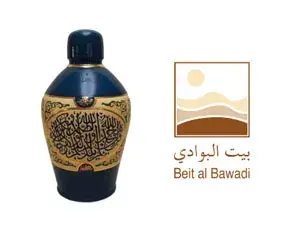
Beit al-Bawadi
Ceramics and weavings Fawzi Qaw Street, Abdoun Tel. +962 6 593 0070 www.beitalbawadi.com
Amman
Darat al Funun
Paintings and sculptures Nadeem Al Malah Street, near Lozmela Hospital, Jebel Al Weibdeh Tel. +962 6 4643252 www.daratalfunun.org
Amman
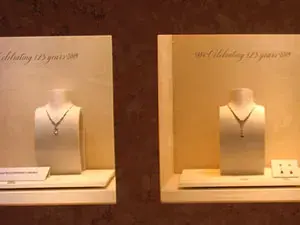
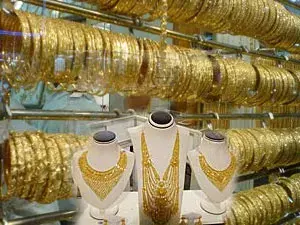
Gold Souk
More than fifty gold and gold jewelry shops are located at the Gold Souk. Off King Faysal Street, Downtown
Amman
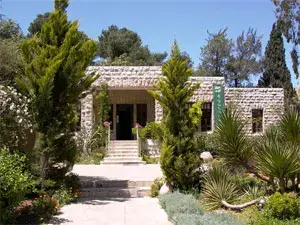
Jordan River Foundation (chaired by Her Majesty Queen Rania)
Arts, crafts, home furnishings Rainbow Street, Jebel Amman, 1st Circle Tel. +962 6 4612169 www.jordanriver.jo
Amman
Souq Jara (Flea market on Fridays)
A flea market organized by locals. People sell all kinds of home-made things such as bread, cookies, jam, rose water, cushions, beaded jewelry and others. 1st circle, Rainbow Street.
Amman
Souq Jabal Al Hussain
Offer aromatic spices and Arabic delicacies, along with cheap products such as men and women’s clothing, you might find a few shops with handicraft or souvenirs for tourists.
Amman
Golden Tulip Grand Palace Hotel
Queen Noor Street, Shmeisani, PO Box 950629, Amman, Jordanwww.lemeridienamman.com(06) 569 6511
Amman
Wasat Al Balad
It may look dirty, sketchy, and chaotic, and indeed it is dirty, sketchy, and chaotic, but downtown Amman, also known as Wasat Al Balad (center of the nation), is the beating heart of the city. It's easy to get lost in the winding and hilly streets, lined with shops selling just about everything. While most of Amman is peaceful and orderly, downtown is awash in humanity. Despite the shabby look, it's actually quite safe. As in the rest of the city, you don't have to worry too much about pickpockets and scammers.
Amman
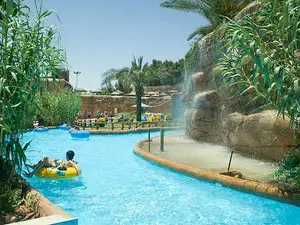
Amman Waves Waterpark
The water park has lots of thrilling rides to keep the children entertained. It is the perfect place to relax and have fun especially for children who are bored of shopping and visiting tourist sites.
Amman
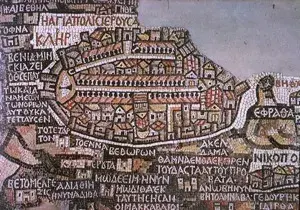
Madaba
Madaba is one of Jordan's many ancient cities. This charming town is located about 30km southwest of Amman. It has been settled for thousands of years, and was mentioned in the 9th century BC Mesha Stele, which helped archaeologists corroborate several episodes from the bible. Madaba thrived as a Roman town, and during the Byzantine period many magnificent churches were built. After Islam took over, the city began to decline and was abandoned by 1100. In the 19th century, the area was resettled by Christians facing persecution elsewhere in Jordan.
Amman
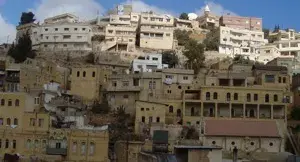
Salt
In an alternate universe, Salt is the capital of Amman. It was the region's capital under the Ottomans and was slated to be the capital of British Transjordan before a disagreement precipitated the move to Amman. Today it is a charming and ancient town 30km northwest of the capital. The area is littered with Roman ruins and the town's citadel dates from the early thirteenth century.
Amman
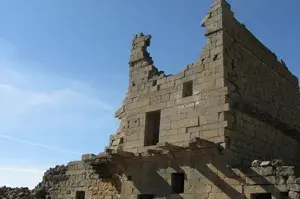
Umm Al Jimal
The town of Umm Al Jimal was likely founded by the Nabateans in the first century BC. It was incorporated into the Roman Empire in the second century AD, but soon after was destroyed in a revolt. During the Byzantine Period, the city prospered as a military outpost and trading center. It's heyday was during the sixth and seventh centuries, before war and a devastating earthquake in 747 caused its abandonment.
Amman
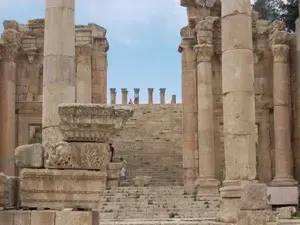
Jerash
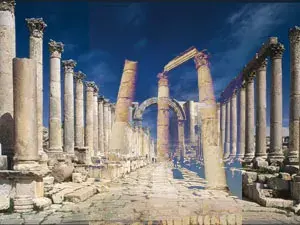
Jerash (or Gerasa as it used to be known) is one of the best preserved Roman cities outside of Rome. The area has been settled since prehistoric times, but it did not become significant until General Pompey conquered the region in 63BC. Under the Romans the city prospered due to its position on the Via Nova Traiana, a highway between Aqaba and Damascus. The population reached 20,000 at its height. During the Byzantine and early Umayyad period, Jerash continued to thrive, but a devastating earthquake in 749AD left the city in ruins. Modern Jerash has a population around 30,000 and is built just to the east of the ruins, on top of the residential neighborhoods of Gerasa.
Amman
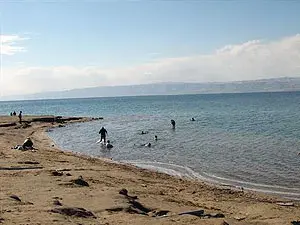
Dead Sea
The Dead Sea is a unique environment. It is so named because nothing can live in the hyper-saline water, which fluctuates around 31.5% salt. The Dead Sea is also the lowest point in the world -- its surface 423m below sea level. Because of decreased inflow from the Jordan River, the Dead Sea is slowly shrinking. The entire southern half has become disconnected and is now maintained only for industry. Plans are in the works for a canal connecting the Red Sea and the Dead Sea, which would refill it and address Jordan's chronic water issues. It would also permanently alter the Dead Sea's unique chemistry.
Amman
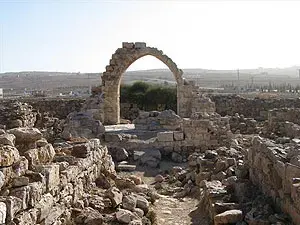
Kerak Castle
Kerak Castle is a magnificent crusader's castle just outside the town of Kerak. Construction began in the 1140s, at a strategic location on top of a hill. It was part of the Crusader's Kingdom of Jerusalem. In the ensuing decades the castle was expanded. Towers and a moat were added.
Amman
Umm Qais
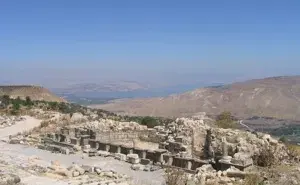
During Roman times, Umm Qais was known as Gadara. It was a city of the Decapolis, a loose confederation of cities in the Roman province of Syria. Other members included Philadelphia (Amman), Gerash, and Damascus. Gadara thrived under the Romans, but quickly declined after their empire fell. It was a small village when Islam arrived in the seventh century, and abandoned soon after. Archaeological excavations did not begin until 1982.
Amman
Mount Nebo
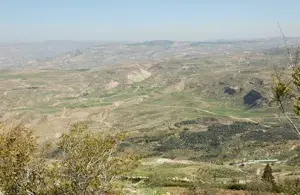
Mount Nebo is a ridge that rises 817m above sea level about 35km southwest of Amman. In the Old Testament, Mount Nebo is where Moses first glimpsed the Holy land (and where he was later buried). The view has not changed. It's simply breathtaking. On a clear day you can see all the way to Jerusalem. Be sure to go in the afternoon or evening on a clear day, because the view isn't as good in the morning.
Amman
Wadi Abdoun Bridge
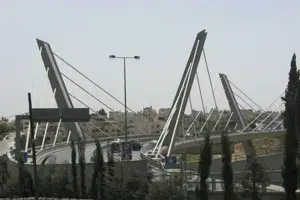
There aren't many bridges in Amman -- not surprising since it's in the middle of the desert -- but when they do need to build one, they do it right. The Wadi Abdoun Bridge connects North Amman and West Amman. It was built between 2002 and 2006 in order to cut travel times between North and West Amman. The total length is 417m. It is Jordan's only cable stayed bridge, and is built in an s-curve to accommodate local traffic patterns.
Amman
King Hussein Park
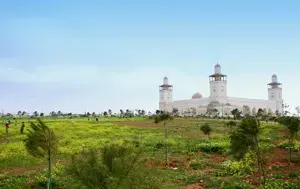
King Hussein Park, or Al Hussein National Park, covers 170 acres of West Amman. It is a recent creation, and one of the city's few green spaces. The park can get pretty crowded on weekends. It doesn't compare to any of the world's great city parks, but it's still a good place to unwind and maybe take in a game of football. The view is pretty good as well. There is an amphitheater here which often hosts concerts and shows during the spring and summer.
Amman
Petra
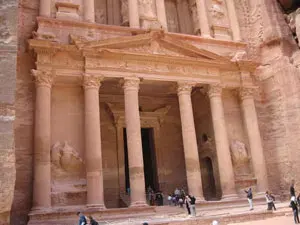
Immortalized in film in Indiana Jones and the Last Crusade (and Transformers 2 among others), the ruins at Petra are Jordan's most recognizable landmarks and one of the world's great archaeological remains. The city was founded in the sixth century BC by the Nabateans. The Nabateans were originally a nomadic desert tribe, famous for their ingenuity harnessing the desert's water.
Amman
Cave of the Seven Sleepers
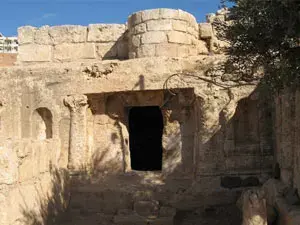
In the year 250AD, Christians throughout the Roman empire were being persecuted. According to legend, seven men were accused of accepting Christianity. Rather than fighting the charges, they donated all their worldly possessions and retreated to a cave to pray. The men fell asleep, and Roman authorities sealed the entrance.
Amman
Amman Citadel
It's easy to forget that Amman is an ancient city, settled for thousands of years. When it was capital of the Ammonite civilization it was known as Rabbath Ammon. During the Greek and Roman eras it was called Philadelphia, the city of brotherly love. It was ruled by a succession of the Middle East's great empires. For most of that history, development was centered on the Citadel, located on top of a hill in Downtown opposite the Roman Amphitheater.