
Women-Friendly Travel in Bahrain
The Bahrain women-friendly travel guide places explicit women-friendly and family confidence signals first, while keeping uncertain details visible for review.
Bahrain
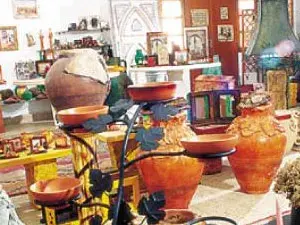
Bahrain Craft Centre
The atmosphere of the Bahrain Craft Centre is peaceful and friendly and managed completely by Bahraini women. It houses many studios and workshops that aim to revive traditional crafts such as weaving, palm-leaf papermaking, pottery and ironwork, but in a modern context. All the work is for sale.
Bahrain
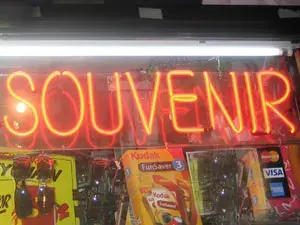
Souvenir Shopping
Most of the souveniers available are imported from Yemen, India, Pakistan and Iran. These include silver jewellery, brass coffeepots, lapis-lazuli, carpets and coral beads. The Souvenier Shops are located in the streets of the Adliya district (near the Gulf Hotel and Convention Centre)
Bahrain
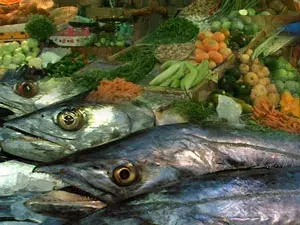
The Central Market
This is an open-air fresh produce market that sells meat, fish, and mostly edibles. It is an interesting place to go to as tourists can stock up on Greek spices, herbs and cheese whilst simultaneously learning about Greek culture.

Bahrain
GOSI Shopping Complex
This offers an enjoyable shopping experience in a modern complex at very inexpensive prices. It specializes in telecommunications products and accessories.
Bahrain
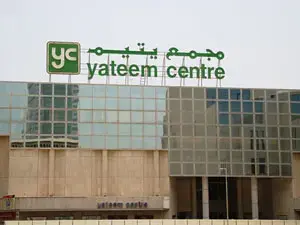
The Yateem Centre
This is an exciting mall offering the best of Bahraini shopping with high quality products, affordable prices and great service. The interior is also beautiful with palm trees growing through the canopy, glass front windows, escalators and fountains. The Yateem Centre sells clothing, electronic goods, jewellery etc.
Bahrain
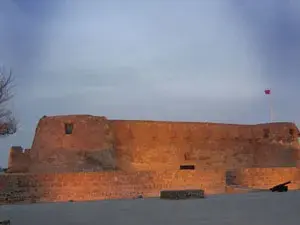
The Bahrain Fort
The Qala'at al-Bahrain (Bahrain Fort) is on the northern shore, five minutes from Manama city. The Portuguese constructed the fort in the 16th century, after which it fell into disrepair. However it has now been superbly restored to its former grandeur. Next door to the fort is an unmarked building that is the museum housing numerous artifacts from the ancient Dilmun period through to the Islamic era, many of which were found at the Fort.
Bahrain
A'Ali Potteries
These kilns have been made on an ancient burial mound. After observing the potter working on the wheel you can take a turn yourself. The shop owner himself is also on hand to give a tour of the kilns and the pottery making process from production to glazing and firing. There are also finished glazed and unglazed products available for purchase at reasonable prices
Bahrain
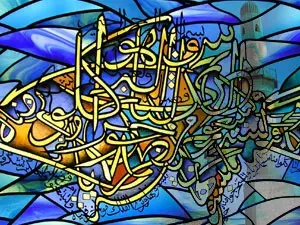
Al Khamis Mosque and Beit Al Qur’an Museum
Dating back to 692 A.D, Al-Khamis is the oldest mosque in Bahrain. However this is disputed and a date pertaining to the 11th century is more probable. The elegant identical minarets were made in the 15th century and are mystifying and peaceful. It is no longer in use and is open to public viewing.
Bahrain
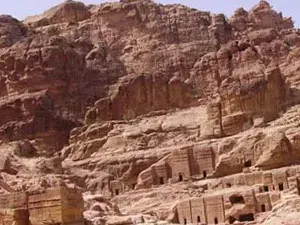
The Royal Tombs
These make up the biggest prehistoric graveyard in the world; there are approximately 170,000 burial mounds here, from the Dilmun period, 4,000 years ago to the third millennium BC, and present an intriguing look into early burial practices.
Bahrain
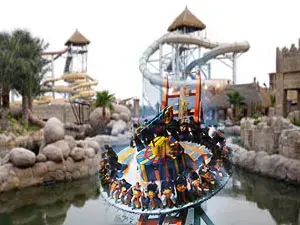
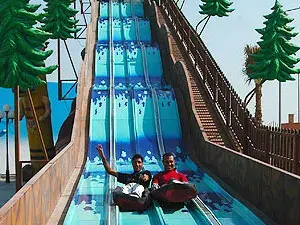
Adhari Park
Adhari Park is a treasure trove for parents confused about how to entertain their overactive children. The Park consists of 165,000 metres of indoor and outdoor rides, food and shopping.
Bahrain
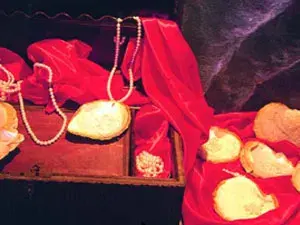
Heritage Centre and Museum of Pearl Diving
The Heritage Centre and Museum of Pearl Diving commemorates the culture of pearl diving.
Bahrain
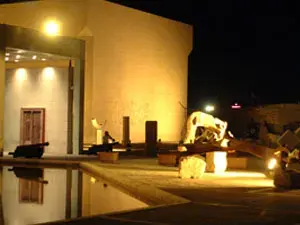
The National Museum
The largest museum in Bahrain, the National Museum is a must-see for history enthusiasts; it is a goldmine of archaeological discoveries and Bahraini cultural relics. The Museum contains most remarkably, an entire dug up tomb as well as intricately carved seals and Sumerian, Babylonian, and Assyrian writing that assert Bahrain’s trading history. Other treasures include; the dioramas of Bahraini crafts, customary paintings, ceramic objects and many religious documents such as beautiful illuminated Qurans.
Bahrain
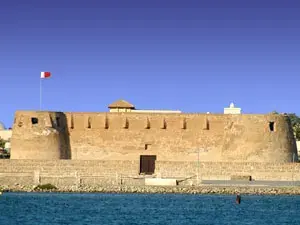
Arad Fort
Though there is no known exact date of construction, the timeline of the Arad Fort is roughly the 15th century. Made in the typically Arab manner, the fort has been thoroughly refurbished and is a truly awe-inspiring sight when it is lit up at night.It is thought that the fort was used by the Omanis during their short occupation of Bahrain in 1800. It was deliberately built next to the waterways between Bahrain and Muharraq Island, to protect Bahrain’s strategic location in the Gulf.
Bahrain
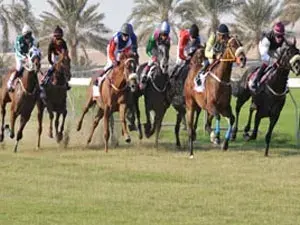
Sakir Horse Race Course
The Race Course and Equestrian & Horse Racing Club was established in 1977 and aims to revive the Arab custom of horse riding and grooming as well as training the new generation in the time-old tradition of riding horses. The course can house up to 40,000 spectators, and even children are welcome. Placing bets on the horses and the outcome of matches is strictly forbidden.
Bahrain
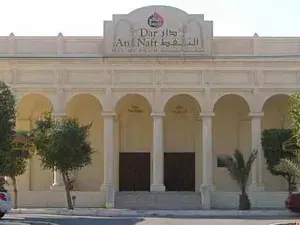
Oil Museum
Situated only some meters from where Bahrain’s first oil well was found in 1932 near Jebel Dukhan, (Mountain of Smoke), the Oil Museum was formally opened in 1992.It contains used drilling gear, underground rock samples, maps and information about the companies that initiated oil exploration in Bahrain which was the first country in the Arabian Gulf to find oil.
Bahrain
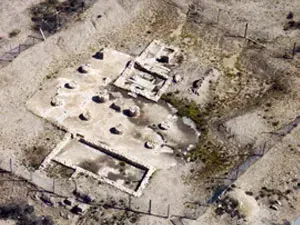
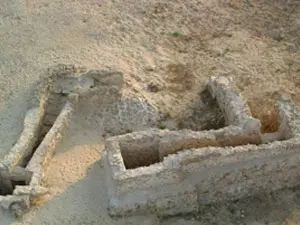
Diraz Temple
This temple was made in the 3rd millennium BC. It differs from both the Mesopotamian temples and the neighboring Barbar Temples. What makes it unique is that the entire complex of rectangles of different sizes and for different purposes is built on rows of enormous limestone columns.
Bahrain
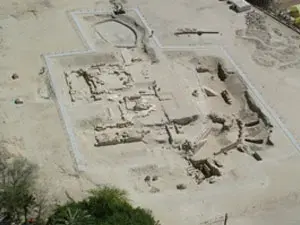
Ain Umm Al-Sajur Site
The site is renowned for having the highest water spring in Bahrain. This spring was found by a Danish Expedition in 1954 and is said to date back to the Dilmun Period i.e.: 2000 B.C. Evidence depicts that the people of that time worshipped the spring water as they thought the water brought them fertility.
Bahrain
The Barbar Temples
These Temples date back to the 2 nd and 3 rd millennia BC. They surround a holy well dedicated to Enki, the god of spring water. Digging has revealed that the temple remains today were built on two older temples and there is evidence of Sumerian influence. The buildings were made of stone and though now they are little more than a few rocks, they depict a gripping, if grisly, image of the temples in their zenith. Clearly unmistakable are stone blocks where horses were tied while awaiting ritual sacrifice and holes in the earth for the blood to flow away.
Bahrain
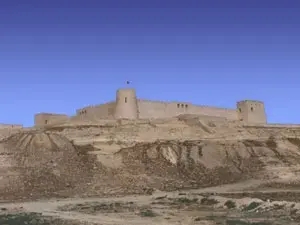
Riffa Fort
This magnificent sandstone structure was constructed in 1812, by Sh.Salman Bin Ahmed ( al fateh) Al Khalifa, the Qal'at ar-Rifa' (Riffa Fort) has now been renamed after its patron. The king ruled Bahrain from here in the years 1869-1932. The whole of the Hunanaiya valley can be seen from here and the sight is beautiful to behold.
Bahrain
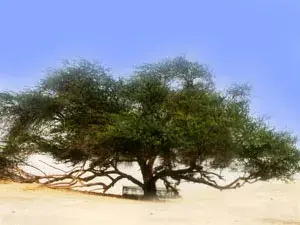
Tree of Life
The Tree of Life is a 400-year old mesquite tree that is seen as a miracle because it is a lone tree that grows in the middle of a desert with no known water body.
Bahrain
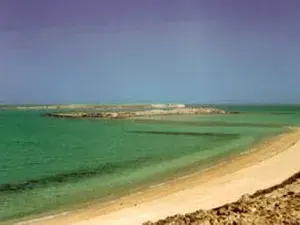
Hawar Islands
Located 20kms from the Bahrain Mainland, the Hawar Islands are an idyllic, untouched, beautiful paradise on earth. With beautiful beaches and goldens sands this is the perfect place to unwind.