
Women-Friendly Travel in Chicago
The Chicago women-friendly travel guide places explicit women-friendly and family confidence signals first, while keeping uncertain details visible for review.
Chicago
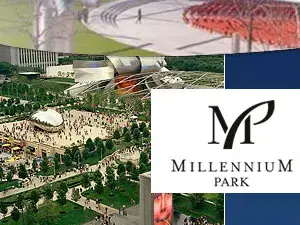
Millennium Park
Millennium Park is one of Chicago's newest attractions. The 24.5 acre park was built between 1997 and 2004 over what had been a rail yard. Today it receives more than 4,000,000 guests annually and is a treasured part of Chicago. Many consider it the most important municipal project since the Colombian Exhibition ended in 1893.
Chicago
Museum of Contemporary Art
Founded in 1967, Chicago's Museum of Contemporary Art features a large collection of modern art from World War II to the present. The current modernist building, designed by German architect Josef Paul Kleihues, opened in 1996 and in terms of square footage was the largest museum of modern art in the world. The highlight of the building is the main staircase, which leads to the beautiful atrium overlooking Lake Michigan.

Chicago
Shedd Aquarium
The Shedd Aquarium is one of the world's largest, with more than 32,000 fish from 1,500 different species. It is the most visited attraction in Chicago with more than 2,000,000 guests annually. The aquarium was built between 1927 and 1930, and was one of the world's first inland aquariums. Seawater had to be brought in by train via railroad from Key West, Florida. Along with the Adler Planetarium and the Field Museum of Natural History, the Shedd Aquarium is part of the Museum Campus Chicago. The aquarium is named for its founder John G. Shedd, president of retailer Marshall Fields.
Chicago
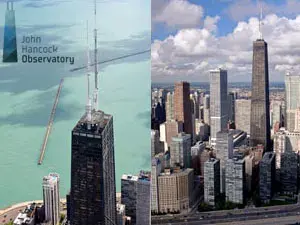
John Hancock Center
The John Hancock Center is the third tallest building in Chicago at 344m. It is one of the signature elements of Chicago's skyline, with its tapered design, twin spires, and criss-crossing trusses. The Hancock Center was designed by architect Bruce Graham of the famous Skidmore, Owings, and Merrill architecture firm. It was built between 1965 and 1970 and houses offices, condominiums, and shops.
Chicago
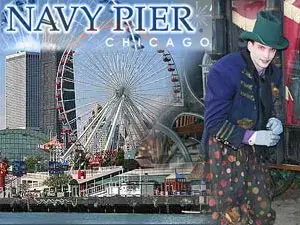
Navy Pier
Navy Pier is Chicago's most visited attraction, attracting more than 8,000,000 visitors per year. It was built between 1914 and 1916 and at the time was the largest pier in the world, at more than 1,000m long. Initially, the pier was to serve as both a port and as a public gathering place, but as cars proliferated the Great Lakes shipping industry declined. Its popularity fell during the 1960s and 1980s, but has seen a resurgence in recent decades.
Chicago
Museum of Science & Industry
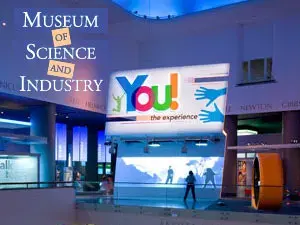
Chicago's Museum of Science and Industry is housed in the Palace of FIne Arts, built for the Columbian Exhibition. In the 1920s, after the Field Museum moved out, it was decided to convert the magnificent Neoclassical building into a museum dedicated to science and industry. The museum was bankrolled by Julius Rosenwald of retailer Sears Roebuck. It has evolved into one of the world's premier science museums and is the third most popular cultural attraction in Chicago by attendance.
Chicago
Lincoln Park Zoo
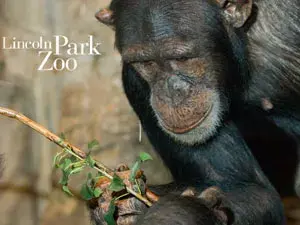
The Lincoln Park Zoo was founded in 1868 and is one of the oldest zoos in America. Its beginnings were humble enough, with a donation of swans from New York's Central Park. The animal collection has expanded slowly over time. The Lion House was built in 1912 and the Monkey House in 1927. Today the zoo is home to around 1,250 animals.
Chicago
Little Italy
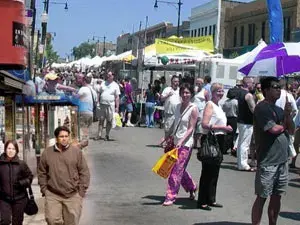
Like most major cities, Chicago experienced a large influx of Italian immigrants in the late 19th and early 20th centuries. The Italian immigrant population went from 1,357 in 1880 to a peak of 74,000 in 1930. They proliferated throughout the metro area, but the focus was around Grant Street on the Near West Side. By the 1930s, the neighborhood was home to a host of Italian restaurants, grocery stores, and bakeries.
Chicago
Andersonville
This neighborhood displays the diversity of a mixture of people of Middle Eastern/Swedish origins. You can find hummus here as well as lingonberry pancakes!
Chicago
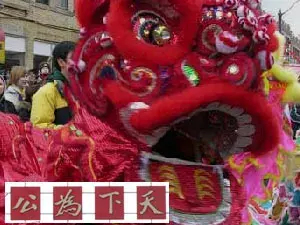
Chinatown
Chicago's Chinatown is the largest in America's Midwest and second largest in the US, home to about 10,000 people. The city's Chinese population has been concentrated here since before World War I. Located in the Near South Side, Chinatown is roughly triangular, bordered by the Red Line of the L, Interstate 55, and the Chicago River.
Chicago
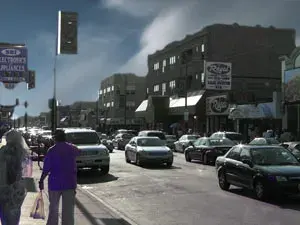
Devon Ave
Indian and Pakistani culture is represented through several clothing and jewelry shops, as well as restaurants. An excellent Independence Day parade is held here every year in mid-August with an attendance of over 35 thousand people.
Chicago
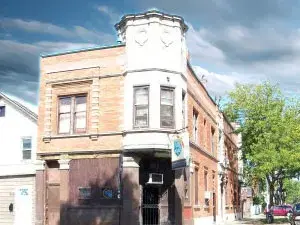
Pilsen/Little Village
Mexican restaurants as well as Pilsen's famous murals can be found here. There is also the National Museum of Mexican Art for those who seek a deeper understanding of Mexican culture.
Chicago
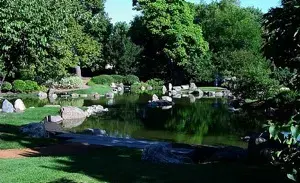
Jackson Park
Jackson Park was designed by legendary landscape architect Frederick Law Olmsted in 1871. It was the main site for the 1893 Columbian Exhibition, but little evidence remains as all the buildings have been demolished since. Jackson Park was originally supposed to be part of a grand South Park, encompassing both it and Washington Park, connected by a canal running through the Midway Plaisance.
Chicago
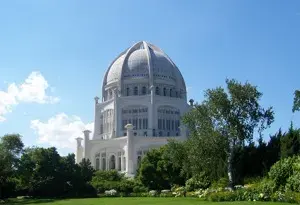
Baha'i House of Worship
Technically located just north of Evanston in Wilmette, the Bahai House of Worship is the oldest Bahai house of worship in the world, and the only one in North America. The land was purchased in 1908 with Bahai contributions from around the world. The cornerstone was laid by Abdul-Baha himself in 1912, but construction did not begin until the 1920s. It was a protracted process, as contributions were slow coming, and only contributions from Bahais were accepted. The superstructure was completed in 1931, but it did not open for worship until 1953. It was designed by famous French-Canadian architect Louis Bourgeois.
Chicago
University of Chicago
The University of Chicago is one of the best universities in the world. It was founded in 1890 thanks to a donation from oil magnate John D. Rockefeller. The university and its reputation quickly grew. By World War II it had become a premier research institution. It was here that mankind's first nuclear reaction took place thanks to Enrico Fermi. Today the University of Chicago is known for its excellent academics. The Common Core undergraduate curriculum attracts a unique brand of undergraduate. Barack Obama taught at the Law School between 1992 and 2004.
Chicago
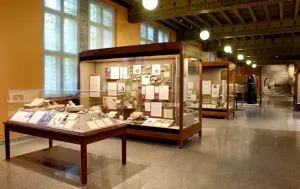
Oriental Institute Museum
The orient generally refers to East Asia, but the University of Chicago's Oriental Institute is dedicated to the Middle East. It is one of the world's premier research institutions regarding the region's archaeology and history. The Institute was founded in 1919, and the art deco building it's housed in was completed in 1930. The collection is largely due to the efforts of James Henry Breasted, who sponsored a series of archaeological digs in the region following the First World War.
Chicago
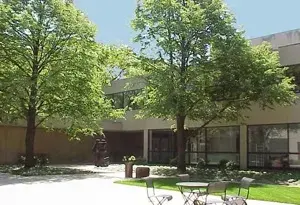
Smart Museum of Art
The Smart Museum of Art is named for David and Alfred Smart, the founders of Esquire Magazine and the museum's benefactor. It was founded in 1974 and is the art museum of the University of Chicago. There are more than 8,000 works on display, split into four different collections: Asian Art, Contemporary Art, European Art, and Modern Art and Design.
Chicago
Wrigley Field
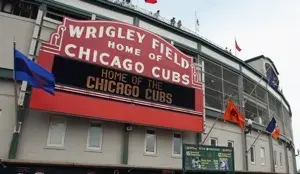
Nothing's more American than baseball, and Wrigley Field, named for the chewing gum company, is one of the sport's holiest sites. Built in just six weeks back in 1914, the park is a throwback to baseball's past. The field fits snugly in Chicago's street grid. Lights for night games were not installed until 1988. The signature features are the ivy covering the outfield fences and the original marquee out front.
Chicago
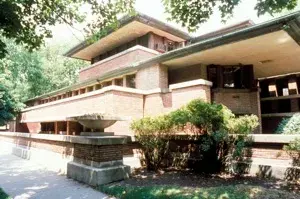
Oak Park
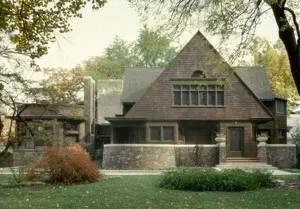
Oak Park is a suburb just to the northwest of Chicago. After the Great Chicago Fire the area grew rapidly because of its location along the railroad. In 1902 it was incorporated, becoming independent from the town of Cicero. Today it is one of Chicago's nicest suburbs, with broad tree lined streets and large older homes.
Chicago
United Center
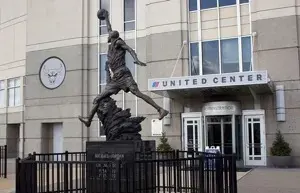
The United Center is hallowed ground for basketball fans. It was here that the legendary Michael Jordan finished his career. He actually began his career and accomplished his first three-peat across the street at the beloved Chicago Stadium, which has since been demolished. The United Center opened in 1994, just in time for the Bulls' second three-peat. It is the largest arena in the United States. A famous statue of Michael Jordan stands at the entrance.
Chicago
Chicago History Museum
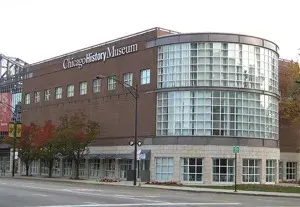
The Chicago History Museum is one of the oldest institutions in Chicago, founded in 1856. The original building and collection was destroyed in the 1871 Great Chicago Fire. The current building was built as a public service during the Great Depression in 1932. The original facade is a magnificent Neo-Georgian structure. The newer addition is a modern glass and steel structure.
Chicago
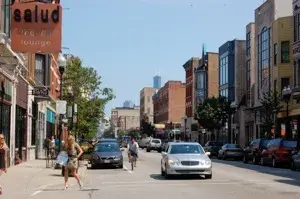
Wicker Park
Wicker Park is located northwest of the Loop, on the west side of the Kennedy Expressway. It was built up after the Great Chicago Fire, as displaced residents and immigrants from Scandinavia and Germany streamed in. A lot of the original architecture remains. The John Rapp House at 1407 North Hoyne Street, and the Holy Trinity Cathedral at 1121 Levvitt Street were both designed by architect Louis Sullivan, known as the father of modern architecture.
Chicago
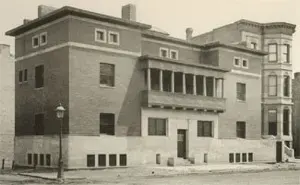
Astor Street
Astor Street is located in the heart of Chicago's Gold Coast district, the city's most opulent neighborhood. It is one of the most expensive addresses in the United States outside New York City. Most of the buildings were built during a sixty year period beginning in the 1880s. Astor Street was named a historic landmark in 1975 for its magnificent architecture.
Chicago
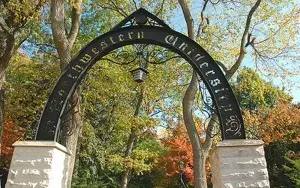
Northwestern University
Sharing Chicago's northern border along Lake Michigan is the pleasant suburb of Evanston, home to Northwestern University. Northwestern was founded in the 1850s by Methodists on land purchased by John Evans, for whom the surrounding town is named. Today it's one of America's most prestigious universities and a member of the Big Ten Conference.