
Women-Friendly Travel in Hanoi
The Hanoi women-friendly travel guide places explicit women-friendly and family confidence signals first, while keeping uncertain details visible for review.
Hanoi
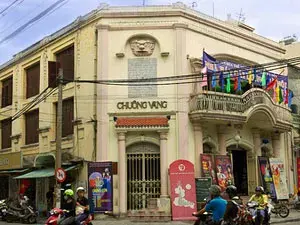
Golden Bell Theatre
The Golden Bell Theatre is a heritage building located on Silver Street, one of the oldest streets in Hanoi. The theatre has the Vietnamese revolution closely interwoven into its history. During the revolution it served as the headquarters of the Hanoi Guards. In 1947, freedom fighters pledged their allegiance to the revolution from its steps. Often overlooked by hurried tourists, it remains a symbolic piece of Vietnam’s heritage.
Hanoi
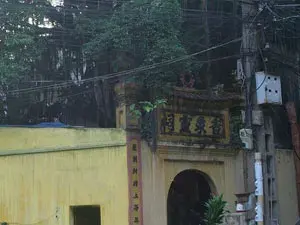
Den Huong Tuong
Huong Tuong Temple is a small temple located on Hang Buom or Sail Street. The temple is said to be over a thousand years old, having been founded in the 9th century, and it still stands as one of the grandest temples in Hanoi's Old Quarter. Classified as a Vietnam National Heritage Site in 2000, further restoration and documentation has returned Den Huong Tuong to its original architecture.
Hanoi
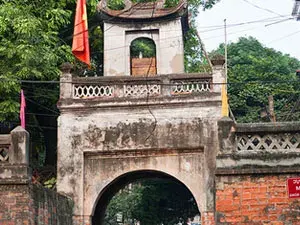
Old East Gate
Cua O Quan Chong, or the Old East Gate, is the only one of the original sixteen gates that provided access to the old city still standing. The Old East Gate is located within the Old Quarters of Hanoi; and dates back from the time when Hanoi was a medieval city.
Hanoi
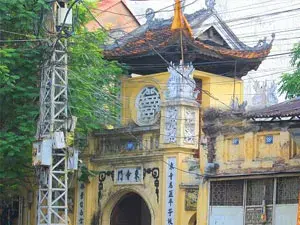
Eastern Gate Pagoda
Also known as Chua Cau Dong; this magnificent, elaborately ornate temple is said to be nearly a thousand years old with some of its statues and dating back 400 years.
Hanoi
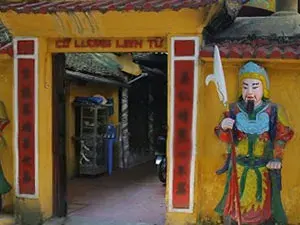
Co Luong Temple
A small temple; it is located at the end of a small and is recognizable by the two colorfully garbed door guards flanking its entrance.
Hanoi
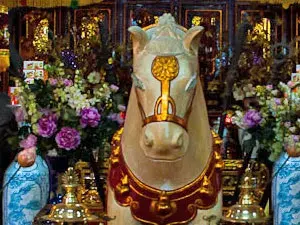
Bach Ma Pagoda
Den Bach Ma, or Temple of the White Horse, is over a thousand years old, having been founded in the 9th century; although nothing remains today from its founding days. The temple itself dates back to its 18th and 19th century reconstruction, and still stands as one of the grandest temples in Hanoi's Old Quarters.
Hanoi
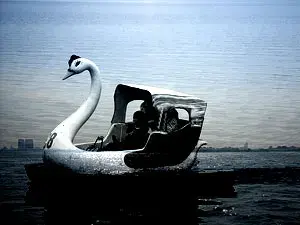
West Lake
Ho Tay, or West Lake, is the largest lake in Hanoi and is popularly known as the Lake of Mists. During medieval times, kings as well as warlords had their palaces built on its banks while in more recent times the lakeside has seen the sprouting of villas, hotels and restaurants; and is now a trendy locale which many expatriates and young Hanoians call home. The lake is also steeped in legend and is bordered by several significant pagodas.
Hanoi
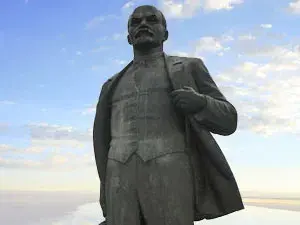
Lenin Statue
The Lenin Statue is a monument to the Soviet leader at the triangular playground called Lenin Park; on Duong Dien Bien Phu Street. The monument faces the Army Museum, and is probably one of the world's few standing reminders of the Russian revolution, which today is difficult to find in Russia itself.
Hanoi
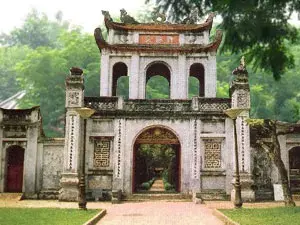
Temple of Literature
The Temple of Literature founded in 1070, is a temple dedicated to Confucius. Today only parts of the sprawling complex dates from this earliest period; most of the architecture that we see comes from the Ly and Tran Dynasties. Also known as Van Mieu, the Temple of Literature has undergone numerous restorations and stands as one of the few remaining examples of later Ly Dynasty (1009-1225) architecture. Although there are several temples in Vietnam called Van Mieu, the one in Hanoi is certainly the most famous, as it also functioned as Vietnam's first university and is considered one of the finest historical sites in Hanoi. The complex is within easy walking distance of Ba Dinh square.
Hanoi
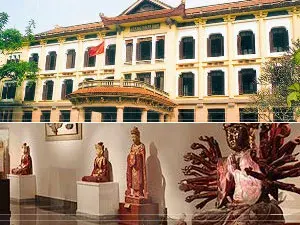
Vietnam National Museum of Fine Arts
Open daily from 8:30am to 5pm the museum the Vietnam National Museum of Fine Arts features Vietnamese art of the 20th century, up to the 1970s. Much of the art is outstanding with entire rooms devoted to the Vietnamese style of lacquer and silk painting, woodblock, and folk art, wile the gift shop has some modern works of well-known artists for sale.
Hanoi
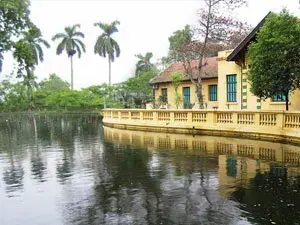
Ho Chi Minh's Residence
Ho Chi Minh's residence is behind the Presidential Palace facing an exquisite landscaped lake. The famous house on stilts does have its charm, and the structure is an interesting glimpse into the life of Vietnam’s revered national hero. The house I closed to the public on Mondays but open every other day of the week. A tour of the house requires paying for a guided tour.
Hanoi
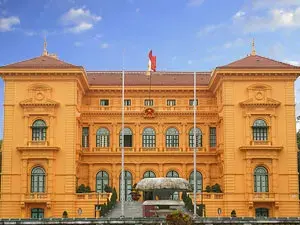
Hanoi Presidential Palace
The Hanoi Presidential Palace is a grand colonial mansion next to the Ho Chi Minh Mausoleum which can only be viewed from the outside amid tight security. Behind the Presidential Palace are the Botanical Gardens which are beautiful, and infinitely more interesting than the palace structure itself.
Hanoi
One-Pillar Pagoda
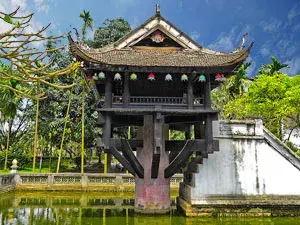
To the right of the Ho Chi Minh Museum, near Ba Dinh Square, is the unique One-Pillar Pagoda - also known as Lien Phai Pagoda, or the Pagoda of the Lotus Sect - a wooden structure built in 1049 that sits on stilts over a lake. The pagoda is a miniature reproduction of the original temple, which was said to represent a lotus emerging from the water. Prayers offered here are said to bring fertility and good health. Visitors will find the pagoda open between 6am and 11.30am every morning and then again from 2pm to 6pm. A certain dress code applies; with shorts not being advisable.
Hanoi
Ho Chi Minh Museum
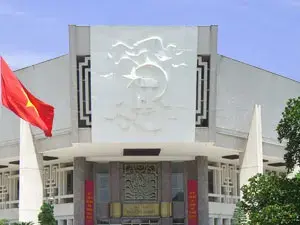
The museum is a tribute to Ho Chi Minh's life; and cause, and there are personal items, photos, and documents detailing the rise of the nation's Communist revolution. The museum is closed on Mondays and is open to the public from 8am – 11.30 am and again from 1.30pm – 4pm for the rest of the week.
Hanoi
Ho Chi Minh's Mausoleum
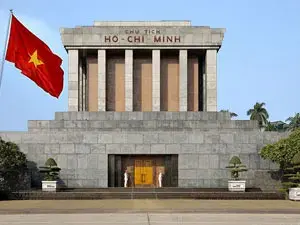
Although he asked to be cremated, Ho Chi Minh lies in state, embalmed and dressed in his favored khaki suit in an imposing, granite-and-concrete structure modeled on Lenin's tomb. A respectful demeanor is required, and the dress code mandates no shorts or sleeveless shirts. The mausoleum is usually closed in October and November, and is open three days a week on Tuesdays, Thursdays and Saturdays between 8am and 11am. Visitors are advised to reach the mausoleum before 10 as there is no admittance after 10.15am.
Hanoi
Army Museum
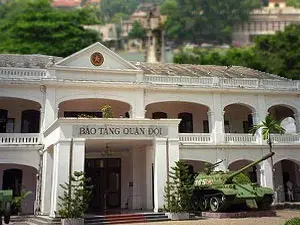
The museum presents the Vietnamese side of the country's struggle against both the French and the Americans. There are three buildings from both wars containing evocative photos and actual war equipment, including aircrafts, tanks, bombs, and big guns, some with signs indicating how many enemies’ lives the war artifacts were responsible for. Also on the grounds is Hanoi's ancient flag tower; Cot Co, constructed over a seven year period and completed in 1812. The exhibits have English translations, which makes this a worthwhile visit. The museum is closed on Mondays and Fridays and visitors must pay an entry fee.
Hanoi
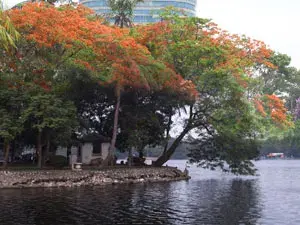
Thong Nhat Park
Now called Reunification Park, Lenin Park or Thong Nhat Park, is a beautiful seven hectare park built around a lake. The Lenin Monument can be found on the western side of the park and every morning it fills up with joggers while it is popular in the evenings with couples who often throng the shores of the lake.
Hanoi
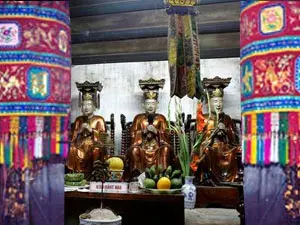
Dong Nhan Temple
Dong Nhan Temple is a beautiful temple dedicated to two sisters who were victorious over the Dong Han invaders. It is well known for the Dong Nhan Festivalduring which it takes on a colorful character, where a procession takes place from the temple to the Hong River. There are beautiful statues that line the temple walls and its intricate architecture is fascinating.