
Women-Friendly Travel in Munich
The Munich women-friendly travel guide places explicit women-friendly and family confidence signals first, while keeping uncertain details visible for review.

Munich
Sebastian Wesely
You can go to Sebastian Wesely for a number of different items. The shopping available here includes beer-related equipment and schnapps glasses, walking sticks, scarves and napkins with the famous Bavarian blue-and-white lozenges. This is also located in the city center.

Munich
Ludwig Beck am Rathauseck
This is one of Munich's major department stores located at Marienplatz. Most of the shopping here is intended for local residents. Tourists will find handmade crafts from all over Germany at this store. Items on sale include ornamental ceramic objects and dishes, beer steins and vases, painted wall tablets showing rural scenes, and decorative flower arrangements. There is also unusual kitchenware, towels and a collection of leather-trimmed canvas purses available for purchase. The shop also offers fashions and textiles.
Munich
Schellingstrasse / Hohenzollernstrasse
For more different wares, you should go to Schwabing which was the former bohemian quarter. Schellingstrasse and Hohenzollernstrasse are the locations for many uncommon galleries and trendy boutiques. A shopping-paradise par excellence begins just behind the University and lovers of literature especially, will feel at home in the antiquarian shops round Schellingstrasse.
Munich
Fünf Höfe
For a more expensive shopping experience, you can visit the many stores, boutiques and galleries at the Fünf Höfe
Munich
Kaufhof
This is one of the largest stores in Munich, located in the city center at Marienplatz. It is on five floors in a building. Here you will find everything you can possibly think of from men's, women's, and children's clothing to house wares to groceries.
Munich
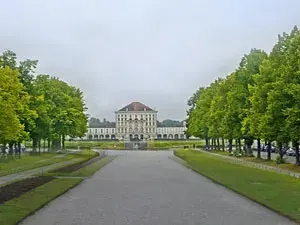
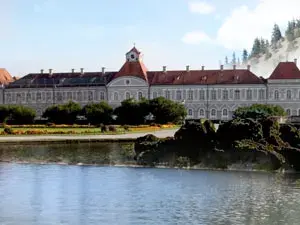
Palace of Nymphenburg
This was the Wittlesbachs summer residence. Elector Ferdinand Maria commissioned the building of the Palace in 1664. Its center is a small Italianate palace which the Electress Adelaide dedicated to the goddess Flora and her nymphs – which is where the palace’s name comes from.
Munich
Marstallmuseum
This museum is loacted to the south of the palace buildings and has state coaches, sleighs and riding equipment used by the Bavarian rulers on display. The coaches with their fine upholestry, sculpture, gilt ornamentation and paintings are real works of art. Among the main highlights are the magnificent vehicles that belonged to King Ludwig II.
Munich
Royal Gardens/ Amalienburg/Badenburg/Pagodenburg
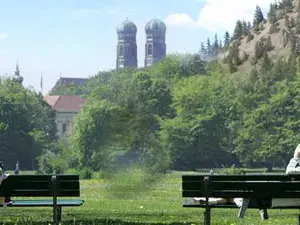
The Palace Park covers an area of about 180 hectares. It was originally a Baroque garden which was transformed in the early 1800’s into a landscape garden. There are extensive grounds with lakes, streams and the famous pavillions, Amalienburg (a roccoco hunting lodge), Pagodenburg (which was used for the most exclusive parties thrown by the court), Badenburg (a small bathing palace) and Magdalenenklause (a place for religious retreat).

Munich
Bavaria Film Studio
This film studio is Europe's largest film making center. Production began here in 1920. Directors such as Fassbinder, Wim Wenders, Herzog and Stanley Kubrickhave worked here. Tours take you through the sets of famous films such as Das Boot and The Neverending Story. There is also a live stunt show, as well as a 4-D film viewing that can be taken in during the visit.
Munich
City Center (Marienplatz/Karlsplatz/ Odeonsplatz/Konigsplatz)
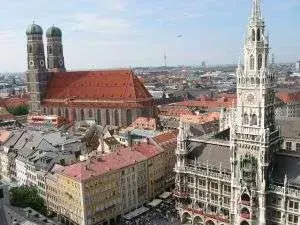
Marienplatz is the very heart of Munich and is always full of crowds who are being entertained by street performers and musicians. This square is dedicated to the patron of the city, whose golden statue stands on top of a huge column (the Mariensaule) in the center of the square. The city's most beautiful square, Odeonsplatz is located to the north. Travelling west from Odeonsplatz you will come to the wide shopping avenue, Briennerstrasse. This avenue will lead you to Konigsplatz, which is a large Grecian square. Located around this square are three classical buildings constructed by Ludwig I, namely, the Propylaen, the Glyptothek, and the Antikensammlungen.
Munich
Neues Rathaus( New City Hall with famous chimes)
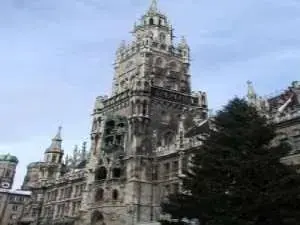
The New City Hall is a huge 19th century neo-Gothic building where every day at 1100 and 1200 hours, the glockenspiel on the frontage plays out a complex presentation which includes a miniature tournament, with copper figures moving in and out of the archways.
Munich
Altes Rathaus (Old City Hall) with Spielzeugmuseum
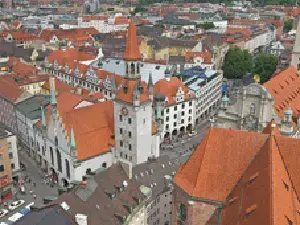
To the right of the New City Hall is the Old City Hall, which has been rebuilt after being destroyed in the war. It is built in the 15 th century style and now houses a vast toy collection in the Toy Museum.
Munich
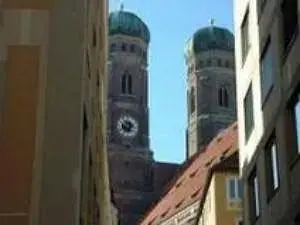
Frauenkirche- Cathedral Church of our Lady
This church is one of the landmarks of Munich. It has a late Gothic nave from the 15th century and its interior is decorated with works of art spanning over five centuries.
Munich
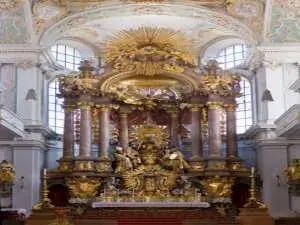
Peterskirche(Church of St. Peter)
This is Munich's oldest church, built in 1180. The church also has a tall steeple that you can climb.
Munich
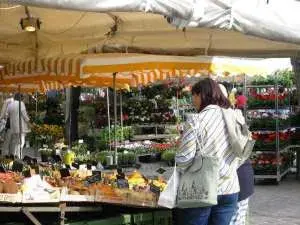
Viktualienmarkt
This is a huge open-air food market selling everything from wiesswurst and beer to fruit and vegetables.
Munich
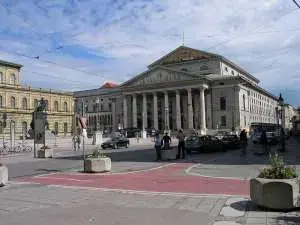
National Theater
Munich's opera history began in 1651 and since then has seen performances, including thoseof Verdi, Cavalli, Mozart, Beethoven, Wagner and Strauss. These composers make up a great share of today's programs. The Bavarian State Opera presents over 350 performances a year.
Munich
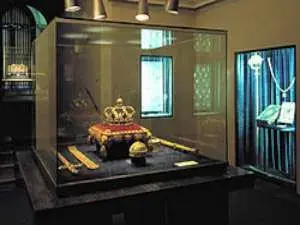
Schatzkammer
A separate ticket is needed to see the amazing treasures of the Schatzkammer. Founded in 1565, the Wittlesbach's treasury is on display in ten halls in the Konigsbau. The collected works are one of the most important of their kind with invaluable enamel, rock crystal and ivory work, crowns and royal insignia, religious art and unique goldsmith work from nine centuries.
Munich
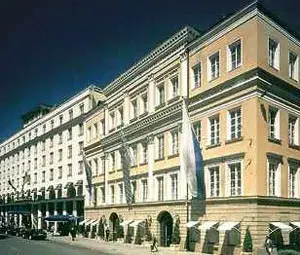
Deutsches Museum
This is Munich’s biggest museum, located on an island in the River Isar. It covers every conceivable aspect of technical endeavour, from the first flint tools used to the research labs of modern industries.
Munich
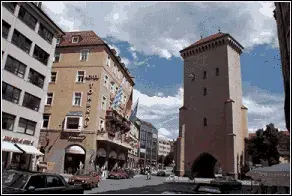
Isartor (Isar Gate)
This gate located at Isartorplatz is one of the most well known landmarks of Munich. This tower was part of a wall that surrounded Munich and protected it from invaders.
Munich
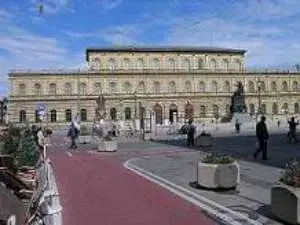
Residenz ( Residence Palace Museum)
The Residenz was the palace of the Wittlebachs. It was first the political and cultural center of the first Dukes, then the Electors (from 1623) and finally the Kings of Bavaria (1806 – 1918). The various rulers furnished and extended the palace’s rooms to suit their personal tastes.
Munich
Alte Pinakotheken
This is one of the largest galleries in Europe, housing the finest art. It contains more than 700 paintings from the golden ages of German, Flemish, Dutch, French, Italian and Spanish painting.
Munich
Neue Pinakotheken
This gallery holds a collection of 19th century art. Here you can find paintings and sculptures from the Neoclassical and Romantic periods, as well as from the Impressionist movements. The museum was commissioned by King Ludwig I in 1853 as the first museum for contemporary art.
Munich
Pinakotheken Der Moderne
This gallery is a glass and concrete structure which is home to an impressive collection of 20th and 21st century art, ranging from Dali and Picasso to great German artists such as Beckman and Polke. There are also regular exhibitions on design, architecture and graphics, as well as temporary exhibits and events from various cultural areas.