
Women-Friendly Travel in Zurich
The Zurich women-friendly travel guide places explicit women-friendly and family confidence signals first, while keeping uncertain details visible for review.
Zurich
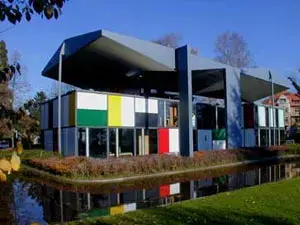
Le Corbusier Center
The Le Corbusier Center, home to the Heidi Weber Museum, was the final building designed by Le Corbusier, one of the seminal architects of the twentieth century. He was born Charles-Edouart Jeanneret in a small city in eastern Switzerland in 1887. He would shape the Modernist movement in architecture with his International Style, and his influence can be seen in cities throughout the world, even if his buildings aren't.
Zurich
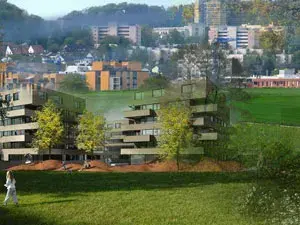
Affoltern, Oerlikon & Seebach
This district is famous for its Christmas Collectors Fair that takes place every year.

Zurich
Zurich Zoo
The Zurich Zoo, or Zurich Zoologischer Garten, is one of the finest in Europe. It opened in 1920 about 5km west of the city center. Today more than 2,000 animals of more than 300 species call this zoo home. It's located in the middle of a park, so there's a lot of open space. All the zoo standards are here: lions, tigers, elephants, etc.
Zurich
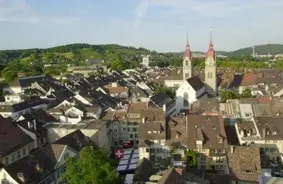
Winterthur
Winterthur is located 20km northwest of Zurich. It is a pleasant suburb with a population around 100,000. Founded during Roman times, it came under control of the Hapsburgs in 1264 and was sold to Zurich in 1467. Winterthur remains part of the canton of Zurich. During the industrial revolution, the city thrived as factories were built. The textile industry was especially strong, and remains so today.
Zurich
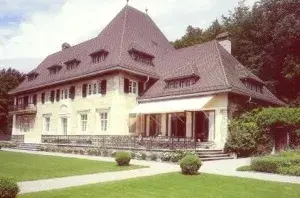
Villa Am Römerholz
Oskar Reinhart was an heir to Volkart Brothers, a Winterthur-based trading company focused on importing goods, specifically cotton, from India. The entire Reinhart family were great lovers and collectors of art, but Oskar took it to another level. In his lifetime, he collected more than 800 paintings by many of Europe's great masters.
Zurich
Schaffhausen
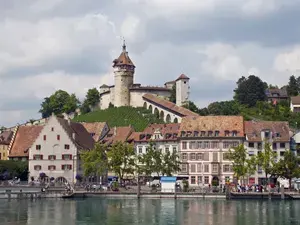
Schaffhausen is a small city 50km northeast of Zurich and the capital of the Canton of Schaffhausen. The first historical mention of the city came in 1045AD. It was an independent city state before becoming a charter member of the original Swiss Confederacy. Schauffhausen suffered considerably during the Thirty Years' War, and in fact did not recover fully until the arrival of the railroad in 1857.
Zurich
Rheinfall
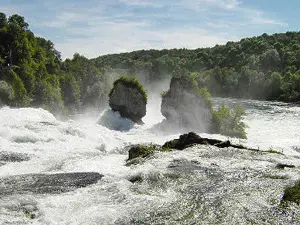
Located approximately 50km north of Zurich in the town of Neuhausen am Rheinfall, the Rheinfall is the largest waterfall in Europe. It measures 150m in width and 23m in height. Though it is indeed the largest waterfall in Europe (by volume), the Rheinfall is actually rather small. It doesn't compare to a place like Niagara Falls, but it is nonetheless one of the most popular tourist attractions in the Zurich area.
Zurich
Zurich Toy Museum
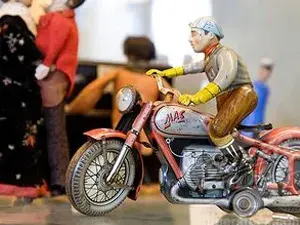
The Zurich Toy Museum, or Zurcher Spilzeugmuseum, is one of the city's most unique attractions. More than 1,200 antique toys are in the collection, dating from the eighteenth century through the start of the twentieth century.
Zurich
Stein am Rhein
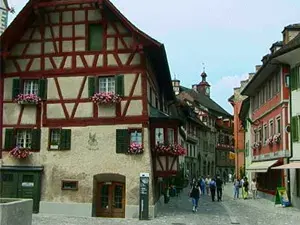
Stein-Am-Rhein is one of Switzerland's loveliest towns. It's located about 20km east of Schaffhausen, as its name would suggest along the Rhine River. Stein-am-Rhein was a small fishing village when the Holy Roman Emperor Henry II moved St. George's Abbey here in 1007. The move was a boon to the city's economy, as the abbey had the ability to mint coins and hold markets. From the eleventh through the sixteenth centuries, Stein-am-Rhein was a regional economic center.
Zurich
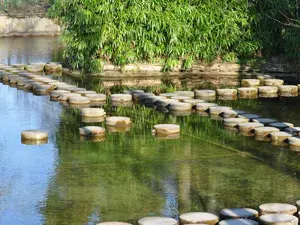
Zurichhorn
Zurichhorn is a public park along the western end of Lake Zurich (or the Zurichsee). It's located at the small delta where the Hornbach stream flows into the lake. During the sixteenth and seventeenth centuries, wealthy Zurichers built new homes outside the city walls in what is now the Seefeld district. In the mid-nineteenth century, the area became a hub of shipbuilding. By the end of the 1800s, though the industry had waned. When the stream was rerouted around 1880, a new park was created. It expanded to its present dimensions in 1887.