
Women-Friendly Travel in Budapest
The Budapest women-friendly travel guide places explicit women-friendly and family confidence signals first, while keeping uncertain details visible for review.
Budapest
What to do with Children in Tow
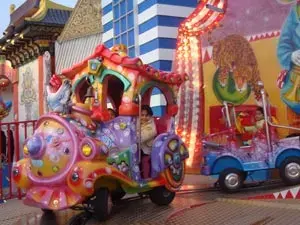
One of the great things about Budapest is that it has an abundance of playgrounds, theme parks and roller-skating parks. One of the best theme parks is Varosliget (City Park) which has an abundance of activities to entertain children: playgrounds, the city zoo, a circus and a fairground. The Szechenyi Baths are well-liked by the older children, especially the whirlpool, and there is also rowing in the summer and ice-skating in the winter (Nov-Mar, Mon-Fri 9am to 1pm and 4-8pm, Sat and Sun 10am-2pm, 4-8pm, depending on weather). Another highlight is the caves underneath the city which are good fun as long as your child isn’t scared of the dark. There are two notable cave formations here such as the ones under the Varhegy, Buda Castle Labyrinth (Budavari Labirintus, daily 9:30am-7:30pm, 1500Ft;) and the Szemlolgyi Caves at Pusztaszeri ut 35 (tours hourly Mon & Wed-Sun 10am-4pm; 1250Ft) which have stunning formations.
Budapest
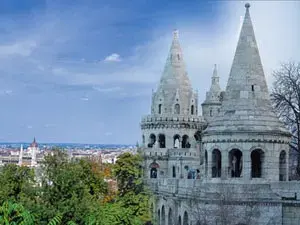
Fisherman’s Bastion
The Fisherman’s Bastion is a medieval looking stronghold that offers impressive views of the city, fitting as it was built as a viewing platform in 1905. The name comes from a medieval guild of fishermen who were responsible for defending that part of the wall. The seven white turrets represent the Magyar tribes that first entered the Carpathian Basin in the late 9th century. In front of the bastion is a statue to St Stephen.
Budapest
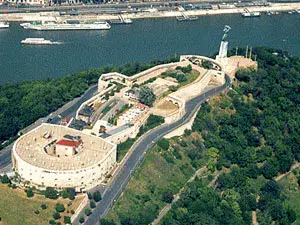
Citadella
A fortress that never saw battle, it was erected by the Hasburgs after the 1848-49 War of Independence just in case of further rebellion. However by the time it was ready, the political climate had cooled and the citadella was of no use. Today it contains some of the city’s artillery, the Bunker Waxworks (466 5794, times 9am-7pm, price 1200Ft) and a rather rundown hostel/hotel. However if you walk north along it you’ll come to a lookout that is the best in the city.
Budapest
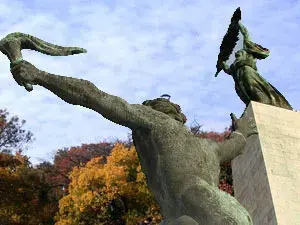
Liberty Monument
A 14m statue of a lady with the palm frond, she symbolises freedom throughout Budapest. Erected in 1947 in tribute to the Soviet forces that died liberating the city at the end World War II, she can be found east of the citadella.
Budapest
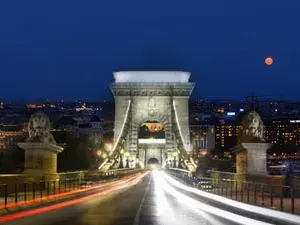
Chain Bridge
If you can walk across only one of the city’s three bridges that join Buda and Pest together, then make it this one. The city’s oldest and probably the most beautiful bridge, it is named in honour of the man who designed it, Lstvan Szechenyi. When it opened in 1849, it was unique for two reasons: it was at the time, the city’s only dry link between Buda and Pest and the city’s aristocracy who had been previously exempt from taxation, had to pay a toll!
Budapest
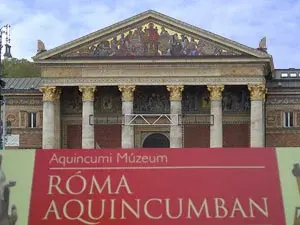
Aquincum Museum
Purposely built on the western edge of an ancient Roman civilian settlement, this museum offers extensive exhibits on Roman life in Budapest. There is a vast collection of Roman coins and wall paintings, a replica of a 3rd century organ called a ‘hydra’ and stone sarcophagi. Across the road is the Roman Civilian Amphitheatre which, while smaller than the original thing, leaves much to the imagination; you can still see stone cubicles where the lions were kept and the ‘Gate of Death’ to the west where slain gladiators were carried through.
Budapest
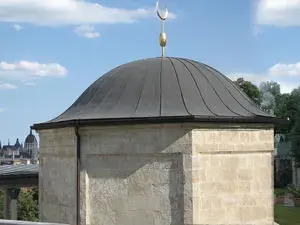
Gul Baba’s Tomb
This tomb is the resting place of Gul Baba, an Ottoman Dervish who played a part in the capture of Buda in 1541. Known as the ‘Father of Roses’, this tomb is a pilgrimage place for Muslims. You must remove your shoes before entering.
Budapest
Zsigmond Kun Folk Art Collection
Be prepared for lengthy and detailed descriptions from the staff at this museum as they are very proud of their collection! Put together by a wealthy ethnographer, a lot of the pottery is from Mezotur near the Tisa River but there are some Transylvanian furniture and textiles on display too.
Budapest
Margaret Island
This island doesn’t have any famous landmarks but is a great spot for sports and other activities such as cycling and swimming (there are two swimming pools here). Or you could go and have a pampering session at the Danubius Grand Hotel Margitsziget which is one of most modern spas in Budapest.
Budapest
Parliament
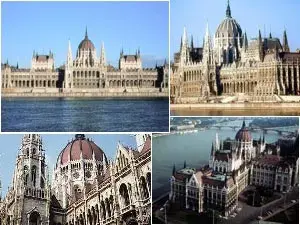
The most on show building in the city, Parliament was completed in 1902 and has 690 gorgeous rooms mixed in a neo-Gothic, neo-Romanesque and neobaroque styles. You’ll only get to see three on a guided tour which takes you around the North Wing. On a tour you’re likely to see the Crown of St Stephen on display, along with the ceremonial sword and, orb and the 10th century Persian crafted sceptre with a crystal lion’s head. The tour will also pass through the Congress hall and the Loge Hall. English speaking tours usually operate around 10am, noon and 2pm but to avoid disappointment book ahead in person.
Budapest
Underground Railway Museum
Found in the pedestrian subway beneath V Deak Ferenc ter, next to the main ticket window, this museum exhibits the history of the capital’s four underground rail lines. A lot of showcase is devoted to Metro 1 which was the first underground railway established in Europe in 1896.
Budapest
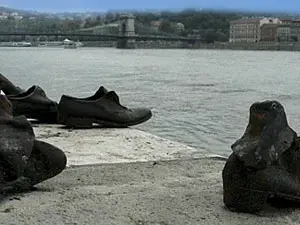
Shoes on the Danube
A simple yet poignant monument to the Jews shot and thrown into the Danube by the fascist Arrow Cross Party in 1944, you’ll find this monument south of V Kossuth Lajos ter. Sixty pairs of cast iron boots and shoes circa the 1940s are scattered on the river’s bank.
Budapest
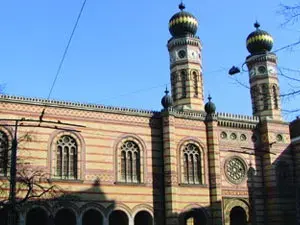
Great Synagogue
This synagogue is the largest outside of New York City and can seat 3000 worshippers in its Romantic and Moorish style prayer area. Built in 1859, it has been renovated over the years; in an annexe you’ll find the Jewish Museum (342 8949, VII Dohany utca 2) which has objects related to Jewish religious and general culture. Amongst the items is a handwritten book of the local Burial Society, circa the 18th century. To the synagogue’s north side you’ll find the Holocaust Memorial which is a metal ‘tree of life’ that stands over the mass graves of the victims of Nazi persecution in 1944.
Budapest
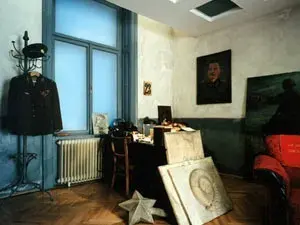
House of Terror
This building has a frightening history as it was once the headquarters of AVH secret police. This force arrested and tortured activists from all sorts of political persuasions within this building and the plaque outside reads: “We cannot forget the horror of terror, and the victims will always be remembered”. Remembered they will be as the wall outside the foyer displays their photos, a tank sits in the centre of the foyer being a stark reminder of this awful time in Budapest’s history. A permanent exhibition ‘Double Occupation’ details the crimes committed by both the fascist and Stalinist regimes but the reconstructed prison cells in the basement below, and the Hall of Tears gallery are the most harrowing.
Budapest
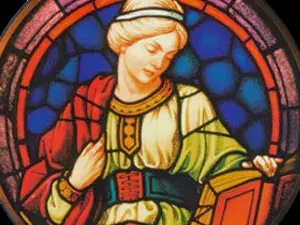
Miksa Roth Memorial House
Beautiful on every level, this museum pays homage to Budapest’s famous art nouveau stained-glass maker Miksa Roth (1865-1944). This building is where he worked from 1911 until his death, creating many stunning technicolour panels which stand as a stark contrast to his almost bare living arrangements.
Budapest
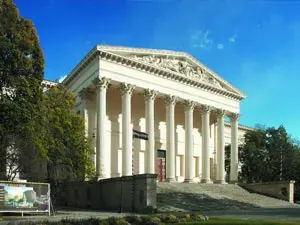
Hungarian National Museum
Built in 1847, this museum has the most important and comprehensive collection of Hungarian artefacts and relics. Starting from the history of the Carpathian Basin, you move through the Magyar tribes’ exhibit and follow the shaping of Hungary from the conquest of the Basin to the end of communism. In the basement, artefacts from Roman and medieval times are displayed and in other rooms you can find the treasury’s collection of gold Celtic jewellery, the baroque library with Beethoven’s Broadwood Piano, and memorabilia from the socialist era.
Budapest
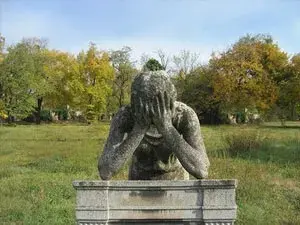
Kerepesi Cemetery
Budapest’s version of London’s Highgate cemetery or the Pere Lachaise of Paris, this cemetery was established in 1847. Spread across this 56 hectare space has some 3000 graves and mausoleums which are the last resting places of national heroes and some celebrities such as actress Lujza Blaha and poet Endre Ady. Southeast of the main entrance is plot 21 which has the graves of those who died in the 1956 Uprising. There is also a Tribute Museum (323 5132, Mon-Thu 10am-3pm, to 1pm Fri) which looks at the way of death in Hungary and internationally, if you’re into that sort of thing.