Skip to content
Budapest
Hungary

Budapest

Hungary was one of the first European countries to herald the end of communism in the summer of 1989, eclipsed by the fall of the Berlin Wall two weeks later. The monuments of the dictatorship were taken down from public places, into Memento Park. The country’s first free elections were held in 1990 but since then the country’s socio-cultural structure has suffered under pressure from opposing political parties and policies.

Search Budapest

Explore Budapest

A CLOSER LOOK

Top places to visit

alt

What to do with Children in Tow

One of the great things about Budapest is that it has an abundance of playgrounds, theme parks and roller-skating parks. One of the best theme parks is Varosliget (City Park) which has an abundance of activities to entertain children: playgrounds, the city zoo, a circus and a fairground. The Szechenyi Baths are well-liked by the older children, especially the whirlpool, and there is also rowing in the summer and ice-skating in the winter (Nov-Mar, Mon-Fri 9am to 1pm and 4-8pm, Sat and Sun 10am-2pm, 4-8pm, depending on weather). Another highlight is the caves underneath the city which are good fun as long as your child isn’t scared of the dark. There are two notable cave formations here such as the ones under the Varhegy, Buda Castle Labyrinth (Budavari Labirintus, daily 9:30am-7:30pm, 1500Ft;) and the Szemlolgyi Caves at Pusztaszeri ut 35 (tours hourly Mon & Wed-Sun 10am-4pm; 1250Ft) which have stunning formations.

alt

Fisherman’s Bastion

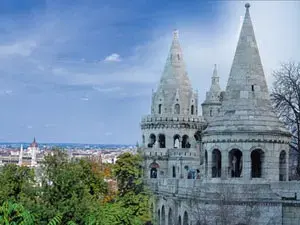
The Fisherman’s Bastion is a medieval looking stronghold that offers impressive views of the city, fitting as it was built as a viewing platform in 1905. The name comes from a medieval guild of fishermen who were responsible for defending that part of the wall. The seven white turrets represent the Magyar tribes that first entered the Carpathian Basin in the late 9th century. In front of the bastion is a statue to St Stephen.

alt

Citadella

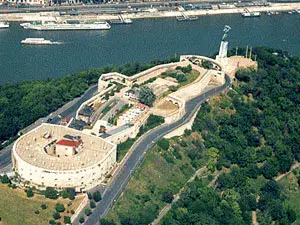
A fortress that never saw battle, it was erected by the Hasburgs after the 1848-49 War of Independence just in case of further rebellion. However by the time it was ready, the political climate had cooled and the citadella was of no use. Today it contains some of the city’s artillery, the Bunker Waxworks (466 5794, times 9am-7pm, price 1200Ft) and a rather rundown hostel/hotel. However if you walk north along it you’ll come to a lookout that is the best in the city.

alt

Liberty Monument

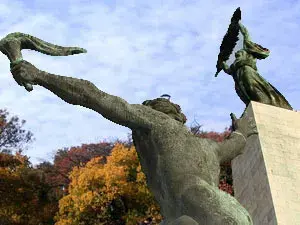
A 14m statue of a lady with the palm frond, she symbolises freedom throughout Budapest. Erected in 1947 in tribute to the Soviet forces that died liberating the city at the end World War II, she can be found east of the citadella.

alt

Chain Bridge

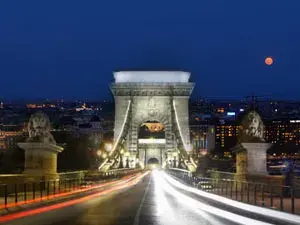
If you can walk across only one of the city’s three bridges that join Buda and Pest together, then make it this one. The city’s oldest and probably the most beautiful bridge, it is named in honour of the man who designed it, Lstvan Szechenyi. When it opened in 1849, it was unique for two reasons: it was at the time, the city’s only dry link between Buda and Pest and the city’s aristocracy who had been previously exempt from taxation, had to pay a toll!

alt

Aquincum Museum

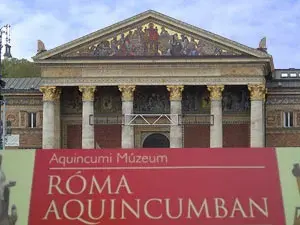
Purposely built on the western edge of an ancient Roman civilian settlement, this museum offers extensive exhibits on Roman life in Budapest. There is a vast collection of Roman coins and wall paintings, a replica of a 3rd century organ called a ‘hydra’ and stone sarcophagi. Across the road is the Roman Civilian Amphitheatre which, while smaller than the original thing, leaves much to the imagination; you can still see stone cubicles where the lions were kept and the ‘Gate of Death’ to the west where slain gladiators were carried through.

alt

Gul Baba’s Tomb

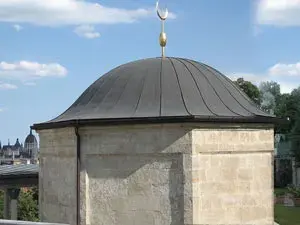
This tomb is the resting place of Gul Baba, an Ottoman Dervish who played a part in the capture of Buda in 1541. Known as the ‘Father of Roses’, this tomb is a pilgrimage place for Muslims. You must remove your shoes before entering.

alt

Zsigmond Kun Folk Art Collection

Be prepared for lengthy and detailed descriptions from the staff at this museum as they are very proud of their collection! Put together by a wealthy ethnographer, a lot of the pottery is from Mezotur near the Tisa River but there are some Transylvanian furniture and textiles on display too.

alt

Margaret Island

This island doesn’t have any famous landmarks but is a great spot for sports and other activities such as cycling and swimming (there are two swimming pools here). Or you could go and have a pampering session at the Danubius Grand Hotel Margitsziget which is one of most modern spas in Budapest.

Muslim travel planner

Plan a Muslim-friendly trip in Budapest

Full guide
THE LOCAL TABLE

Halal restaurants in Budapest

alt

Café Pierrot

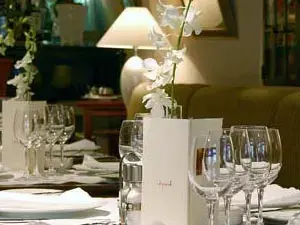
A curious mix of café, bar and restaurant, this long established eatery is very stylish on Castle Hill. The décor is clownish and there is daily live piano music. The cuisine is Hungarian though it does offer interesting hybrids with international flavours.

alt

Tabani Terasz

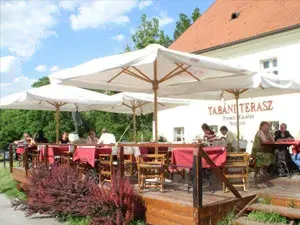
For something lovely to remember, you should try this enchanting cellar and terrace restaurant below Buda Castle; the place becomes very distinctive during winter when candlelit. Offering a more modern Hungarian cuisine accompanied by an excellent wine list.

alt

Spoon

Dining on the high waters of the river Danube (don’t worry, you’re still tethered to the bank!), here you’ll experience international cuisines with great choices for vegetarians. The décor is bright and the views for the castle and Chain Bridge are amazing.

alt

Lou Lou

A foodie hangout for expatriate French, this bistro offers delicious French cuisine with reasonable daily specials. Some of the food highlights on offer at this antiquely furnished place are the smoked duck breast and grilled scallops.

alt

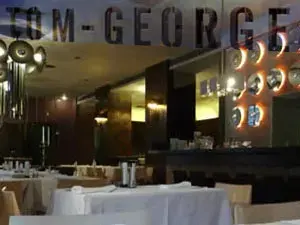
Tom-George

Address: V Oktober 6 utca 8 Tel: +266 3525 Times: Noon to midnight

alt

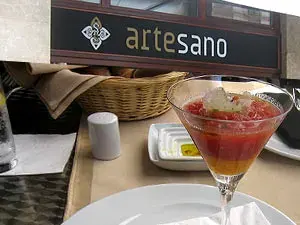
Artesano

Address: VI O utca 24-26 Tel: + 688 1696 Times: Noon to midnight, Monday to Saturday

alt

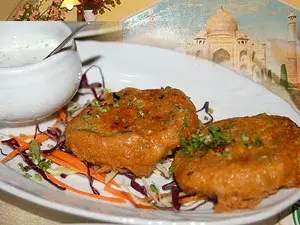
Salaam Bombay

Address: V Merleg utca 6 Tel: + 411 1252 Times: Noon to 3pm & 6-11pm

alt

Stex Haz

Address: VIII Jozsef korut 55-57 Tel: + 318 5716 Opening Times: 8am to 4am Monday to Saturday, 9am to 2am Sunday

alt

Mongolian Barbecue

Address: XII Marvany utca 19 Tel: + 212 1859 Opening Tomes: Noon to 5pm & 6pm to midnight

alt

Iguana

Address: V Zoltan utca 16 Tel: + 331 4352 Opening Times: 11:30am to 12:30am

THE DAILY RHYTHM

Prayer times

All prayer times

Loading local prayer times…

Calculated times. Confirm congregation times with your local masjid.

Where to stay in Budapest

alt

Buda Castle Fashion Hotel

The building is from the 15th century, the vaulted brickwork in the lobby is stylish, but the hotel name itself is noted for its boutique standards. There are 25 rooms and suites that look upon a cobbled stoned street or facing a quiet grass courtyard. Services on offer are a rich, buffet breakfast, bar lounge and free Wi-Fi; the hotel itself does not have a restaurant but there are restaurants nearby and the staff can assist in locating them or any other particular dining requirements you might have.

alt

Lanchid 19

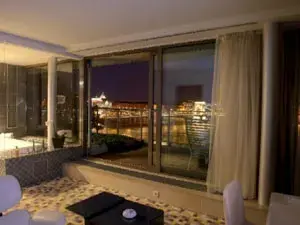
Situated at the feet of Buda Castle, this hotel is stylish to the max and has the awards to prove it. The Lanchid is the winner of the Best Architecture category at the European Hotel Design Awards in 2008, and has 45 rooms on offer, 3 panorama suites, 3 meeting rooms and a terraced restaurant with a bar. The rooms are distinctive with modern artwork and minimalist flair; all rooms are equipped with air conditioning, free internet access, mini bar and safe and a flat-screen, internet connected TV. The hotel itself offers: business services (copy machines, telephone, and fax), luggage storage, dry-cleaning, car rental, airport transfers, cultural programs and massage and babysitting upon request.

alt

Danubius Gellert Hotel

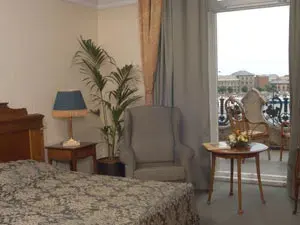
The grande dame of Budapest hotels, this establishment has 221 rooms and 13 suites; each fitted with satellite TV, telephone, radio and mini-bar. There are business rooms, unlimited wi-fi, a souvenir shop, laundry and dry cleaning, a newsstand, baby-sitting services, transfers and a car park available at this hotel. Be sure to check out the thermal spa and swimming pool with its arched glass entrance hall; designed in 1909 and completed in 1918, because it truly is a wondrous sight to see. The hotel architecture uses much of art nouveau. Other facilities also include an outdoor swimming pool and wave pool (operated in the summer season), a jacuzzi, a sauna and steam room, Thai massage, a beauty salon, sun terrace and solarium. Dining options are the Panorama Restaurant that offers Hungarian cuisine; gipsy music is hosted from spring to autumn. In the summer a terrace café terrace opens.

alt

Le Merdien Budapest

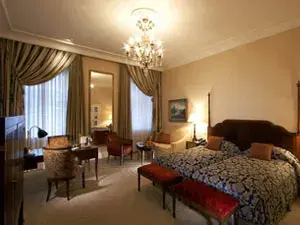
French polished furniture and brocade are the style here in this expensive hotel. Accommodating up to 210 guests, with eight meeting rooms, the hotel’s has its own catering staff that can plan a themed dinner, ranging from a Hungarian or French Buffet Campagnard to a decadent chocolate buffet - the choice is yours! The hotel also comes with its own spa, including an indoor pool, a jacuzzi, and massage services.

alt

Andrassy Hotel

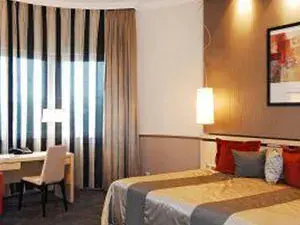
A beautiful, high-class hotel just off Andrassy ut (go through Munkacsy Mihaly utca 5-7), it was built in 1937 and renovated in 2007. Services provided include a 24-hour front desk, multi-lingual staff, free Wi-Fi, high speed internet, restaurant and lounge, gourmet breakfast, room service, business facilities and parking spaces. There are 61 rooms with 7 suites to choose from.

alt

Papillon Hotel

With only 20 rooms, this is one of the smallest, best-kept secrets in Budapest. The hotel has a beautiful back garden with a swimming pool and some of the rooms even have balconies. There are also four apartments within the building, one of which has its own roof terrace.

alt

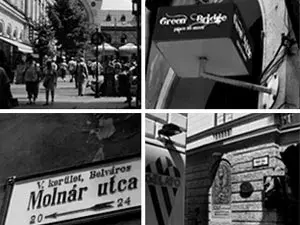
Green Bridge Hostel

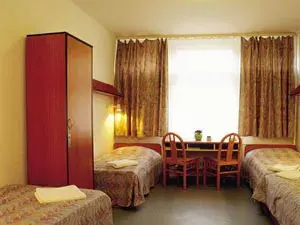
In terms of location, reception and comfort, Green Bridge has it all in spades. The rooms have variety in doubles, triples and quads to eight person dormitories and the establishment is on a quiet street just one city block away from the Danube. Coffee is available throughout the day.

alt

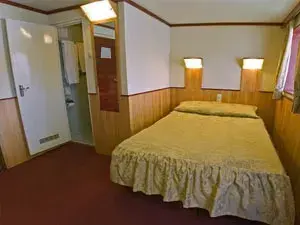
Boat Hotel Fortuna

If you had to give an award for most unassuming accommodation, this hotel would win hands down: it’s a one-time ferry that’s anchored in the Danube. A ‘boatel’ with 42 single and double rooms have air-conditioning with a shower and toilet at water level. However if you go below deck, there are an additional 14 rooms with 2 or 3 beds and a washbasin.

alt

Hotel Benczur

Situated in a fantastic location, near Andrassy ut, Heroes’ Sq and City Park, this hotel has 161 rooms on seven floors. Some look down onto a garden and over 65 of the rooms have been renovated in recent years.

alt

Hotel Griff Junior

With 120 rooms – some with their own shower, this hotel offers dirt cheap prices for those on a small budget. What it lacks in facilities it makes up for in location; nearby there is the Campona shopping mall and Amusement Centre which features the Tropicarium-Oceanarium that houses the biggest shark-aquarium in Middle-Europe. Gellért Hill is also nearby and the rest of the city sights can be reached by mass transit easily.

History and today in Budapest

Budapest Residents

Budapest Residents

The residents of Budapest are predominantly Hungarians, or Magyars as they prefer to call themselves, making up about 90% of the population demographic. Magyars originate from around 4000BC and were thought to inhabit the forests and the Ural Mountains in western Siberia. Over the next thousands of years they moved into an area in Central Asia where they formed a tribal alliance called onogur or ‘10 peoples’ – this is thought to be where the name ‘Hungary’ comes from in English. Eventually, the Magyars would reach the Carpathian Basin in the mid-19th century AD with seven tribes crossing the basin to, what is now known as, Ukraine, making their home in the Budapest area. The Magyars were a force to be reckoned with but they were defeated by 970AD and left their tribes with little choice but to align themselves with their powerful neighbours. Eventually the descendents of the great chiefs who had originally settled in Budapest, asked the Holy Roman Emperor Otto II to send Catholic missionaries to Hungary. This would lead to their baptism, with the great-great grandson of the original chief being recognised as King Stephen I; Hungary the kingdom and nation was born there and then. After the Magyars (Hungarians), the next biggest demographic is the Roma minority – the largest in Central Europe. Roma organisations and population experts’ estimate between 450,000 to 1 million Roma reside in Hungary; it is expected this population will double by 2050. The Roma population is a cause of much debate in Budapest over issues of poverty, health and education (the life expectancy of a Roma individual is 10 years less than a non-Roma). Indeed, Budapesters have serious training when it comes to the art of complaining – the economy hasn’t recovered much since the Global Financial Crisis and the dragging on of the construction of the Metro 4 line is starting to grate. In 2006 only 36% of the population said that they were happy with their quality of life. But despite their sirva vigadni (‘taking pleasure sadly’), Budapesters still take life with vigor.
When to go

When to go

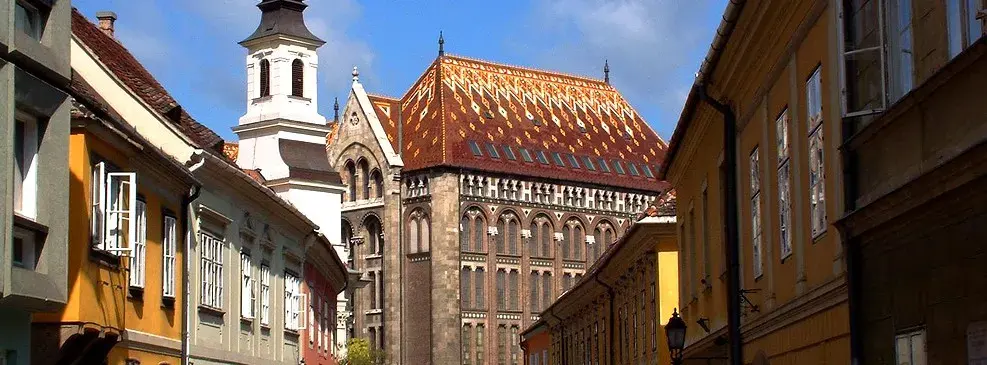
The summer periods have the city crowded with tourists which is why we think the best time to visit Budapest is during the spring (late March to early May) and autumn seasons (Sept – Oct). The city gets busy during the Budapest Spring Festival held in late March/early April. In August the city slows down with the locals taking part in activities such as the ‘cucumber-growing season’, but some festivals are scheduled around August so don’t be discouraged from visiting during this month. Some of the concert halls are closed during summer but there are plenty of outdoor activities for your entertainment as well as several sights to see. Winter can get extremely cold and snowy with some museums and other tourist sites closing for the season.
Fast Facts

Fast Facts

-Location: Budapest is located in central Hungary which is a landlocked country in central Europe. -Dialling code: country +36 : city + 1
Currency and Exchange Rates

Currency and Exchange Rates

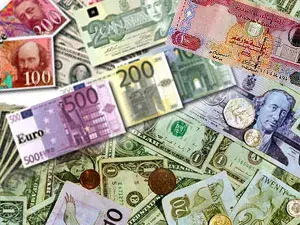
Hungary’s unit of currency is the forint (Ft or HUF). It comes in notes of 200, 500, 1000, 2000, 5000, 10,000 and 20,000Ft, with coins coming in with 5, 10, 20, 50 and 100Ft.
Public Holidays

Public Holidays

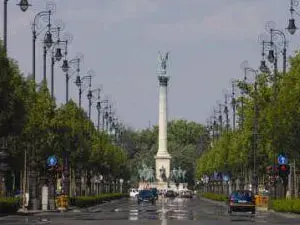
• New Year’s Day – 1st January • 1848 Revolution Day/National Day – 15th March • Easter Monday – March/April • International Labour Day – 1st May • Whit Monday – May/June • St Stephen’s/Constitution Day – 20th August • 1956 Remembrance Day/Republic Day – 23rd October • All Saints Day – 1st November • Christmas Holidays – 25-26th December
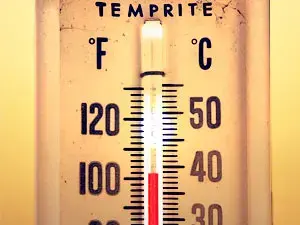
Annual Temperature

Annual Temperature

Month Annual High Annual Low January 2°C -3°C February 5°C -1°C March 11°C 3°C April 17°C 7°C May 22°C 12°C June 25°C 14°C July 27°C 16°C August 27°C 16°C September 22°C 12°C October 16 8 November 8 3 December 3 -1
Budapest Today

Budapest Today

Hungary was one of the first European countries to herald the end of communism in the summer of 1989, eclipsed by the fall of the Berlin Wall two weeks later. The monuments of the dictatorship were taken down from public places, into Memento Park. The country’s first free elections were held in 1990 but since then the country’s socio-cultural structure has suffered under pressure from opposing political parties and policies.
Budapest History

Budapest History

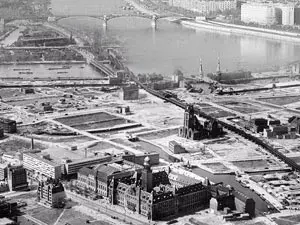
The beginnings of Budapest can be traced back to 1 AD when the Celts first settled in the region. Later the Romans took over and made the site a fortified military camp which lasted until 829 AD when the victory of the Bulgarian army over the Holy Roman Emperor Louis the Pious shaped the area into two Bulgarian military fortresses, Buda and Pest which occupied opposite sides of the Danube River. The Hungarians, led by the Arpad dynasty, eventually settled in the 9th century, eventually founding the Kingdom of Hungary. However it wasn’t until the Tartar invasion in the 13th century that King Bela IV ordered the building of the royal palace on the hills of Buda; the city would become the capital of Hungary in 1361. During the reign of Matthias Corvinus, the city went through a golden age and became a cultural hub for Central Europe. The Italian Renaissance had a great influence on the architecture and design of the royal palace and the Corvina Library was second only to the Vatican in terms of size and important documents. However the golden age was not to last because in 1526 the Ottoman Turks came plundering in Buda, eventually occupying it in 1549 which was to last for 140 years. In 1686 the Holy League Army, made up of soldiers from all over Europe, invaded resulting in the Turks signing the Treaty of Karlowitz which recognised territorial changes; the entire Kingdom of Hungary was eventually removed from Ottoman rule in 1718. However in the result, Budapest came under Hasburg rule and the next century was endless struggle for the Hungarians to claim independence and modernization. The socio-political back-drop of Budapest was to change with 1897, the year of Reconciliation, which brought about the birth of Austria-Hungary. This now made Budapest the twin capital of a dual monarchy but it also gave the city a second golden age by instigating cultural developments. In 1873 the cities of Buda and Pest were officially merged with the third part, Óbuda (Ancient Buda), thus producing the metropolis of Budapest as we see today. Pest grew into the country's administrative, political, economic, trade and cultural hub. The capital, Budapest, was 23% Jewish. Due to the prosperity and the large Jewish community of the city, Budapest was often called the "Jewish Mecca". However it was not to last with World War I bringing about the end of the second Golden Age. By 1918, Austria-Hungary had lost the war and as consequence, collapsed; the trade-off was that Hungary got to declare itself an independent republic. In 1920 the Treaty of Trianon finalized the country's separation but Hungary lost over two-thirds of its territory. World War II was to bring about more strife with the city being partly destroyed by British and American air raids in 1944. The worst was yet to come with the period from 24th December 1944 to 13th February 1945, culminating in the Battle of Budapest. The attacking Soviet troops and the defending German and Hungarian troops caused major damage to the city with all bridges destroyed by the Germans and deaths of 38,000 civilians. The war also brought the death of between 20% and 40% of Budapest's 250,000 Jewish inhabitants who died through Nazi and Arrow Cross Party genocides during 1944 and early 1945. Despite this, modern day Budapest has the highest number of Jewish citizens than of any other European city. In 1949, Hungary was declared a communist People's Republic but this new government considered buildings like the Buda Castle as symbols of the former regime, resulting in all the interiors being destroyed. In 1956, peaceful demonstrations in Budapest led to the outbreak of the Hungarian Revolution. The Leadership collapsed under the mass demonstrations that began on 23 October; but Soviet tanks entered Budapest to crush the revolt with a ceasefire announced in November. The Revolution left more than 3000 dead. From the 1960s to the late 1980s, Hungary’s population would reach 2.1 million and this period saw much redevelopment in Budapest with much of the wartime damage to the city finally being repaired. Buda Castle and the banks of the Danube were included in the UNESCO list of World Heritage Sites in 1987; Andrassy Avenue (including the Millennium Underground Railway, Hősök tere and Városliget) would be added to the list in 2002.

Useful information

Shopping

alt

WestEnd City Centre

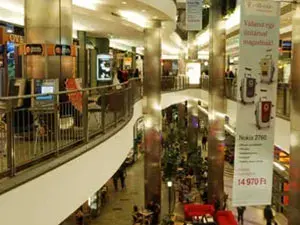
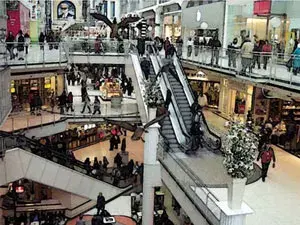
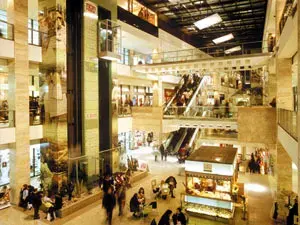
An opulent place with its own indoor waterfall, you’ll find brands such as Mango, Mexx and Springfield here and much more.
alt

Great Market Hall (Nagycsarnok)

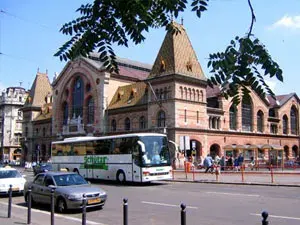
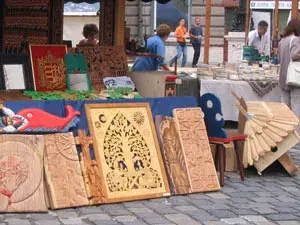
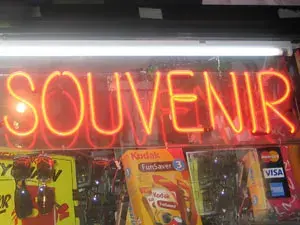
Found at the bottom end of Vaci utca, this is the largest and finest market in the city (plus the most expensive). Here you’ll find knives, wood craft and embroideries along with other amazing souvenirs.

alt

Mammut

This shopping monstrosity has doubled in size since the opening of its second mall next door, linked by a pedestrian bridge. There are over 320 shops to browse through or try the many facilities with a cinema, gym, squash courts and a children’s playground with a nappy-changing room. There’s even a market out the back of the complex.

alt

Mom Park

Located up the road from Deli metro station, this is a newer mall with just seventy shops, a cinema and gym. Location: XII Alkotas utca 53 Times: Mon-Sat 10am-8pm, Sun 10am-6pm

alt

Ecseri piac

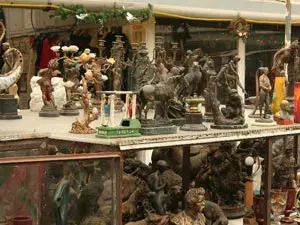
A well-known flea market for tourists to explore and bargain hard (the stall owners are notorious for rip-offs). Here you’ll find everything from bike parts and jackboots to peasant clothing and hand carved pipes, with a few antiques in the mix. Take the red bus 54 from the Hatar ut metro stop on the blue line or the black 54 bus from Boraros ter by Petofi hid.

alt

Petofi Csarnok

A less well known flea market that operates on the weekends, you’ll find it around the ‘Pecsa’, the cultural centre in the Varosliget. While a fair bit of this market is junk, you might find a treasure here or there. A small entry fee applies.

alt

Hollo Atelier

Lots of beautiful folk art can be found here (some distinctly modern). It makes for beautiful gifts or something nice for yourself. Tel: +316 317 8103 Address: V Vitkovics Mihalyutca 12 Times: Mon-Fri 10am-6pm, Sat 10am-2pm

alt

Herend

Contemporary and traditional porcelain are the order of the day at this shop which is the place to go for Hungarian souvenirs. The most popular motif on offer is the Victorian pattern of butterflies and wildflowers that was produced for the British queen during the 19th century.

alt

Intuita

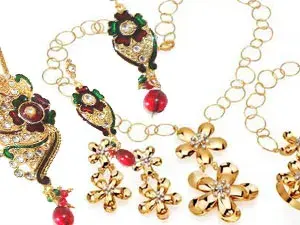
You won’t find tacky painted eggs here but modern Hungarian craft such as hand-blown glass, jewellery, ceramics and bound books.

alt

Bestsellers

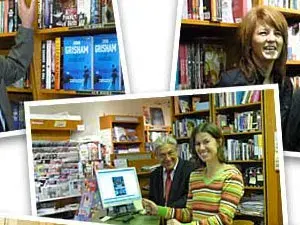
Without a doubt the best English-language bookshop in the city, this place has fiction, travel guides and a large selection of newspapers. There is also a large selection of Hungarian literature.

Signature sights in Budapest

alt

Parliament

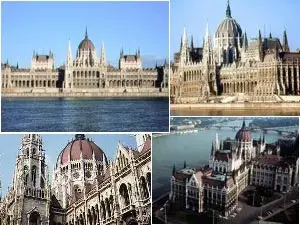
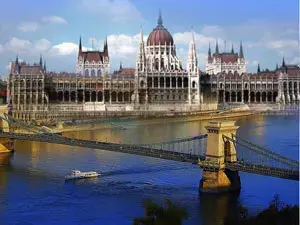
The most on show building in the city, Parliament was completed in 1902 and has 690 gorgeous rooms mixed in a neo-Gothic, neo-Romanesque and neobaroque styles. You’ll only get to see three on a guided tour which takes you around the North Wing. On a tour you’re likely to see the Crown of St Stephen on display, along with the ceremonial sword and, orb and the 10th century Persian crafted sceptre with a crystal lion’s head. The tour will also pass through the Congress hall and the Loge Hall. English speaking tours usually operate around 10am, noon and 2pm but to avoid disappointment book ahead in person.

alt

Underground Railway Museum

Found in the pedestrian subway beneath V Deak Ferenc ter, next to the main ticket window, this museum exhibits the history of the capital’s four underground rail lines. A lot of showcase is devoted to Metro 1 which was the first underground railway established in Europe in 1896.

alt

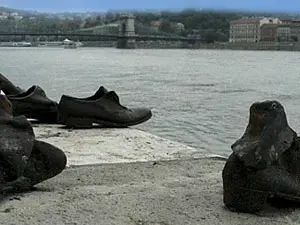
Shoes on the Danube

A simple yet poignant monument to the Jews shot and thrown into the Danube by the fascist Arrow Cross Party in 1944, you’ll find this monument south of V Kossuth Lajos ter. Sixty pairs of cast iron boots and shoes circa the 1940s are scattered on the river’s bank.

alt

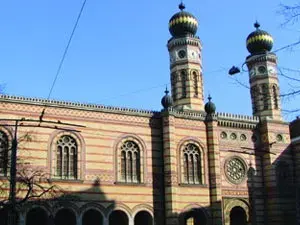
Great Synagogue

This synagogue is the largest outside of New York City and can seat 3000 worshippers in its Romantic and Moorish style prayer area. Built in 1859, it has been renovated over the years; in an annexe you’ll find the Jewish Museum (342 8949, VII Dohany utca 2) which has objects related to Jewish religious and general culture. Amongst the items is a handwritten book of the local Burial Society, circa the 18th century. To the synagogue’s north side you’ll find the Holocaust Memorial which is a metal ‘tree of life’ that stands over the mass graves of the victims of Nazi persecution in 1944.

alt

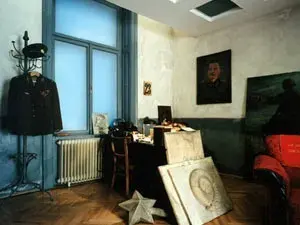
House of Terror

This building has a frightening history as it was once the headquarters of AVH secret police. This force arrested and tortured activists from all sorts of political persuasions within this building and the plaque outside reads: “We cannot forget the horror of terror, and the victims will always be remembered”. Remembered they will be as the wall outside the foyer displays their photos, a tank sits in the centre of the foyer being a stark reminder of this awful time in Budapest’s history. A permanent exhibition ‘Double Occupation’ details the crimes committed by both the fascist and Stalinist regimes but the reconstructed prison cells in the basement below, and the Hall of Tears gallery are the most harrowing.

alt

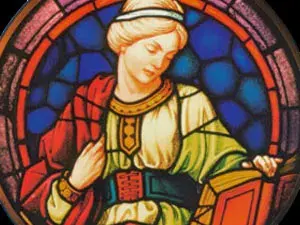
Miksa Roth Memorial House

Beautiful on every level, this museum pays homage to Budapest’s famous art nouveau stained-glass maker Miksa Roth (1865-1944). This building is where he worked from 1911 until his death, creating many stunning technicolour panels which stand as a stark contrast to his almost bare living arrangements.

Festivals and events in Budapest

alt

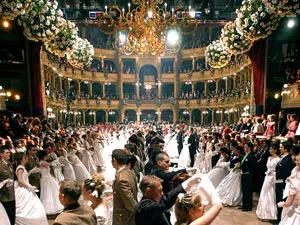
Opera Ball

A very prestigious event that is held in the third week of February at the Hungarian State Opera House.

alt

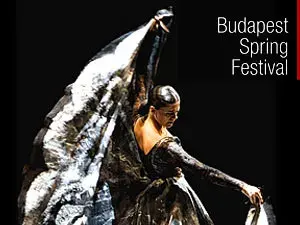
Budapest Spring Festival

Cramming in over 200 events, this is the capital’s largest and most important festival which truly expresses Hungarian culture. It takes place over two weeks in late March/early April.

alt

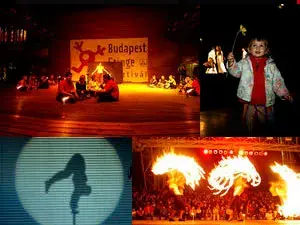
Budapest Fringe Festival

A kind of sideshow to the Spring Festival, this event is held in Millennium Park and other venues around the city. It is a three day festival and showcases non-mainstream theatre, music and dance performances.

Budapest tours and experiences

alt

Organised Tours

There are a whole variety of tours to experience in Budapest.

Budapest masjids and Muslim travel

Transportation

Buses

Buses

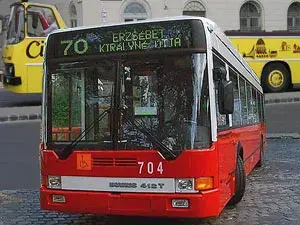
There are over 250 bus routes serving Budapest, some also connecting the city centre with the suburban zones and several metro and train stations. The best way to read the buses is to look for whether it has either a black or red number. Red numbered buses (usually showing an ‘E’ symbol after the number) are an express which will have fewer stops. Buses with ‘A’ symbols after their number indicate a route that is shorter than its regular corresponding bus. Night buses are numbered with three digits, the first always beginning with 9; they run every 10 to 60 minutes depending on the route.

Metro

Metro

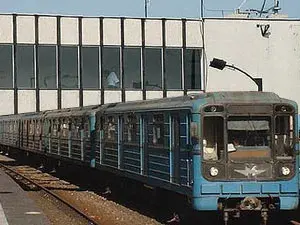
Budapest has three metro lines that only converge at Deak Ferenc ter. There is the Millennium line (M1) which runs from Voroamarty ter to Mexikoi ut in Pest. The M1 (yellow on the rail map) stops at Heroes Square (Hosok ter) and the Opera and is rich in history as the first underground rail line in Continental Europe. Keep in mind though that there is a stop on the M1 called ‘Vorosmarty ter’ with another, five stops after, called ‘Vorosmarty utca’. The M2, marked by a red line, runs from Deli ter in Buda to Ors vezer tere in Pest. The M3, marked in blue, runs from Ujpest-Kozpont to Kobanya-Kispest in Pest.

Taxi

Taxi

If you can help it, don’t bother getting taxis in Budapest – the public transport system is fine. There have been one too many incidents of gross rip-offs of tourists by taxi drivers. The taxi firms listed at Budapest are some of the more reputable ones in the city. Avoid taxis with no name on their doors and ones that have a removable light on the cab – they’re just ordinary guys with a car and the most likely to rip you off. Always look for a yellow license plate and an identification badge on the dashboard (as required by law). Not all taxi meters have the same rates and some can be more expensive than others, however there are price ceilings that some firms can manoeuvre within. Be aware that residents rarely flag down a taxi on the street; it is a general practice to call for them and it actually works out to be cheaper if you do. Make sure you know the landline number you are calling from so the dispatcher can determine your whereabouts; a mobile phone will be harder for them to trace.

Car for Hire

Car for Hire

You must be 21 years of age and have had your license for at least a year to rent a car in Budapest; drivers under 25 might have to pay a surcharge. All international car rental firms have offices in Budapest. If you intend to do a lot of driving in the city, plan your journey carefully as some streets are one-way or tough to drive through. One example is that you are not allowed to left in most of the crossings of the Nagykörút inner ring road or on the main avenues like Andrássy út, Váci út, Üllői út or Rákóczi út.

From the Airport

From the Airport

Ferihegy International Airport is located 24km southeast of Budapest and has two terminals side by side and an older terminal 5km to the west. To get into the city there are a few ways but the most popular is the Budapest Airport Minibusz (+361 296 8555, or through your travel agency). The minibusz is a nine seat van that ferries passengers from the airport directly to their hotel/hostel. Prices vary according to what area you are residing in; but in general the city centre is priced at 2990Ft one-way, 4990Ft return. Be aware that you need to book your return journey at least 12 hours in advance; try not to leave it too late to catch your plane as they’ll probably be up to eight pick-ups en route.

Driving Tips

Driving Tips

• Drive on the right side of the road • Speed limits for both cars and motorcycles are consistent across the country: 50km/h in built-up areas; 90km/h on secondary roads; 110km/h on highways and 130km/h on motorways. Speeding will earn a fine between 5000Ft to 30,000Ft to be paid by postal cheque or at a post office. • It is the law to wear seatbelts in the front (and back if there is any). • Your headlights must be on throughout the day outside the built-up areas. • Parking costs up to 300Ft on the streets of Budapest (up to 600Ft on Castle Hill). Covered 24hr car parks usually charge around 370Ft to 680Ft and are located below the Millennium Centre at V Vaci utca 25 and V Szervita ter 8 where you can also find Avis Car Rental.

Health and Safety

Health and Safety

Health and Safety

While medical care in Budapest is sufficient for routine troubles the same cannot be said if you find yourself in complicated situations. First aid and ambulance services are only provided if you have suffered an accident and/or require immediate medical attention – all follow up treatment, including medicines, must be paid for. If you visit an outpatient clinic (rendelo intezet) the treatment is usually inexpensive however if the doctors work privately you will be charged a lot more. A doctor’s consultation roughly equates to 6000 Ft (a home visit could range from 8000Ft to 10,000Ft). Therefore it is advised that you select a travel health insurance that you consider a policy that covers you for the worst possibilities, e.g. an accident that requires an emergency flight. Notable clinics in Budapest are:

Your city guide

More cities. More possibilities.

View all →