
Women-Friendly Travel in Kathmandu
The Kathmandu women-friendly travel guide places explicit women-friendly and family confidence signals first, while keeping uncertain details visible for review.
Kathmandu
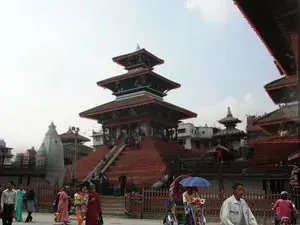
Kasthamandap (Pavilion of the Wood)
A three-roof building that according to local lore was constructed in the 12th century from the wood of a single sal tree. It was first used as a community centre for the congregation of the people before major events. It was later converted into a temple dedicated to Gorakhnath a 13th century abstinent who was linked to the royal family. Currently the building houses an image of a god which is interesting as Gorakhnath is represented by only his footprints. The four corners of the building have images of Ganesh.
Kathmandu
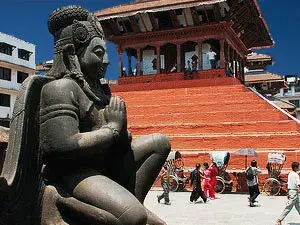
Hanuman Dhoka
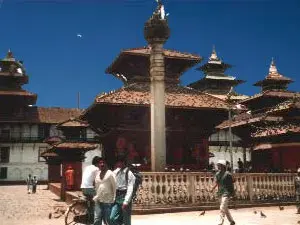
A small area within Dunbar Square, this place serves as the inner palace complex that was originally founded during the Licchavi period (4th to 8th centuries AD). The structure that stands today was constructed by King Pratap Malla in the 17th century. There are now ten chowks (courtyards) to explore here; cameras are allowed here but not within the buildings of the complex. The Hanuman Statue marks the entrance to Hanuman Dhoka and dates to 1672.
Kathmandu
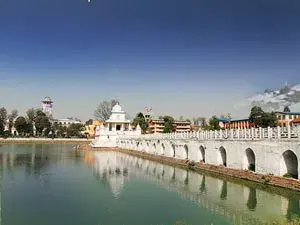
Rani Pokhari
A fence enclosed tank, just off Kantipath is said to have been built by King Pratap Malla for his grief-stricken wife after the accidental death of their son in 1667. The pokhari (pool) was used during the Malla era for trials by ordeal and later became a suicide spot; because of this, the tank is opened only one day a year, the fifth day of the Tihar festival.
Kathmandu
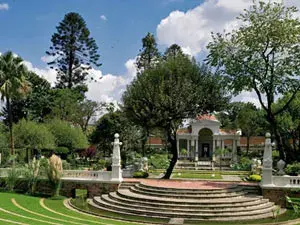
Garden of Dreams
Tel: +9771 442 5340 Price: Adult/child: Rs 160/40 Opening Time: 9am-10pm
Kathmandu
Three Goddesses Temples
Found next to the Snachaya Kosh Bhawan Shopping Centre in Thamel, these temples are often ignored. Symbolically located on the Trivdevi Marg (‘tri’ means three and ‘devi’ means goddesses), these temples pay tribute to Dakshinkali, Manakamana and Jawalamai.
Kathmandu
Asan Tole
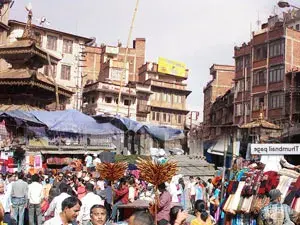
The busiest square in the city, from dawn to dusk it is crammed with vendors selling spices and vegetables from all over the country. It is fitting then that Annapurna Temple is dedicated to the goddess of abundance, represented by a purana bowl of grain. On Sundays and other days of the week, you’ll see locals walk around the shrine, touch a coin to their heads, throw it into the temple then ring the little bell above their heads. Nearby is the two-storey Ganesh shrine and on the western side of the shrine are spice shops.
Kathmandu
Jaisi Deval Temple
Tall and triple roofed, this temple sits at what once was the site of the ancient city during the Licchavi period (during the 4th and 8th centuries). This temple is a Shiva one as specified by the bull on the steps and the mildly erotic carvings on the temple struts. To the west of the temple you’ll find the Ram Chandra Temple, named after Ram – an incarnation of Vishnu and the hero of the Hindu epic, the Ramayana.
Kathmandu
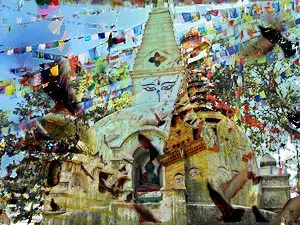
Swayambhunath
Located outside the ring road surrounding Kathmandu, this Buddhist temple is considered to be one of the definitive experiences of the city. Nicknames the ‘Monkey Temple’ given the mass of monkeys you’ll find, the compound is centred around a white stupa, topped by a spire with the painted eyes of Buddha. It is a great place to see the sun set over Kathmandu and the mystical atmosphere of ancient carvings and prayer wheels everywhere is heightened by all the morning and evening pilgrims who come here to make a ritual circumnavigation of the stupa.