
Women-Friendly Travel in Lisbon
The Lisbon women-friendly travel guide places explicit women-friendly and family confidence signals first, while keeping uncertain details visible for review.

Lisbon
Feira da Ladra
A market found on the eastern edge of the Alfama, this is where you may find something memorable to take home with you: bric-a-brac African colonies, old prints of Portugal and inexpensive clothes and CDs. You’ll also find all out junk but if you walk to the top if the feira you might get lucky with the antiques.
Lisbon
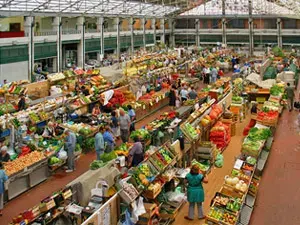
Mercado da Ribeira
The best place to experience Lisbon’s food culture is here in these covered markets. Here you’ll find locals selling crusty breads, fresh fruit and vegetables and, of course, a large variety of fish produce.

Lisbon
Mercado da Carcavelos
A Thursday morning market opposite the train station that contains lots of off-beat clothes and ceramics.
Lisbon
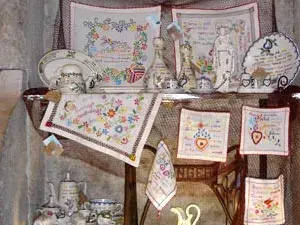
A Arte da Terra
Found in the cobblestoned stables of an old bishop’s palace, this place sells authentic Portuguese crafts including hand-painted azulejos (tiles) and Castelo Branco embroideries.

Lisbon
Santos Oficios
A must-stop shop for Portuguese folk art, you’ll find glazed pottery here along with Madeira lace. This is also the best place to go if you’re after a hand-embroidered fado shawl.
Lisbon
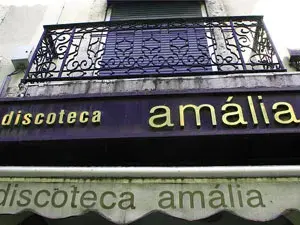
Discoteca Amalia
A store that pays homage to Portugal’s most famous fadista, Amalia Rodrigues, come here for an excellent range of CDs on the classical and fado genres.
Lisbon
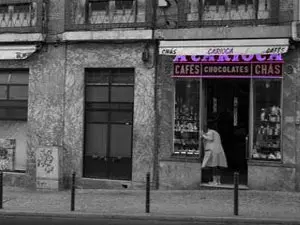
A Carioca
With brass fittings and a coffee roaster dating back to the early 20th century, little has changed since this cafe/store opened in 1924. Here you’ll find home blends, toffees and sugared almonds wrapped in green paper.
Lisbon
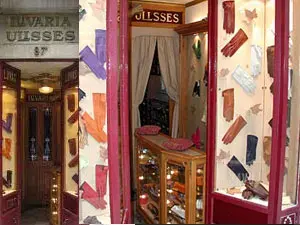
Luvaria Ulisses
A store so tiny that you have to squeeze in to see, this place is full of soft handmade leather gloves in all different colours. If that doesn’t sway you, just come by to see if you can spot the store first!

Lisbon
What to do with Children in Tow
The great thing about Lisbon is that it’s full of the little things that can delight a child: the bumpy rides on the yellow trams to acting out dungeons and dragons at Castelo de Sao Jorge. In fact Lisbon is one of the most family-friendly cities around with free or half-priced tickets, small portions at restaurants and free transport for children under five. The best place to start their adventure is Parque das Naples where they can run around; nearby is Oceanario (
Lisbon
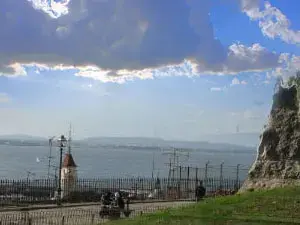
Miradouro de Santa Catarina
Found in boho Santa Catarina, this viewpoint boasts views from the river to the Ponte 25 de Abril and Christo Rei not to mention student buskers, hippies and loved-up couples. If you are coming from Cais do Sodre, take the 19th century Elevador do Bica funicular up the Rua da Bica de Duarte Belo to get to the top. Noobai Cafe is located there where it is lovely to sit back and watch the view, especially at night.
Lisbon
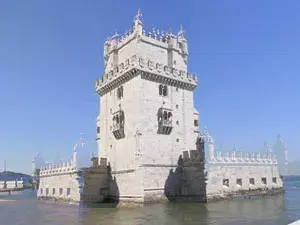
Torre de Belem (Belem Tower)
If Padrao dos Descobrimentos is the monument to Portugal’s Age of Discovery then Torre de Belem symbolises the essence of it. Almost like a stand-alone chess piece, the tower was built to be a defence point along Lisbon’s harbour with Manueline designed filigree stonework and even a stone rhinoceros below the western tower. You can explore the small dungeons and climb the narrow, rickety staircase to the tower which offers beautiful views of Belem and the river.
Lisbon
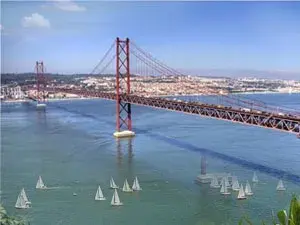
Ponte 25 de Abril
You would swear this bridge is almost a dead ringer for San Francisco’s Golden Gate Bridge – in fact it was constructed by the same company in 1966 and is almost as long, stretching at 2.27km. Concerning the unusual name, the bridge was called Salazar after the dictator until the 1974 Revolution of Carnations when a demonstrator separated the ‘Salazar’ and wrote ‘’25 de Abril’ – the new name was adopted almost as quickly as the dictatorship dissolved later on.
Lisbon
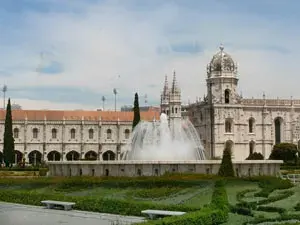
Mosteriro dos Jeronimos
Built to herald the success of Vasco da Gama’s discovery of a sea route to India in 1498, this monastery is a beautiful structure, definitely wrought for ‘the glory of God’. This place was first occupied by monks under the Order of St Jerome; on dissolving in 1833, the building was used as a school and orphanage until 1940. Once you enter the church, after marvelling at the intricate stonework, you’ll find Vasco da Gama’s tomb in the lower chancel towards the left, celebrated poet Luis Vaz de Camoes is interred on the opposite. The view of the church from the upper choir is outstanding and the rows of seats are decorated with the first Renaissance woodcarvings ever found in Portugal. The Manueline cloisters are an eyeful of elaborate craftsmanship while you can also see the cross of the Military order and gargoyles in the upper balustrade.
Lisbon
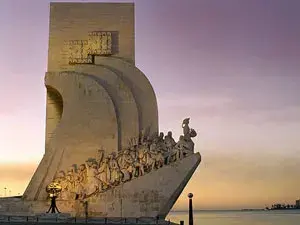
Padrao dos Descobrimentos (The Discovery Monument)
This amazing monument was officially inaugurated in 1960, marking 500 years after the death of Henry the Navigator’s death. Standing at 52m high and carved out of limestone, this statue pays tribute to all the famous people within Portugal’s Age of Discovery: Henry stands at the prow followed by Vasco da Gama, Diogo Cao and over thirty over great explorers. The mosaic in front of the monument is a chart of all the routes the explorers took. To get to the top you can take a lift or, if you’re feeling fit, climb the 267 steps to get 360 degree views of the river.
Lisbon
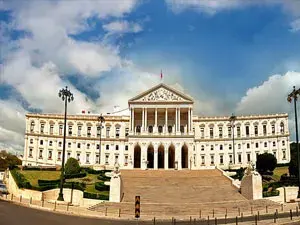
Palacio da Assembleia da Republica (Assembly of the Republic)
Almost a temple, with its columns and statues symbolising justice and fortitude, this is where Portuguese parliament convene. While you can’t go in, it’s worth just to see the outside decor.

Lisbon
Museu da Marioneta (Puppet Museum)
This magical museum is housed in the 17th century Convento das Bernadas and showcase all sorts of puppets the world over. There are familiar favourites like Punch and Petrushka but there are also Vietnamese water puppets, Sicilian opera marionettes and Burmese shadow puppets. The museum also offers workshops where children can try their hand at puppetry.
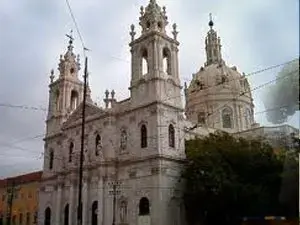
Lisbon
Basilica da Estrela
Completed in 1790 by Dona Maria I (her tomb is here) in gratitude for the male heir, this neoclassical church is a beautiful mix of pink and black marble. Opposite is the Jardim da Estrela (7am-midnight) which is a great garden to relax in, along with a playground for the children.
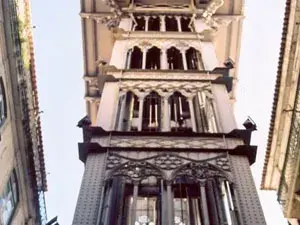
Lisbon
Elevador de Santa Justa
Looking at this neo-Gothic elevator you would swear you’ve seen something like it before – that’s because it was designed by Rual Mesnier, the apprentice of Gustave Eiffel. The only vertical street lift in the city, get in early to beat the crowds and go to the top to experience all-encompassing views of the city.
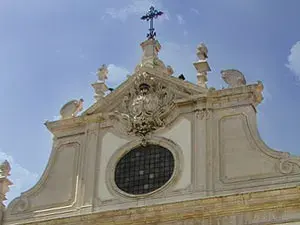
Lisbon
Igreja de Sao Domingos
A beautiful building that houses cut pillars, scruffy walls and eerie sculptures; the Star of David out the front is a tribute to this spot where an anti-Semitic massacre occurred in 1506. A popular hang-out for Lisbon’s African community, locals gather at dusk to pass round liquor at A Ginjinha.
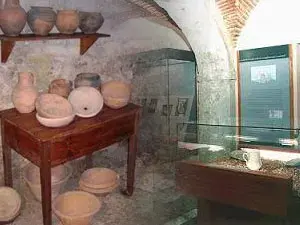
Lisbon
Nucleo Arqueologico
A network of tunnels underneath the Banco Comercial Portuguesa, they are believed to be the remnants of a Roman spa circa 1st century AD. Guided tours are offered by the Museu da Cidade; phone ahead of your intended visit to book.
Lisbon
Praca do Comercio
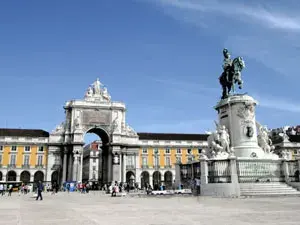
A square right on Lisbon’s riverfront, this place seems to out-do any place you’ve ever been to in terms of grandeur. High 18th century cloisters, meringue coloured facades and, of course, mosaic cobblestones, this place used to be the first point of disembarkation for the boats while now it retains its bustling history by being the gateway for trams and people going places. The statue of Dom Jose I sits primly in the centre, alluding to the square’s royal history; it is the original site of Palacio da Ribeira, before the earthquake. In fact the square has been the spot for much of Lisbon’s history; 1908 saw the fall of the monarchy with anarchists assassinating Dom Carlos I and his son. There is also the Arco da Victoria which pays homage to many notable Lisboetas such as Vasco da Gama.
Lisbon
Praca do Municipio
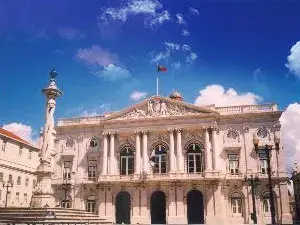
Northwest of Praca do Comercio, this square alludes to Lisbon’s marine history as its former arsenal stock hold. The neoclassical Pacos do Concelho (City Hall) is also a prominent site here; the republic of Portugal was proclaimed here in 1910. If you look to Rua do Arsenal you’ll find grocers selling cheap wines and bacalhau (dried salt-cod).
Lisbon
Rossio & Praca da Figueira
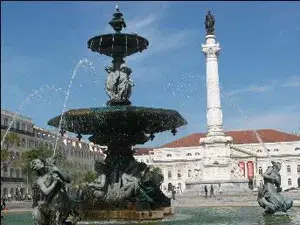
Rossio is the local nickname for Praca Pedro IV and with all the hustle and bustle of office workers, peddlers and tourists; it operates almost like a mini-district on its own. It certainly looks the part: cobblestone streets, fountains and perched high on a marble platform is Dom Pedro IV (first emperor of Brazil). Rossio train station, with its filigree horse-shoe shaped arches is standout, along with Teatro Nacional de Mona Maria II which harbours a dark past as the site of the Portuguese Inquisition. If you look further you’ll find Praca da Figueira which has lots of al-fresco cafes for you to sit and sip a bica as you admire the castle on the hillside.