
Women-Friendly Travel in Rome
The Rome women-friendly travel guide places explicit women-friendly and family confidence signals first, while keeping uncertain details visible for review.
Rome
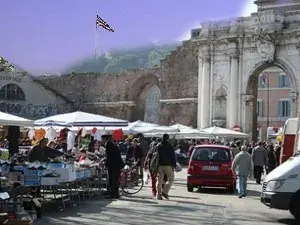
Viale Marconi and Porta Portese- viale
It’s Italy- the home of Pasta, and this is a very good place for shopping for Macaroni. It is particularly popular with young trendy Romans and tourists alike. Hip and trendy clothes and accessories are available here at very reasonable prices. Summer sales start in the first week of July and last until the end of August.
Rome
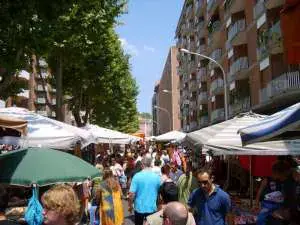
Porta Portese
Running short on cash and still want to get something for your family and relatives back home, then this is the place for you-the famous Roman flea market which takes place every Sunday from 08:00am until about 2pm.
Rome
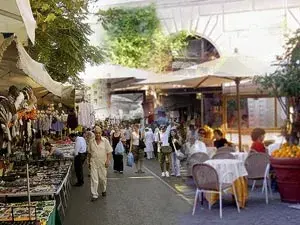
Trastevere Market
This street market is located just over the river Tiber. It is the outdoor food market in Piazza San Cosimato, where you will see locals buying and bargaining with local Roman vendors. The market starts at about 7:00 am and closes at 2:00 pm. It is a traditional market where local farm produce is sold along with ocean fresh caught products. Apart from that, everything from clothes and books to DVDs and statues are also sold. Here there is always something for everybody.
Rome
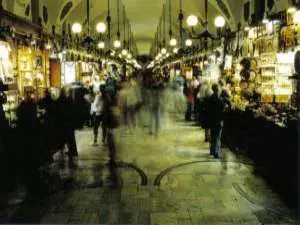
Mercato delle Stampe
It is a market full of vintage products and is open from 7am-1pm from Monday through Saturday. There are clothes with old prints, second hand and original books, magazines and other printed memorabilia.
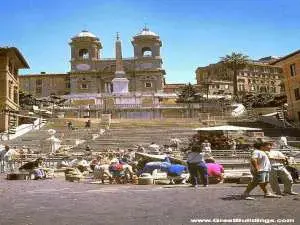
Rome
Piazza di Spagna
A wide range of souvenirs can be found in this area. From a very simple item like a spoon or a key chain to rosaries and wooden statues of saints and angels, one can surely take home a piece or two of Rome with them.
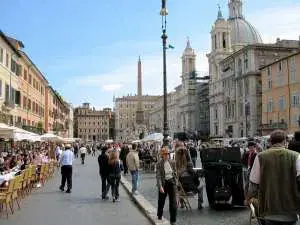
Rome
Piazza Navona
This is an area where one can shop for Colisseum miniatures as souvenirs. Some of the best selling merchandise are priced less than 10 euros.
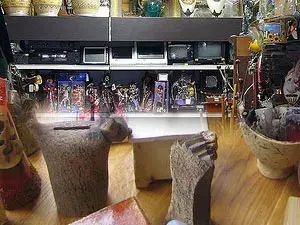
Rome
Vatican
Souvenir shops around the Vatican area still sell merchandise mostly with Pope John Paul II's image in it. But one can also find items like rosaries and some other religious medals or statues.
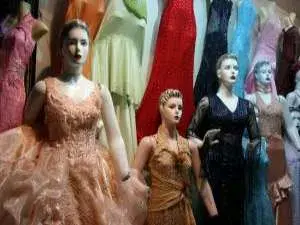
Rome
Open-air markets
Open-air markets: PORTAPORTESE Piazza di Portaportese (Trastevere district) Sundays only. Rome's most famous market. Everything: Here you'll find whatever you are looking for.
Rome
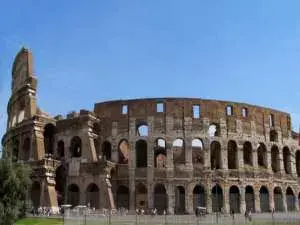
The Coliseum (Colosseum)
Undoubtedly the symbol of Rome, this magnificent ruin is indelibly linked to the past glory of the Roman Empire, and its subsequent decay and fall. It takes its name from the giant statue of the emperor Nero that once stood near this location.
Rome
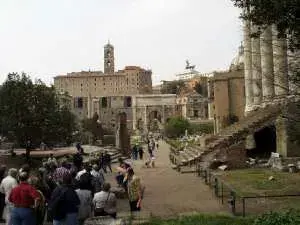
The Roman Forum
The ancient Roman Forum is a huge complex of ruined temples, basilicas and arches. It was the ceremonial, legal, social and business center of ancient Rome. People would gather there everyday to discuss politics with each other or with the senators of Rome. It was a place where the ordinary people could voice their opinion concerning trade and law, peace and war.
Rome
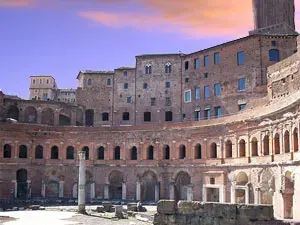
Trajan's Market
Thought to be the world’s oldest shopping mall, the arcades in Trajan’s Market are now believed by many to be administrative offices for Emperor Trajan. The shops and apartments were built in a multi-level structure and one can visit several of the levels. Highlights include delicate marble floors and the remains of a library. The new museum of the Imperial Forums houses a wealth of artefacts from ancient Rome’s entire Forums.
Rome
Circo Massimo(Circus Maximus)
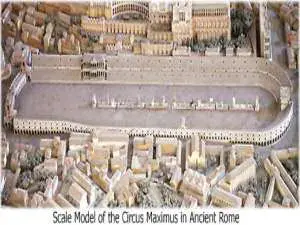
The Circus Maximus,which is situated in the valley between the Aventine and Palatine Hills,was a horse and chariot racing area. In the 1st C, it was Rome’s biggest stadium, a 250,000-seater. It was used for many other purposes as well. Marketing and gambling also took place here. Even though chariot races were held here as far back as 4 BC, it wasn’t until Emperor Trajan rebuilt it after the AD 64 fire that it reached its maximum grandeur. The track could hold 12 chariots.The two sides of the track were separated by a raised median termed the spina. The four-storey façade of the circus held a maze of shops, rooms, stairways and arcades. A great interior corridor provided access to any part of the structure. Now all that is left of the circus is the grass covered racing track and the spina. Being a large green area in the centre of the city, the Circus Maximus still is occasionally used for concerts and meetings. Over 700,000 people gathered there to celebrate Italy’s victory in the World Cup 2006. On July 14, 2007 the British rock band Genesis concluded the European leg of their Turn It On Again tour by a free concert at Circo Maximus in front of 500,000+ fans.
Rome
Palatine Hill
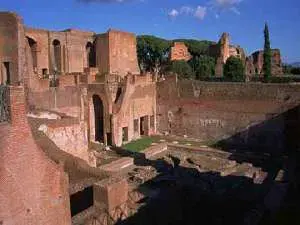
The Palatine Hill is the centermost of the Seven Hills of Rome, and is one of the most ancient parts of the city. Overlooking the Roman Forum, this is an area of majestic ruins and grand views. This is the site where the mythical she-wolf nursed Romulus and Remus. When they were older, Romulus got into an argument with Remus and killed him. He later went on to found the city of Rome which was named after him. The palatine was Rome’s poshest neighborhood. Aristocrats lived here and successive emperors built increasingly opulent palaces. Eventually it fell into disrepair and in the Middle Ages churches and castles were built on it. During the renaissance, wealthy families established gardens on the hill.
Rome
The Capitoline Hill
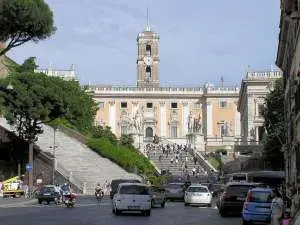
Above the Roman Forum, the Capitoline Hill was Rome’s symbolic centre and held the temple of Jupiter. It is one of the most famous and highest hills of Rome. It was a seat of power in ancient Rome and remains a centre of municipal government even today. There are two museums, the oldest public museums in the world, the Palazzo Nuova, with Greek and Roman sculptures, and the Palazzo dei Conservatori, with art galleries, sculptures, and frescoes. Just like in ancient Rome, the hill still has the best views of Rome’s centre. The Temple of Jupiter was destroyed three times by fire; it was last rebuilt by Emperor Domitian. In the 16th Century, Michelangelo designed the present plan. In the centre of the square is a casting of the equestrian statue of Marcus Amelius, the only statue to have survived from the era of pagan Rome. The real statue is inside the museum. For centuries it stood in the centre of the piazza until the 1970s when it was moved inside and restored.
Rome
Piazza del Popolo
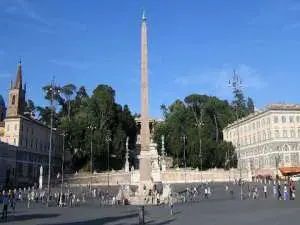
The Piazza del Popolo is one of the most famous squares in Rome. In modern Italian, it means ‘piazza of the people’. Before the age of railroads, it formed the main entrance to the city for pilgrims and travelers arriving from the north on the Via Flaminia. This large square was originally the site for festivals.It was also for centuries the place for public execution. The last execution took place in 1826.To the north of the piazza stand the Porta del Popolo and the ancient church of Santa Maria del Popolo.The Porta del Popolo was designed by Bernini and it was constructed in stone. There is an Egyptian obelisk in the center of the square. This marks the ‘Tridente’,the gathering point of three famous streets that begin in the square; Via del Corso, Via del Babuino and Via di Ripetta. This obelisk is a granite monolith built in Egypt during the rule of King Ramses II and brought to Rome by Emperor Augustus. At one end of the Piazza are two identical churches; Santa Maria di Montesanto and Santa Maria di Miracoli.
Rome
Spanish Steps
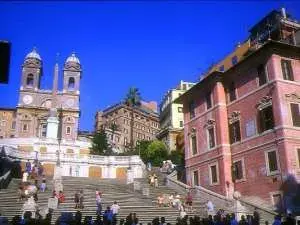
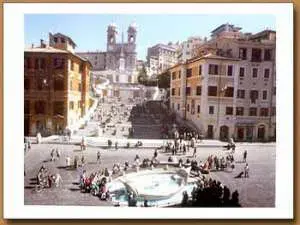
The famous Spanish Steps, the longest and widest staircase in all Europe, are located in the most exclusive part of modern Rome next to Piazza di Spagna taking its name from the Spanish Embassy that used to stand there. On the right is Keats’ House, a monument containing memoirs of John Keats and other romantic poets of those times including Byron and Shelley. At the top of the steps is the French Church, Trinita dei Monti, built in the 16th C. Rome’s fashionable designer stores and boutiques situated in Via Condetti can be seen from these steps.This is a great place to sit and watch the world go by. At the foot of the steps is the famous Barcaccia Fountain, the work of Pietro Bernini and his son, Gian Lorenzo. The Steps have served as a meeting point for generations of travellers from the English grand tourists of the 18th C to the young people of all nationalities who flock here today.
Rome
Keats-Shelley Memorial House
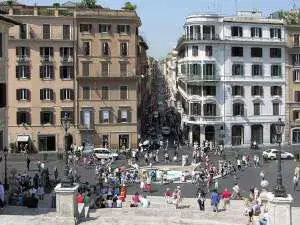
The English Romantic poet, John Keats, travelled to Rome to get away from the inclement weather of England and spent the last few months of his life in the Casina Rosa or Little Red House, where he bravely struggled to cope with his ailing health and where he tragically died of tuberculosis in 1821.The house situated at the foot of the Spanish Steps remains much the same from the outside as it was when Keats arrived in Rome.
Rome
Fontana della Barcaccia (Fountain of the Old Boat)
Fontana della Barcaccia ia a Baroque fresh-water fountain in Rome in the Piazza di Spagna, just below the Spanish Steps. Its shape resembles a half sunken ship with water spilling from its sides.The fountain is the work of Pietro Bernini and his son Gian Lorenzo Bernini. Water flows out unhurriedly from this fountain, giving the visitor a sense of peace and tranquility. Legend goes that before the river walls on Tiber were built at the end of the 19th C, the river quite often flooded the city.Once after the flood waters withdrew, a boat was left behind.
Rome
The Sistine Chapel
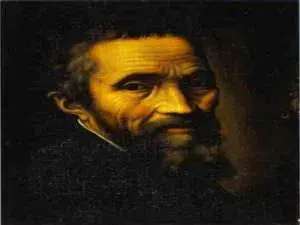
The Sistine Chapel was built within the Vatican during the time of Pope Sixtus IV.Work began on the chapel in 1477 and finished in 1480. The first mass in the chapel was celebrated on Aug 9, 1483. The Sistine Chapel is a rectangular brick building with six arched windows on each of the two main walls and a barrel vaulted ceiling. It is drab and dull from the outside but once you step into the interior you are transported to another world. The walls are covered with paintings by the great artists Pietro,Perugino, Botticelli, Rosselli, Signorelli and their respective workshops. Michelangelo, though a sculptor, was commissioned by Pope Julius II dela Rovere in 1508 to repaint the ceiling. The work was completed between 1508 and 1512. The form of art used was frescoes where paint is applied to wet plaster. The frescoes of Michelangelo show stories from the Bible. There are nine pictures that tell stories from the Old Testament of the Bible.These include stories about God making light, the earth, the sun and the moon. Next, there are pictures telling the story of God making Adam and of making Eve from Adam’s rib. There is a picture depicting the fall of man, when Adam and Eve eat the forbidden fruit and are chased out of the Garden of Eden. Three pictures tell about Noah’s Ark. All around the wall, Michelangelo painted twelve big figures of wise men and women depicting the prophets who told people about the coming of Christ. Michelangelo also painted the Last Judgement over the altar, being commissioned by Pope Paul III Farnese.
Rome
Saint Peter's Basilica
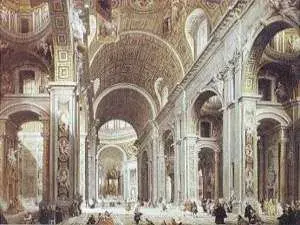
Saint Peter’s Basilica is a large church in the Vatican City in Rome. It is believed to be the burial place of St. Peter who was one of the twelve apostles of Jesus.Catholics believe that St. Peter was buried in a cemetery where the Basilica now stands. This is a holy place for devout Catholics who come here for pilgrimage. It is the spiritual centre of Catholicism. The Pope, who lives at the Vatican, often takes services at St. Peter’s, which is considered to be the largest church in the world. It has the capacity to hold over 60,000 people. Michelangelo, the master sculptor, was the architect of St Peter’s. He designed a dome that would dwarf the Pantheon which was situated nearby.It is smaller in diameter but much higher than the Pantheon. The dome was made of heavy masonry unlike the dome of the Pantheon which was made of volcanic tufa and super-light pumice. The dome had to be strengthened by inserting large metal rings. Over the years, cracks began to appear and eventually more rings had to be inserted to uphold the structure. The style of architecture is predominantly Renaissance and Baroque. Inside, works of some of Italy’s greatest artists like Bramante, Raphael, Michelangelo and Maderno have been showcased. The detailing of gilt, marble and mosaic is quite overpowering. St. Peter’s Basilica has many treasures. These include Christian relics, the tombs of Popes and many other important people, famous artworks which are mostly sculptures and other interesting things.
Rome
Pantheon
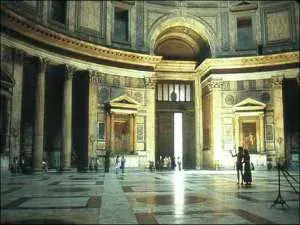
The Pantheon was a temple dedicated to the gods of the seven planets. To see the Pantheon for the first time on entering the Piazza della Rostanda is simply astonishing. Though there are thousands of visitors visiting the place, there is a shocking silence all around. It screams the sound of silence, peace and calm.
Rome
The Piazza Navona
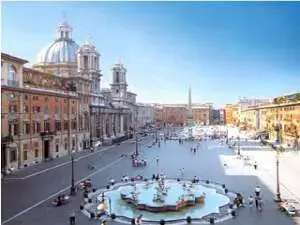
The Piazza Navona was built in 1644 over the exact area where Domitian’s Stadium used to stand and where games and horse racing took place from 86 CE. Now full of lusciously painted buildings, two fountains by Bernini, cafes and restaurants around its sides and artists selling their work in the centre, it is an attractive place to while away the hours or build up stamina for a visit to the Pantheon.
Rome
Fontane di Trevi (Trevi Fountain)
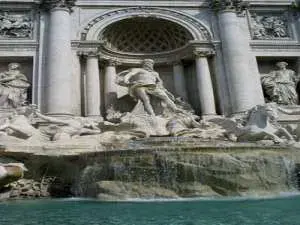
The Trevi Fountain is the most famous of all fountains in Rome. The fountain which covers an entire wall of the Palazzo Poli, does not disappoint, is magnificent, refreshing to the eye and well-preserved.Trevi refers to the three roads that converge there. This extravagant baroque work depicts Neptune’s statue.This statue, has a famous legend attached. A person who throws a coin over his shoulder and into the fountain will be blessed by a return trip to Rome someday. If two coins are thrown, a marriage will occur soon.This two-tiered fountain is designed as a large basin in a semi-circular shape and is sunk right below the pavement level. Its water cascades down a trio of ledges and rocks at the feet of the statue of Neptune, his sea-shell chariot and his sea-horses-one wild, one docile, representing the moods of the sea. The Trevi Fountain can be described as an impressive haven in a bustling city.