
Women-Friendly Travel in Beirut
The Beirut women-friendly travel guide places explicit women-friendly and family confidence signals first, while keeping uncertain details visible for review.
Beirut
L’lArtisan du Liban
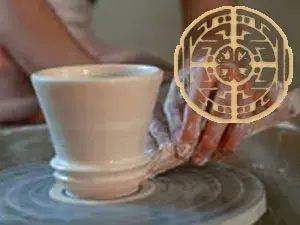
The L’artisan du Liban is a non-governmental initiative to promote the creative work of young men and women and to preserve Lebanese heritage and traditional methods of work. Quality, affordability, and innovative designs are its forte. These handicrafts are a popular buy among tourists as well as local people. Check out the fantastic table cloths, tableware and oriental furniture.
Beirut
Hamra Street
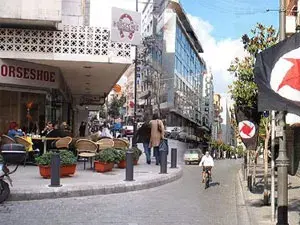
Hamra Street is one of the most pulsating and happening streets and was once known as the Champs Elysees of Beirut. It is filled with a number of modern outlets selling jewelry, shoes, handicrafts, books, etc. There are a number of cafes too where you can unwind after your shopping.
Beirut
Sunday Market
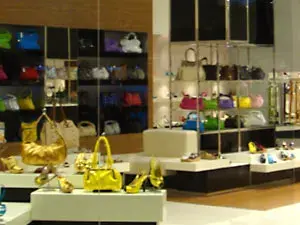
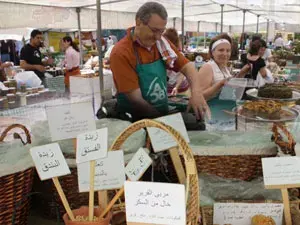
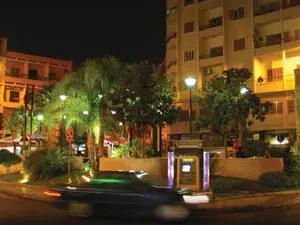
This Syrian Sunday Market is held every Sunday morning in East Beirut, adjacent to Beirut River. Here you can get a completely local and cheap shopping experience. Antiques, clothes, beads and baubles, etc. can be purchased at comfortably low prices. Be sure to test your bargaining skills here for being a tourist, you might be duped!
Beirut
Burj Hammoud
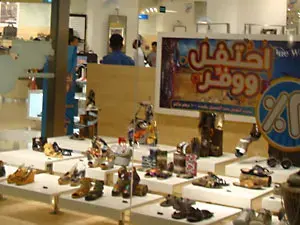
Burj Hammoud is the area of the city east of Beirut River and is populated by Armenians. There are many shops in Arax Street and Armenia Street which sell clothes at affordable rates.
Beirut
Souk el Barghout
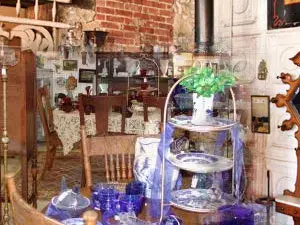
A typical Middle Eastern market place, the Souk el Barghout will delight you with its array of shops selling traditional crafts, jewelry, perfumes and souvenirs. Bargaining is the norm so go ahead and you will surely get items to suit your budget. Along with shopping you can unwind at one of the many outdoor cafes and enjoy a Lebanese meal or simply sit back and soak in the atmosphere of the place while sipping a cup of mint tea.
Beirut
Antiques
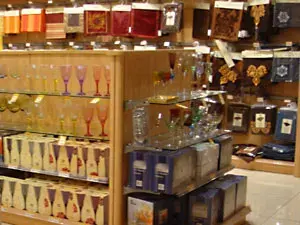
L’Amateur-Hamra Address: Hamra Street, near Capuchin Church Tel: 961 1 342930 961 3 504444

Beirut
Nejmeh Square
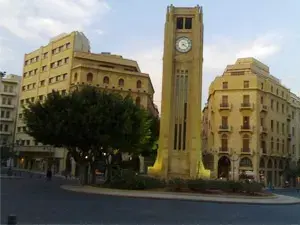
This centrally located square in Downtown Beirut has been recently renovated. ‘Nejmeh’ means star, and it is so named because the six roads converging on the square resemble a star. The highlight is the famous clock tower dating from the French Mandate. It is one of the few historic structures that remain intact in Downtown. Other than that, the square is pretty mundane. You’ll naturally run across it while you’re downtown, no need to go out of your way to see it.
Beirut
Solidere Clock Tower
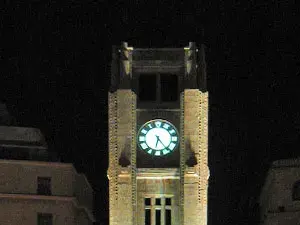
Located in Nejmeh Square (nejmeh means star, and is so named because the six roads converging on the square resemble a star) in Downtown Beirut, the Solidere Clock Tower is an iconic symbol of Beirut. It dates from the French Mandate and is one of the few historic structures that remain intact in Downtown. The tower managed to survive the civil war relatively unscathed.
Beirut
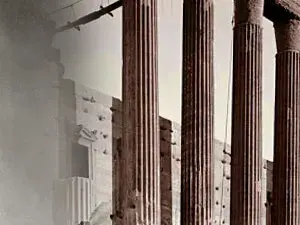
Group of Five Columns
The group of five columns located to the left of the St. George Maronite Cathedral, were once part of a grand colonnade of Roman Berytus. They were found in 1963.
Beirut
Roman Beirut
The Roman city of Beirut met a traumatic end in the sixth century after a series of devastating earthquakes. As a result, there is little evidence of the city’s glorious Roman period. What little remains are concentrated Downtown.
Beirut
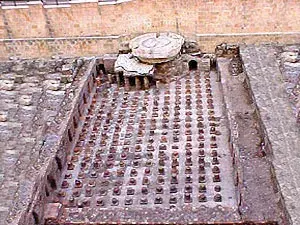
Roman Exedra
The Roman city of Beirut met a traumatic end in the sixth century after a series of devastating earthquakes. As a result, there is little evidence of the city’s glorious Roman period. What little remains are concentrated Downtown.
Beirut
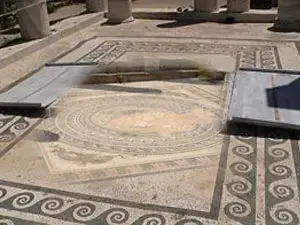
Floor Mosaics
These mosaics came from a Byzantine church of the 5th century AD. They were moved from Khalde, south of Beirut to a site neat the National Museum in the 1950’s.
Beirut
Highly Carved Colonnade
This highly carved colonnade was discovered in the 1940’s between Nejmeh Square and the Great Mosque. They were once a part of the Roman Basilica. This group of five columns was moved and erected across from the National Museum in the 1950’s.
Beirut
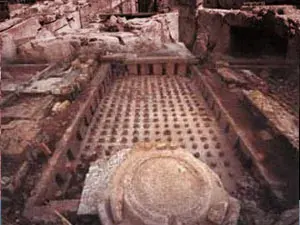
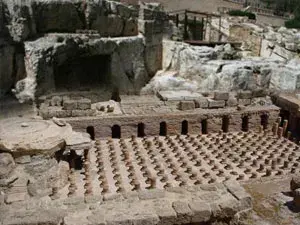
Roman Baths
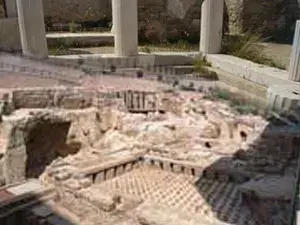
The Roman Baths were lost to the city for several years and were discovered in 1968-69. It wasn’t until the 1995-97 period of reconstruction that they were fully discovered. Situated behind Bank Street, the site is surrounded by a garden which attempts to recreate the atmosphere of ancient Roman gardens. In addition, there is a small amphitheater for open-air concerts. Rue Riad El Solh, Beirut Central District (Downtown)
Beirut
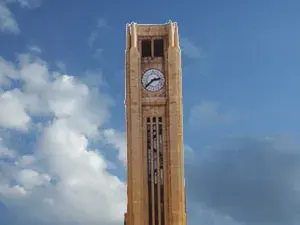
Hamidiyyeh Clock Tower
The Ottoman Clock Tower was built on the grounds of the Grand Serail in 1897. It marked the 10th anniversary of Sultan Abdul Hamid II’s coronation. The need was felt for a public clock that would indicate the Muslim prayer timings. The clock that stands 25 meters tall was the tallest structure in Beirut at the time of its completion. The Clock Tower houses a huge bell weighing 300 kgs on its third floor. A set of 125 cast iron steps inside the tower’s shaft lead up to this bell. Four miniature neo-orientalist style balconies adorn this floor. Above these balconies are four large clock faces especially imported by the Ottoman embassy from France.
Beirut
Ottomon Military Hospital
This military hospital right beside the Serail was built in 1865 by Sultan Abdul Aziz. From the period of the French mandate till the 1960’s it served as a courthouse. It was later converted into the of the Lebanese University but most parts of it were destroyed in the war. Completely renovated, it now houses the Council for Development and Reconstruction.
Beirut
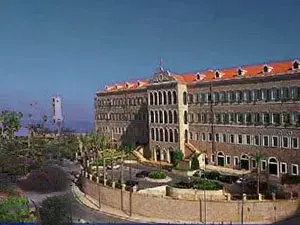
Grand Serail Hill
Serail Hill is Beirut’s main government center, overlooking the city center. There are three important monuments on the hill. The Grand Serail is the most impressive. It was originally a garrison for the Ottoman army. Construction began in 1853, shortly after the Ottoman’s regained control of the region from Egypt. It was soon repurposed into a headquarters for governors both Ottoman and later French of Beirut. Today it is a government palace and headquarters of the Prime Minister of Lebanon. The Grand Serail has been heavily reconstructed in recent years, but is an excellent example of Ottoman architecture, with 40,000m² of floor space and a whopping 430 rooms.
Beirut
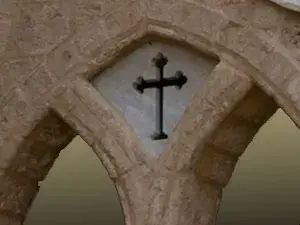
St George Maronite Cathedral
St. George Cathedral serves Lebanon’s Maronite Christian community. The church dates back to 12th century crusaders, but the modern iteration was built between 1884 and 1894. The interior design is inspired by the basilica, a large open hall dating to Roman times, specifically the Basilica di Santa Maria Maggiore in Rome. The façade is neoclassical, designed by Italian architect Giuseppe Maggiore. The walls are made from stucco and marble. Some of the columns were recycled from Roman ruins elsewhere in Lebanon.
Beirut
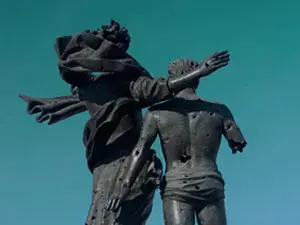
Place des Martyrs
Located in the center of Beirut, Martyr’s Square (also known as Place de Canons and the Burj, so named for the Burj al Kachaf that occupied the square until 1874) is loaded with history. In 1908 it was called Liberty Union Square to commemorate the declaration of the Constitution. In 1916 it became Martyr’s Square in memory of Syrian-Lebanese nationalists who were executed by the Ottomans. A bullet-ridden statue symbolizes the destruction that occurred during the Lebanese civil war.
Beirut
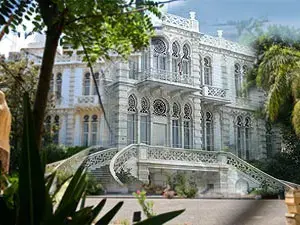
Sursock Museum
The first thing you’ll notice about this museum is the striking architecture – a blend of Venetian and Ottoman styles. It was built as a residence in 1920 by Nicholas Ibrahim Sursock, a member of the Lebanese aristocracy. After his death it was supposed to be converted into a museum per his request, but was instead used for fancy receptions. The museum was not established until the 1960s. The original interior décor and furnishings are still intact.