
Women-Friendly Travel in Beirut
The Beirut women-friendly travel guide places explicit women-friendly and family confidence signals first, while keeping uncertain details visible for review.
Beirut
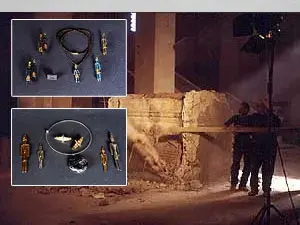
National Museum of Beirut
The Beirut National Museum can be traced back to Raymond Weill, a French officer stationed in Lebanon during World War II. During his time here, he began collecting ancient artifacts. In 1923, a committee was created to create a permanent museum to house these and other antiquities. Construction began in 1930 and was completed in 1937. By the time the civil war began, the museum had assembled an excellent collection of near Eastern artifacts. Unfortunately, the museum just happened to be located right on the Green Line that separated Beirut. Extraordinary measures were taken to protect the collection. Mosaics were buried in concrete. Most of the collection was relocated to the basement and walled off.
Beirut
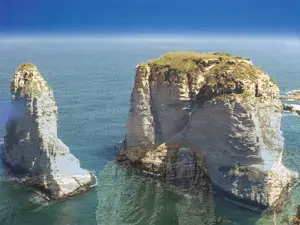
Pigeon Rocks
The Pigeon Rocks are huge natural formations off the coast of the Corniche andone of the symbols of Beirut. They stand out like sentinels in the sea. Walking and jogging on this seaside promenade are popular activities. There are a number of restaurants serving local and foreign cuisines and cafés offering a variety of snacks. The shores near Pigeon Rocks have yielded the oldest evidence we have of human existence in Beirut. Flints and basic tools found here are displayed in the AUB Archaeological Museum.
Beirut
Assembly Hall
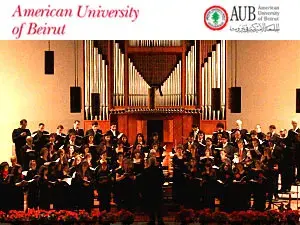
Assembly Hall was built in 1883 and has since changed names and functions. A chapel originally, it later became the venue for musical performances open to the public. Its fine acoustics and attractive building graced by traditional red tile roof, make it a popular place for visitors.
Beirut
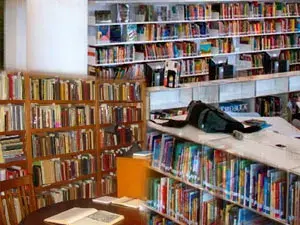
The Nami Jefet Memorial Library
The Nami Jefet Memorial Library was built in 1951. Now fully updated and computerized it lists over 250,315 titles written in almost a dozen languages. The Archives Department, with material collected since the early days of the university, is a treasure house of information, chiefly about AUB and Lebanon.
Beirut
Archaeological Museum
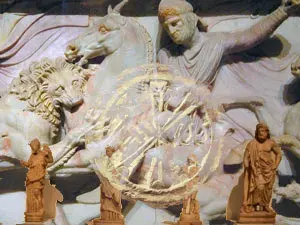
The archaeological Museum, begun only two years after the university itself, has a collection of objects from the Middle East region ranging from the Stone Age to Islamic times. The cavernous interior of Post hall, which is decorated with towers and crenellations, makes a suitable home for the museum’s classic sculpture, Islamic pottery, Iron Age figurines and Stone Age tools.
Beirut
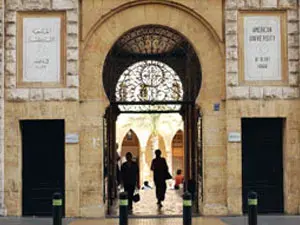
American University of Beirut (AUB)
The American University of Beirut (AUB) was founded in 1862 and opened in 1866 by American missionaries. It is one of the best universities in the Middle East. The beautiful campus is located along the north shore of Beirut’s peninsula. There are lots of trees and shrubs, and it has even been declared a bird sanctuary. A visitor’s center is located in the Main Gate House on Bliss Street. Here guests can learn about the university and join a guided walking tour of the campus.
Beirut
Souk el Tayeb
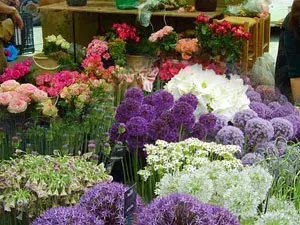
The Souk Al Tayeb is Beirut’s first farmer’s market and is a great place to get a feel for the city. Every Saturday, residents and visitors converge at this open-air market. Organic fruits and vegetables, traditional dishes, flowers, and much more are available. This souk brings everyone together and serves as a meeting place for producers, bankers, farmers, and housewives. It’s a platform for direct contact between the producer and consumer. Lots of foodie events are also held here. There's plenty for kids to enjoy too.
Beirut
Mount Lebanon
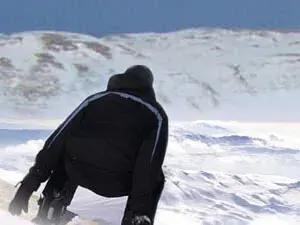
Mount Lebanon is the name of the mountain range that bisects the country. They are one of its greatest gifts. In the summer they provide spectacular views, hiking, and a relaxing escape from Beirut. In the winter they provide the region’s best skiing. Throughout much of history, they protected the coastal cities from invaders, allowing trade to thrive. The highest peak is Qurnat Al Sadwa, which rises to 3,088m above sea level.
Beirut
Baalbek
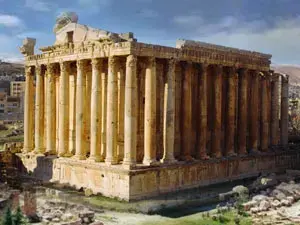
Baalbek is perhaps Lebanon’s greatest treasure. During Greek and Roman times it was known as Heliopolis, or City of the Sun, though the area had been settled for thousands of years prior. It was made part of the Roman Empire in 64BC as General Pompey conquered the region. Construction of the Temple of Jupiter began shortly thereafter, and the city began to grow because of its location on important trade routes. The temple would take more than a century to complete, and required more than 100,000 slaves. The entire complex was the largest religious building in the Roman Empire. It was intended to show their superiority and get the upper hand on the nascent Christian religion. The result was magnificent, though after Constantine converted to Christianity somewhat moot.
Beirut
The Cedars
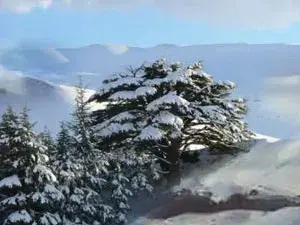
The Cedars are among the last survivors of the immense forest that once covered Mount Lebanon. Though modest in number (about 400), each cedar is a dignified survivor of ancient times when cedar wood played a major role in the earliest history of Byblos, Sidon and Tyre. It was used by Egyptians to build temples and ships and also in building the Phoenician fleet. Some of the trees are between 1200 and 2000 years old. The village of the cedars is a very picturesque ski resort with hotels, chalets and sky lifts. Today the majestic cedar is the national emblem of Lebanon and adorns its flag.
Beirut
Gibran Museum
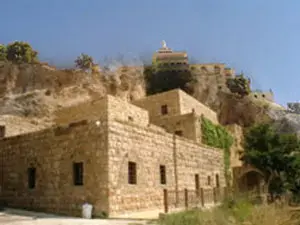
Located in the picturesque town of Besharre (or Bsharri), about 120km from Beirut, the Gibran Museum is dedicated to famed Lebanese poet, philosopher, painter, and author Gibran Khalil Gibran. He was born into poverty in 1883 and received no formal education – priests taught him how to read and write. In 1895, after their land was confiscated, Gibran moved to the US with his family.
Beirut
Jeita Grotto
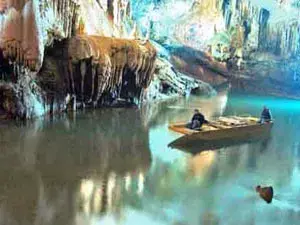
Jeita Grotto is a complex of caves in the foothills of Mount Lebanon. The lower cave was inhabited in prehistoric times, but not rediscovered until 1836. The upper cave, or gallery, wasn’t discovered until 1958. The caves are karstic – they were formed over millions of years by the dissolution of bedrock with water. The upper gallery is more than a mile long, with a ceiling more than 100m tall in spots. Only about half is accessible to tourists to prevent ecological damage. The lower cave is only accessible by boat. The spring flowing through here is an important source of drinking water for Beirut.
Beirut
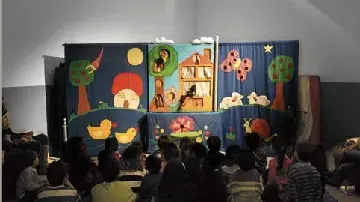
Children’s Science Museum-Planet Discovery
Planet Discovery is a children’s science museum in Beirut Souks in the heart of Beirut. Children of all ages can discover the secrets of life and the surrounding world. The exhibits stimulate their curiosity and desire for learning. The museum holds interactive experiments, exhibitions, performances and workshops, and awareness competitions. It welcomes handicapped and visually impaired children too.
Beirut
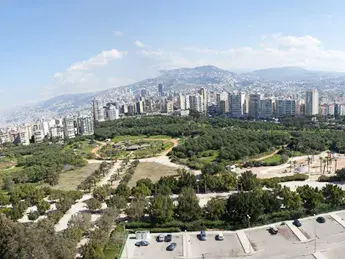
Horsh Beirut
This urban park in Beirut is also known as Horsh Al-Sanawbar or Bois De Pins (in Arabic and French). It is a lush green area of 40,000 sq-meter pine forest. There is a playground for children where they can enjoy being outdoors and take in the freshness of the air amidst beautiful natural surroundings.
Beirut
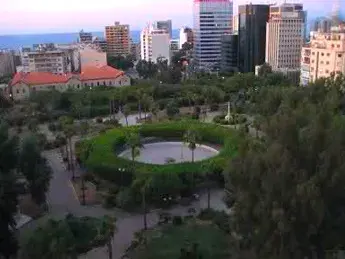
Sanayeh Public Garden- René Moawad Garden
This green lung of the bustling city of Beirut is a popular place among the residents. Children have a good time playing here. Bikes are available for hire and kids can also skate on the paved tracks. Numerous vendors roam around selling drinks and snacks. This garden is also popular with walkers, joggers and elderly citizens who enjoy the shade of the trees, some of which are hundreds of years old. The garden also features an Ottoman fountain. Originally known as Sanayeh Garden, it was renamed in honor of President René Moawad who was assassinated on Nov 22, 1989.
Beirut
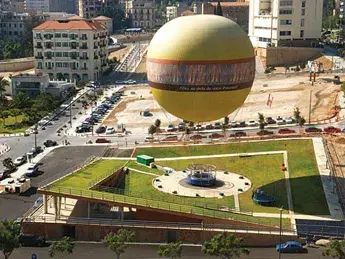
Beirut Balloon
Children are sure to love a ride on this helium filled balloon. This 30 passenger balloon, offers breathtaking views of the city from an altitude of 300m.
Beirut
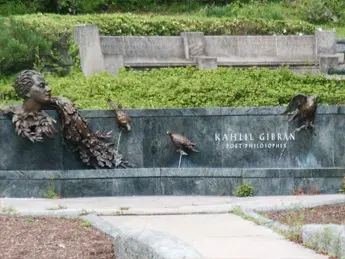
Gibran Khalil Gibran Garden
Named after the renowned Lebanese-American writer and artist, this garden is a vast verdant expanse in the center of Beirut. There are two circular lawns with trees around a water fountain. A platform looks out onto the garden. Six obelisks are part of the formal landscaping. A bust of Gibran and abstract sculptures by contemporary Lebanese artists also adorn the square. This garden is popular with families where they can enjoy a picnic and stroll around. There is ample space for children to run around and play.