
Women-Friendly Travel in Dublin
The Dublin women-friendly travel guide places explicit women-friendly and family confidence signals first, while keeping uncertain details visible for review.

Dublin
Books Upstairs
Available here are books on women’s studies, Irish literature, theatre and many other genres. Although it is a small shop, the selection here is incredible and worth a stop for a book fiend. Bargain books are available on a table outside the store.

Dublin
D. P. Stationers
The store is stocked with all kinds of stationary, paper, craft supplies, easels and canvases you could possibly need. Check it out if you or someone you know if into arts and crafts. Also available are photocopying, printing and facilities. Florence Road Bray Dublin Republic of Ireland 2 Phone: +353 (0) 1 286 2130
Dublin
Dublin Zoo
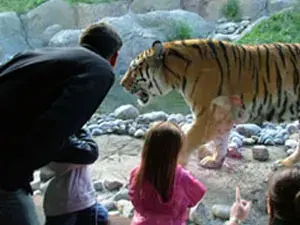
What better way to spend the day than to make a trip to the Dublin Zoo, spread over 60 acres and divided into different regions like the Artic zone, plains of Africa and the Indian Rainforest. It houses elephants, tigers, orangutans, chimpanzees, giraffes and many more exotic and endangered species. The zoo is definitely family friendly with rest stops, nursing stations, food outlets and kiosks. Known as one of the modern zoos in Europe, the Dublin zoo plays a crucial role in the zoo breeding programmes. The zoo is accessible by the DART, bus or the Luas. In case you want to walk, although not advisable when going with children, the zoo is approximately 15 minutes away from the Heuston Station Stop. Children under 3 years get free entry.
Dublin
Aqua Zone at the National Aquatic Centre
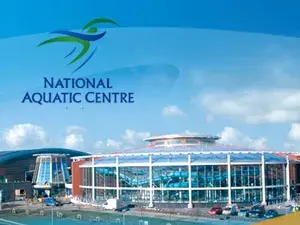
Europe’s largest leisure, water park, the Aqua Zone has a bit of everything for people of all ages but even more so for children. If you and your children enjoy water adventures and thrilling rides, then this water wonderland is the right place for you. Rides include the Master Blaster (a water roller coaster), wave pool and the Flow Rider among others. Children under 4 get free entry.
Dublin
National Gallery of Ireland
With over 2500 paintings, a free tour of the gallery on the weekends and free audio guides, this is the perfectly family friendly especially with teenage kids and when traveling on a budget. Admission throughout the week is free.
Dublin
Imaginosity
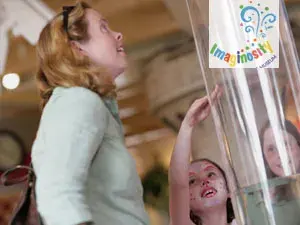
Being Ireland’s first interactive museum for children under 9, it has become extremely popular. Exhibits are fun, exciting and extremely engaging. The musuem has an art studio so kids can get wild with colours and their imagination and a kid’s stage where children can create their own stories, try on different costumes and change the props on the stage. The museum also has a café (Café Kiddiccino) which specifically offers healthy and nutritous food for the entire familiy. In short, this will ensure a fun-filled day for your toddlers!
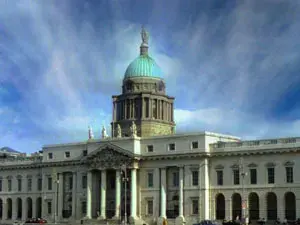
Dublin
The Custom House
The Custom House was built between 1781 and 1791 by James Gandon. As its name would imply, it served as the Customs House for the port of Dublin. The Neoclassical facade and its signature dome became a symbol of Dublin, even after the port moved downstream. It became the center of the city's local government (and a symbol of the English occupation) until 1922, when the interior was burned by the Irish Republican Army.
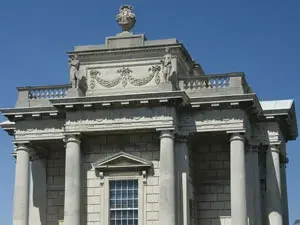
Dublin
Marino Casino
Marino Casino is not a casino in the modern sense. It is actually a small villa built in the mid-eighteenth century by Scottish architect Sir William Chambers. The name is derived from Italian, and means 'little house'. Completed in 1775, it is a striking example of Neoclassical architecture. The casino was part of the estate of James Caulfeild, the 1st Earl of Charlemont.
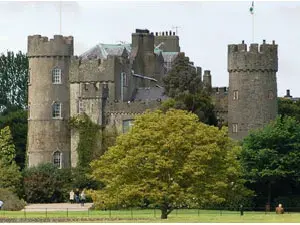
Dublin
Malahide Castle
Malahide Castle is one of the oldest in Ireland. The estate was founded 1185 for Richard Talbot, a knight who came to Ireland with Henry II during the Norman invasion. The Talbot family would continue to live on the estate until 1975, barring the 1650s during Cromwell's occupation of Ireland (the interlopers were subsequently hanged). Construction on the castle began in the mid-thirteenth century, though the oldest surviving portion is a three-story, keep-like tower from the fourteenth century.
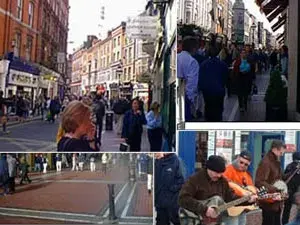
Dublin
Grafton Street
Grafton Street is one of two pedestrian shopping avenues in central Dublin (along with Henry Street). It runs from the northwest corner of Saint Stephen's Green to the west side of Trinity College. Though Henry Street receives more visitors, Grafton Street has more upscale retailers. This is one of the most expensive commercial streets in the world.
Dublin
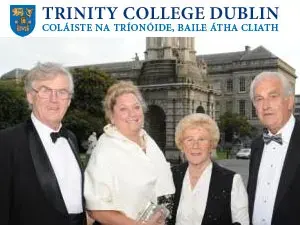
Trinity College
Trinity is Ireland's oldest college. Its charter was granted by Queen Elizabeth in 1592 as part of the effort to consolidate English control of Ireland. Catholics were not allowed entry into college until 1793, and all such restrictions were banned by 1873. The university started to grow in the eighteenth century as the political situation in Ireland stabilized. Many of the campus' most spectacular buildings date from this period. Today, Trinity is the most prestigious college in Ireland, and in the top tier of worldwide universities.
Dublin
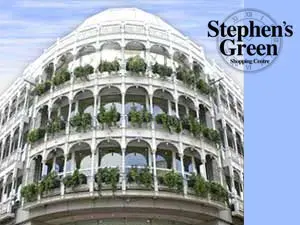
St. Stephen's Green
Saint Stephen's Green was a common area on the outskirts of Dublin when it was walled in in 1664. In the 18th and 19th centuries the are surrounding the park was built up with Georgian style buildings that were home to the city's best off. Unfortunately, many of those buildings have been demolished since then. In 1877, the Green was opened to the public by an act of Parliament, thanks to the Guinness family. Previously it had only been open to local residents.
Dublin
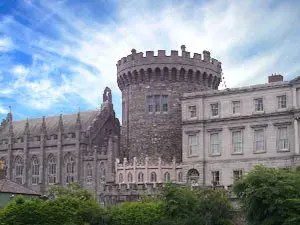
Dublin Castle
Dublin Castle is steeped in the rich history of Ireland. It was first built in the early thirteenth century by Normans after their invasion of Ireland. The original castle was completed around 1230. The design was typical of Norman fortifications -- four walls with towers in each corner. The buildings and the purpose of the castle changed throughout the years. It served as the house of Parliament, a banquet hall, and even the seat of the British government in Ireland.

Dublin
Chester Beatty Library
The Chester Beatty Library is a combination library and art museum located on the ground of Dublin Castle. It was established in 1950 to house the spectacular private collection of Sir Alfred Chester Beatty, a Canadian mining magnate. He donated the collection to Ireland two decades before his death. The current building was opened in 2000.
Dublin
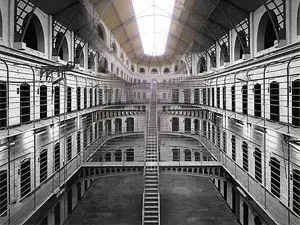
Kilmainham Gaol
Kilmainham Gaol is a former prison turned museum that played an important part in Irish history. It opened in 1796. The leadership of failed Irish rebellions in 1798, 1803, 1848, 1867, and 1916 were held, and oftentimes executed here. Consequently, the prison was seen as an instrument of British colonial control and was closed after independence in 1924. In the 1950s, plans were submitted to demolish the unused prison prompting a community response. Restoration work was undertaken between 1962 and 1971 and today it's open as a museum.
Dublin
St. Patrick's Cathedral
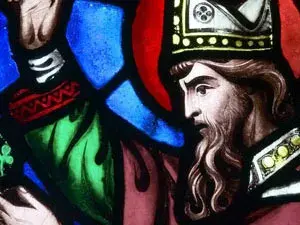
St. Patrick's Cathedral is named for St. Patrick, the patron saint of Ireland who brought Christianity to the island in the fifth century. His holiday on March 17, the date of his death, is a celebration of all things Irish. The site of the church is supposedly where a well that St. Patrick used to baptize converts was once located.
Dublin
Guinness Brewery and Storehouse
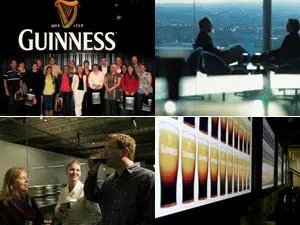
Nothing says Ireland quite like a cold Guinness. The harp that graces every bottle is an internationally recognized symbol of Irish culture. The drink itself is a thick, dark beer known as stout. Brewing began in 1759 at the Saint James's Gate Brewery by Arthur Guinness. At the end of that year he signed a 9,000 year lease at £45 per year for the previously unused brewery. That turned out to be a pretty good deal, as Guinness is still produced there today.
Dublin
Temple Bar
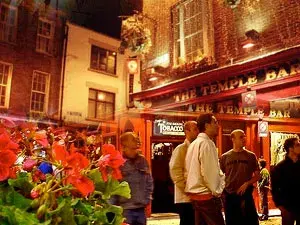
Located on the south bank of the River Liffey, the Temple Bar area is one of the the most popular spots in Dublin. Temple Bar was one of Dublin's nicest neighborhoods in the seventeenth and eighteenth centuries. Many of the city's elite lived here, but starting in the nineteenth century, the area went in to a steep decline. It quickly became one of London's most derelict neighborhoods, which it remained until the 1980s. Low rents attracted artists, galleries, and small shops. Since then Temple Bar has been subjected to gentrification.
Dublin
Phoenix Park
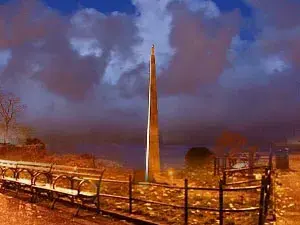
Phoenix Park is one of Europe's largest urban parks at more than 1700 acres. It was established in the 1650s as a deer park under the supervision of James Butler, a viceroy for English king Charles II. Because of the deer and other wildlife, it was enclosed by a wall. It opened to the public in 1745, which it has remained ever since. The park is immortalized in literature in the James Joyce novels Ulysses and Finnegan's Wake.
Dublin
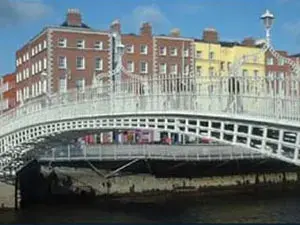
The Ha'penny Bridge
The Ha'penny Bridge was the first crossing of the Liffey River in Dublin. Prior to its completion in 1816, the only way across was one of seven ferries. The ferry owner was forced to build the bridge as the ferries became delapidated. The bridge is named for the half-penny toll that was once required to cross it. It's officially known as the Liffey Bridge, or Droichead na Life. It was renovated in 2001.
Dublin
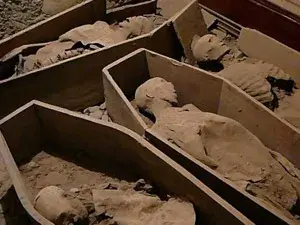
St. Michan's Church
The original Saint Michan's Church was a Danish castle built in 1095, though the current building was built much more recently, in 1686. It is the only remaining churches in Ireland that was originally founded by Vikings. The exterior isn't particularly remarkable, but the interior features excellent woodwork, stained glass, and an organ dating to 1724. It was here that Handel supposedly composed his famous Messiah.
Dublin
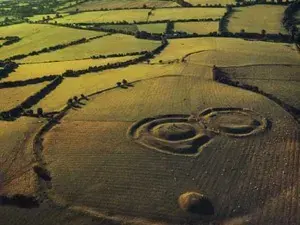
Hill of Tara
The Hill of Tara is an important archaeological site about 60km north of Dublin in County Meath. Once upon a time (before the Norman invasion in 1167), it is believed this was the seat of the kings of Ireland. Whether this is true and how important the site actually is are still up for debate. The hill itself rises 197m over the Irish countryside.
Dublin
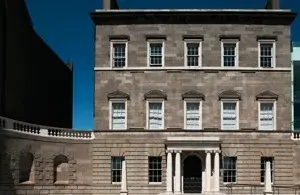
Hugh Lane Gallery
The Hugh Lane Gallery serves as Dublin's museum of modern art and was the first of its kind in the world. It was founded in 1908 by none other than Hugh Lane, an Irish art dealer who died on the RMS Lusitania. The collection moved to the Charlemont House in 1933. This handsome dark grey Neo-classical mansion was built by famed Scottish architect Sir William Chambers.
Dublin
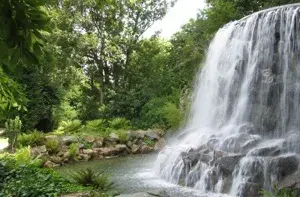
Iveagh Gardens
The Iveagh Gardens are one of Dublin's great hidden treasures. They're actually located just across the street from Saint Stephen's Green in the heart of Dublin. Originally a small commons and later a pleasure garden, the Iveagh Gardens had fallen into disrepair by the mid-nineteenth century. It was renovated in 1863 by brewing heir and Dublin mayor Benjamin Guinness behind his home, Iveagh House, on Saint Stephen's Green. They were bequeathed to the city of Dublin in 1880.