
Women-Friendly Travel in Dublin
The Dublin women-friendly travel guide places explicit women-friendly and family confidence signals first, while keeping uncertain details visible for review.
Dublin
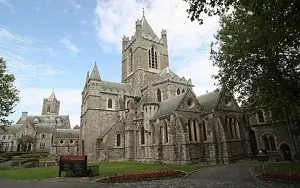
Christ Church Cathedral
Christ Church Cathedral is considered the oldest building in Dublin. The original building dates back from Viking times, sometime shortly after 1028. The church stood on a hill overlooking the settlement and was one of just two churches serving Dublin at that time. It was completely rebuilt in the 1180s by Robert de Clare (aka Strongbow), the Norman conqueror of Dublin.
Dublin
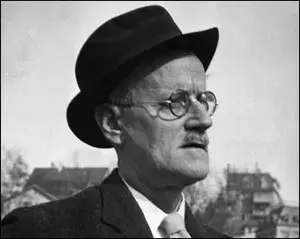
James Joyce Cultural Center
The James Joyce Cultural Center is one of Dublin's more unique attraction, dedicated to perhaps the city's most famous resident. It opened in June 1996 thanks to the tireless efforts of Senator David Norris, a James Joyce scholar. Norris bought the property, an eighteenth century Georgian mansion, in 1982. At that time, many of the wonderful Georgian buildings on the street and throughout Dublin had been demolished. It took Norris fifteen years to restore the property.
Dublin
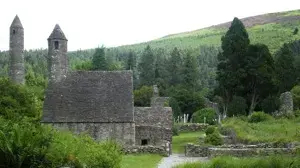
Glendalough
The monastery at Glendalough was founded at the start of the sixth century by Saint Kevin, a descendant of one of Ireland's ruling families. Kevin wanted to live the life of an ascetic and commune with nature. Soon enough, Glendalough, meaning Valley of the Two Lakes, became a thriving monastery and town, attracting students from all over Ireland. Unfortunately, that attracted the attention of the Vikings, who sacked the monastery several times throughout the ninth, tenth, and eleventh centuries. It persevered, however, until 1398 when English forces from Dublin razed the monastery.
Dublin
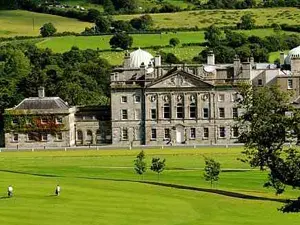
Powerscourt Eastate
Powerscourt Estate is located just outside the town of Enniskerry, a suburb of Dublin about 25km from the city center. The original castle was built in the thirteenth century by the Baron La Poer (which eventually became Power, hence the name). German Richard Cassels carried out an extensive renovation between 1731 and 1741. The new facade was in the Palladian style, bookended by two domed towers. The third story was added later. The castle suffered a devastating fire on November 4, 1974, necessitating a renovation which was not completed until 1996.
Dublin
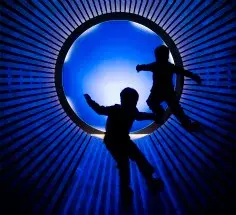
The National Leprechaun Museum
The National Leprechaun Museum takes visitors deep into Celtic culture to discover what really lies behind tales of leprechauns, rainbows and pots of gold.
Dublin
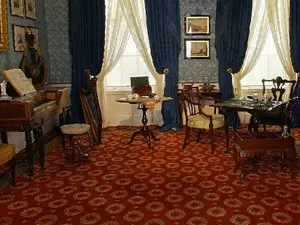
Number 29 Georgian House Museum
The Georgian House Museum is located at 29 Fitzwilliam Street, hence the name. The stately Georgian townhouse was built towards the end of the nineteenth century. Its first occupant was one Mrs. Olivia Beatty, the focus of the museum. She was a young widow, able to afford the mansion thanks to the estate of her deceased husband. The house was eventually sold and changed hands several before the 1980s, when it was restored and converted into a museum. It opened to the public in 1991 to commemorate Dublin's status as European Cultural Capital.