Overview & visitor information

Suzhou St, Haidian, Beijing, China

Search for a city, hotel or experience
Live suggestions could not load. Press Search to view results.
Suzhou St, Haidian, Beijing, China
Suzhou St, Haidian, Beijing, China
Keep exploring Beijing.
 beijing
 beijing
东直门外察慈6号, Dongzhimen Outer Byway, Dongcheng, Beijing, China010 6468 5890
Keep exploring Beijing.
 beijing
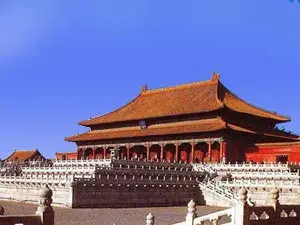
This museum should definitely be visited as it houses some of the most magnificent ruins and remnants of famed Chinese architecture. The halls which store these treasures are themselves historically significant as they were once part of the Altar of Agriculture where Chinese emperors came to pray during plantation and harvesting season and performed rituals pertaining to these. The Hall of Jupiter is amazing and should not be missed.
 beijing
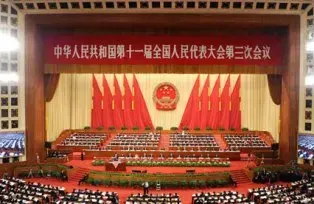
The Great Hall of the People is one of ten buildings (creatively known as the Ten Great Buildings) constructed to honor the tenth anniversary of the People’s Republic of China in 1959. All are around today – among them the National Museum of China, the Beijing Railway Station, and the Chinese People’s Revolutionary Military Museum. All were built in the modernist style, heavily influenced by Soviet architecture. The most important of these is the Great Hall of the People, home to the National People’s Congress, China’s top legislative body.
 beijing
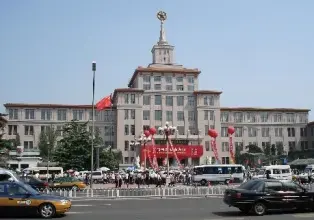
This fascinating museum dedicated to China’s military and its history first opened in 1960. The building’s edifice is a striking example of Socialist Realism. Even before entering the museum, there’s no doubt that it’s related to the military. Outside is a row of artillery cannons and a decommissioned boat. Once you get inside, the main hall is filled with tanks, planes, and a rocket.
 beijing
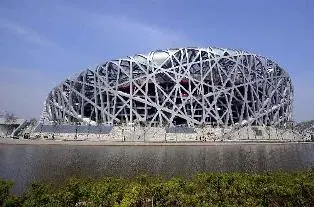
The 2008 Summer Olympics signified China’s return as a global economic power. It’s hard to forget the spectacular opening ceremony. Three years on, the Olympic Park is still there and open to the public. The centerpiece of the park is the Beijing National Stadium, better known as the Bird’s Nest. Its edifice is unmistakable. Though no teams call the Bird’s Nest home, and few concerts or sporting events are held there, it still manages to be profitable thanks to the steady stream of visitors who want to relive Olympic glory.
 beijing
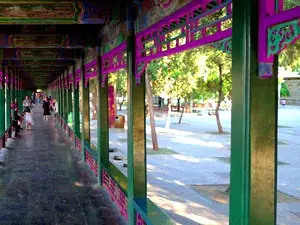
When the Hailingwang Emperor of the Jin Dynasty moved the capital back to Beijing, he needed a new palace to escape the sweltering summers. The site he chose was on Gold Mountain (now Longevity Hill), about 12km northwest of Beijing. The Qianlong Emperor of the Qing Dynasty renovated the palace and the gardens in the 18th century. Kunming Lake was expanded to resemble the famous West Lake in Hangzhou. During the Second Opium War in 1860, the palace was destroyed by British and French forces. Under the Empress Dowager Cixi, the palace was subsequently rebuilt in 1893, only to be destroyed once again during the Boxer Rebellion in 1900. The Summer Palace we see today was the product of another restoration in 1903 (also by Cixi). It was open to the public during the Republic of China and eventually turned into a park.
 beijing
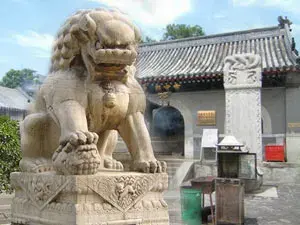
This magnificent and massive temple dates back to 739 A.D. Followers of the Daoist religion come to worship here. Chinese monks in traditional costume also can be seen here. This is an interesting temple to visit.
 beijing
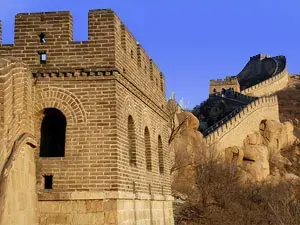
Contrary to popular belief, the Great Wall is not visible from the moon, or even Earth’s orbit. Nevertheless, it is one of mankind’s great engineering achievements. The various kingdoms of ancient China had been no stranger to walled fortifications, and when the Qin Dynasty was established in 221 BC, Emperor Qin Shi Huang ordered several existing walls to be merged together. Succeeding dynasties continued expanding the wall and renovating existing sections.
 beijing
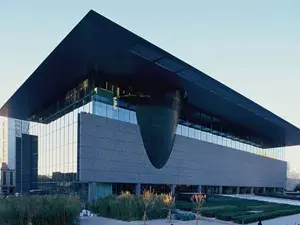
The Capital Museum is one of Beijing’s newest. It first opened in 1981, and moved into its current location in 2005. Initially, it wasn’t much more than a storehouse, completely overshadowed by Beijing’s other museums. Now it stands as one of its best, thank to the new building, which is an attraction in its own right. With more than 60,000m² of floor space and room for 13 concurrent exhibitions, it’s now Beijing’s second largest museum. Inside the huge entrance hall rises all the way to the ceiling. The exhibits are housed across five stories.
 beijing
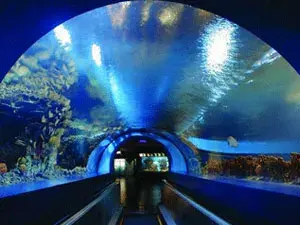
Beijing Aquarium This is an inland aquarium which exhibits numerous species of under water creatures. Dolphin shows take place daily and are a highlight of this aquarium. A panda house is located nearby as well.
 beijing
This is an inland aquarium which exhibits numerous species of under water creatures. Dolphin shows take place daily and are a highlight of this aquarium. A panda house is located nearby as well.
Keep exploring Beijing.
 beijing
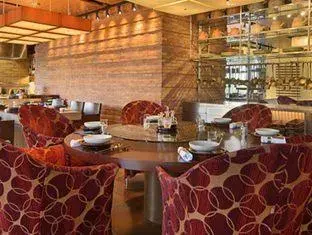
Located in the grand Hyatt Hotel, Made in China offers a variety of authentic Chinese specialties, including Peking duck. As you might expect in such a nice hotel, the décor is opulent and the food delicious. The service is good and the staff is attentive too. If you want the duck, call in advance.
 beijing
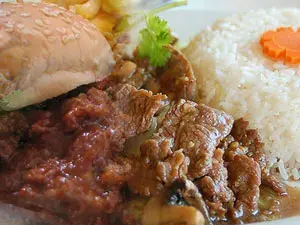
'Down to earth' best describes the atmosphere inside this restaurant. Unpretentious delicious food coupled with reasonable prices makes this a stop worth making. Sea food lovers and vegetarians will both be satisfied by the dishes listed on this menu. The pastas as in any Italian restaurant are delectable.
 beijing
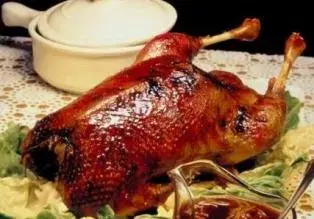
No trip to Beijing is complete without trying the city’s specialty: Peking duck. This delicacy emerged during the Ming Dynasty and was the meal of choice in the Forbidden City. It has been a staple in Beijing cuisine ever since. Pekin ducks are specifically bred for use in the dish. After the duck is slaughtered and de-feathered, air is pumped in through the neck to separate skin and fat. It is then boiled and left to dry, before finally being cooked in a closed or hung oven.
 beijing
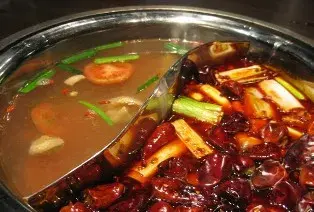
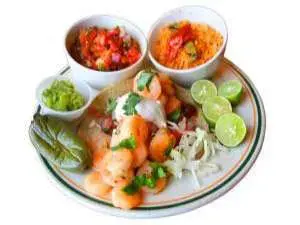
No trip to China is complete without trying hot pot. You start with a cauldron of boiling broth and add whatever meat (usually deli sliced), noodles, and vegetables you want. Traditionally, mutton is used, but pretty much anything you could want is available depending on the restaurant, from the mundane (chicken and beef) to more exotic fare like tripe, fish balls, and even frogs. Many places have a buffet from which you can make a sauce to dip your food in.
 beijing
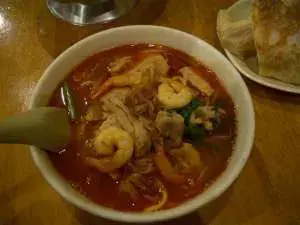
This restaurant is especially interesting because the interior epitomizes Han culture. Han cuisine known as 'Hakka' is at its ultimate here. The shrimp and other sea-food dishes are the specialty. Arguably the best food in all of Beijing is served here.
 beijing
This is a family restaurant. The interior is simple and sparkling clean. Absolutely divine vegetarian dishes are served here. The soups, the broths, salads and rolls are cooked using quality ingredients.
 beijing
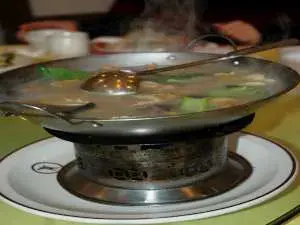
This restaurant provides outstanding service and offers a vast array of dishes to choose from. Sea food is the specialty and all kinds of it- lobster to crab to shrimp to trout are excellently cooked. The vegetarian dishes are also delicious.
 beijing
Set amidst a beautiful man-made forest guests, will be paying more for the ambience and not necessarily the food. The décor and the furnishings are traditionally Chinese. The place is luxuriant and quality food is to be expected. The sea food dishes are exceptionally good.
![Restaurant Bar Lounge [RBL] Beijing](https://pub-b123c2c5a35541649f58c1579579e956.r2.dev/media/image-6a22bb876bf965e27988c8a1f77ef28e651027a008f1cd32eb1f0d6948363921.webp) beijing
beijingThis is an extremely posh restaurant. The décor and interior are minimalist, contemporary, chic and stylish. The menu has listed on it eclectic and diverse dishes from sushi to beef to chicken. The deserts too are delectable. Customers will not regret eating here.
 beijing
Decadent best describes the interior of this restaurant. The Sea food dishes are marvelous and the deserts are to die for.