The ideal time for you to visit Frankfurt is the late spring to early autumn period in the months of April and May. The summer months are usually warm around 25 °C to 35 °C with high levels of humidity and light rainfall is expected. However, winters in Frankfurt can get pretty harsh in the months of November to February with temperatures dropping as low as -10 °C with occasional heavy rainfall. Therefore, as winter fades to spring during the months of April to May, you can enjoy the tourist attractions in Frankfurt to their fullest with pleasant temperatures of 15 to 25 °C . Keeping in mind with the year round fairs and festivals, you might also wish to avoid the busiest months in order to enjoy a relaxing vacation and still be able to find affordable accommodations.
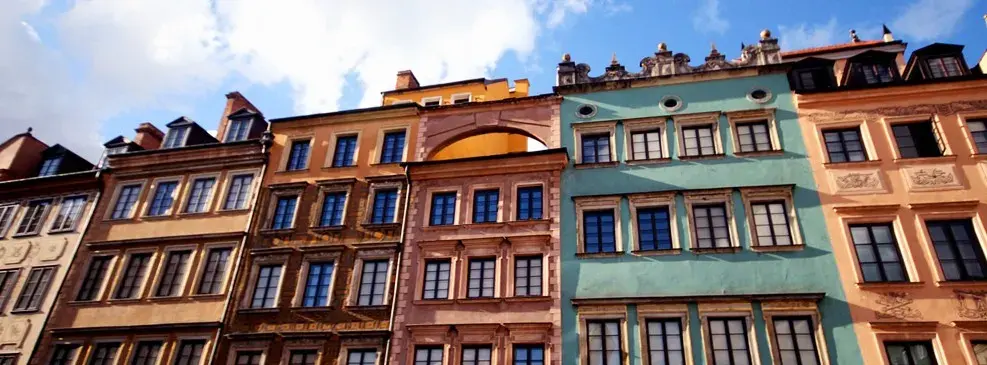
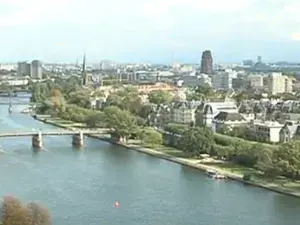
• Location: Frankfurt has a very attractive location. It is set beautifully on an ancient ‘ford’ (which is the place where a river may be crossed) on the River Main. 524km in length, this river crosses a lot of major German cities, including Bavaria. The city is in the heart of the ‘Rhine’ which is the largest metropolitan region in Germany. • Dialing codes: country code: +49, city code to Frankfurt: +69 • Emergency (police or ambulance): 112 • Airport enquiry: 1. Frankfurt Hahn (HHN): (06543) 509 200. 2.Flughafen Frankfurt/Main (FRA): (069) 6900
1st January- New Year’s Day. 6th January- Epiphany (a Christian fest to celebrate God’s revelation to mankind). During April: Good Friday. During April: Easter Monday. 1st May: Labor Day. During May: Ascension Day. During May/June: Whit Monday. During June: Corpus Christi (in honor of Holy Eucharist). 8th August: Holiday to celebrate Peace Festival. During August: Ascension of the Virgin (to celebrate the reuniting of Mary and her Child). 3rd October: Day of Unity. 31st October: Day of Reformation. 1st November: All Saints Day. 23rd November: Repentance Day. 25th December: Christmas. 26th December: Boxing Day/ St. Stephens Day.
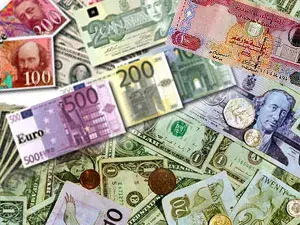
The currency in Frankfurt is the euro, which became Germany's official currency in 2002. It is divided into 100 cents. Euro come in denominations of five, ten, twenty, fifty, 100, 200 and 500 notes and one, two, five, ten, twenty and fifty cent coins.
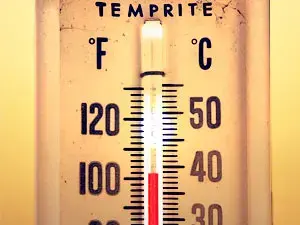
Month Min. Temp °C Max. Temp °C January -3 1 February -2 3 March 0 8 April 4 13 May 8 19 June 12 22 July 13 23 August 13 23 September 10 19 October 6 13 November 2 7 December -2 3
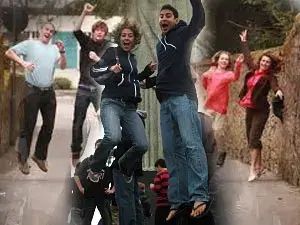
Due to the high influx of immigrants, Frankfurt is home to a mixture of people from more than 180 nationalities. Being a multicultural society has added greatly to the already rich German culture depicted in the monuments and museums. The population of nearly 2.3 million is comprised of people of all backgrounds and professions, including wealthy businessmen, college students, traders from countries as diverse as Turkey, U.S.A, Bosnia, Spain, France, Japan and India. With the increased transportation facilities, 35% of the people in the city are immigrants and 25% of the people living in Frankfurt don’t have German passports. These aspects also have downside. In the last decade, Frankfurt has experienced a rise in its crime rates especially with regard to smuggling and pick pocketing. Nevertheless, Frankfurt is an amazing place to be with some of the most hospitable, friendly and courteous people in the world, who aim at building strong relationships.
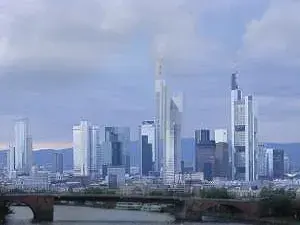
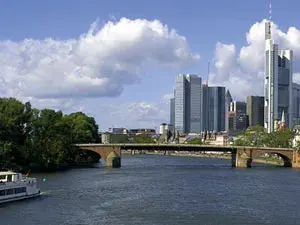
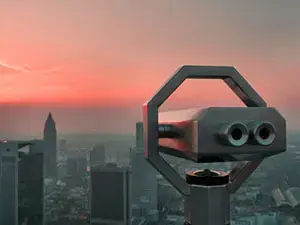
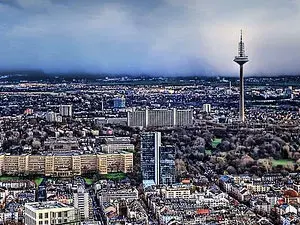
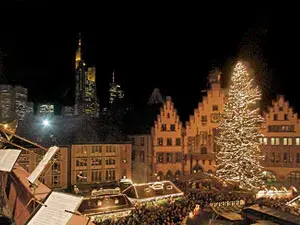
Frankfurt am Main is located by the Main River in Germany’s second largest metropolitan area. Home to the Frankfurt Stock Exchange, European Central Bank and the German Federal Bank, this dynamic city is known as the financial center of continental Europe and has been playfully nicknamed “Bankfurt” and “Mainhattan”. With intricate transportation networks, it also serves as a major hub and millions of people pass through Frankfurt Airport, Europe’s third busiest airport by passenger traffic, and Frankfurt Central Station each day. The city skyline is marked by impressive skyscrapers, including the two tallest skyscrapers in the EU: the Commerzbank Tower and Messeturm. Not only has the city progressed in economically, it has also preserved and built upon its monuments and traditional landmarks. More than 500,000 tourists are attracted each year to the various fairs and festivals held to celebrate the history and culture of Frankfurt and Germany. The city is also a leading contributor to education and research and is training its young minds and grooming an educated generation. Frankfurt’s juxtaposition of commerce and culture makes it an ideal city to live and work in, which has earned it the distinction of a spot among the top 10 most livable cities by Mercer’s Quality of Living survey.
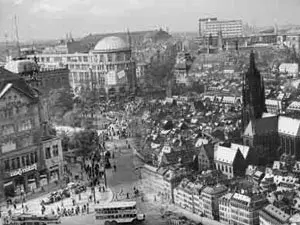
Most of Frankfurt’s history revolves around its location, a swampy valley at the intersection of two river channels. Though artifacts can be found dating back to the Paleolithic period, the first settlements were of the Romans during the first century CE. After Roman settlement, the first reference to the name Frankfurt in history appears as ‘Franconofurd’ the “ford of the Franks” where the river could be traversed by wading. Charlemagne had a royal court here and in 822, his son Emperor Ludwig the Pious, ordered the construction of the residential areas of the city. In the years following this, from 1074 to 1150, different tariffs, fairs and festival names were coined after Frankfurt and in 1152, Fredrick Barbarossa was named king of Germany. By 1240, Frankfurt was known as a ‘safe passage’ for tourists and its reputation as a fair trade city was built because it was the most profitable city of Germany. After being elected as a ‘free imperial city’ in 1372, the first Town Hall was built in Frankfurt in 1405. For about four centuries after this Frankfurt went through civil and political unrest with the Romans, Americans and the Jewish settlements. It was in 1800 that the fortification boundaries surrounding Frankfurt were demolished and the population numbers slowly rose from 35,000 to 100,000 to 400,000 in 1905. Within this period the major monuments of the city were, including the Alte opera. From 1948 onwards, Frankfurt witnessed an era of great development and progress with the opening of major banks, the establishment of an elaborate transportation system, and the growth of the city’s skyline with the addition of new skyscrapers. The Frankfurt we see today is one that carries a rich history of war and struggle. Every monument, park and alleyway has a story to tell.