Samarkand heritage core
Registan
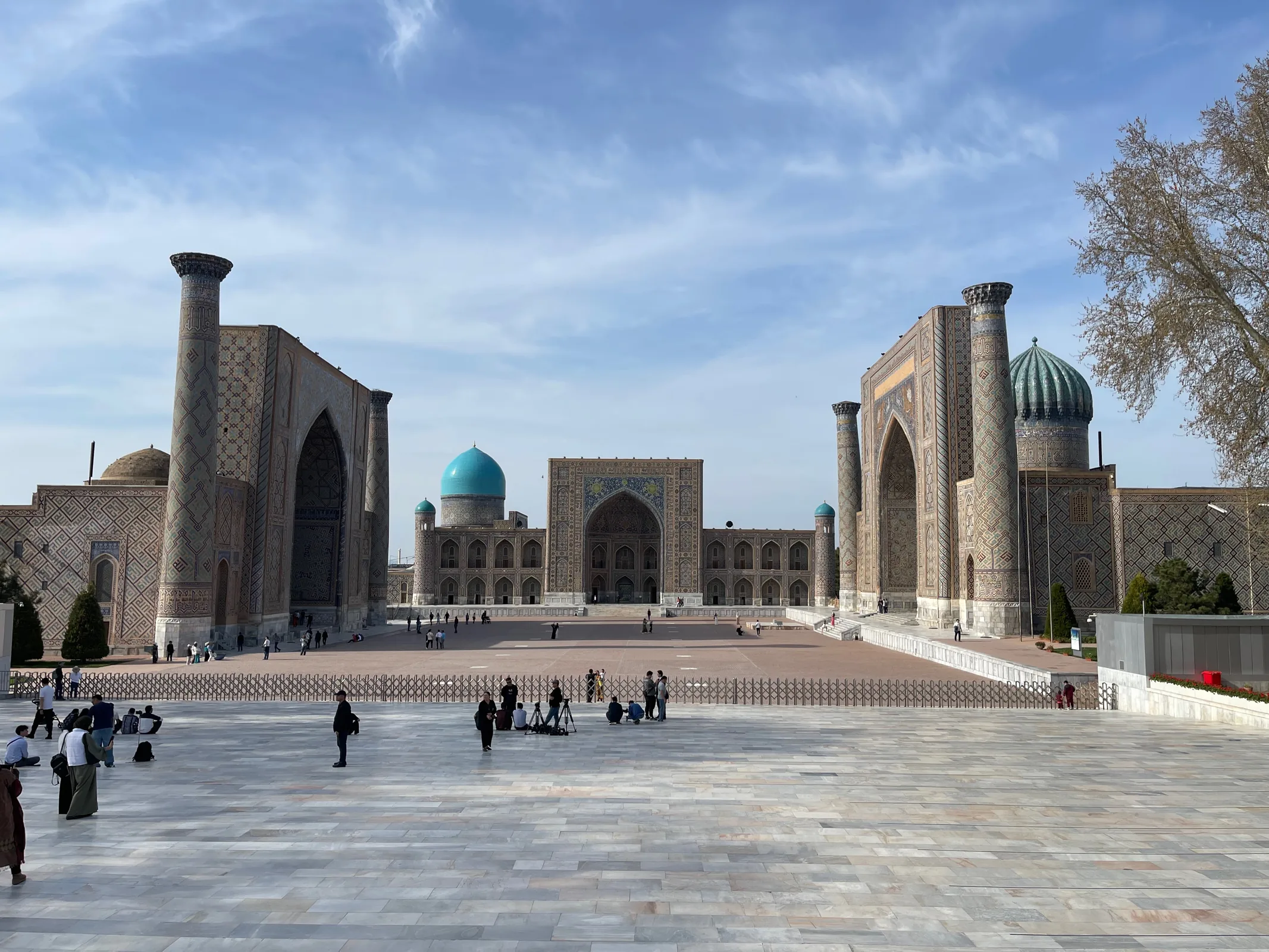
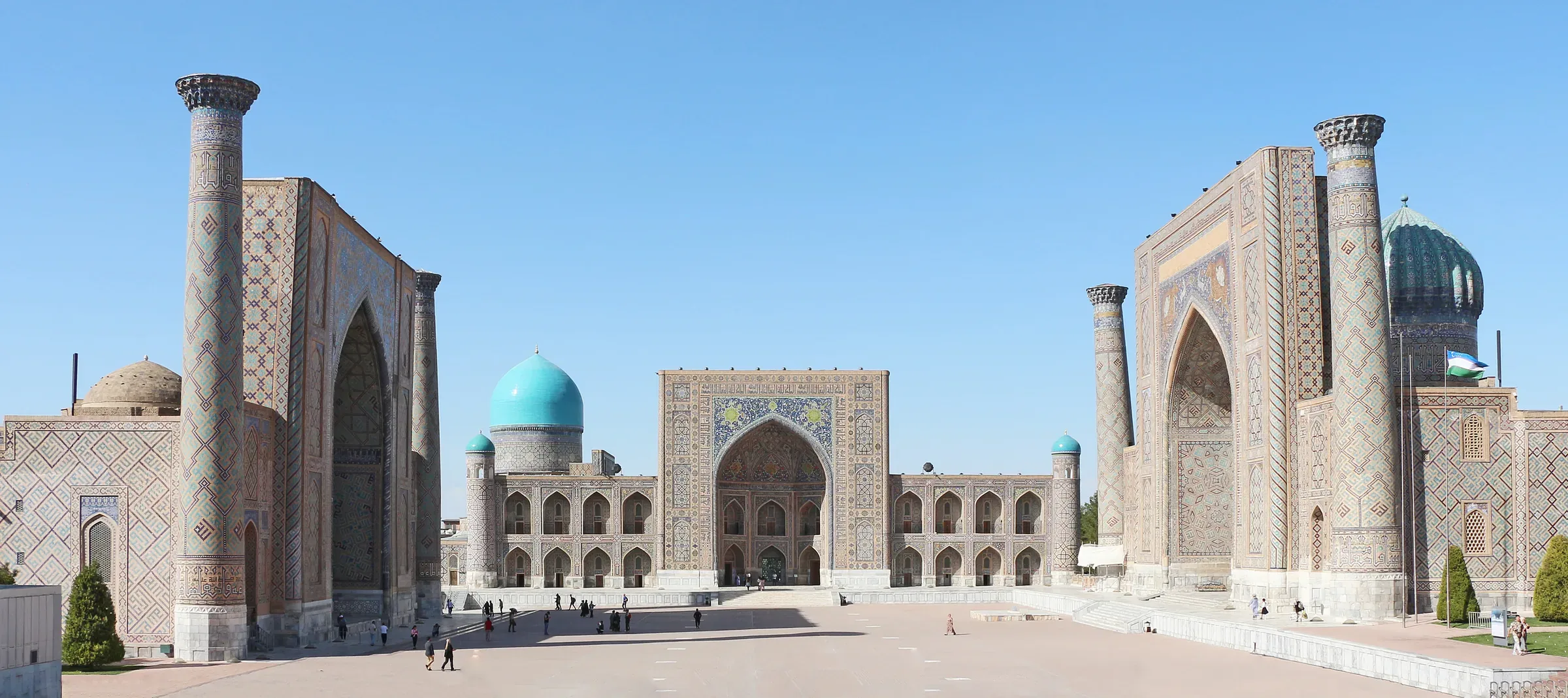
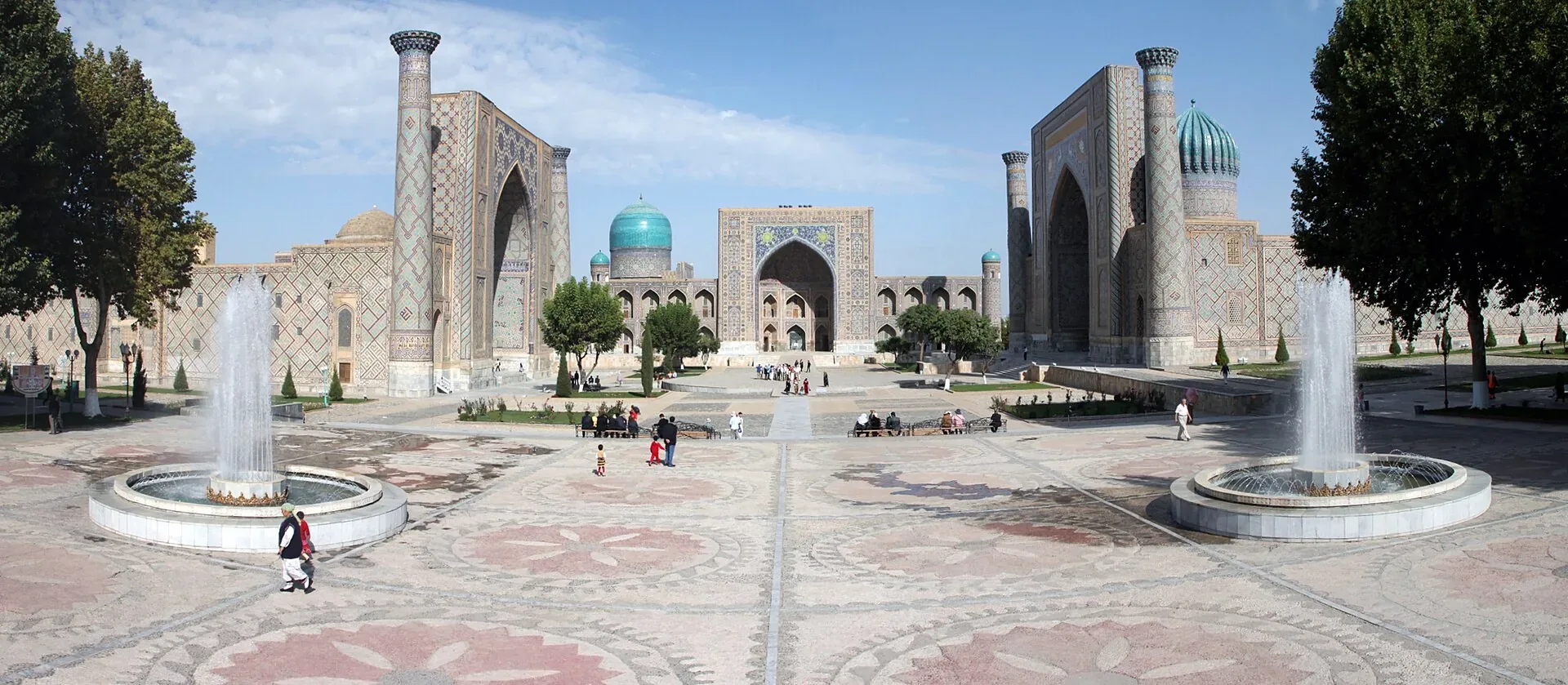
Samarkand’s great public square, framed by three Timurid madrasas and at its most memorable when given time to explore.

The essentials for entering, timing and managing a Samarkand trip without relying on stale rates or generic Central Asia advice.
Samarkand’s great public square, framed by three Timurid madrasas and at its most memorable when given time to explore.
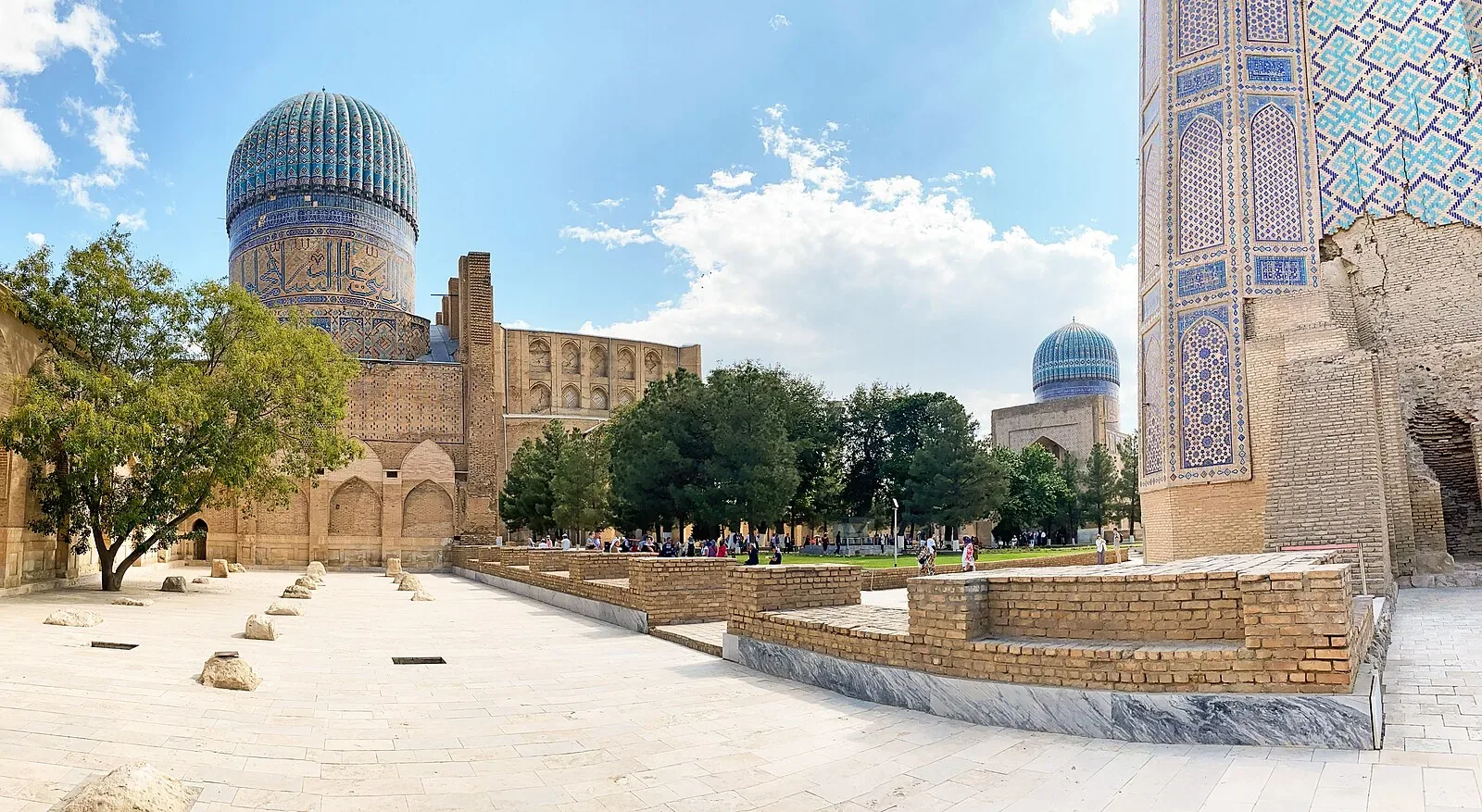
A vast Timurid mosque beside Siyob Bazaar, where monumental scale and surviving tilework define the northern heritage core.
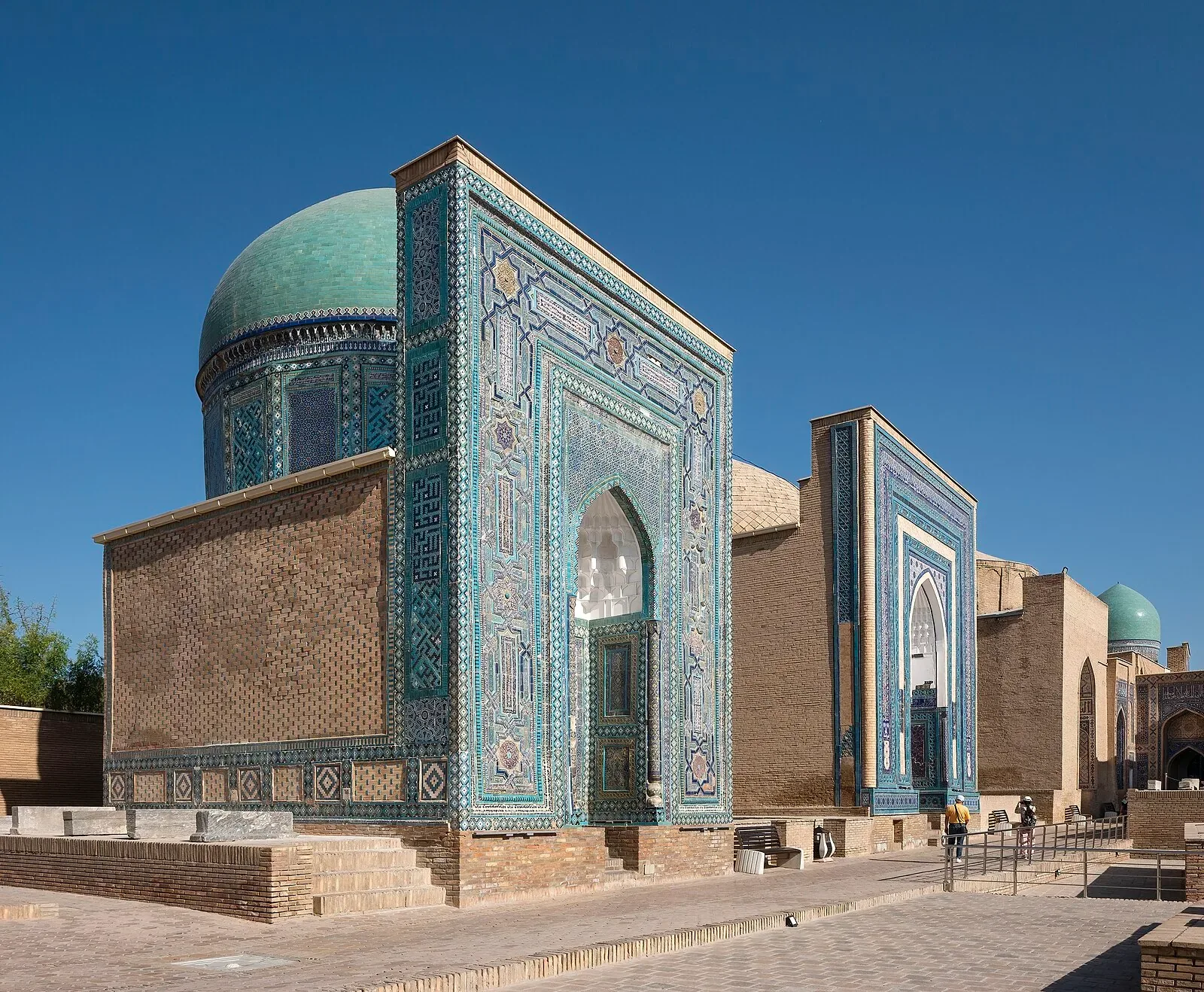
Shah-i-Zinda is a sacred Samarkand necropolis associated with Qusama ibn Abbas, with mausoleums, mosques and ritual structures spanning the eleventh to nineteenth centuries and richly decorated blue and turquoise tilework.
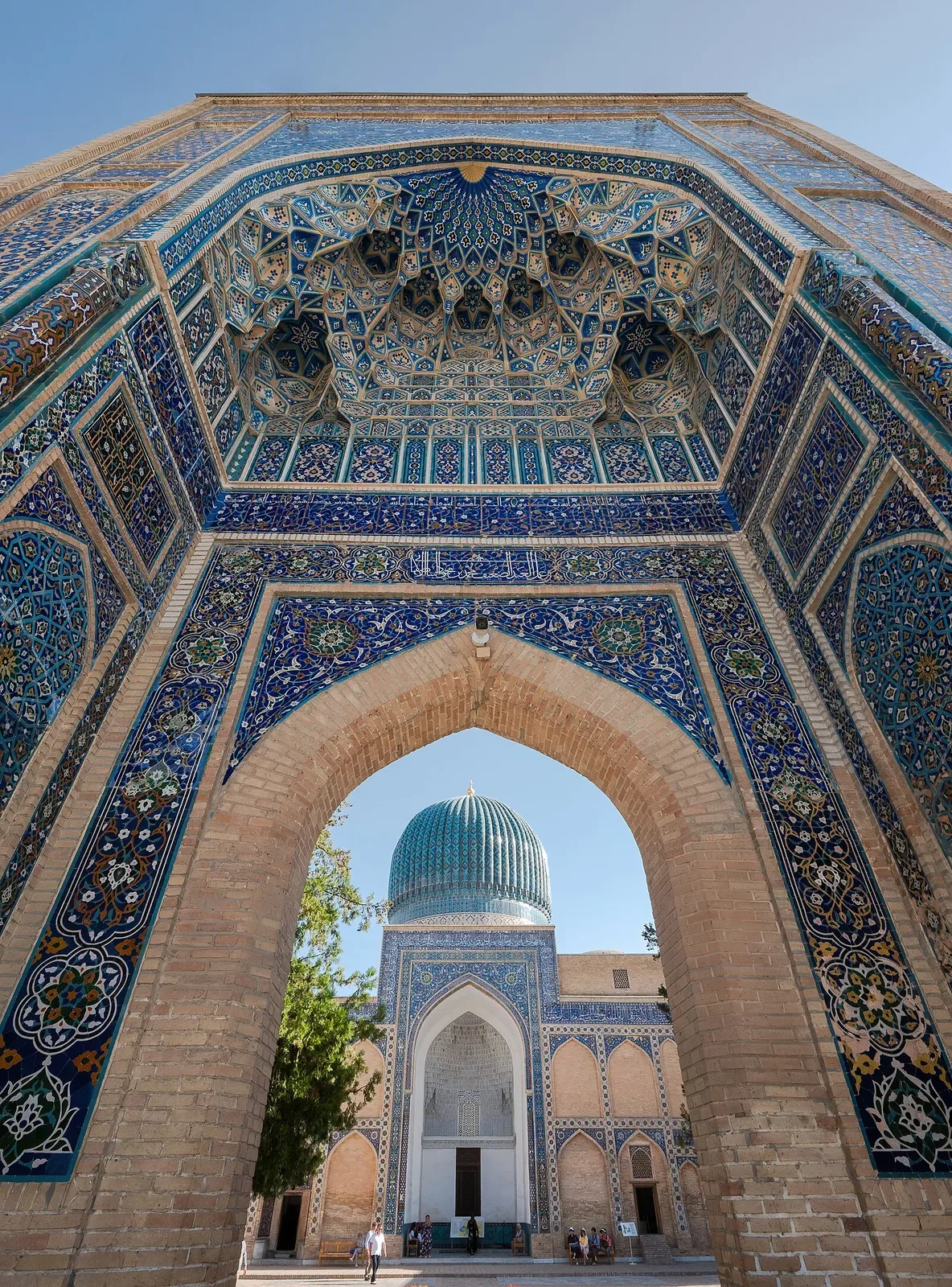
Gur-e Amir is the Timurid dynastic mausoleum and the resting place of Amir Temur, whose jade tombstone and family crypt anchor one of Samarkand’s most important historical visits.
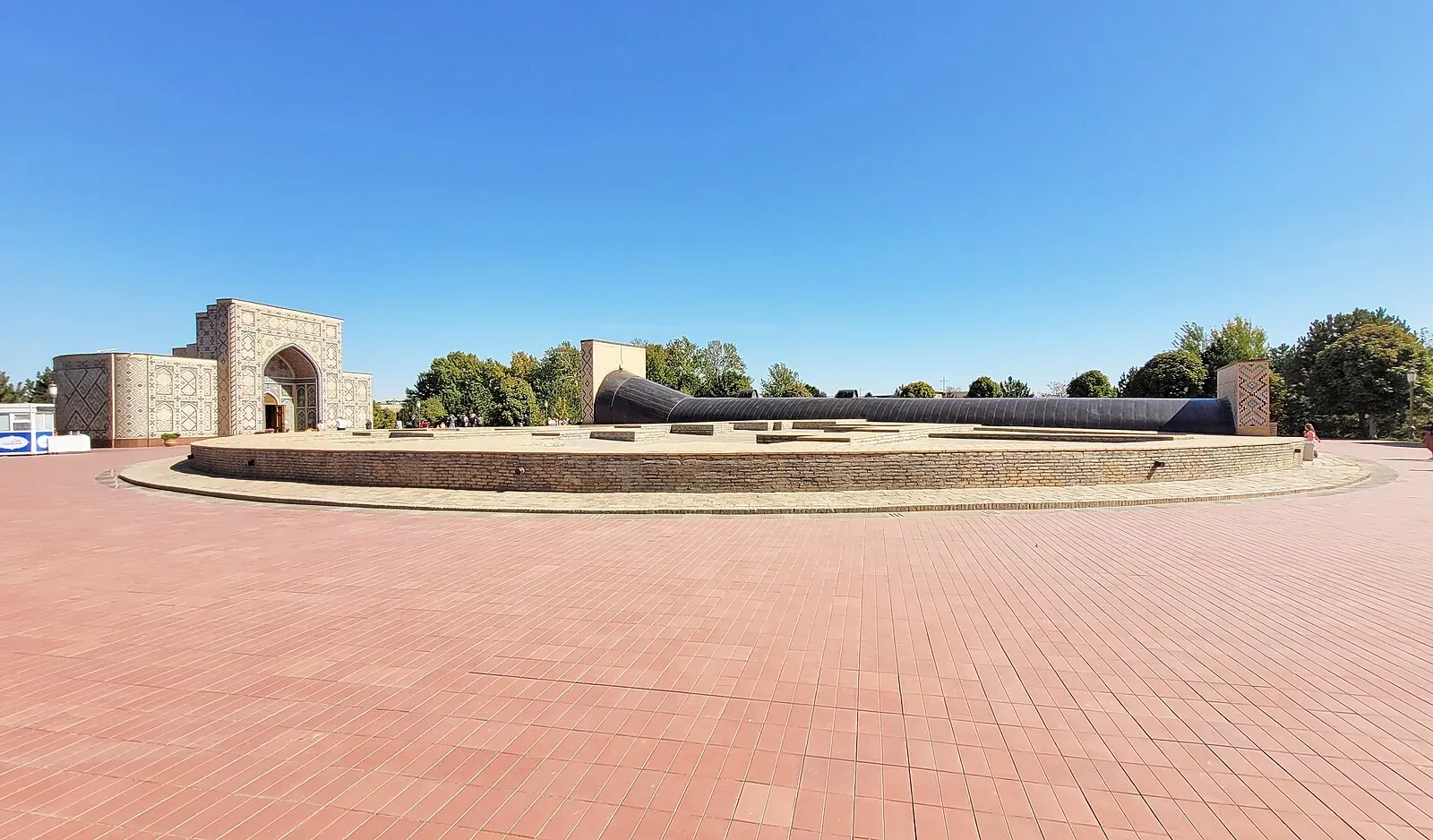
The surviving astronomical instrument and museum of Ulugh Beg’s fifteenth-century observatory.
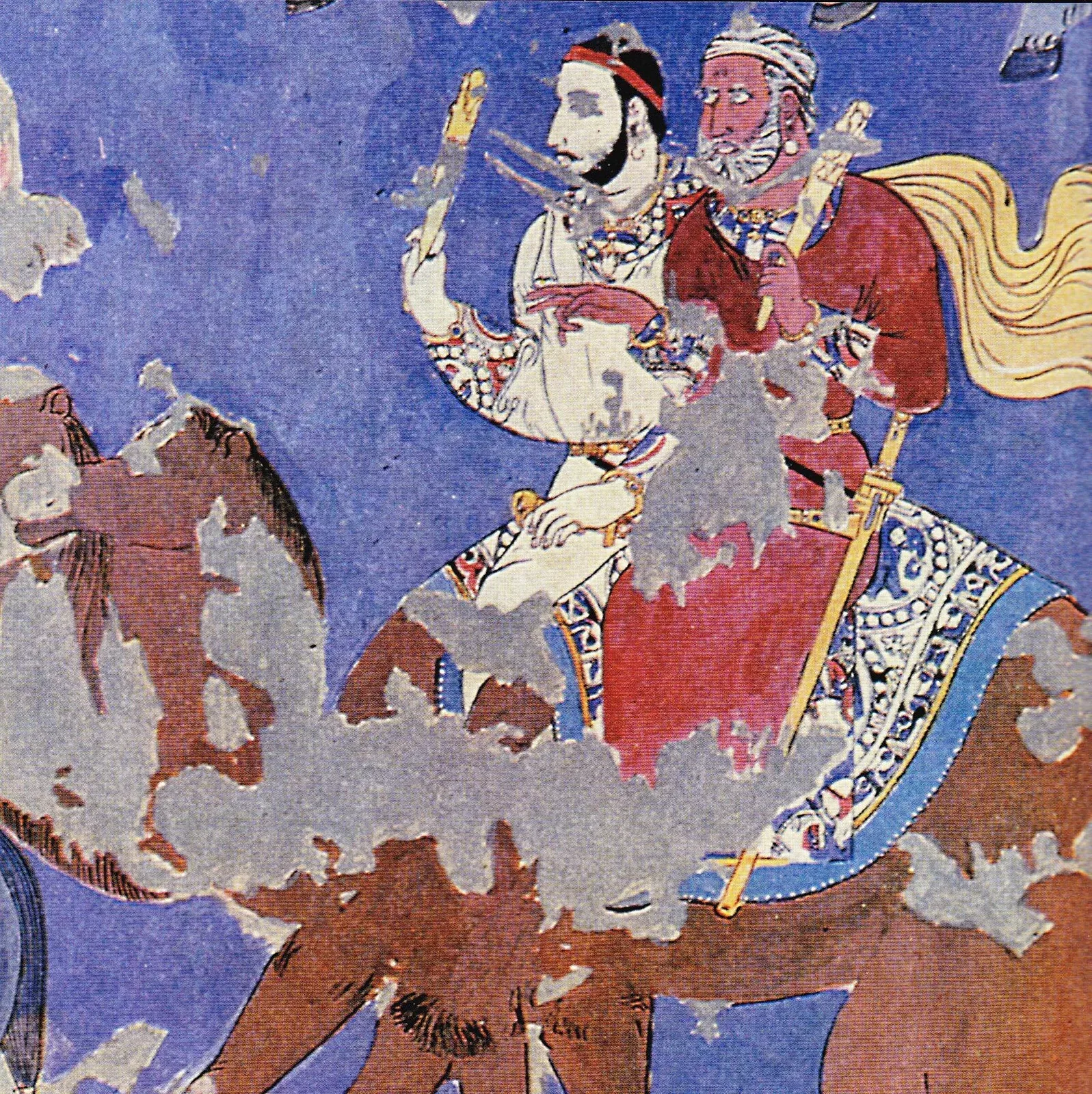
The essential introduction to ancient Samarkand, centred on the seventh-century Sogdian murals discovered at Afrasiab.
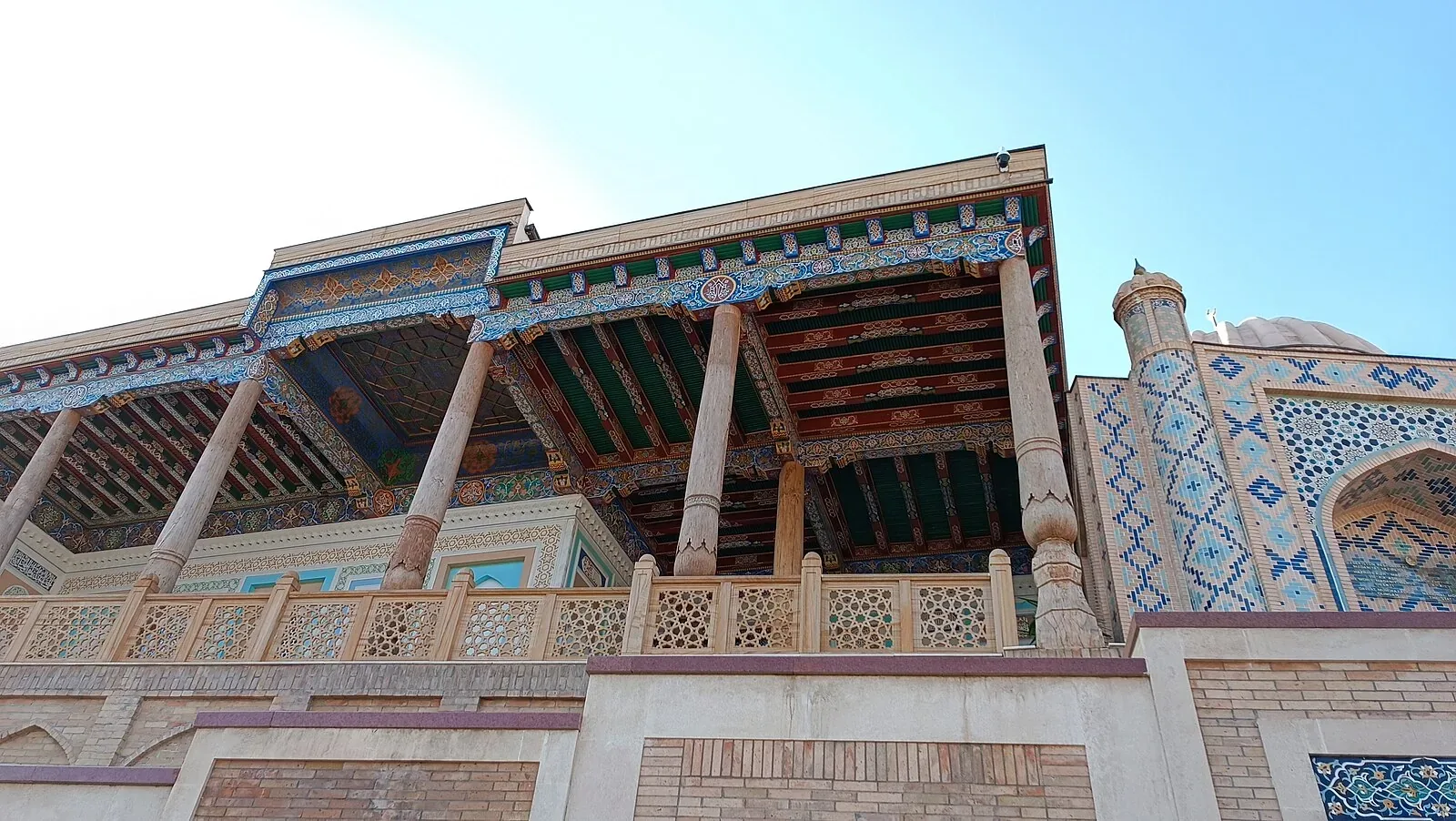
A hilltop mosque above the northern heritage route, valued for its veranda, graceful silhouette and broad Samarkand views.
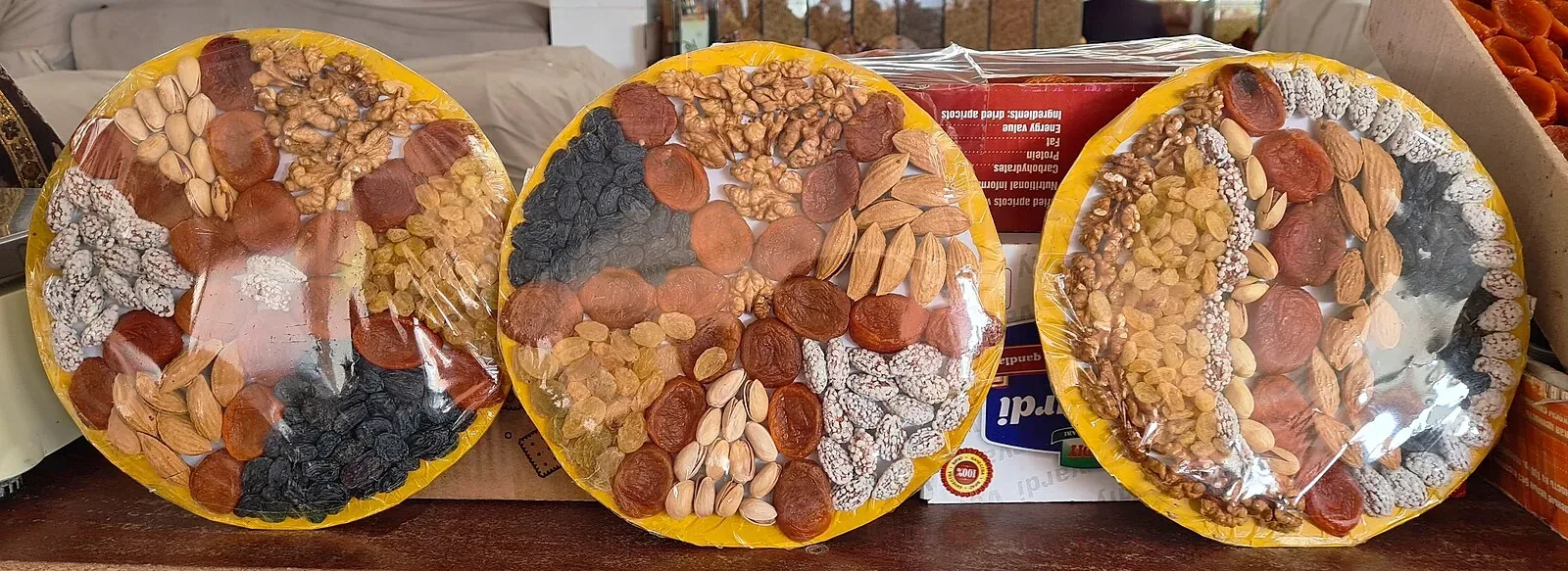
Samarkand’s working food market beside Bibi-Khanym, best for non bread, dried fruit, nuts, spices and everyday local shopping.
The revered inner mausoleum at Shah-i-Zinda, set within one of Samarkand’s most richly tiled Timurid necropolises.
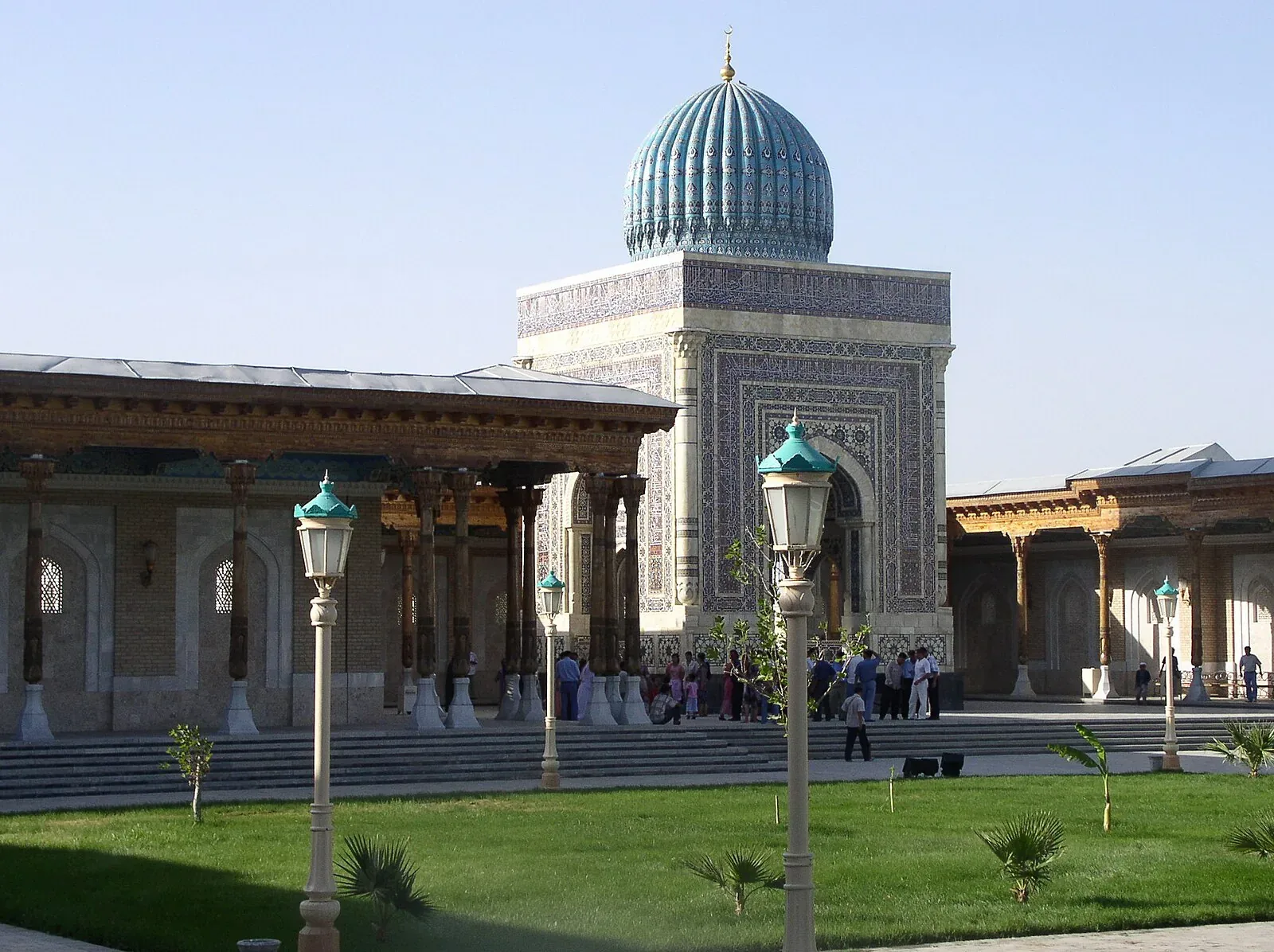
A memorial at Hartang outside Samarkand, centred on the burial place of Imam al-Bukhari and best visited as a dedicated excursion.
A deliberately spacious first visit: a central heritage day followed by ancient Afrasiab and the eastern corridor, with Hartang kept as an optional regional excursion.
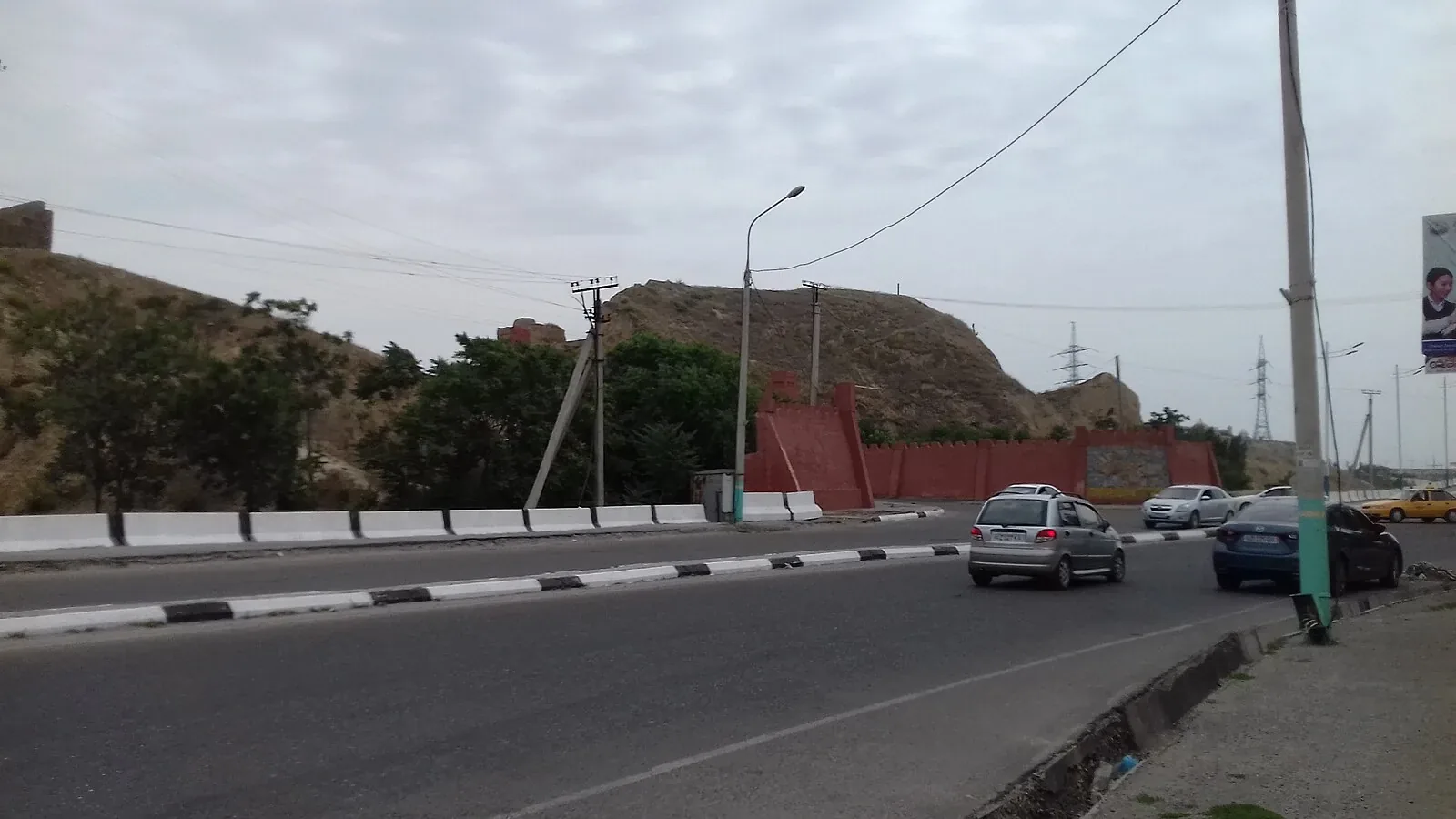
A taxi-linked day beyond the headline square, connecting ancient Samarkand, its mural museum, nearby sacred sites and Ulugh Beg’s scientific legacy.
A flavour-led Samarkand day that joins Bibi-Khanym and Siab Bazaar with a short Konigil craft excursion and a relaxed central dinner.
A visual, hands-on day for families: bold architecture, market colours, ancient murals and a craft workshop, paced with breaks rather than a long monument checklist.
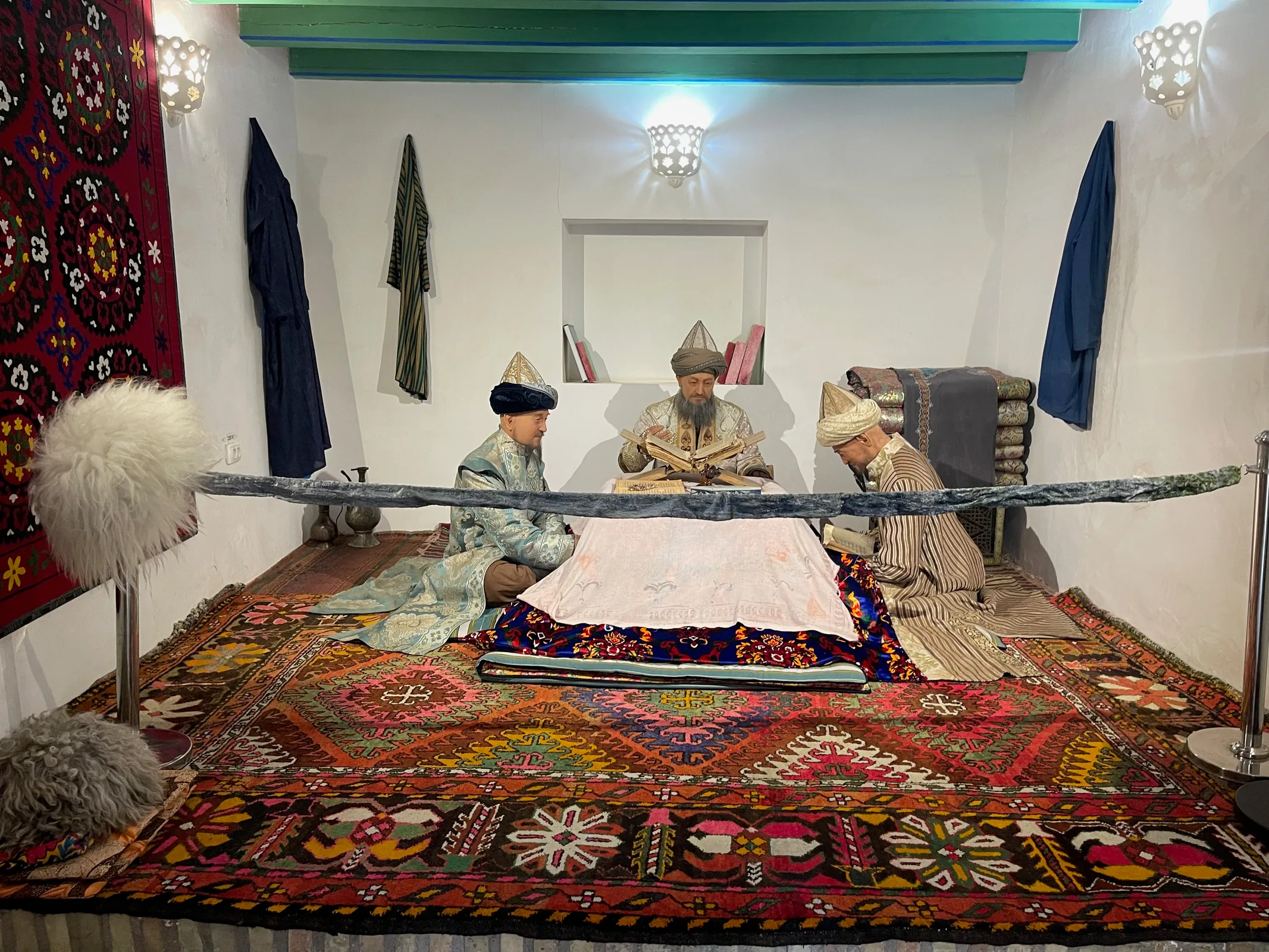
A respectful city-centre day tracing Samarkand’s sacred architecture and Islamic intellectual heritage, with a calm rhythm for reflection and meals.
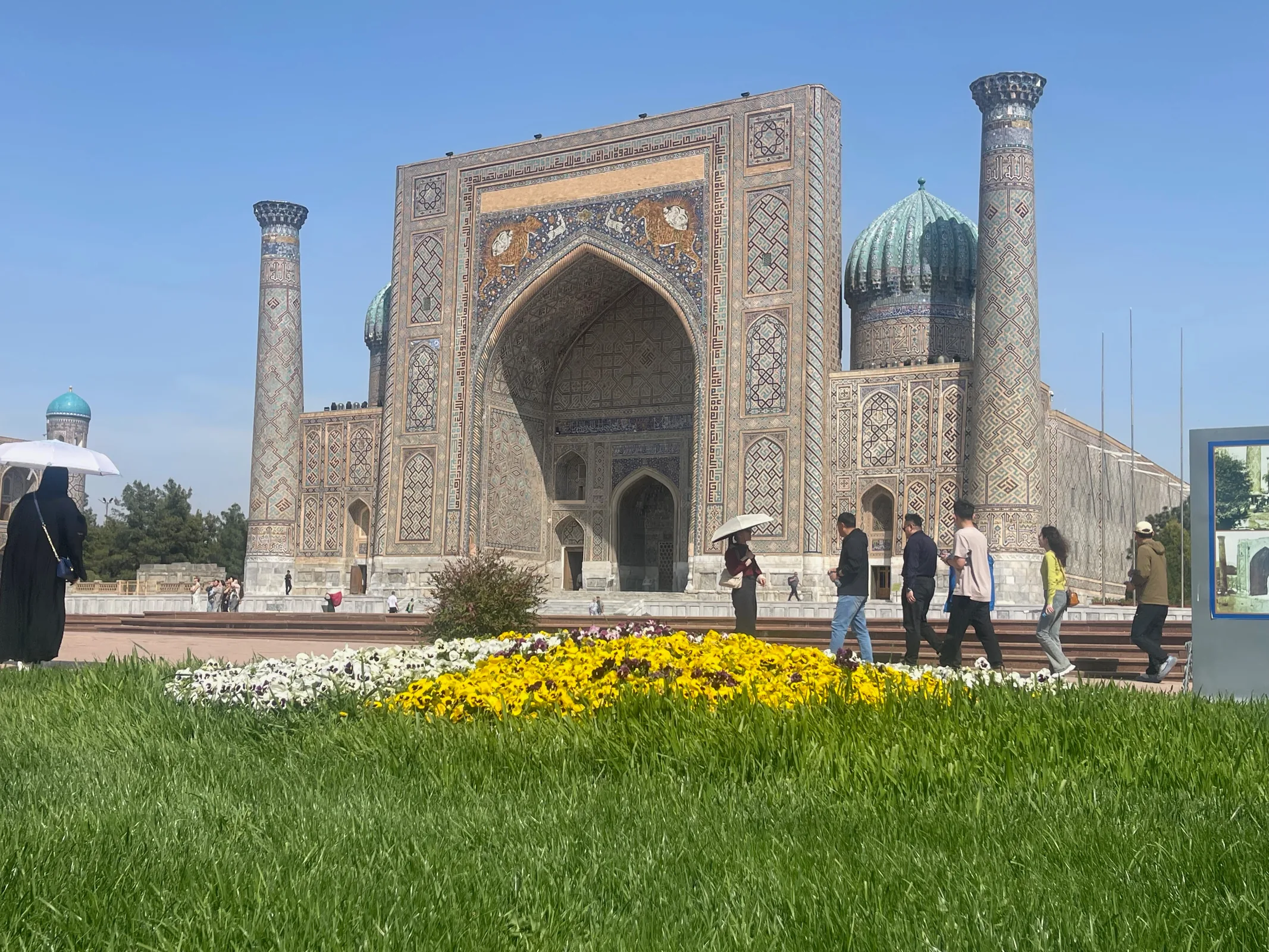
A full but walkable first introduction to Samarkand, linking Registan’s three madrasahs with the northern heritage corridor, market lunch and Shah-i-Zinda.
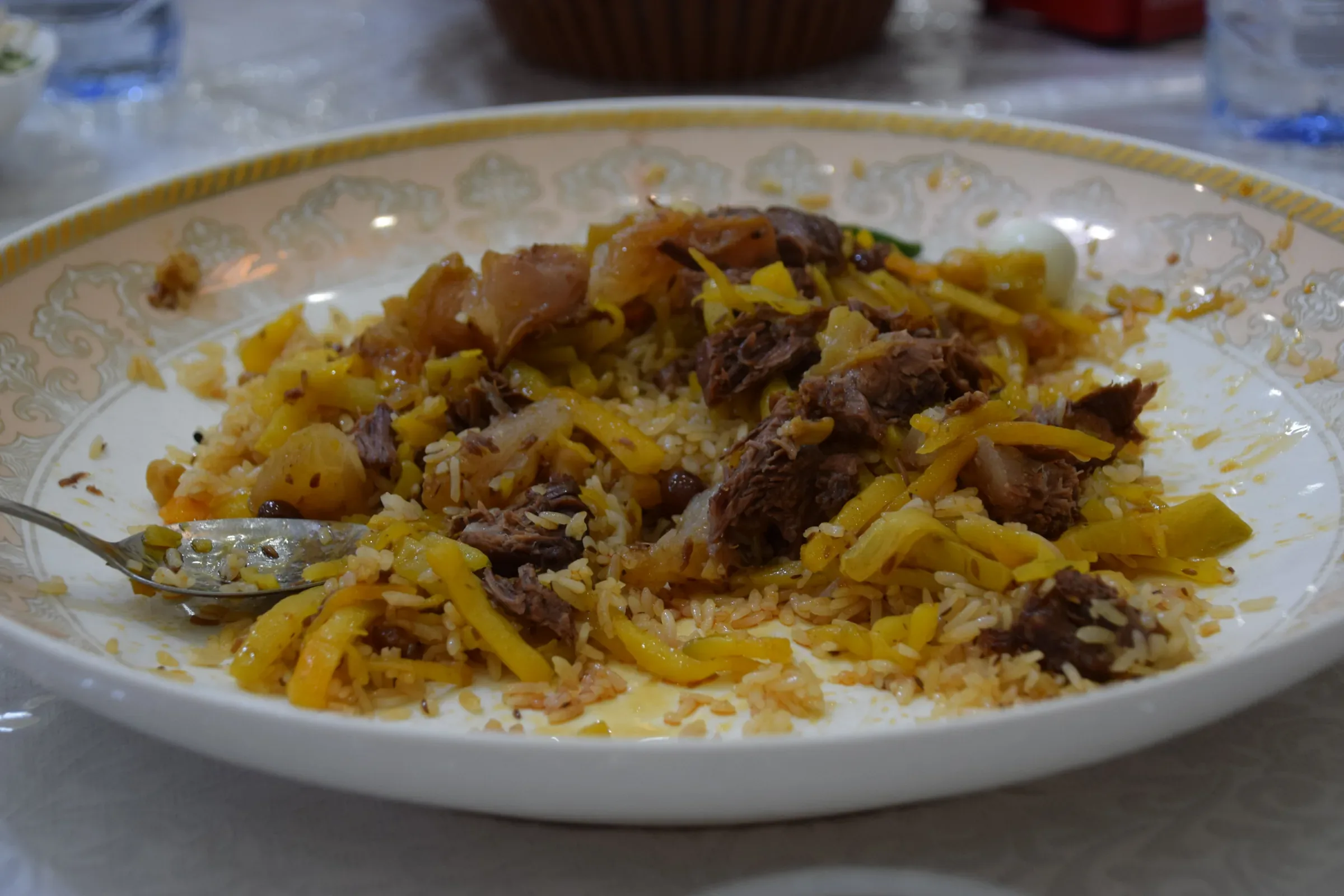
A focused Ibn Sino Street lunch stop for Samarkand plov, tomato salad, non bread and tea in a lively local dining hall.
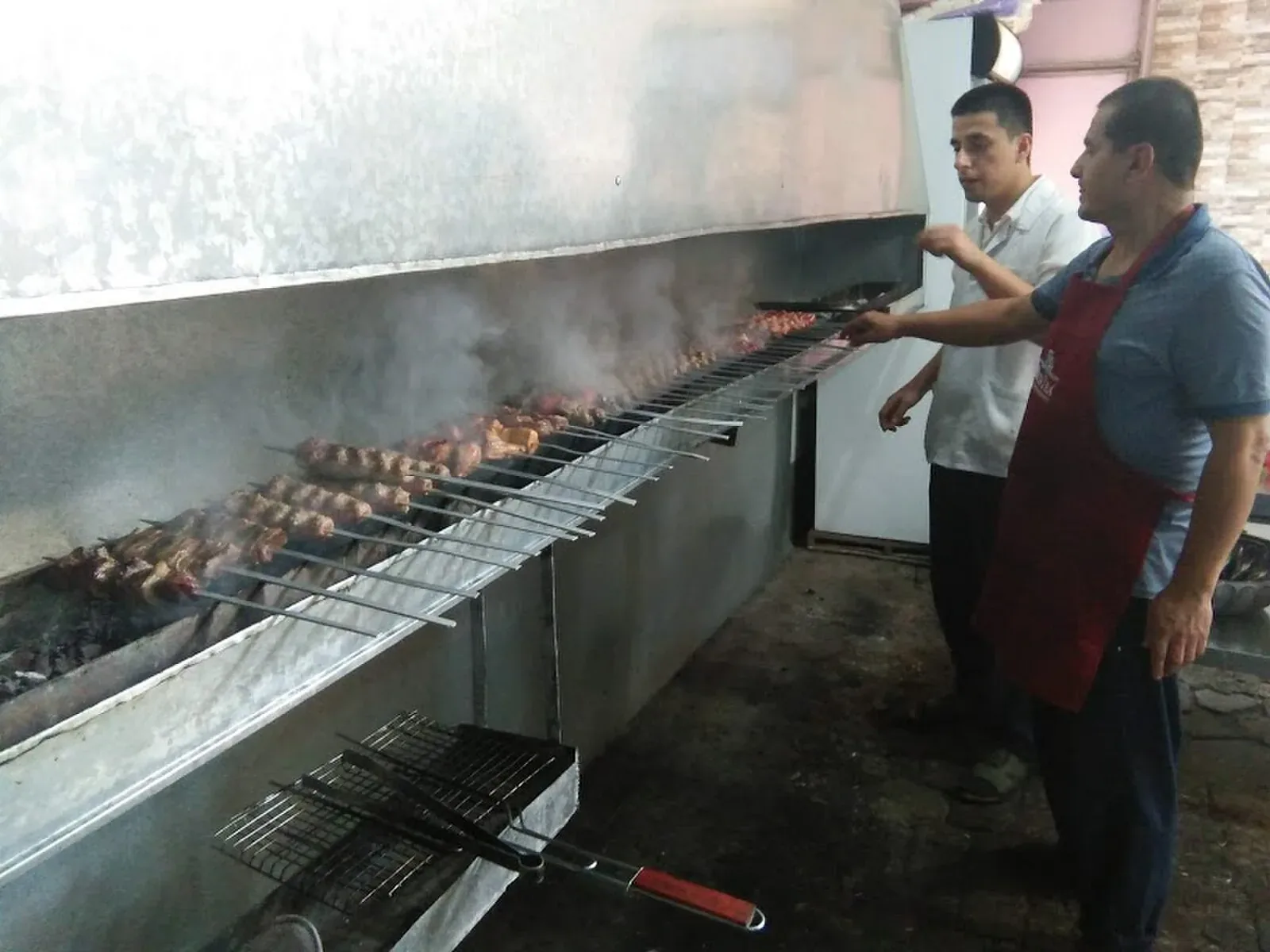
A casual Chorraxa Street grill near Bibi-Khanym and Siyob Bazaar, serving freshly prepared skewers with bread, salads and tea.
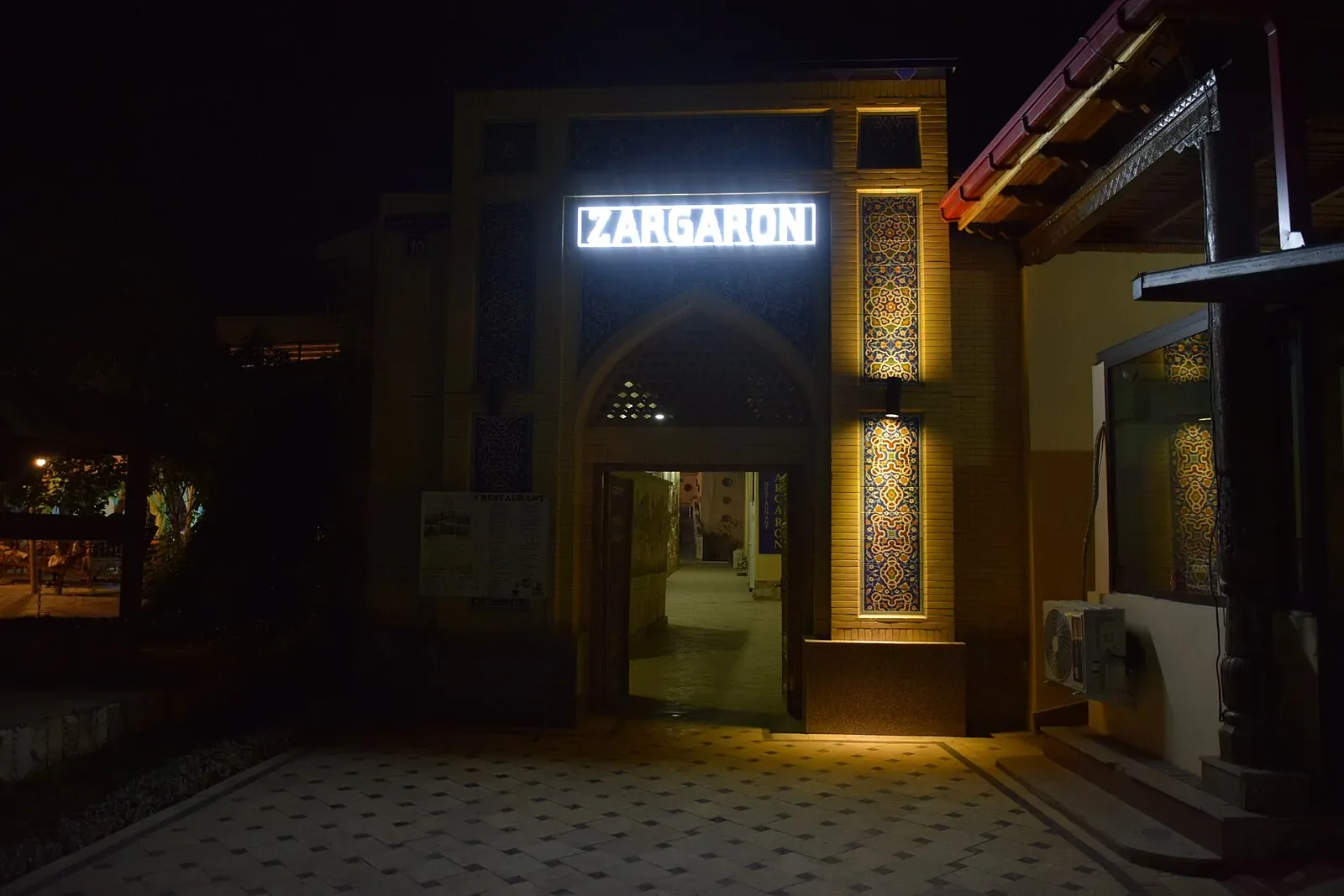
A calm hotel restaurant beside Bibi-Khanym Mosque, ideal for a comfortable Uzbek meal between Siyob Bazaar and the heritage sights.
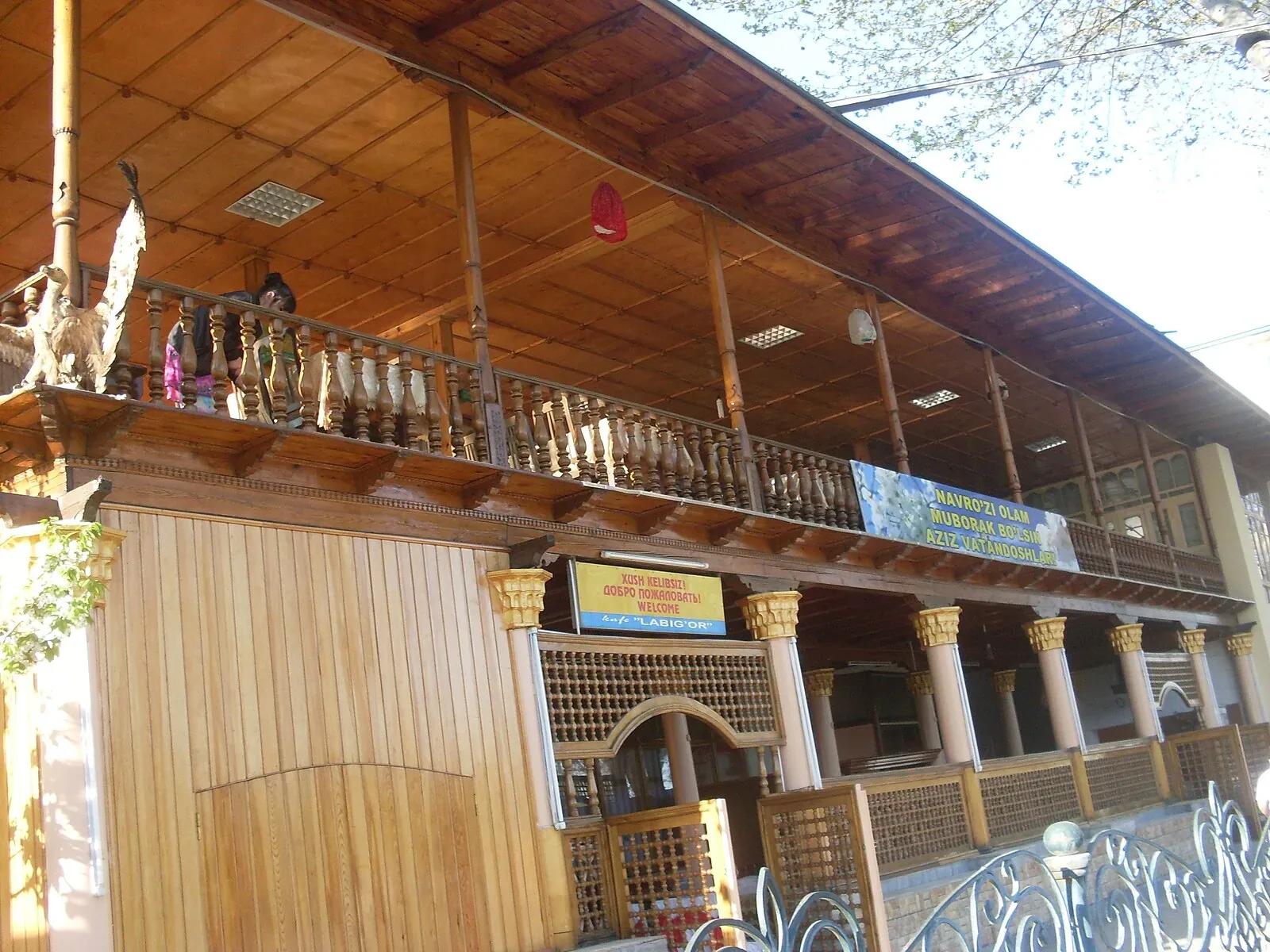
A central Registan Street restaurant for varied Uzbek dishes, tea and a flexible seated break close to the heritage core.
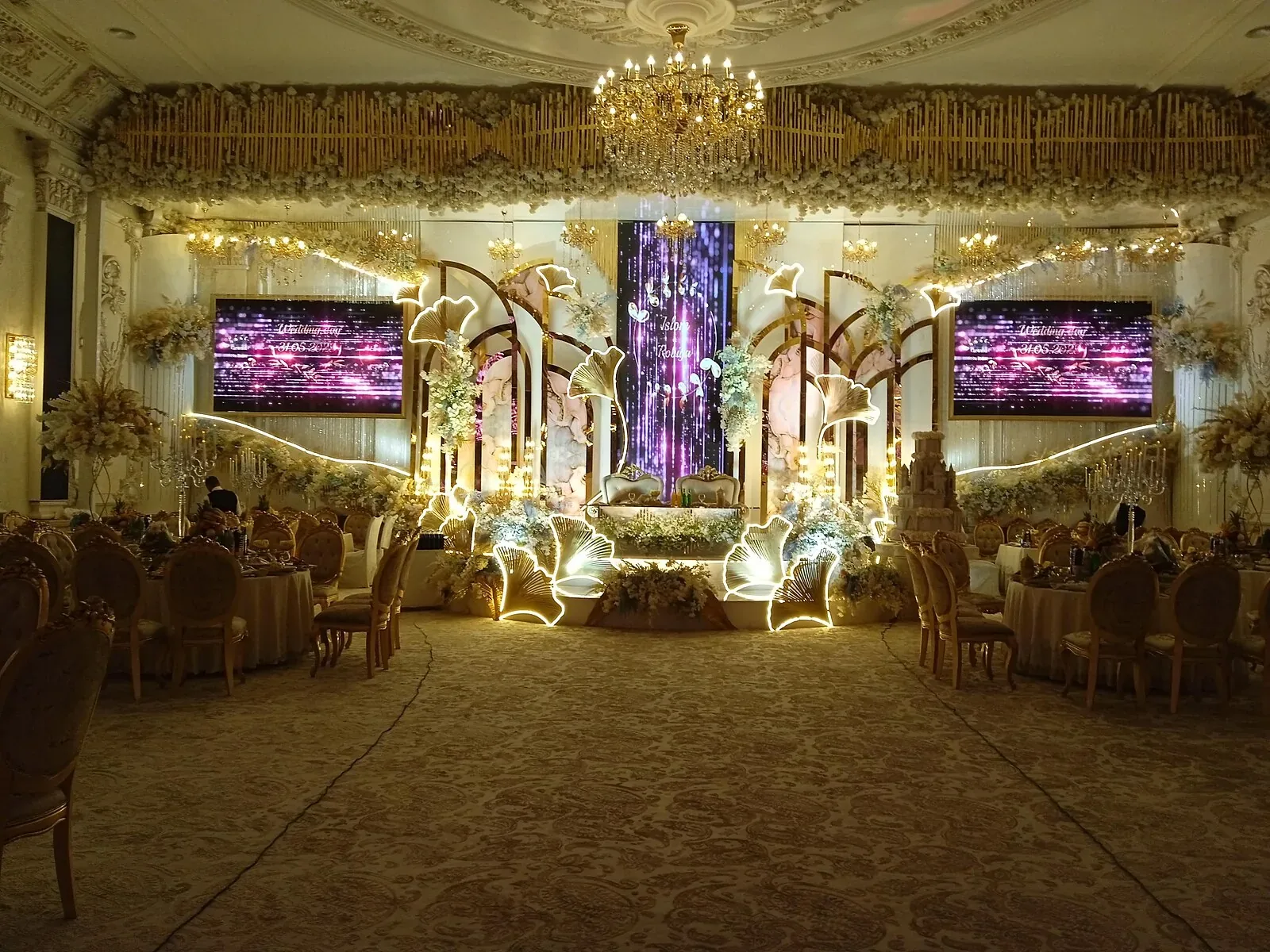
A large northern Samarkand dining hall for extended families, celebrations and broad shared Uzbek meals away from the old-city core.
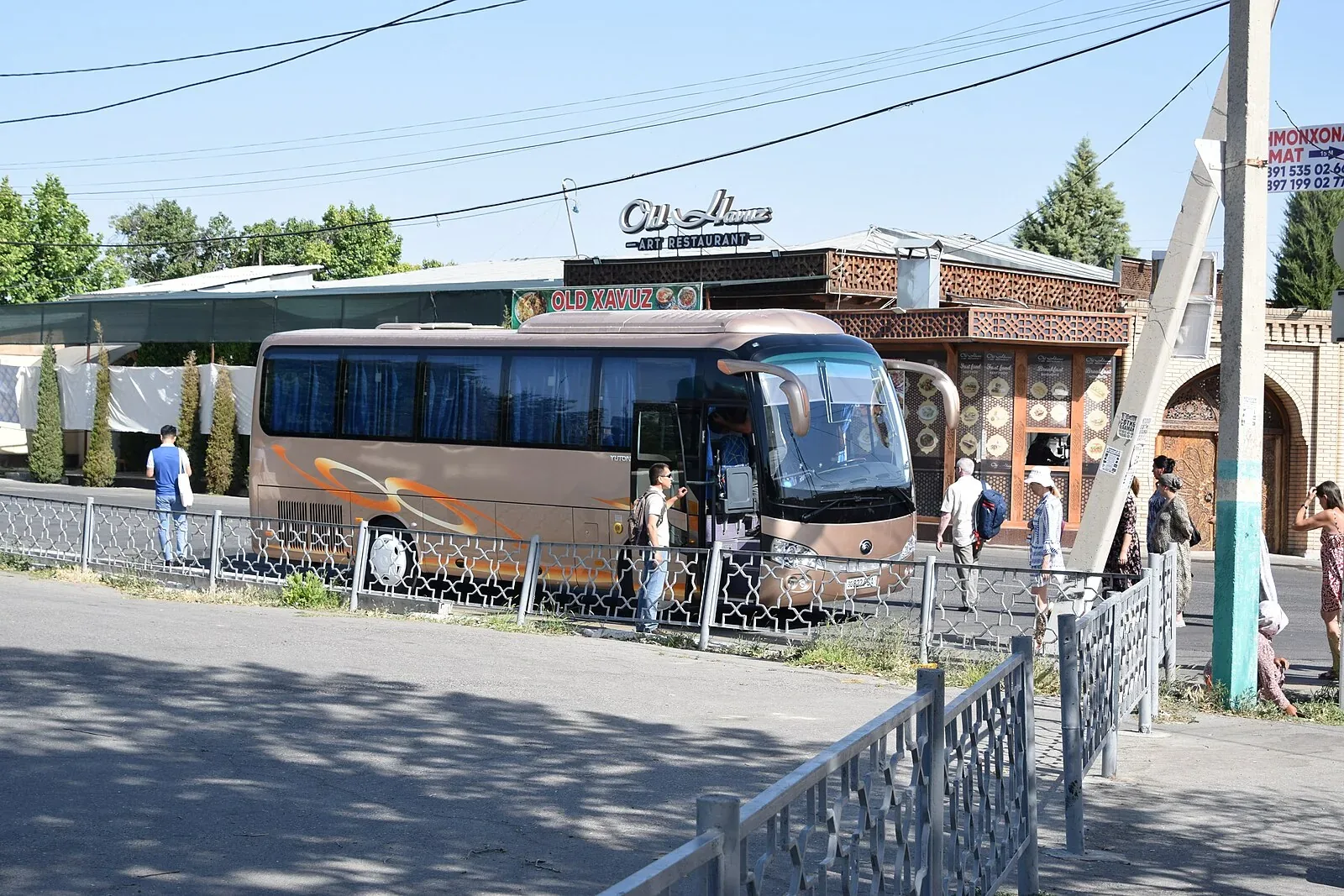
A characterful Pasdarg‘om Street courtyard restaurant for shared Uzbek dishes, close to Registan, Gur-e Amir and the central heritage walks.
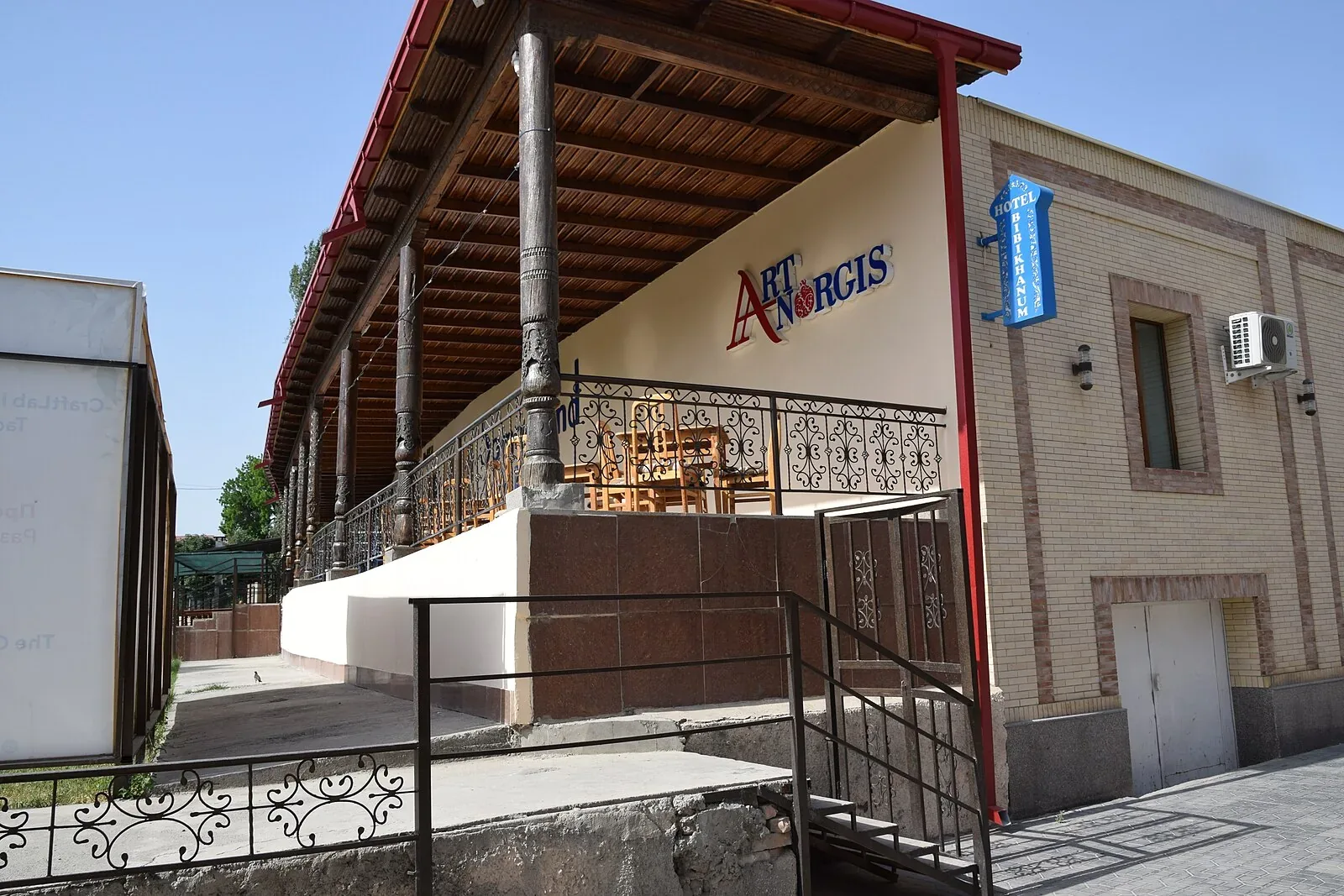
A polished terrace restaurant on Islom Karimov Street, offering a comfortable Uzbek meal between Registan, Bibi-Khanym and Siyob Bazaar.
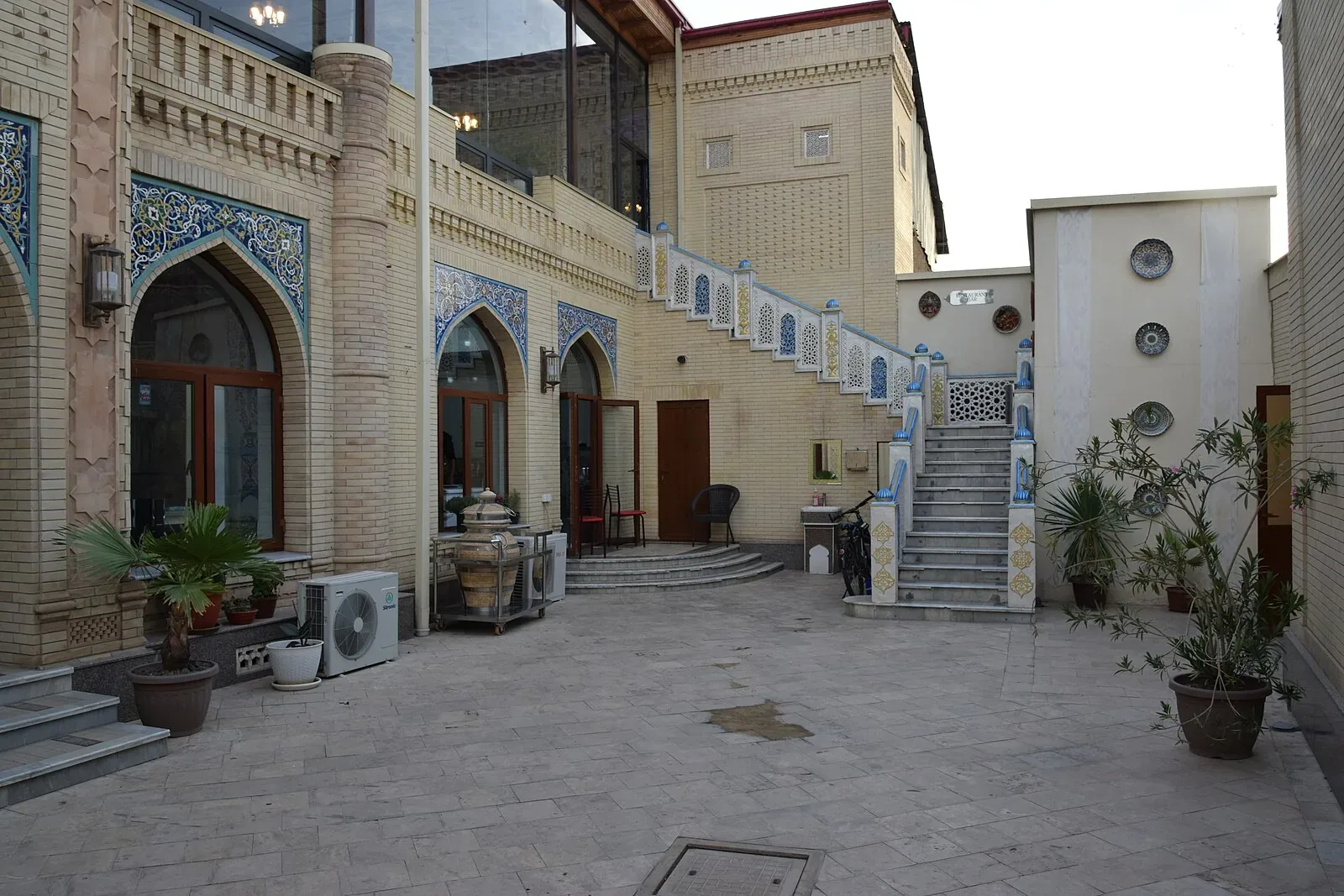
A courtyard-style Uzbek restaurant beside Bibi-Khanym and Siyob, with flexible hours for a family meal in the northern heritage core.
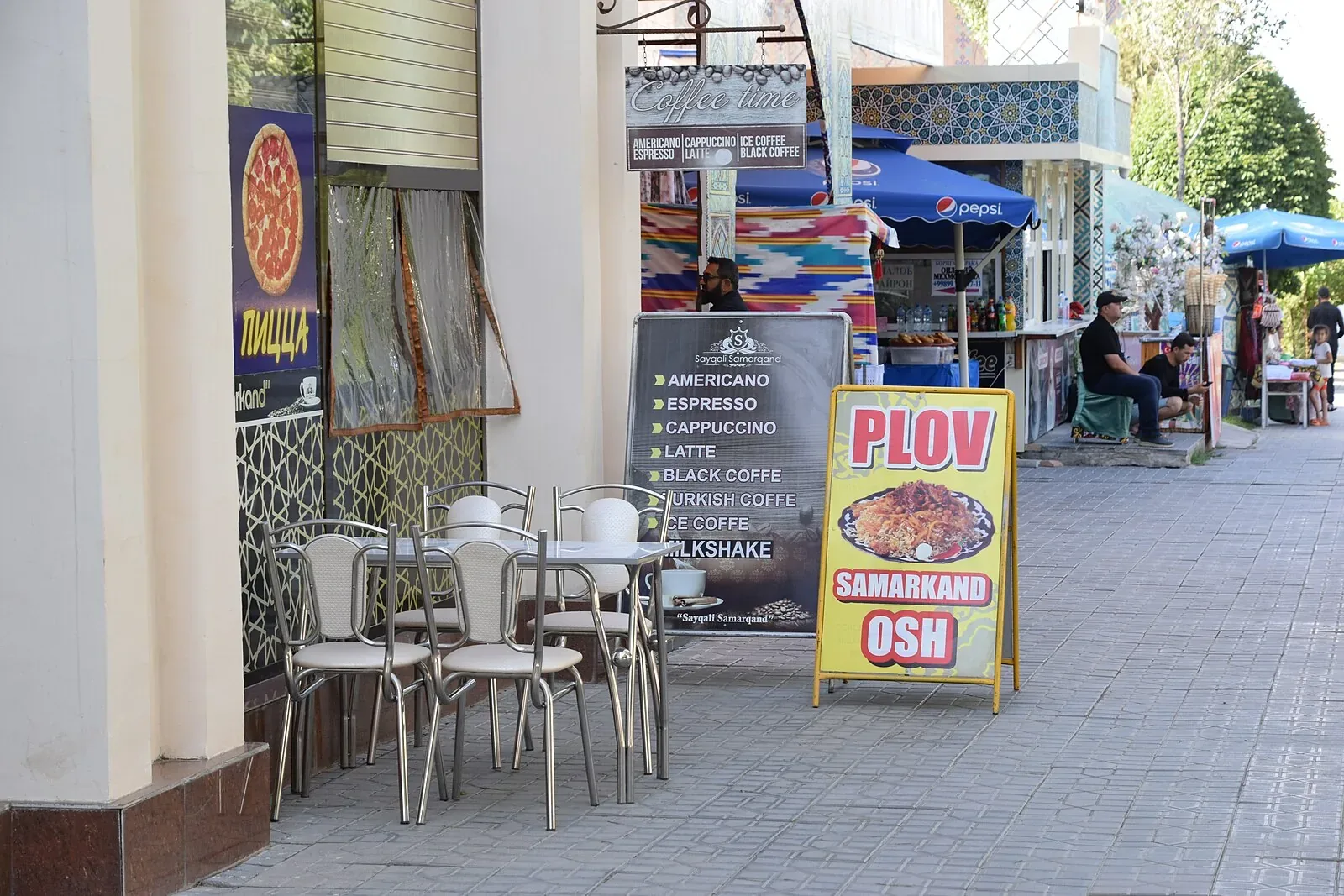
A compact Islom Karimov Street stop for plov, lavash and quick Uzbek comfort food between Registan and the Bibi-Khanym–Siyob cluster.
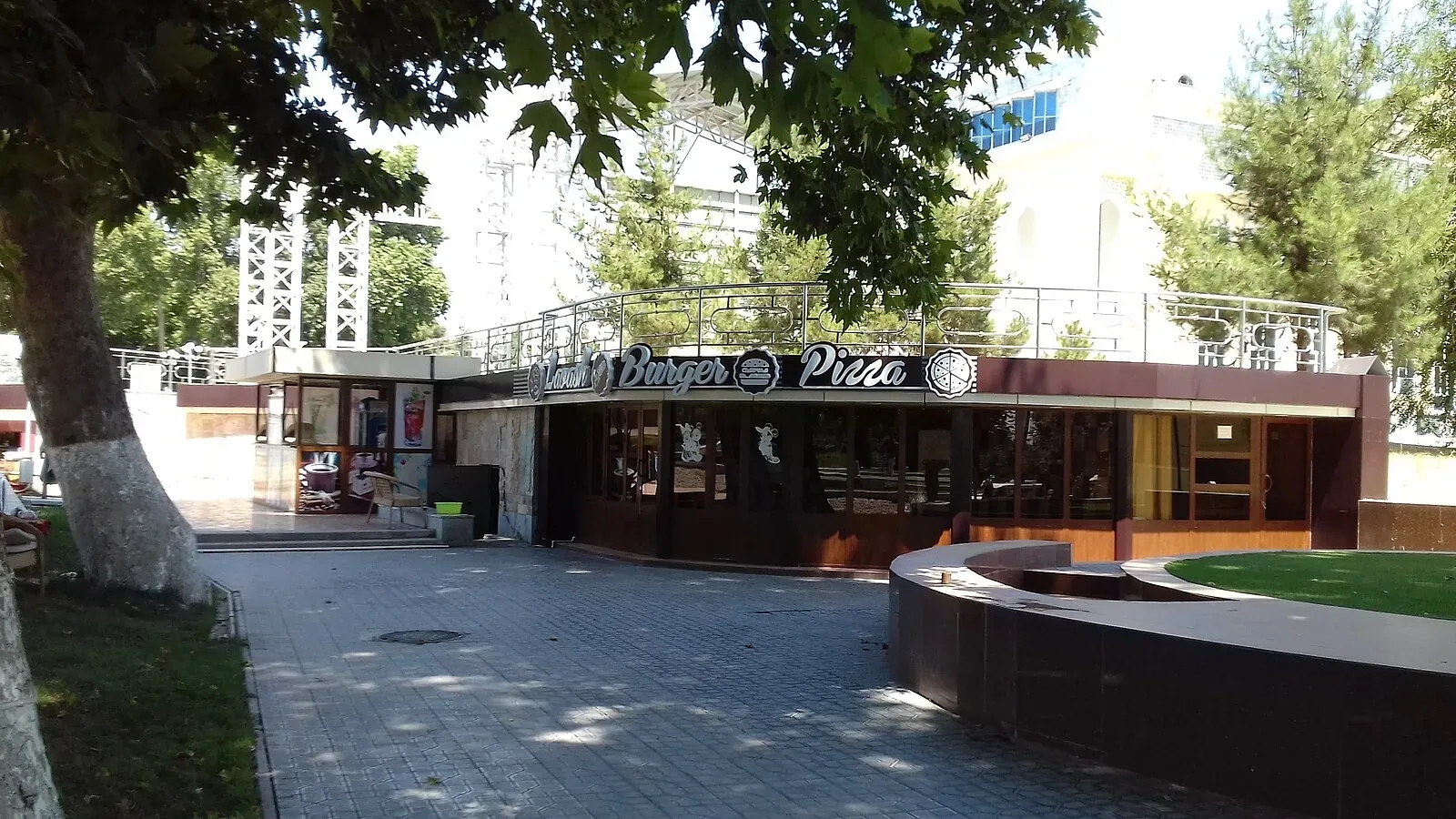
A casual, low-cost café-and-fast-food stop near Samarkand theatre for flexible small orders between Registan and the boulevard area.
Loading local prayer times…
Calculated times. Confirm congregation times with your local masjid.
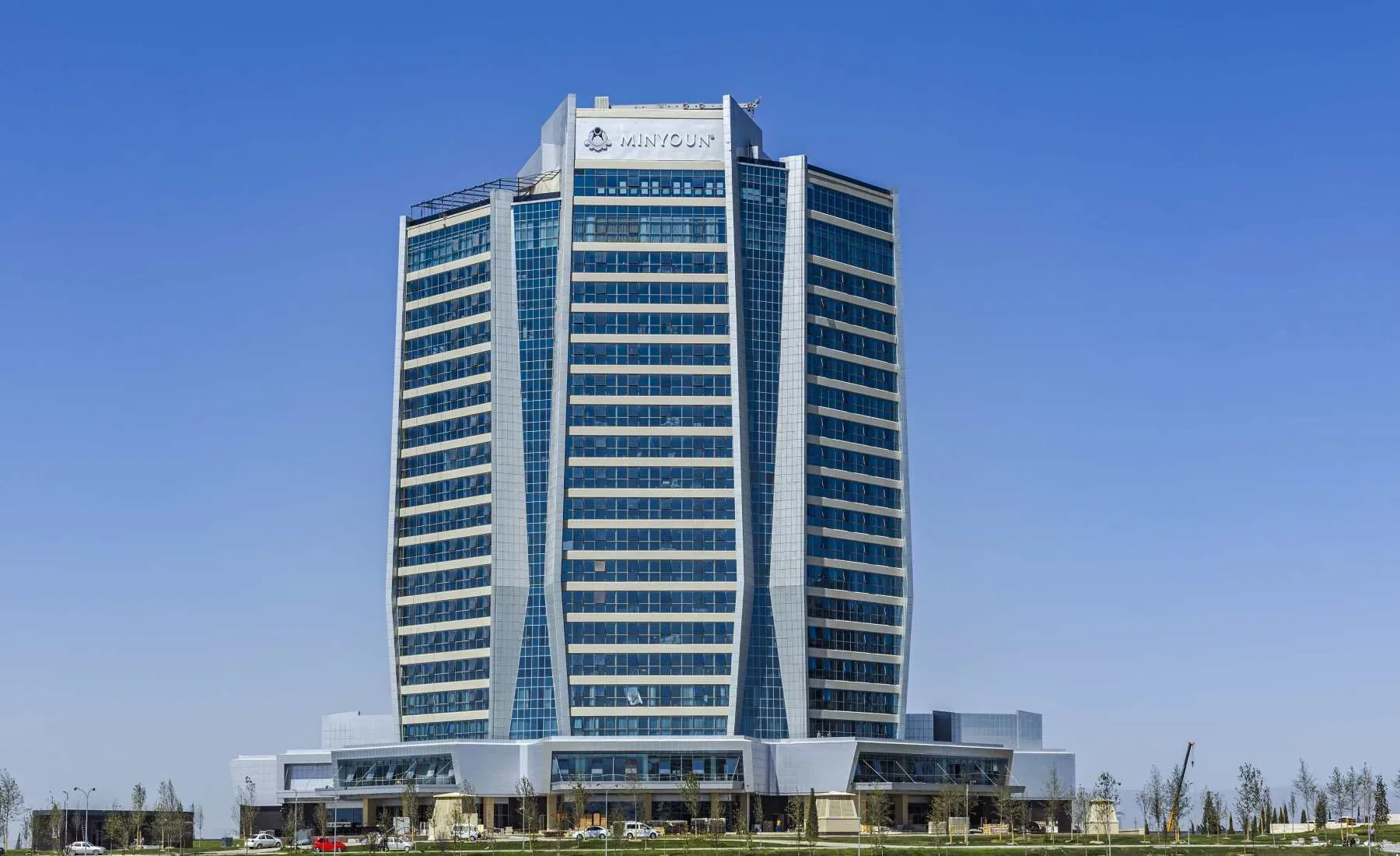
A five-star, 241-room resort hotel with a panoramic lounge, Pan-Asian dining and Mirage Spa & Wellness.
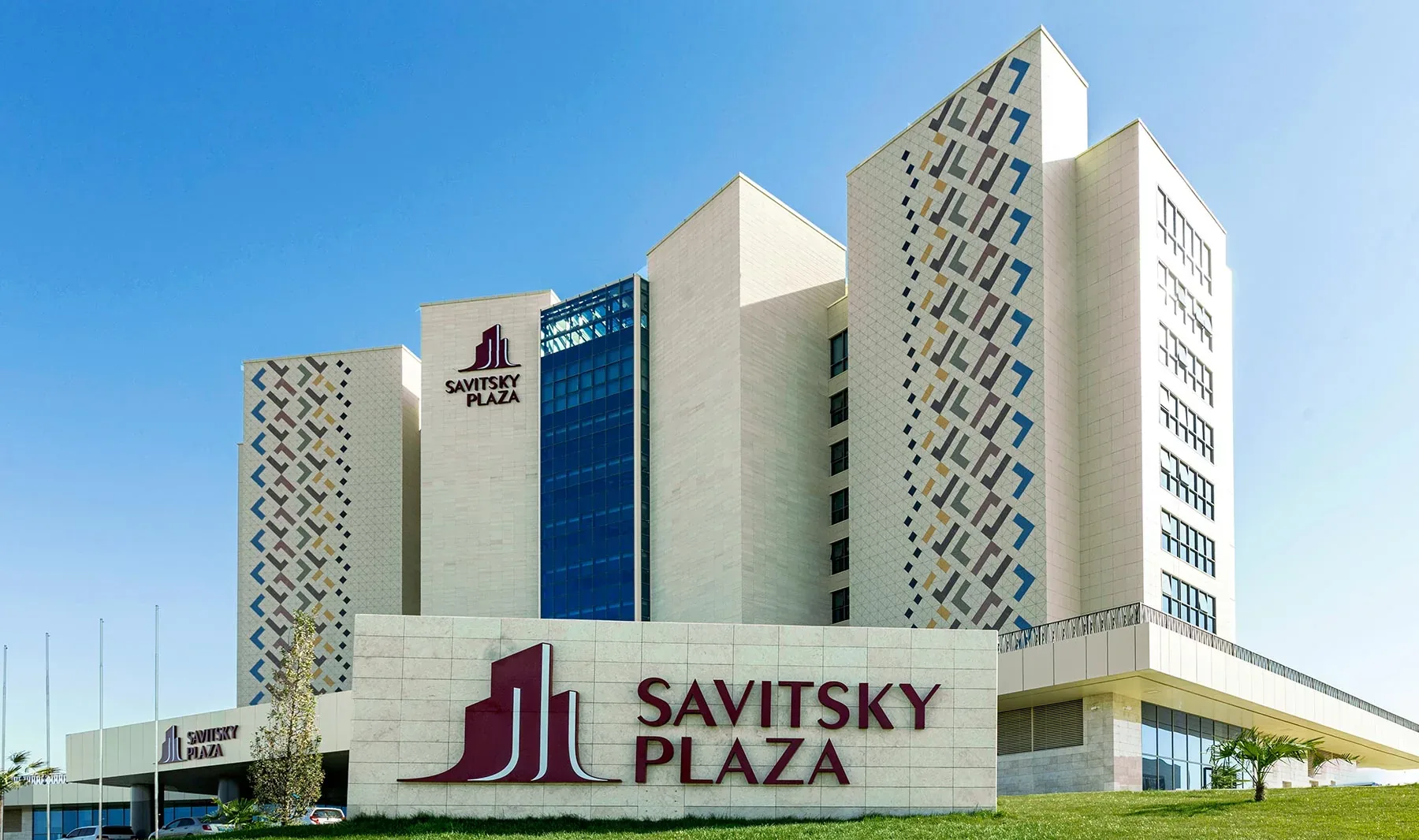
An art-led 175-room hotel with canal-view rooms, a restaurant and a cultural design theme inspired by Igor Savitsky.
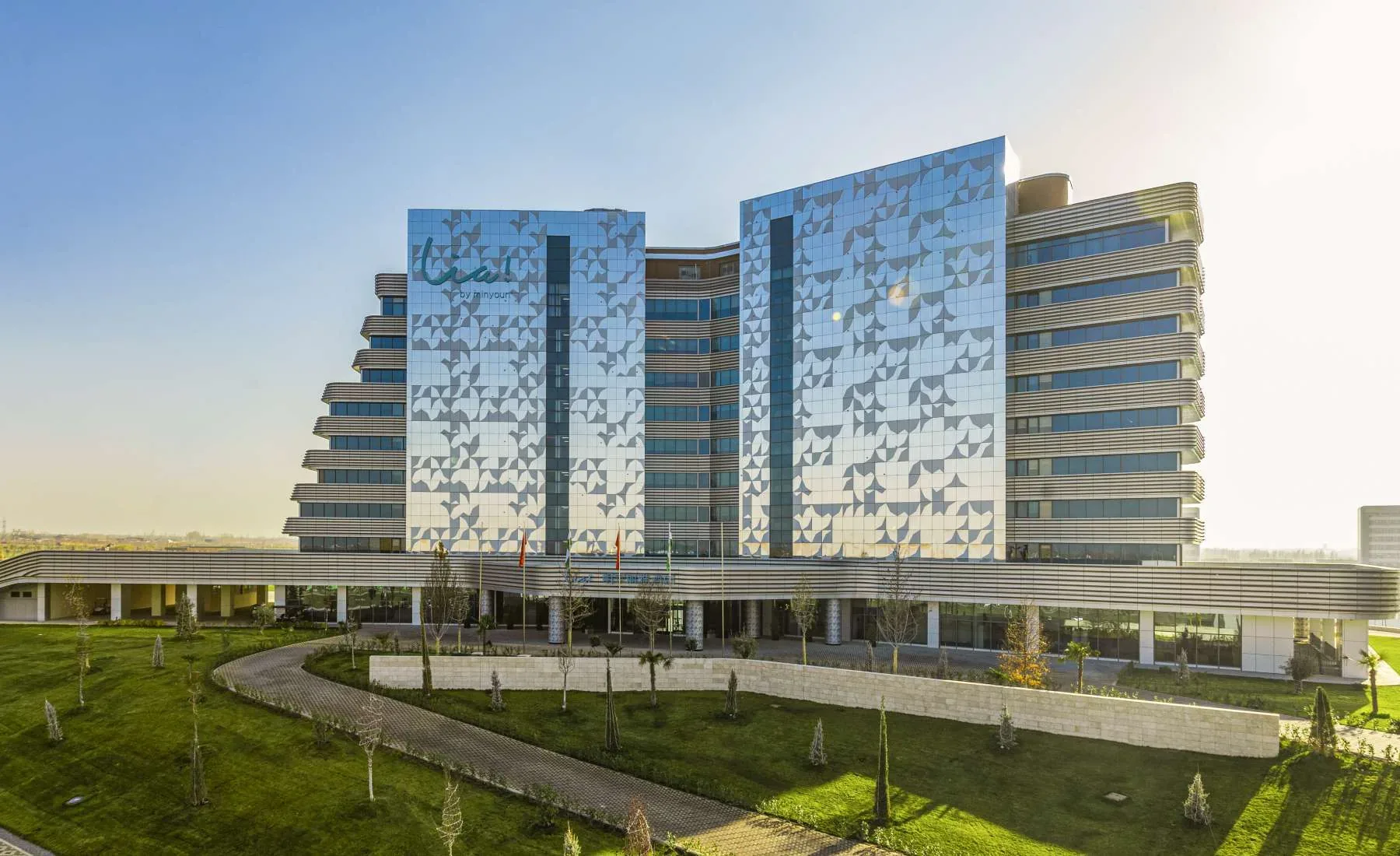
A four-star, 170-room hotel for active travelers, with Foodrink dining, Tea Station and an Ulugbek-inspired theme.
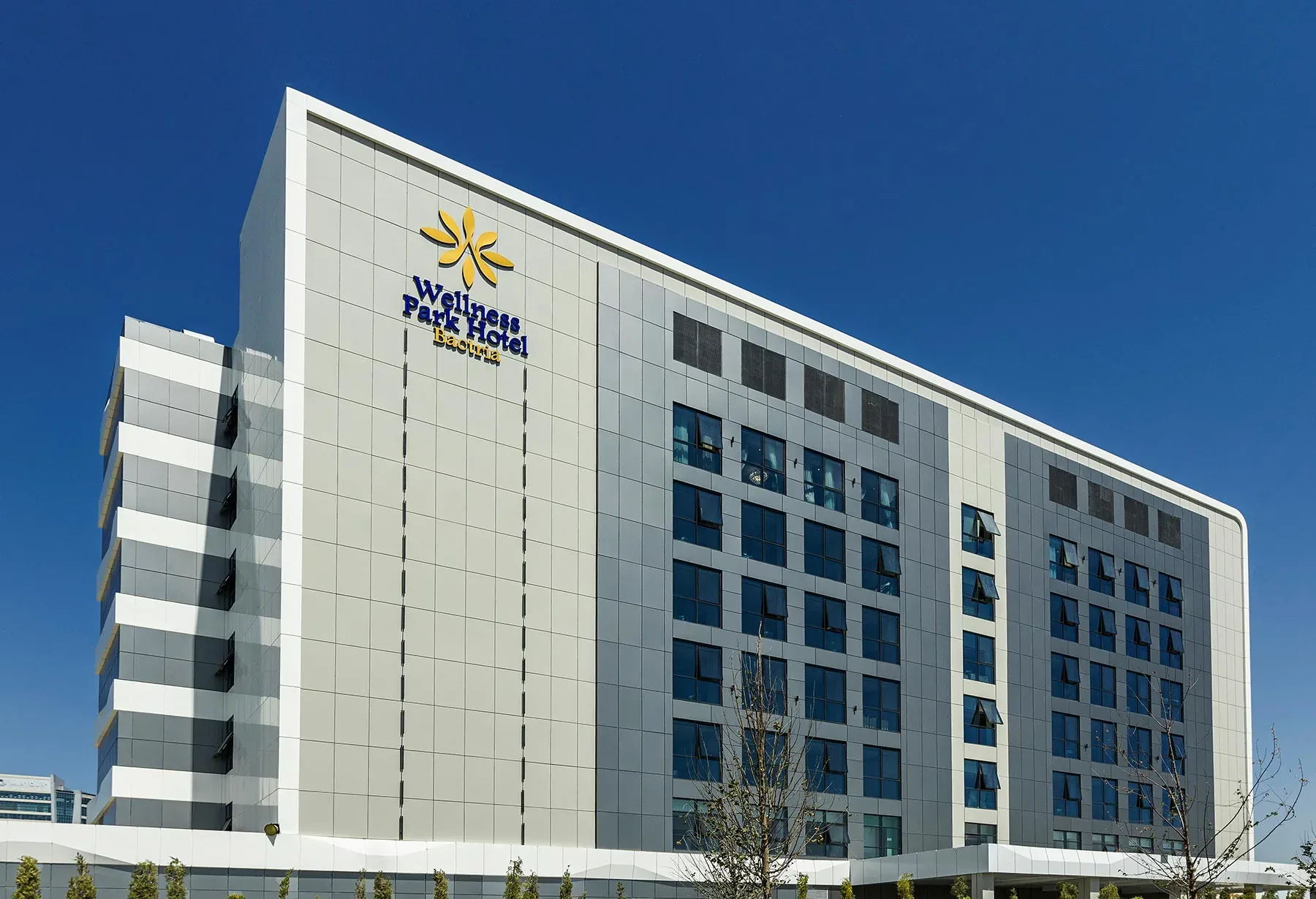
A canal-side 92-room wellness-oriented hotel with a fitness room, restaurant and Bactria-inspired design.
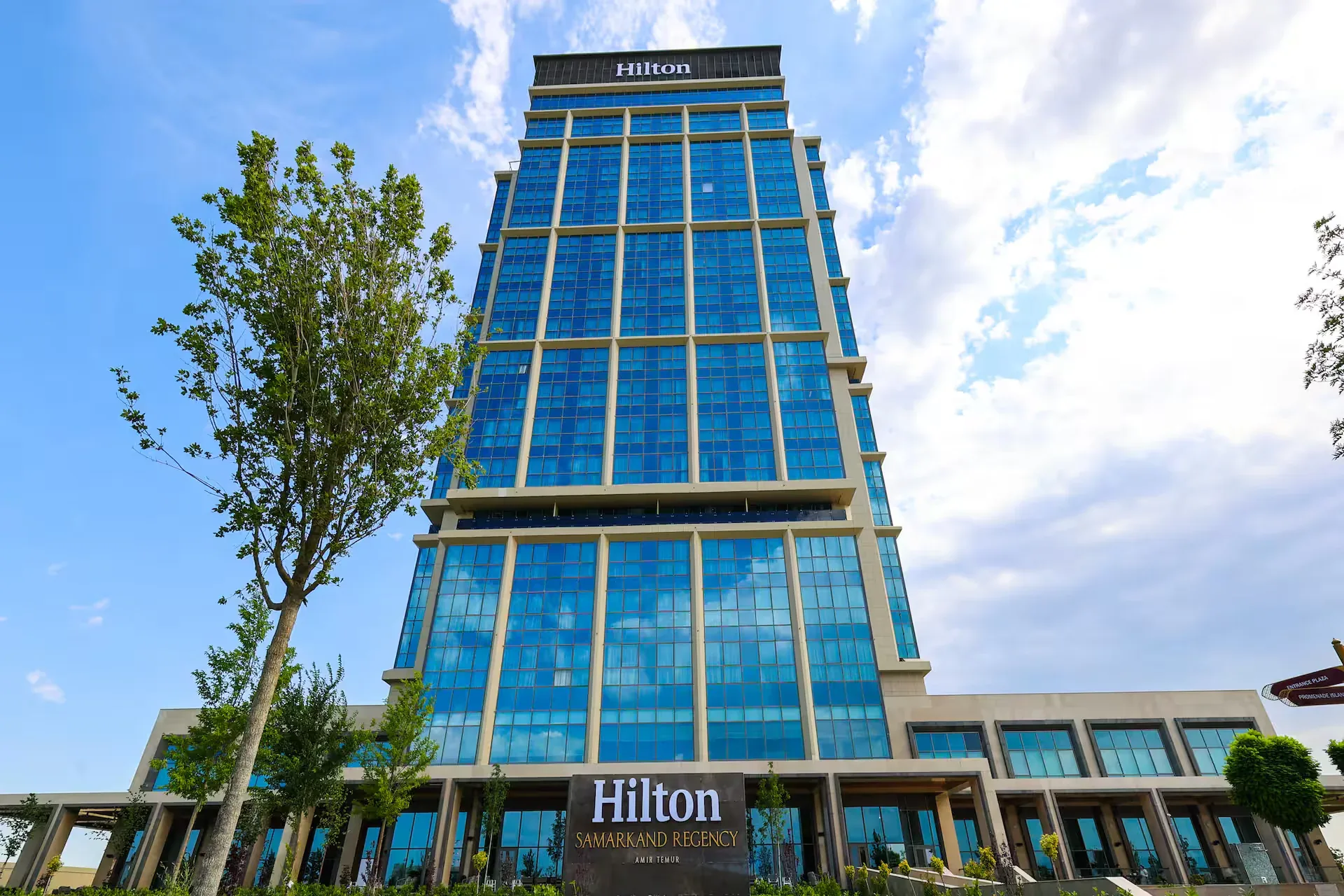
A full-service Hilton resort hotel by the Rowing Canal, with pools, spa, Sky Bar and family-ready amenities.
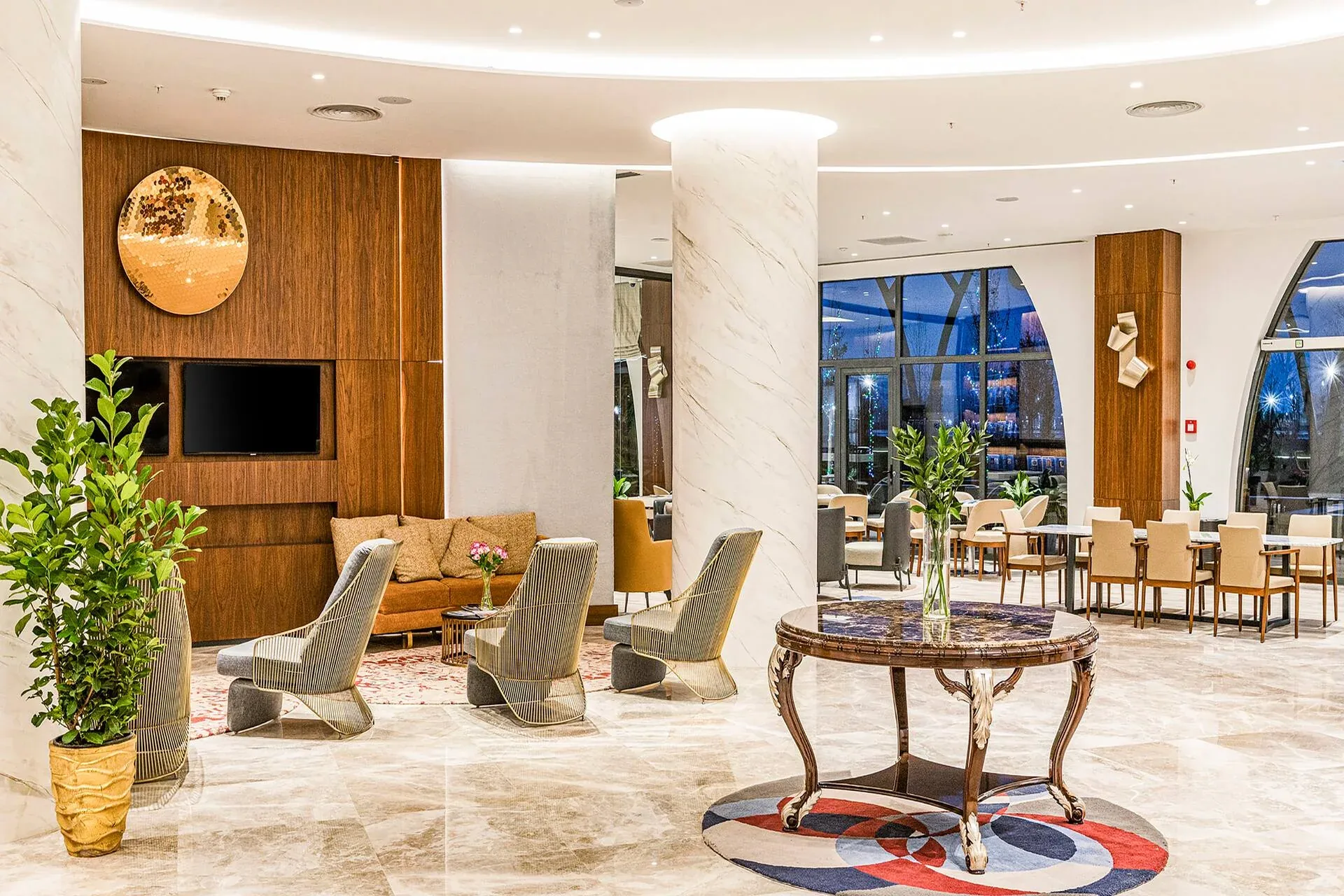
A Hilton Garden Inn inside the Silk Road complex, with terrace dining, wellness facilities and a 24-hour fitness centre.
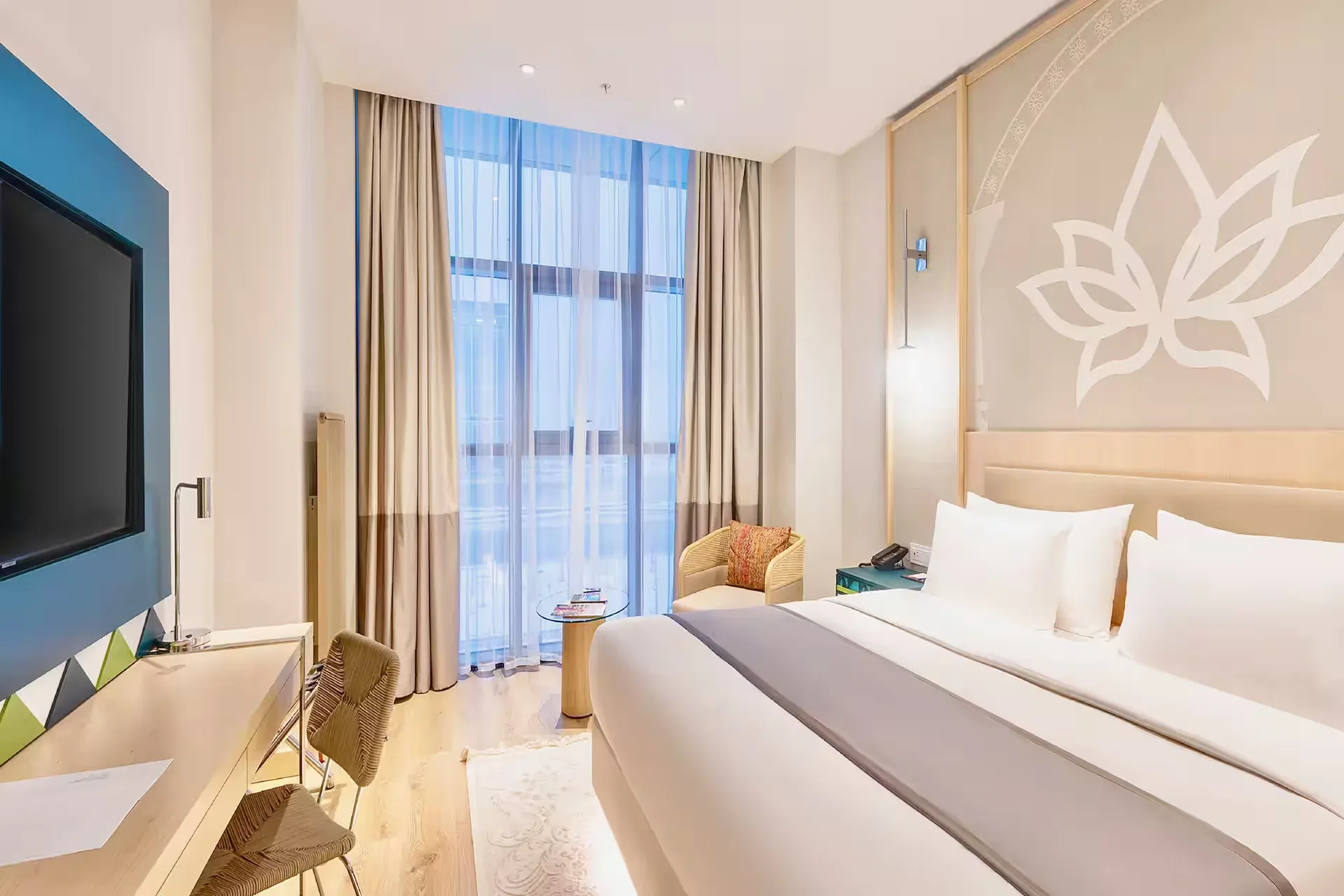
A Hilton Garden Inn resort stay at Grebnoy Kanal, pairing the Silk Road Samarkand precinct with a recognised hotel operator.
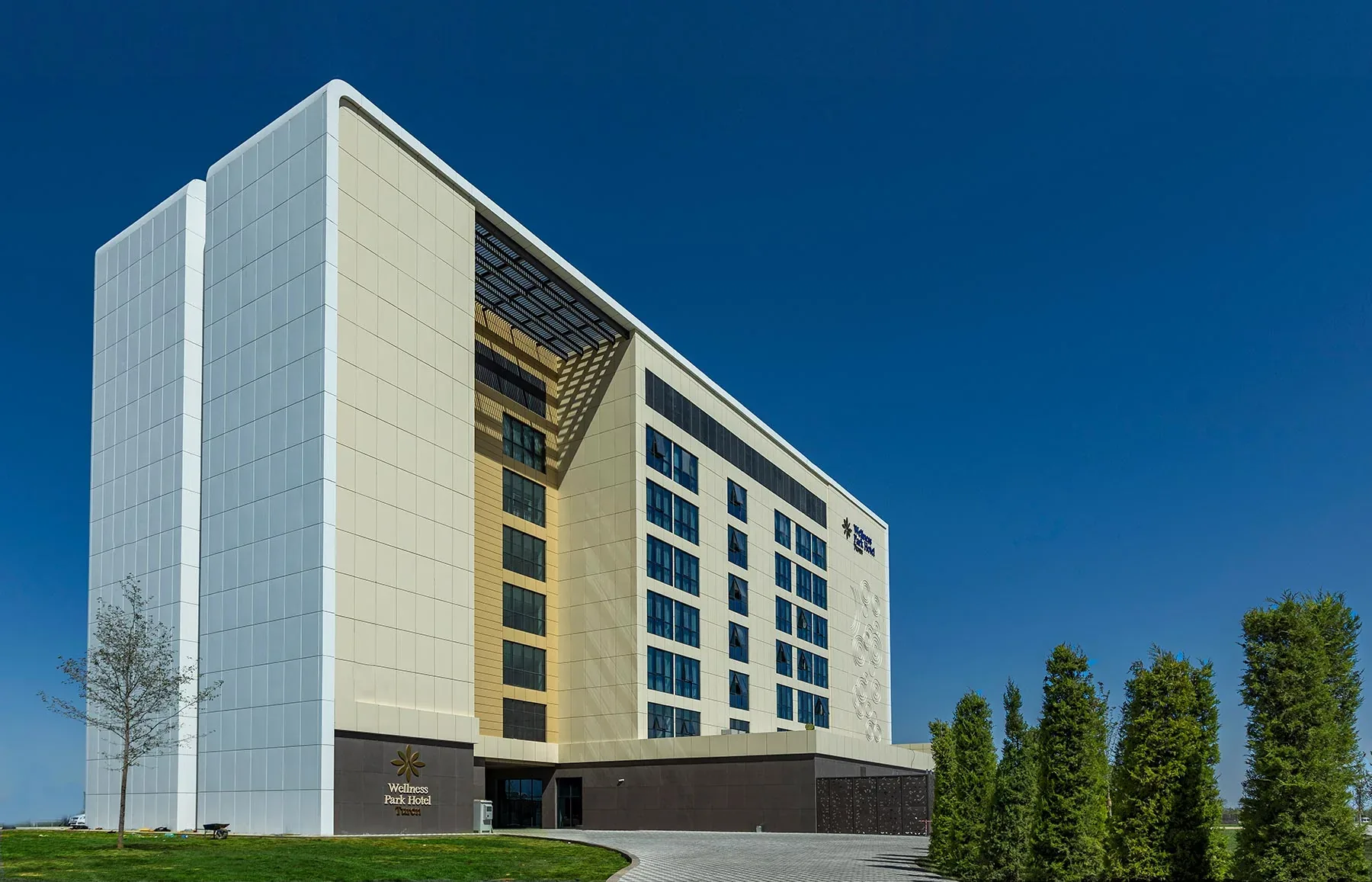
A canal-view wellness hotel with 82 rooms, fitness space, conference rooms and a lower-entry resort price.
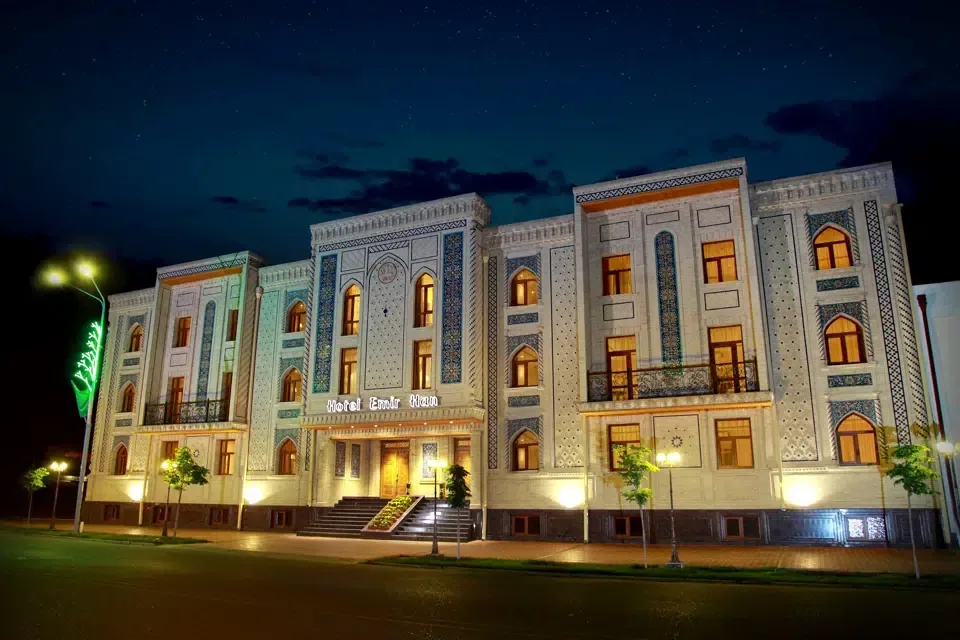
A central Samarkand hotel with buffet breakfast, parking and online booking, suited to heritage-focused stays.
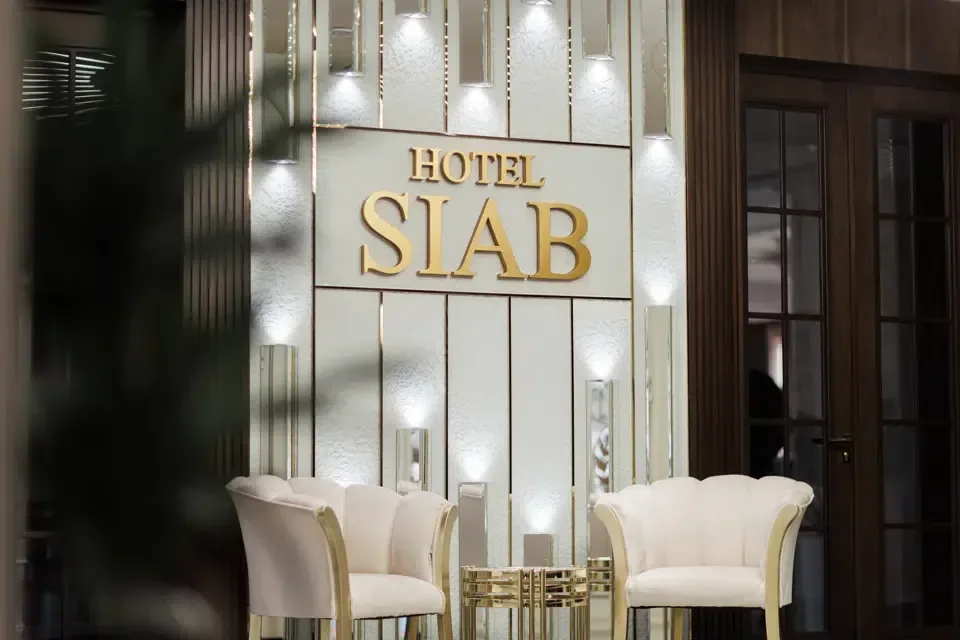
A central Samarkand hotel with city-view terrace, restaurant, indoor pool, buffet breakfast and direct online booking.
The visitor sees several Samarkands at once. The Timurid monuments and old mahallas dominate the historic core; broad boulevards and late-imperial or Soviet-era fabric shape the modern centre; the railway and airport sit outside the main walking circuit; and the Silk Road Samarkand complex creates a separate resort and conference pole beside the rowing canal. These areas are connected by ordinary urban life, not by one seamless tourist promenade.
Ancient Afrasiab, northeast of today's monumental core, preserves evidence of a settlement founded in the first millennium BCE and destroyed during the Mongol conquest in the thirteenth century. The modern visitor should not collapse Afrasiab, the Timurid city and present-day Samarkand into a single historic centre: they occupy different ground and explain different chapters of the city's development.
Samarkand's streets, bazaars and homes reflect overlapping Uzbek and Tajik traditions, while Russian remains useful across transport, business and public life. Language identity can be personal and politically sensitive; visitors should avoid assigning ethnicity from appearance or speech. A few Uzbek greetings are appreciated, but patient translation and a clearly saved address are more useful than performing confidence in a language one does not understand.
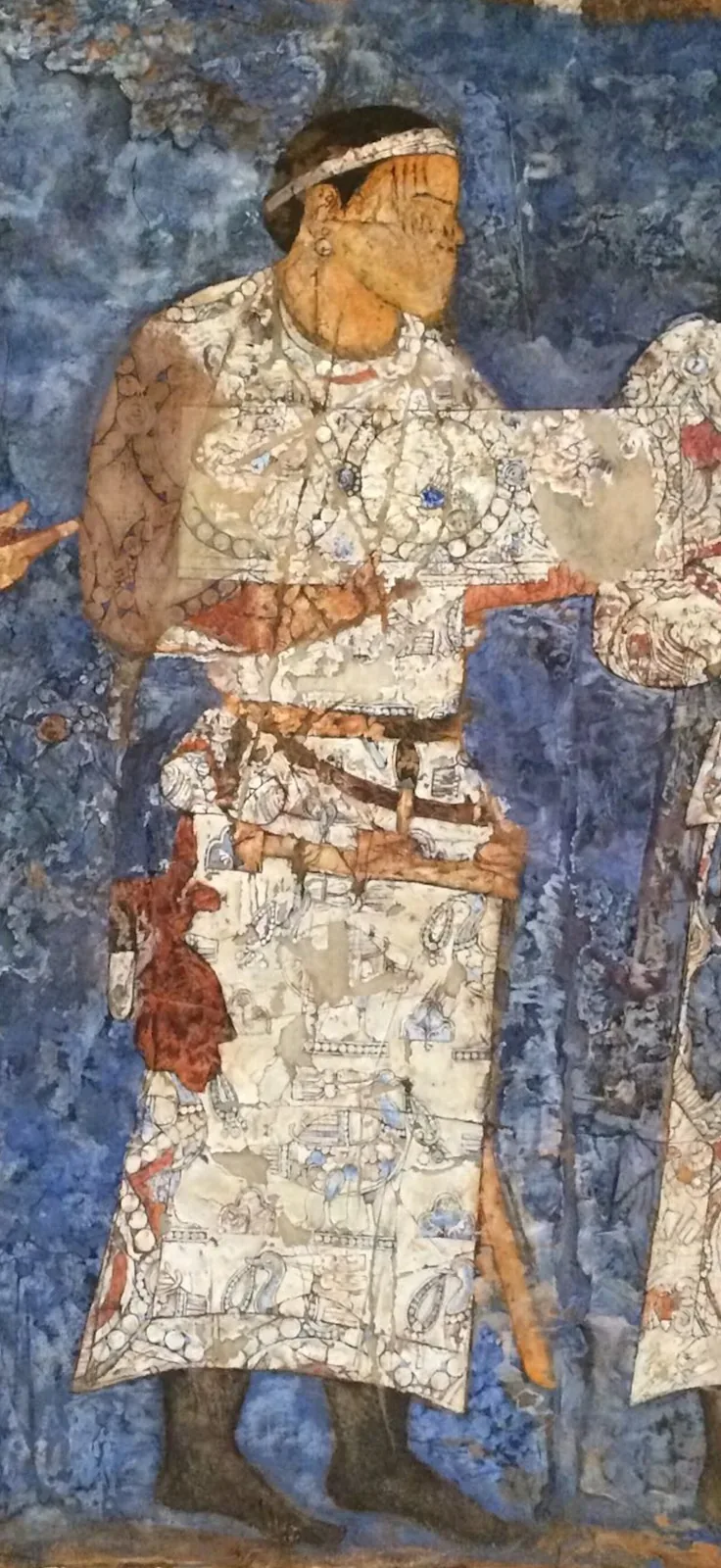
Turn the surviving Sogdian murals into a child-led search for people, costumes, journeys and diplomatic stories.
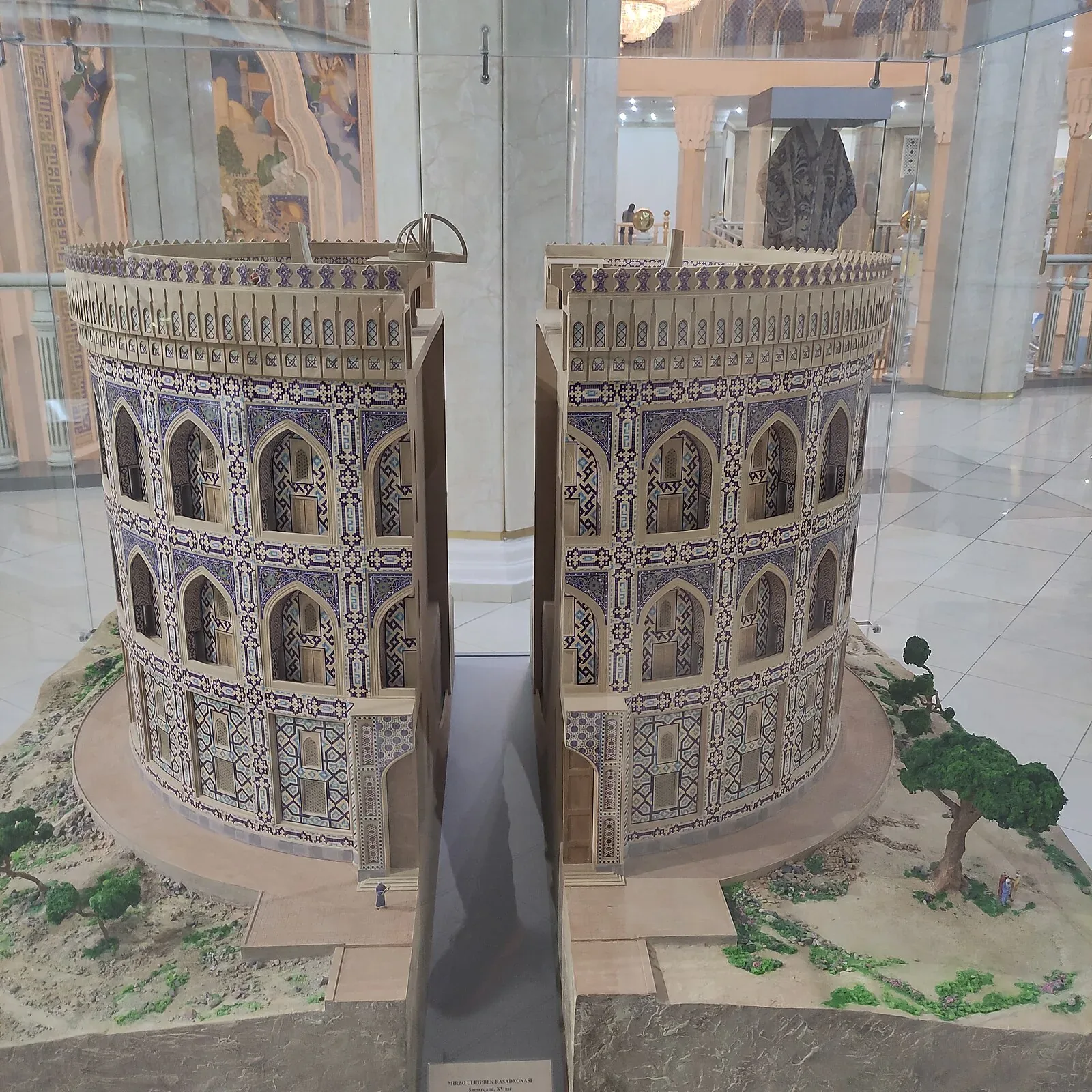
A family science break where the underground arc and great-sextant model make Samarkand’s astronomy legacy visible.
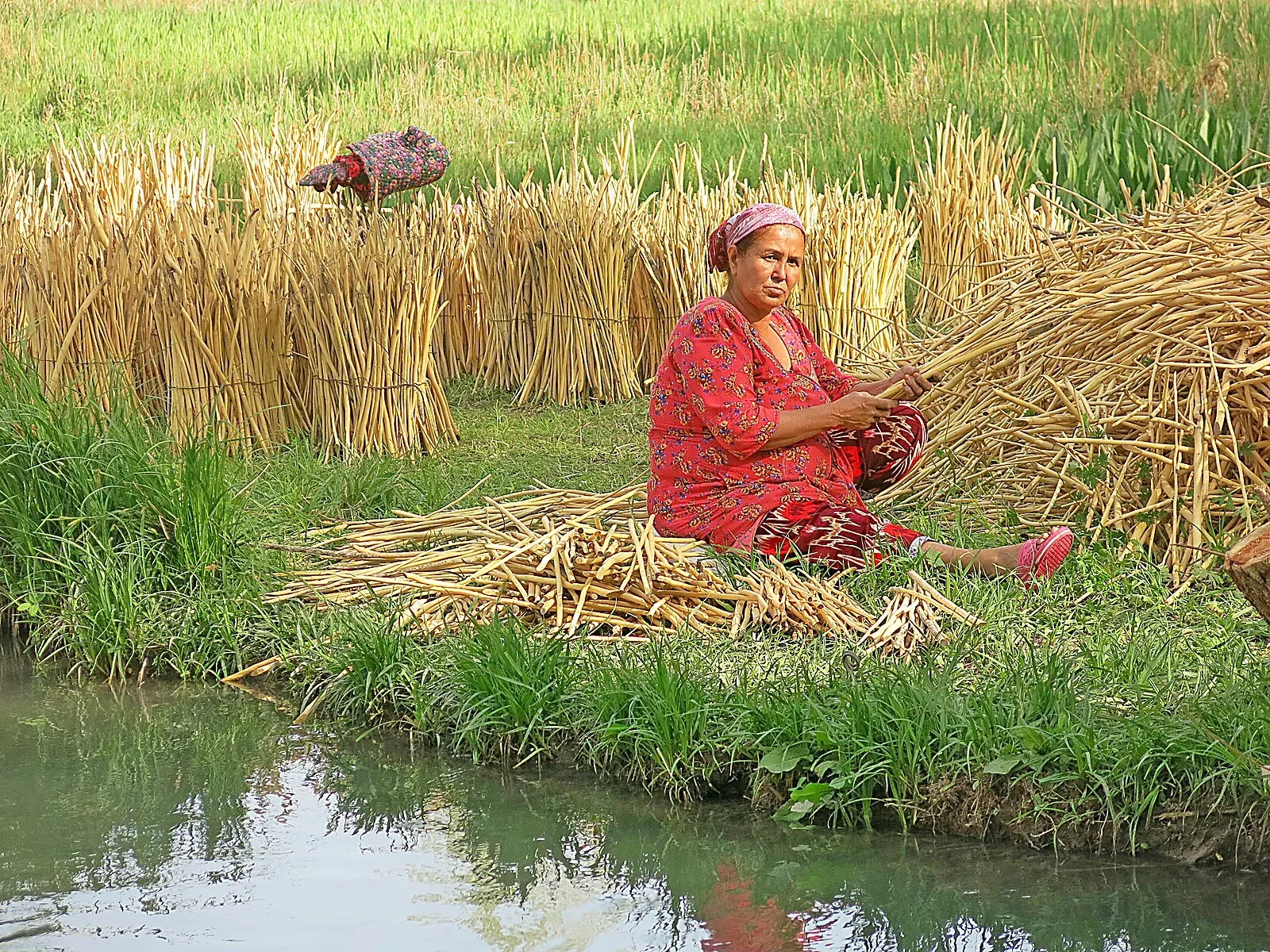
A short craft-focused family visit where children can follow mulberry branches and bark into traditional Samarkand paper.
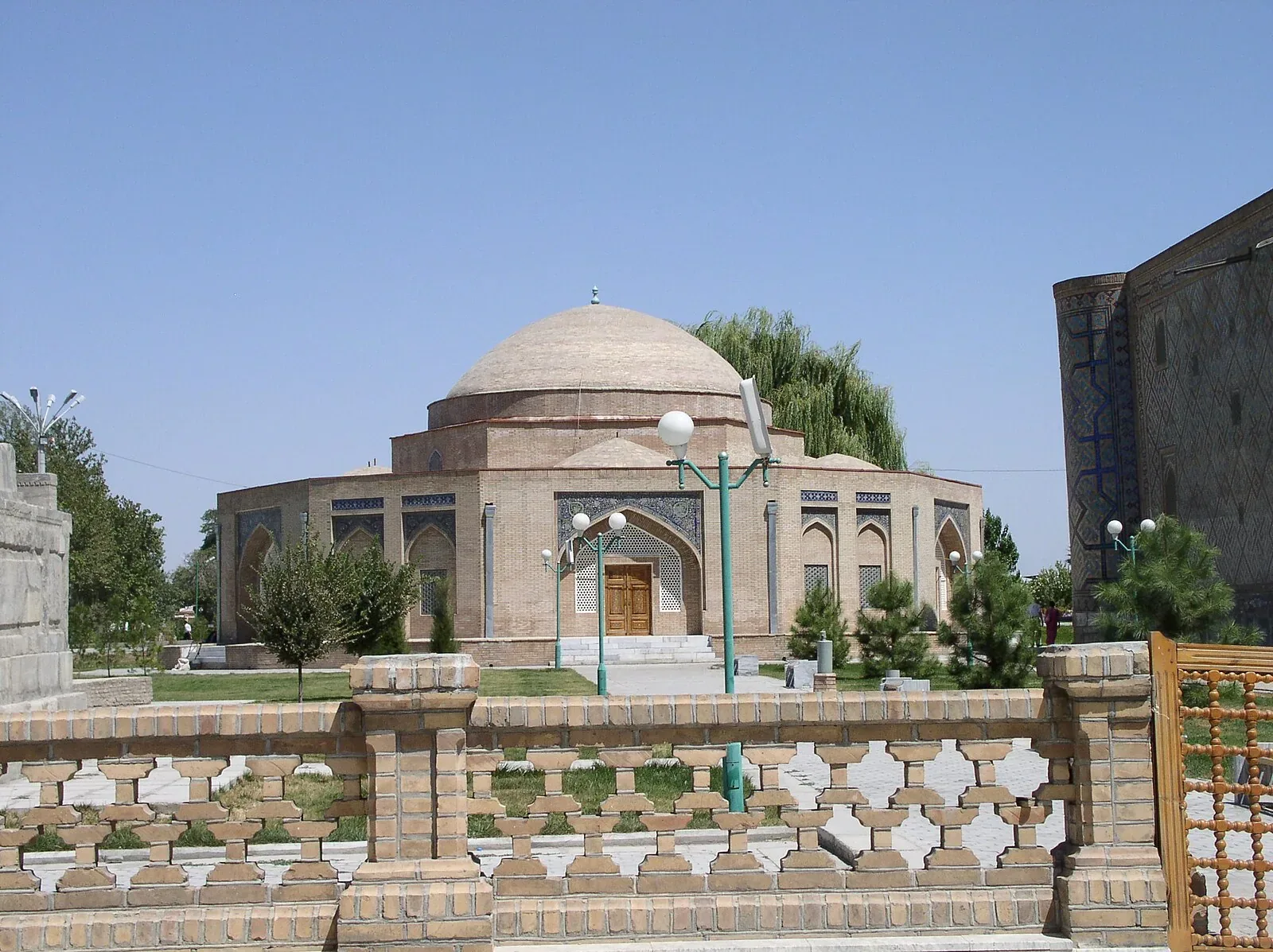
A compact indoor family pause inside a historic domed market building, made for looking at form, colour and craft before returning to the monuments.
A slow-looking Registan activity that turns Sher-Dor’s portal, windows and ornament into a child-friendly visual comparison.
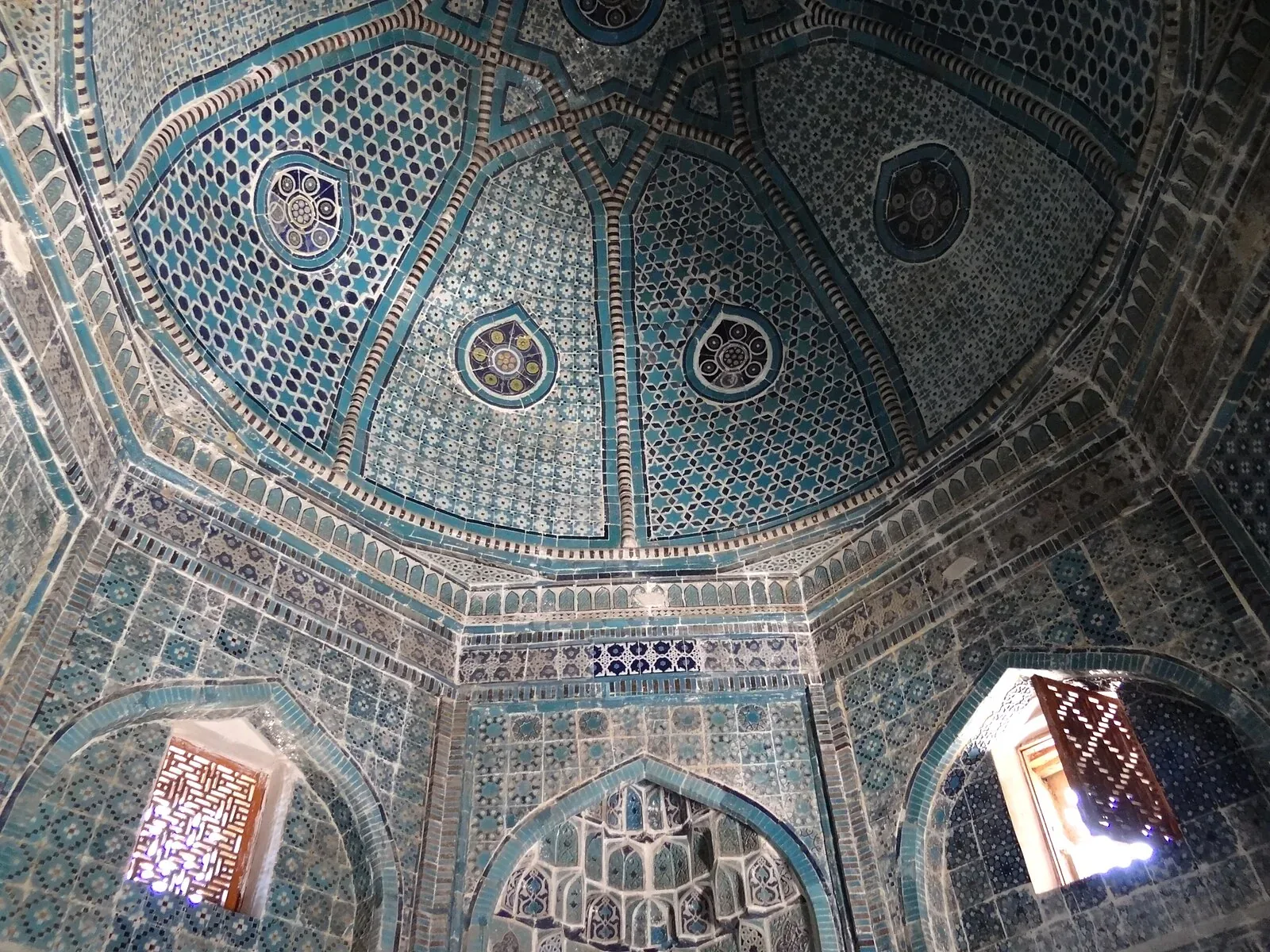
A respectful, child-paced walk through Shah-i-Zinda that uses colour and tile detail to make the passage easier to explore together.
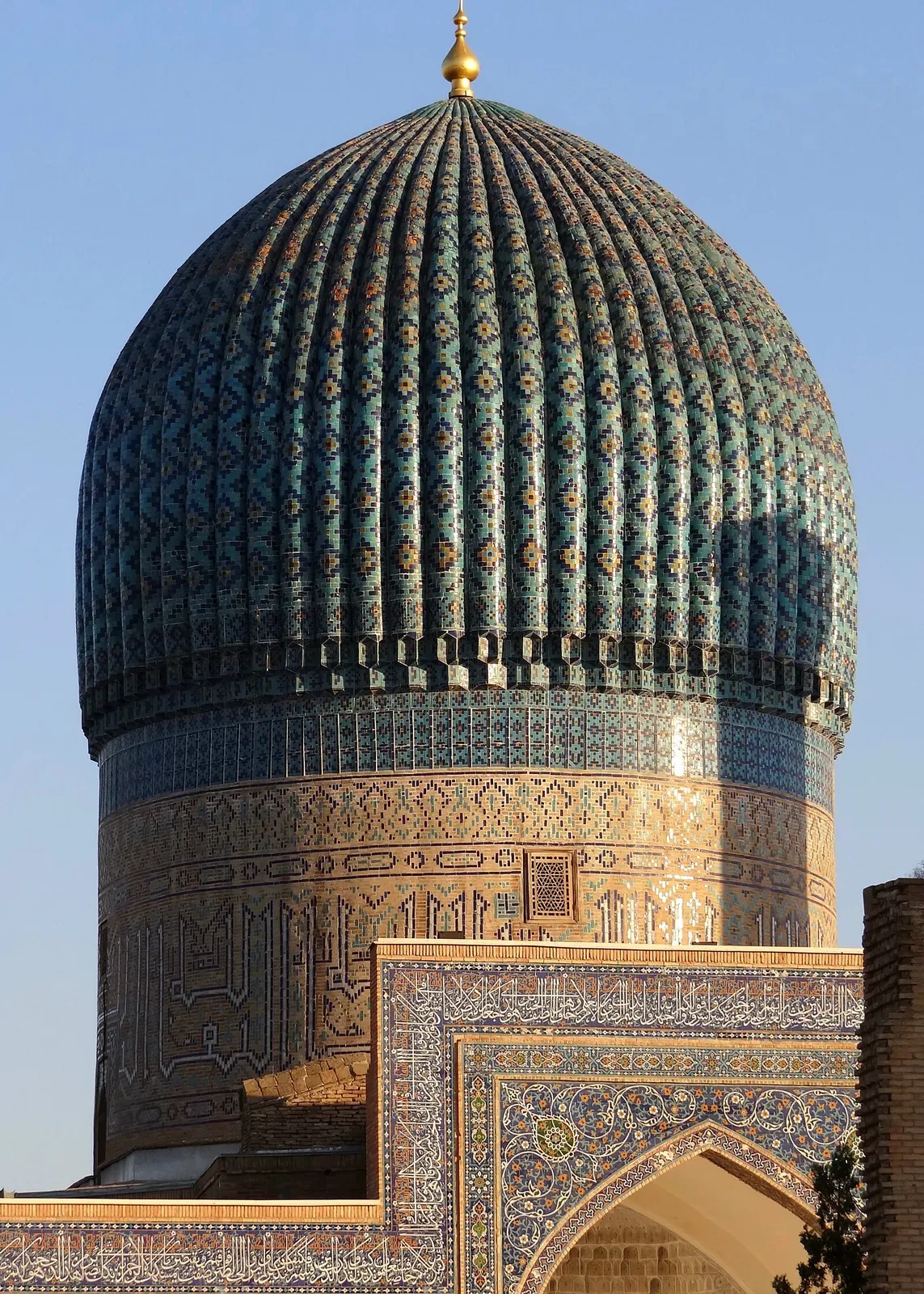
A family-scale introduction to dynastic memory through Gur-e Amir’s blue dome, concentrated interior and powerful sense of visual scale.
A simple family activity for comparing the three Registan madrasahs by shape, colour, scale and the way each building faces the square.
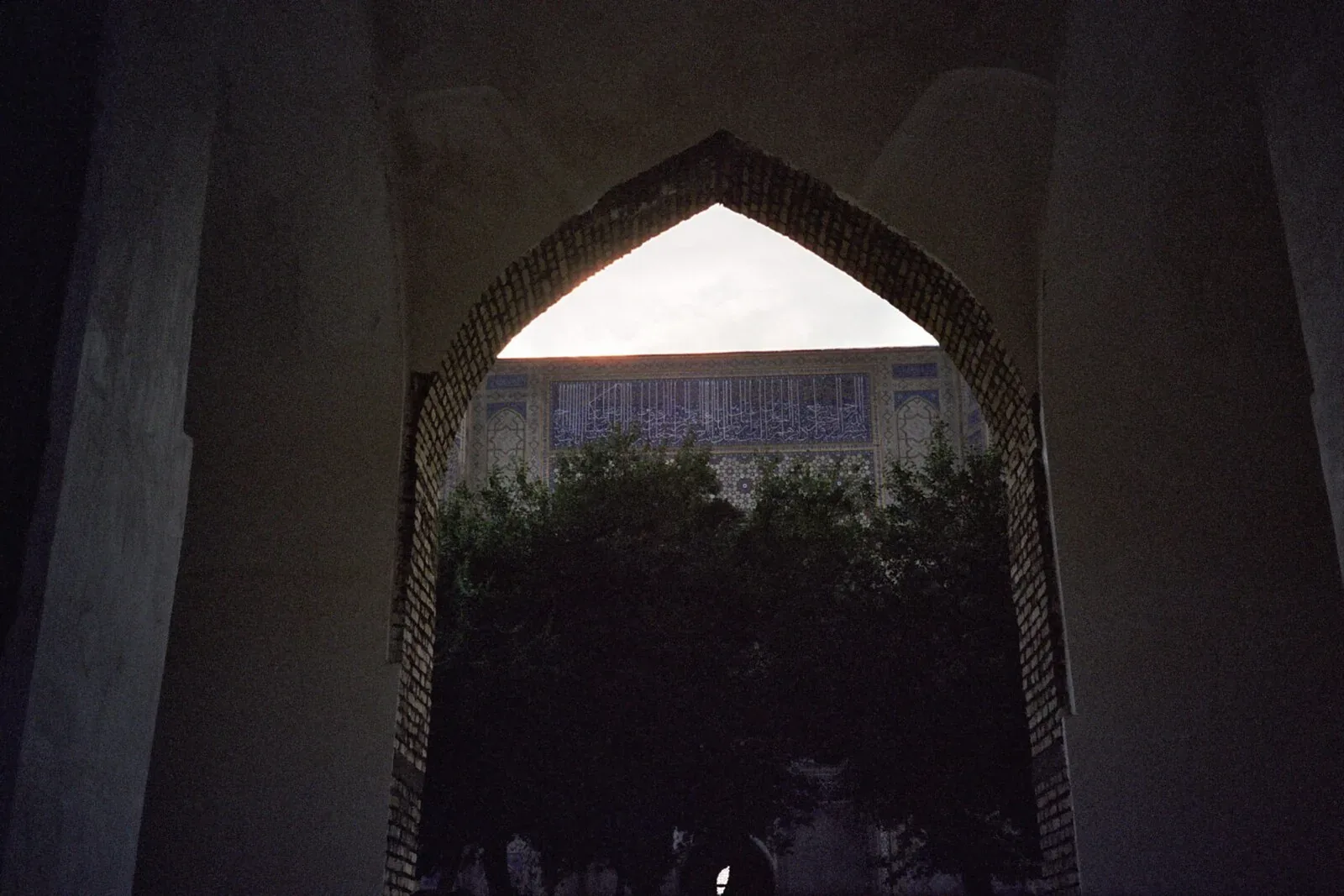
A simple family observation game using Bibi-Khanym’s vast courtyard, portal and dome to explore scale, shape and distance.
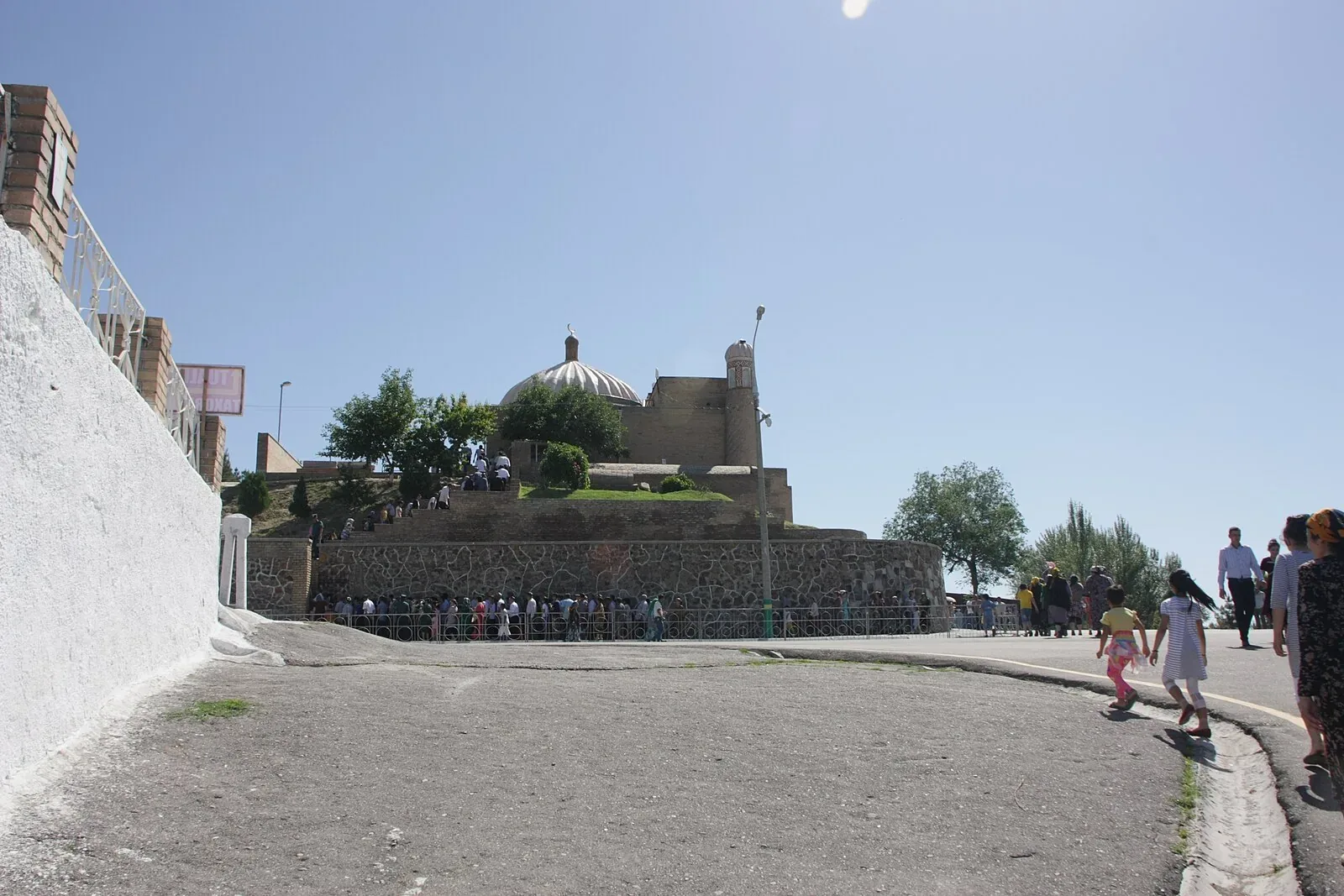
A gentle hilltop pause where families can look from Hazrat Khizr’s veranda across the northern heritage area and reset between larger sites.
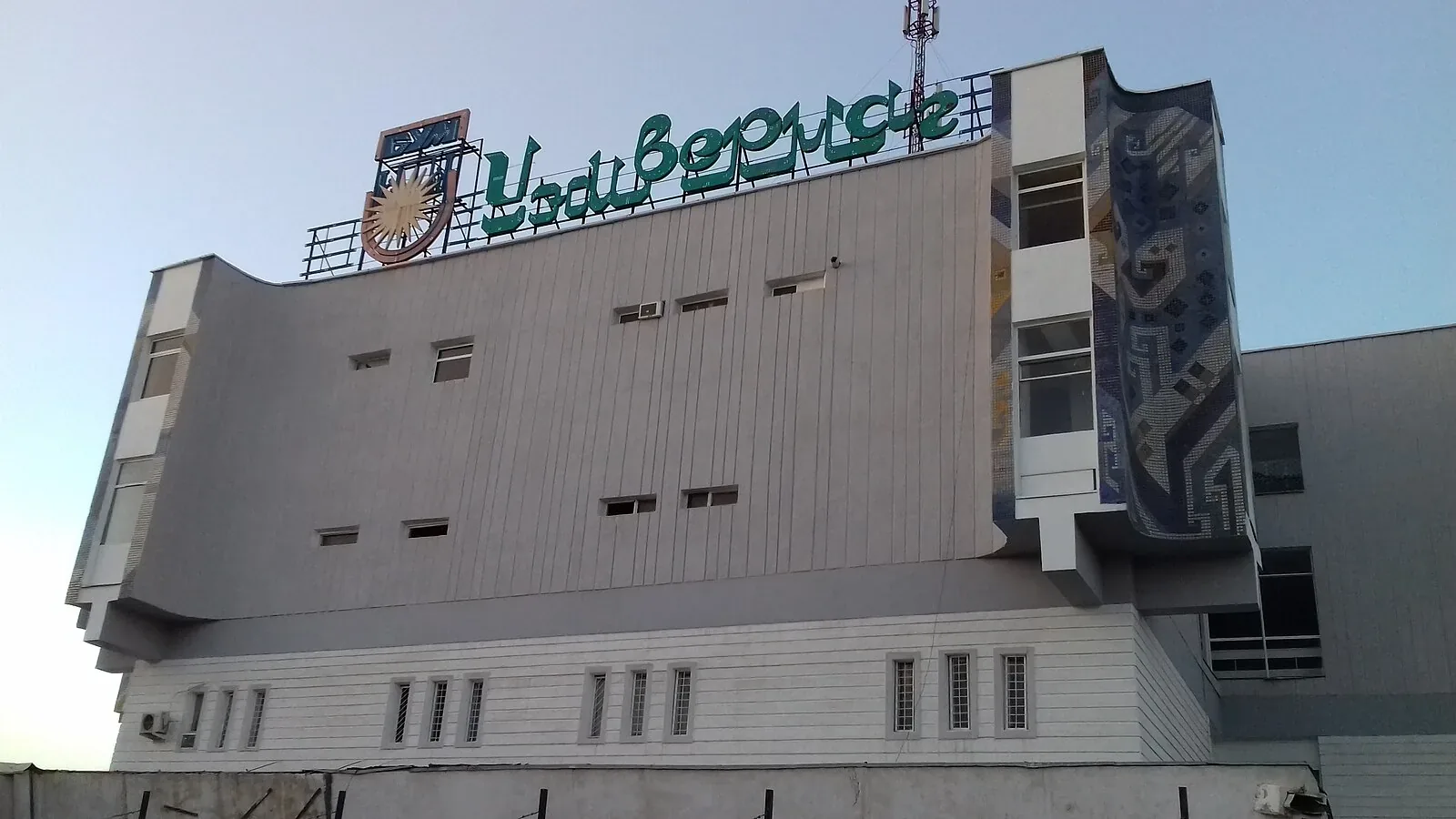
A practical central department-store style stop for visitors who want to compare everyday purchases without leaving the city centre.

A Samarkand retail-and-entertainment centre with more than 80 listed stores, food outlets and attractions.
A three-level mapped shopping centre close to the Siyob Bazaar and Bibi-Khanym area.
A mapped wholesale-oriented market area in Samarkand, distinct from the nearby Siyob retail bazaar.
A mapped supermarket beside Yangi Bozor, useful for practical provisions rather than souvenir shopping.
A mapped marketplace on Samarkand’s south-western edge, relevant only to vehicle-market errands.
A neighbourhood market identified beside Family Park in western Samarkand.
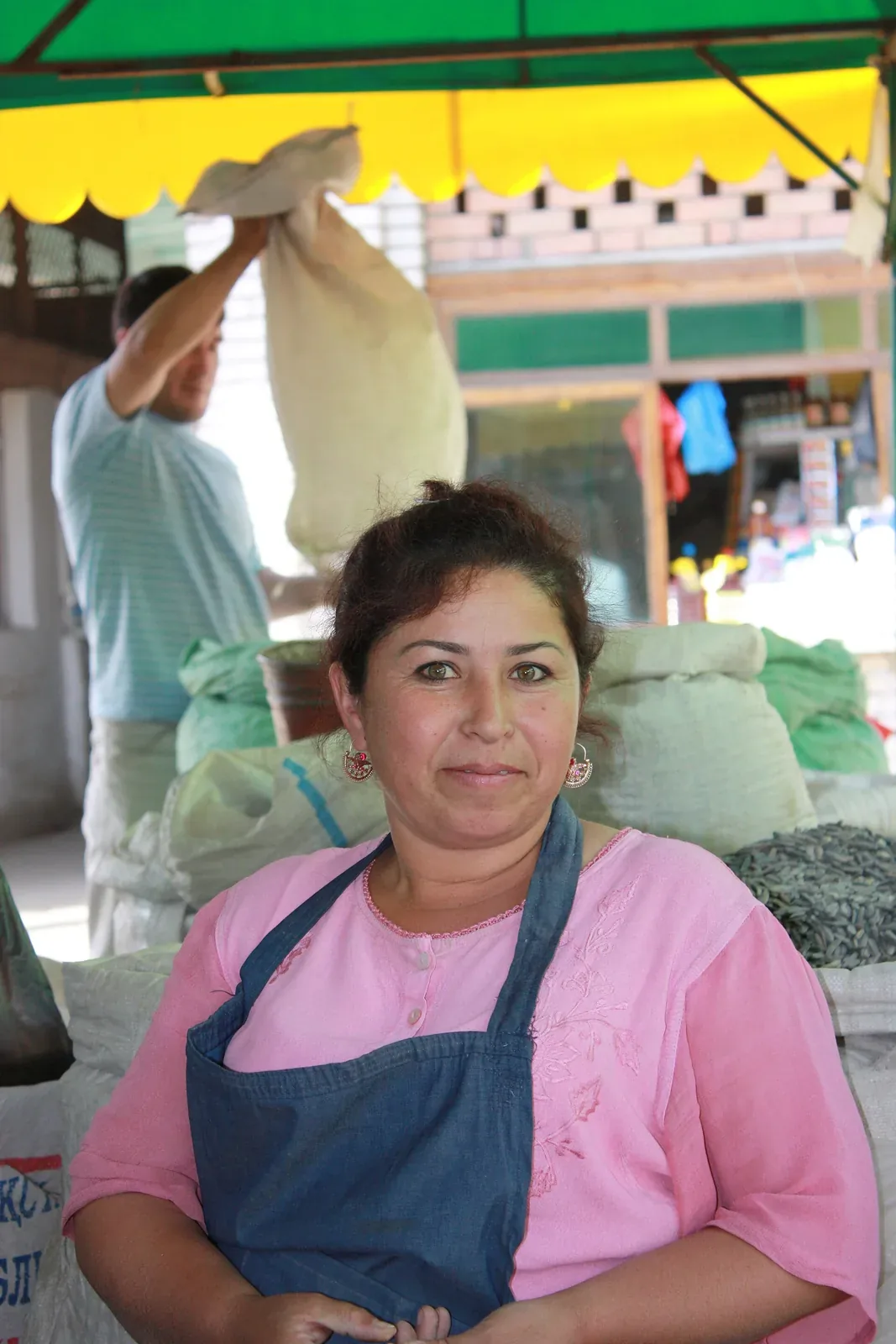
A location-led practical market reference near central Samarkand, pending editorial confirmation of its current public name.
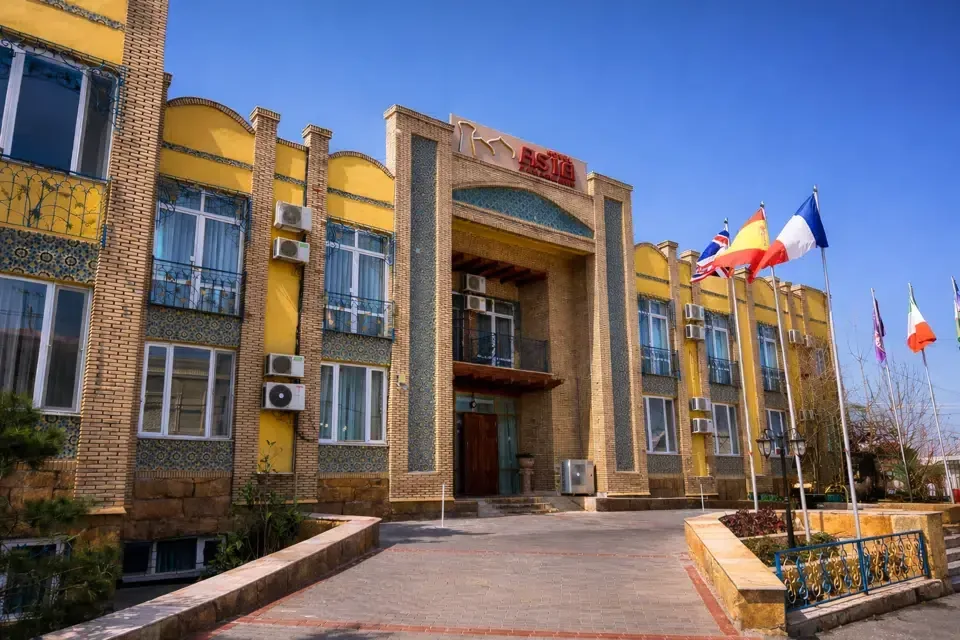
Editorial resort precinct — not an official administrative neighborhood. Mapped to Eternal City, canal promenades, Congress Centre and integrated resort hotels. Check the live programme and pre-book both transport directions.

Editorial transport zone — not an official administrative neighborhood. Mapped to the station, platforms, forecourt, tram/taxi interchange and railway-side Art Station gallery. Verify live train information and use a vehicle with luggage.
Editorial transport zone — not an official administrative neighborhood. Mapped to the passenger terminal, pickup areas, parking and immediate airport approach only. Pre-arrange transfers and verify live flight and terminal details.
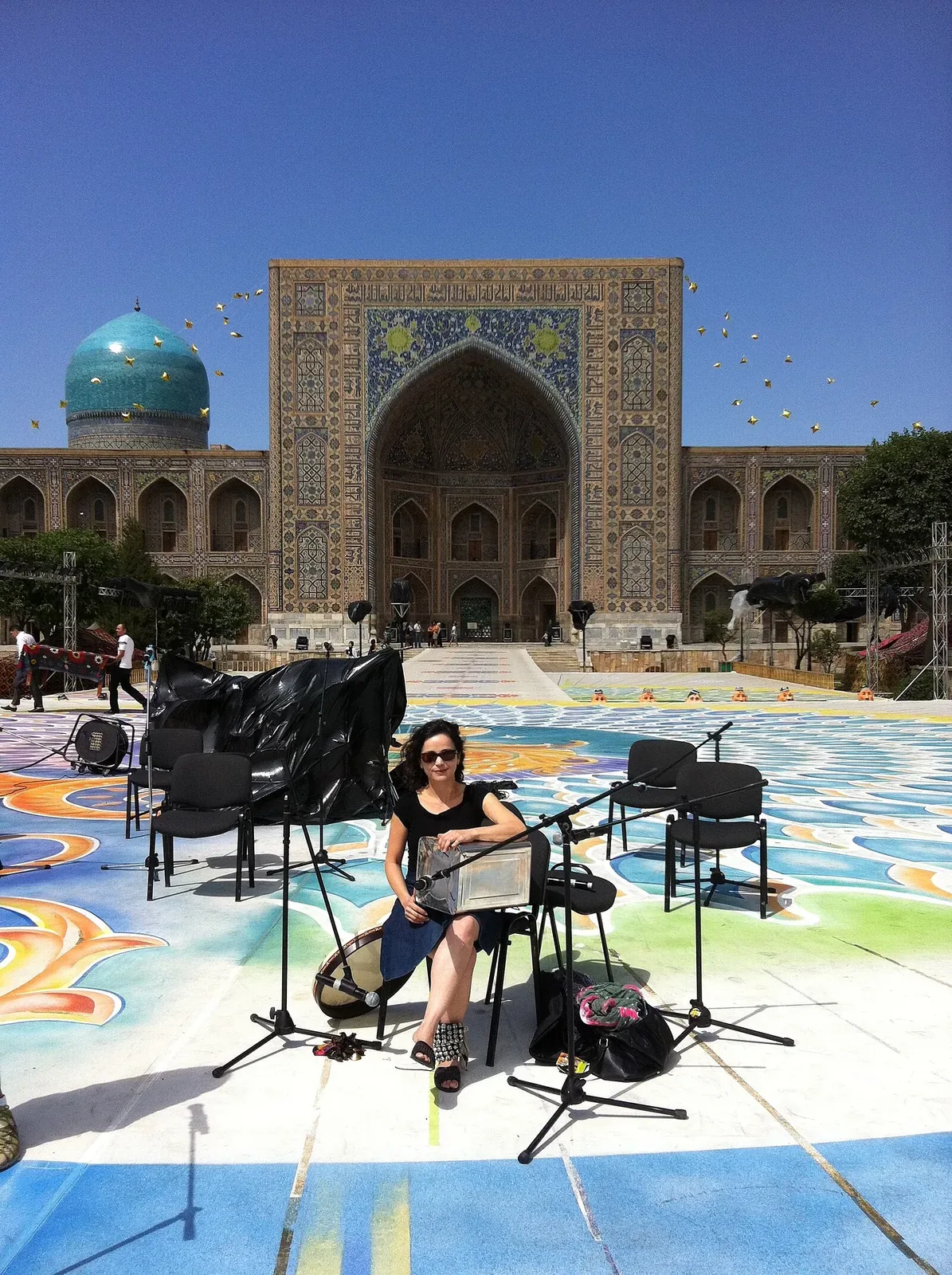
Editorial visitor zone — not an official administrative neighborhood. Mapped from Registan Square to Chorsu and the immediate pedestrian approaches; use the centroid only as a navigation anchor. Best explored on foot; reconfirm access restrictions and ticket arrangements on the day.
Registan’s eastern madrasah, famous for its early-seventeenth-century façade of felines, deer and rising sun motifs.
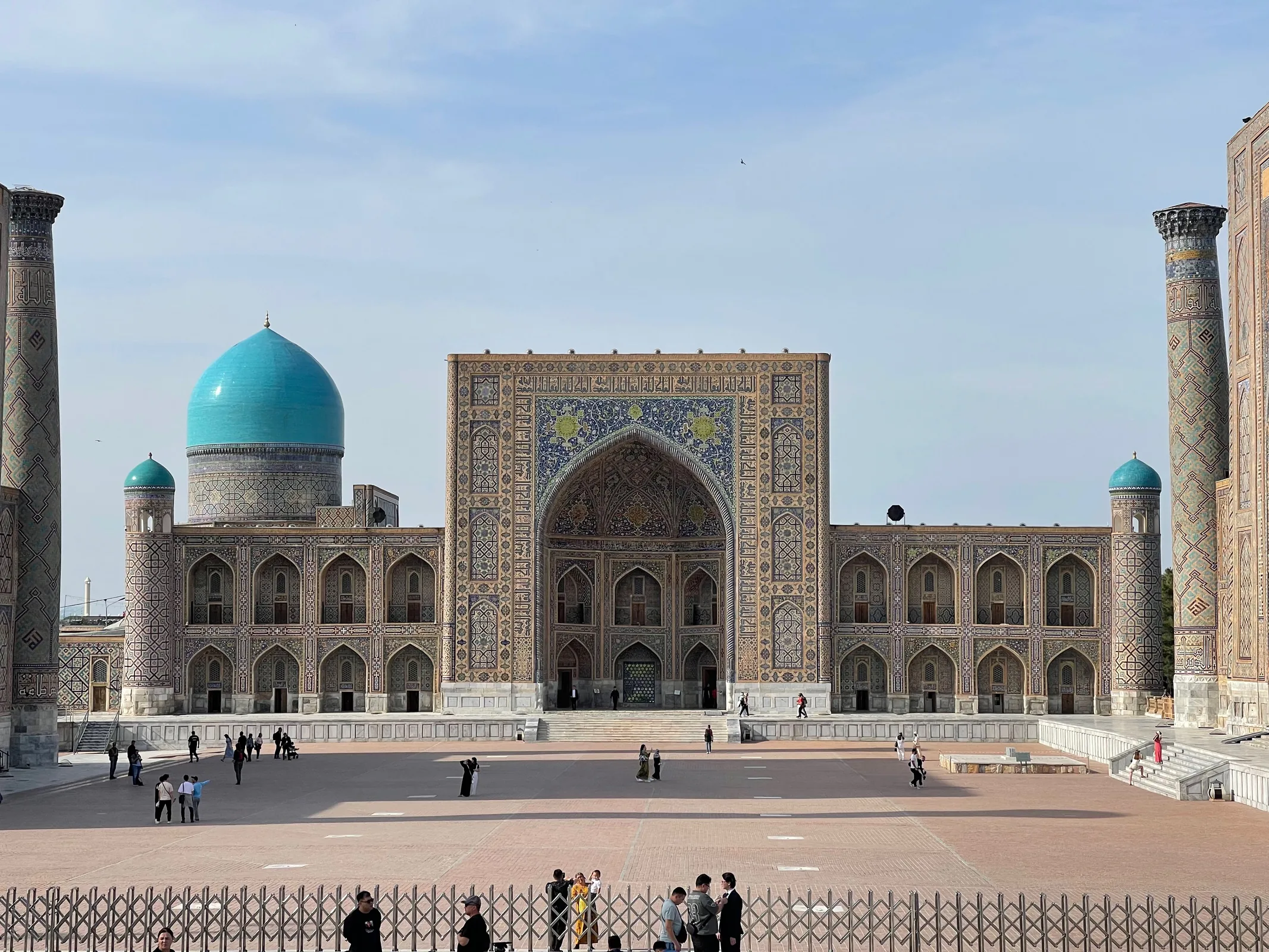
Registan’s central madrasah, completing the ensemble with a balanced exterior and a celebrated gilded interior beneath its blue dome.
Registan’s fifteenth-century madrasah, associated with Ulugh Beg’s scholarly legacy and marked by astronomy-themed portal decoration.
The archaeological landscape of pre-Timurid Samarkand, where restored walls and open ground reveal the scale of the ancient city.
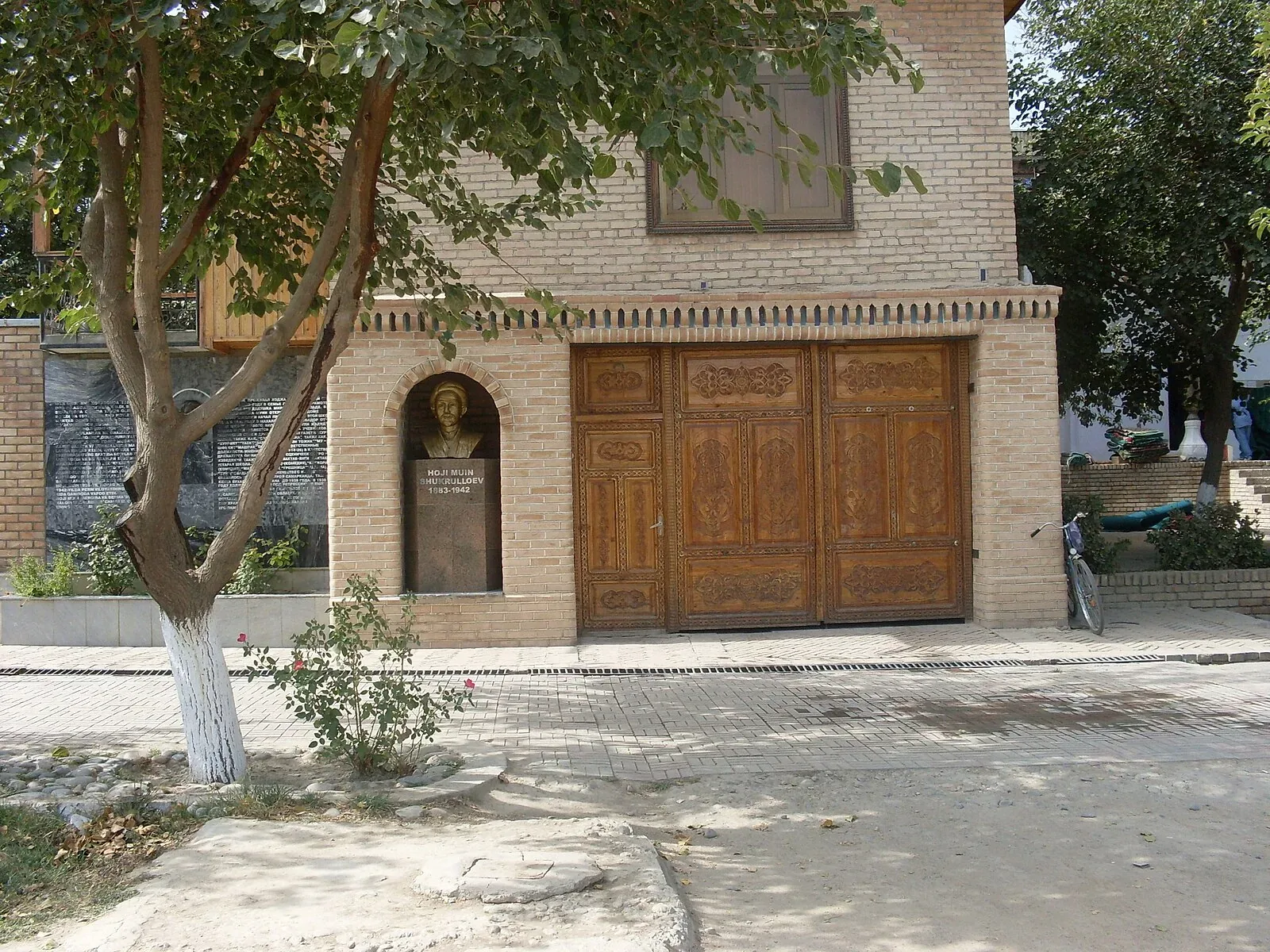
A fourteenth-century brick-and-dome mausoleum of Sheikh Burhan al-Din Sagarji, offering a quieter pause between Registan and Gur-e Amir.
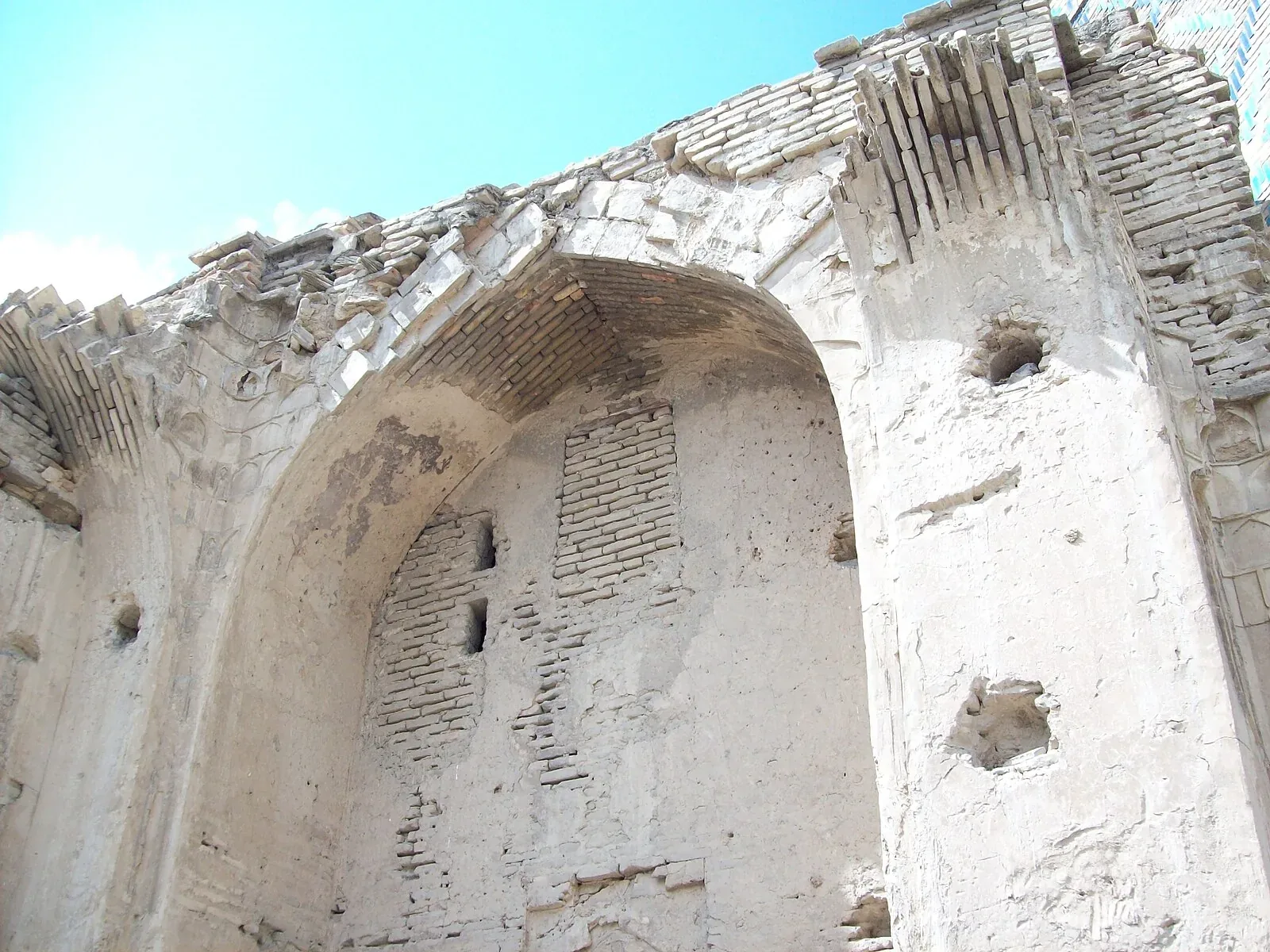
A dynastic funerary monument associated with the Bibi-Khanym complex, offering a compact architectural counterpoint to the great mosque.
Samarkand’s international music festival brings performers and audiences into the Registan setting for a major celebration of musical traditions.

A first-edition culinary festival held in Samarkand on 23–24 March 2026.

A named local-chef culinary programme held on the second day of the March 2026 food-festival programme.
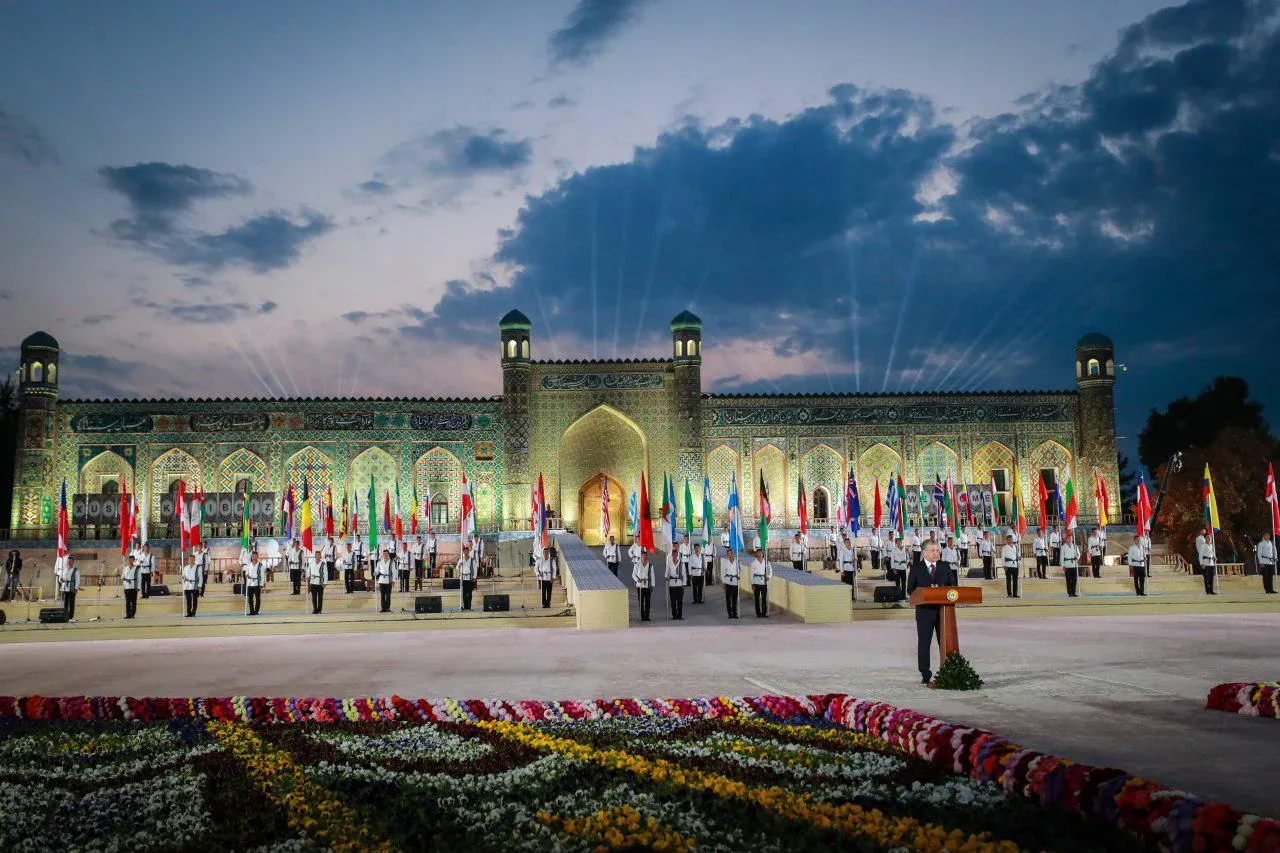
The fourth international embroidery festival, announced for central Samarkand on 17–19 April 2026.

City celebrations for Navruz recorded by the Samarkand regional government on 21 March 2026.
A private, operator-listed city tour with hotel pickup, a guide, transport and entrance fees for Samarkand’s headline sites.
A private two-day product that combines Samarkand’s landmark core with Afrasiab, Konigil and the Khoja-Ahrar ensemble.

A private Samarkand departure experience combining a regional bazaar, ancient plane trees and a silk-carpet workshop.

A private seasonal day trip from Samarkand to the Hazrat Daud Cave, presented by Advantour as a spiritual escape with views and local legend.

A private, all-year operator product linking Tashkent and Samarkand by high-speed train for a concentrated city visit.

A private two-day drive product from Tashkent for travellers who want Samarkand’s sights with an overnight city stay.

A private day product from Samarkand to Shakhrisabz for travellers seeking a verified operator-led regional heritage excursion.
A private two-day rail product from Tashkent with an overnight Samarkand stay and an operator-arranged sightseeing programme.
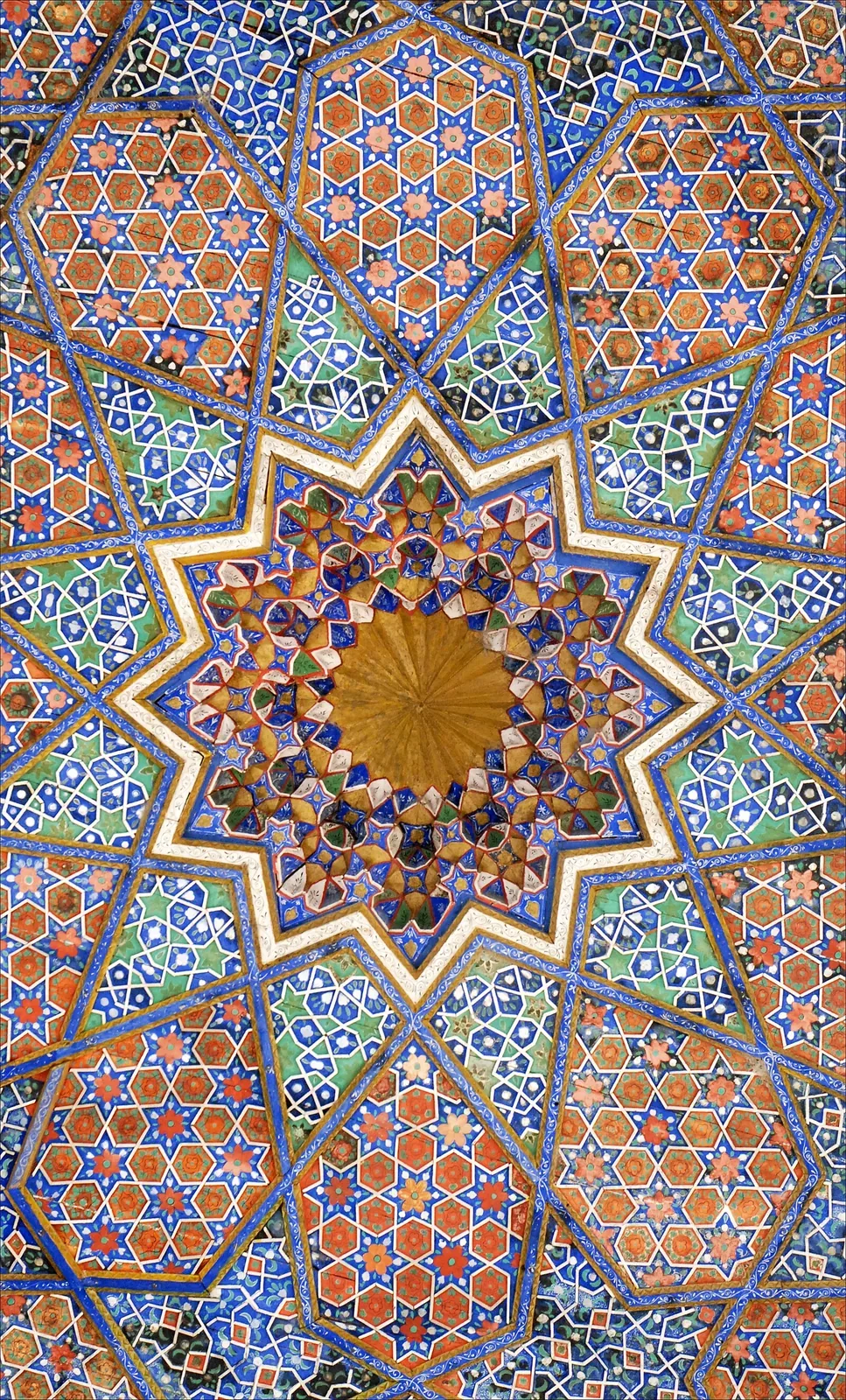
A historic Samarkand mosque associated with Khoja Ahrar, valued for its decorative interior and place in the city’s Muslim heritage.
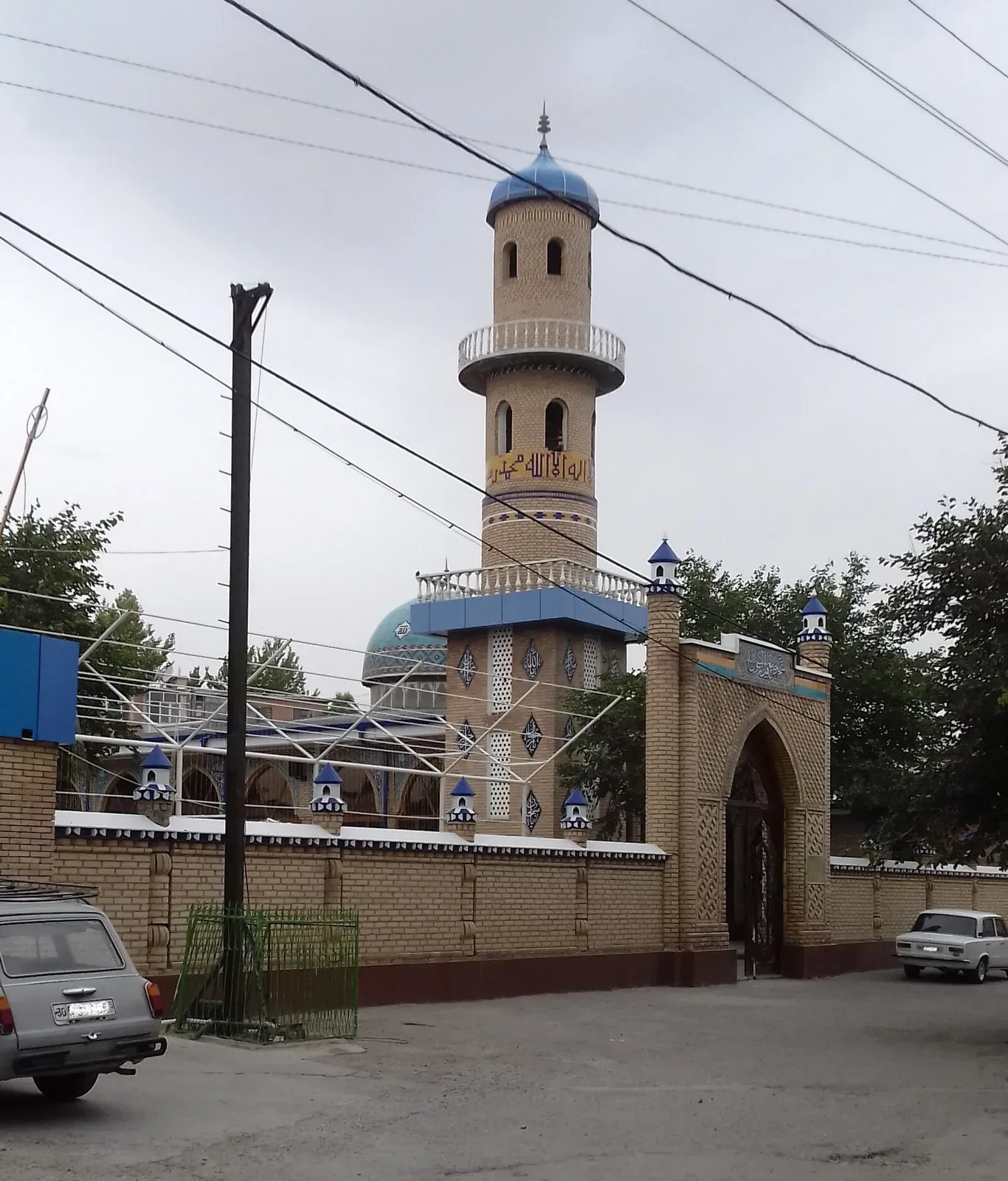
A Shia mosque in Samarkand that adds an important dimension to the city’s religious diversity and built Islamic heritage.
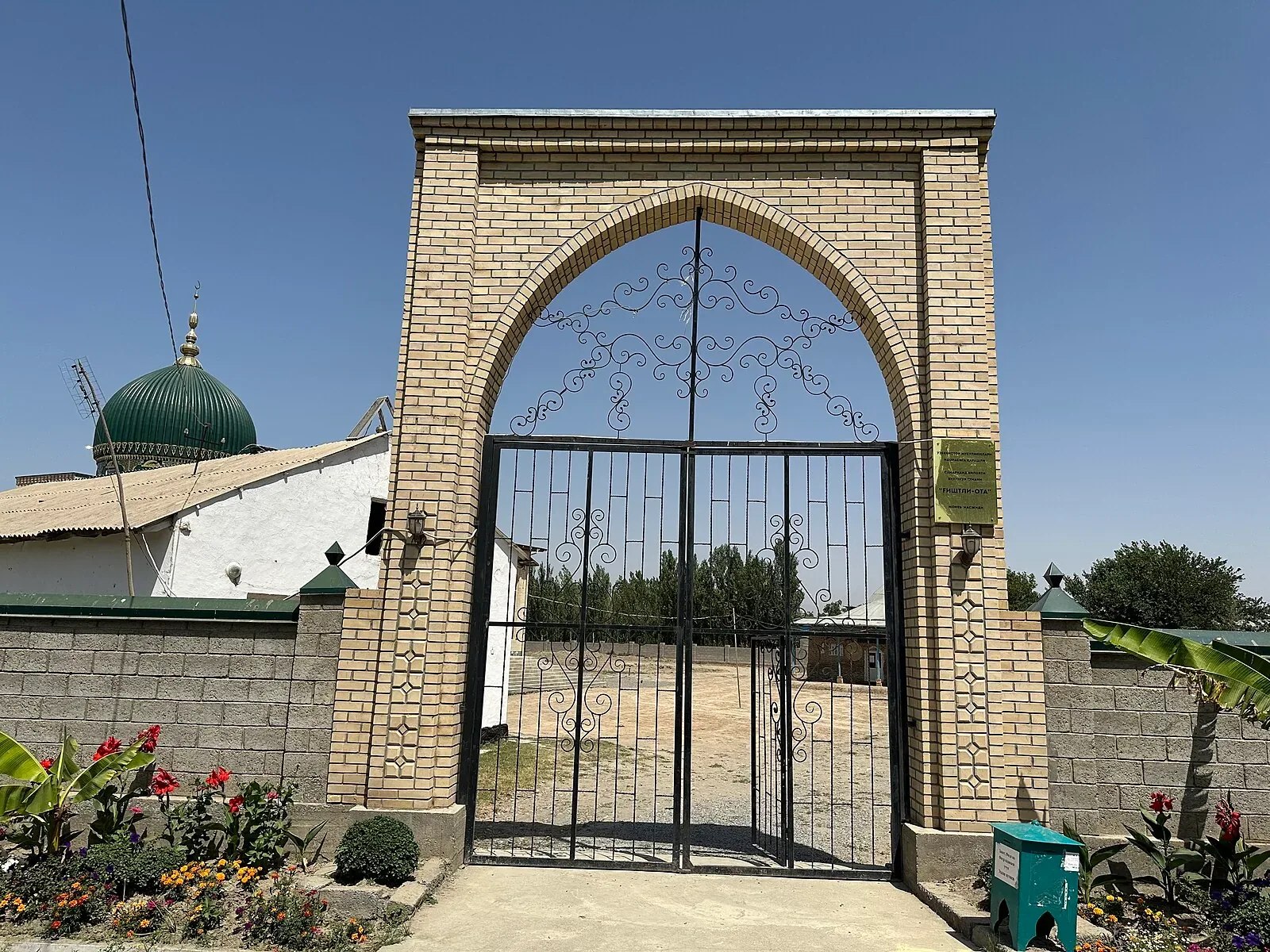
A local Samarkand mosque whose brickwork and gate character add a neighbourhood-scale chapter to a longer Muslim-heritage route.
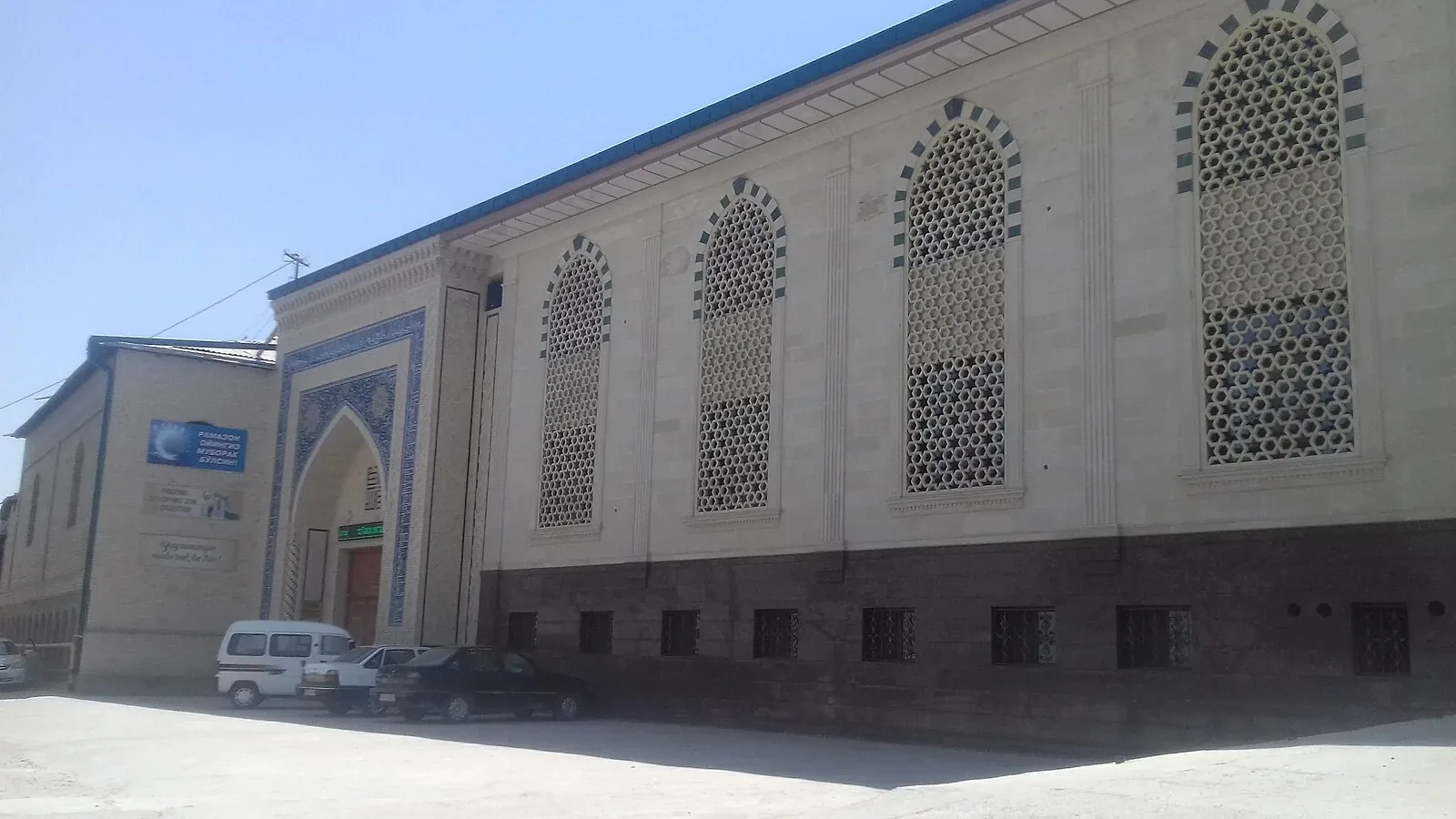
A local Samarkand mosque that adds a quieter layer to a Muslim-heritage route beyond the city’s headline monuments.
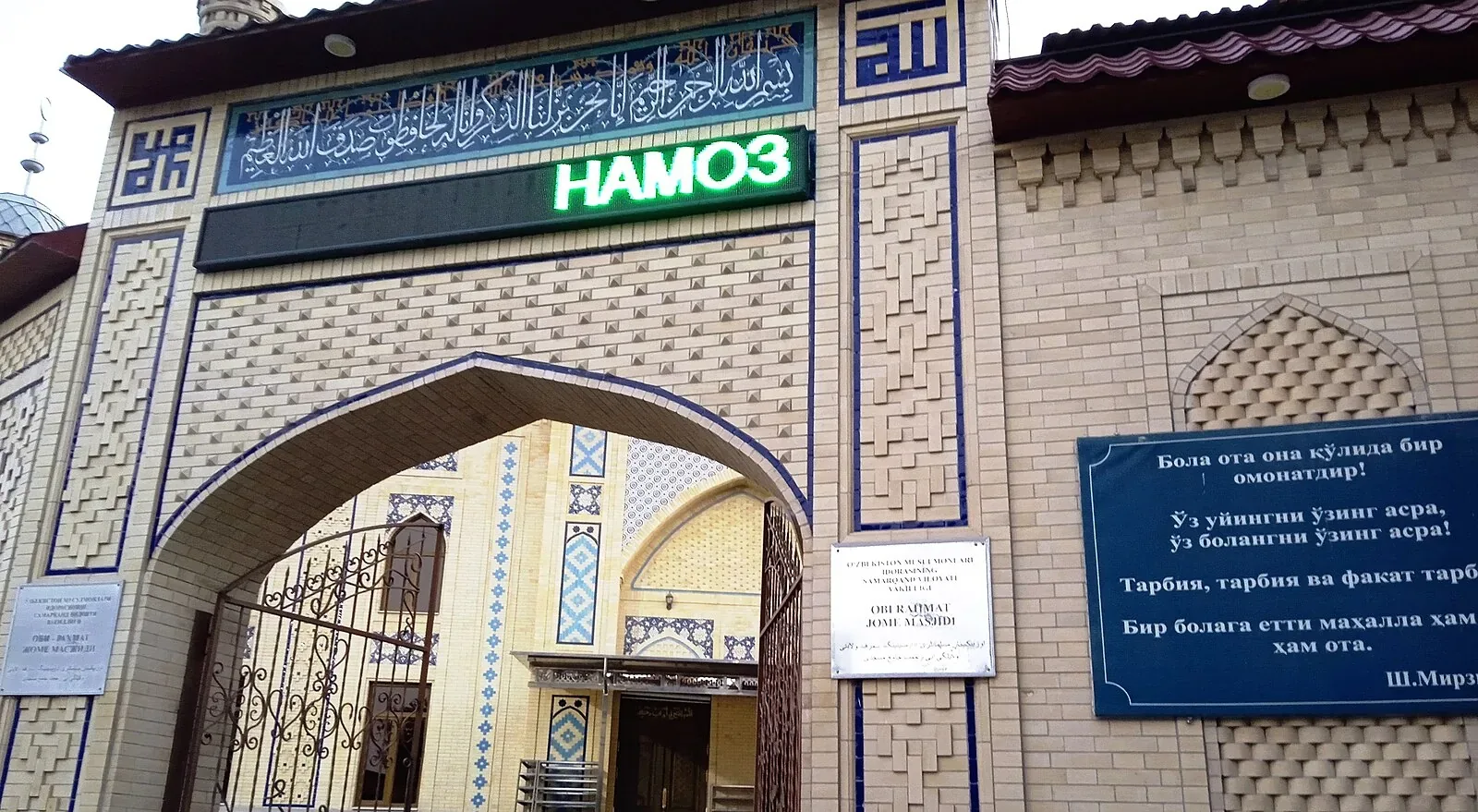
A local Samarkand mosque whose visible architecture offers a neighbourhood-scale perspective on the city’s Muslim heritage.
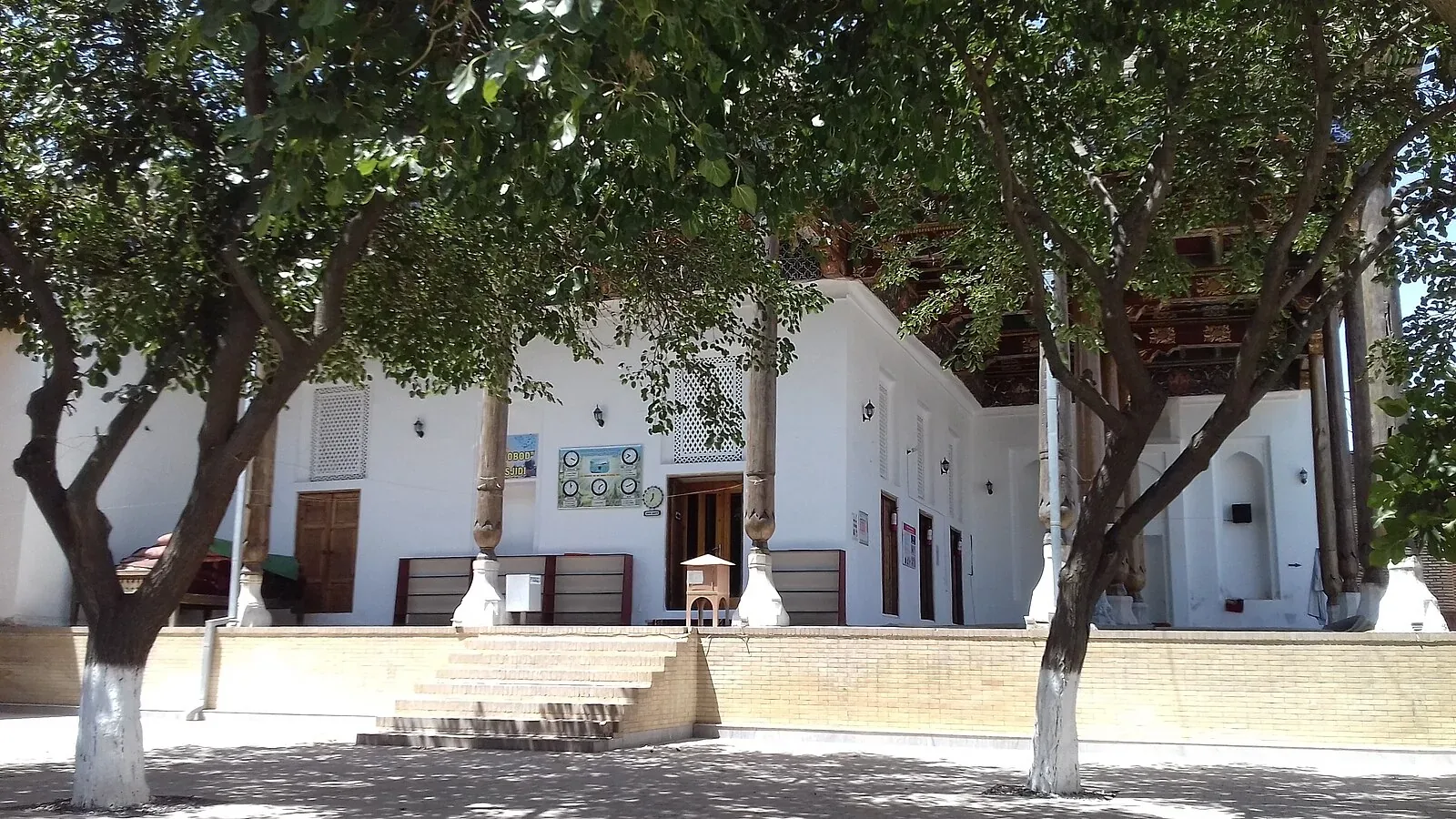
A central Samarkand mosque whose prayer-space architecture should be read separately from the nearby Ruhabad Mausoleum.
Samarkand International Airport (SKD) is the principal air gateway, at Ibn Sino Street 1. The operator publishes flight information and a local contact number, but airline schedules remain the controlling source for a specific journey. Complete passport, baggage and customs formalities before arranging onward transport; keep accommodation registration details and the hotel address ready in Uzbek or Russian.
Samarkand station sits west of the main heritage core, so arrival still requires a taxi, hotel transfer or local connection. Uzbekistan Railways publishes schedules and sells e-tickets through its official portal. Search the actual travel date because train type, departure time, journey length and seat inventory change. Popular high-speed services can sell out, especially around holidays and weekends.
Samarkand has public buses and a tram corridor, yet the network is designed primarily for residents rather than a heritage sightseeing loop. Routes, stops and payment arrangements can change, and English information is limited. Ask the hotel to write the stop and route number, confirm with the driver, and keep small-denomination UZS unless a current official notice confirms another payment method.
Ride-hailing is normally the easiest way to bridge Samarkand's separated clusters. Set the pin carefully at monuments with several gates, compare the displayed destination with the Uzbek or Russian address, and check the plate before entering. Cash may still be useful even when the app supports cards. Screenshot the route and fare if mobile data is unreliable.
Registan, Tashkent Road, Bibi-Khanym and Siab Bazaar can be linked on foot by a reasonably fit traveler, while Shah-i-Zinda and Afrasiab add distance and elevation. Monumental paving, curbs, steps and busy crossings vary significantly. Start early in warm months, carry water and use a taxi between clusters rather than turning a cultural day into an endurance test.
Urgut is useful for travelers specifically interested in its market and regional craft context, while Shahrisabz adds major Timurid associations. Both sit outside central Samarkand and require a separate transport plan. A tour or private driver can solve route finding and waiting time, but the operator should state what is included, the pickup point, vehicle standard and whether monument tickets are separate.
Uzbekistan applies visa-free access to many nationalities and operates an official electronic-visa portal for eligible travelers, but the permitted stay and documentation are nationality-specific. GCC residents should check using the passport they will travel on rather than assuming that UAE or Saudi residency determines eligibility. The Ministry of Foreign Affairs also lists tourist, group-tourist and pilgrimage visa categories. A passport should remain valid for the trip and match every booking exactly.
April to May and September to October are generally the easiest periods for long heritage walks between Registan, Bibi-Khanym and Shah-i-Zinda. Spring can bring rain and busy holiday dates; autumn brings clearer harvest-season market interest but popular train departures may tighten. Book intercity rail and well-located hotels early around major public celebrations and large international events.
Prices are paid in Uzbekistani som (UZS). Cards are increasingly useful at hotels, established restaurants and formal shops, but cash remains important in bazaars, small cafés, local transport and for minor purchases. Use bank ATMs or licensed bank and exchange-office counters, count notes discreetly, keep the receipt and reject street exchange offers. Do not store a fixed conversion in a travel plan because rates move.
The city is in Uzbekistan and follows UTC+5 year-round. Uzbek is the state language; Russian remains practically useful in transport and commerce, while Tajik is widely heard locally. English coverage improves at major hotels and monuments but is inconsistent elsewhere. The international dialing code is +998. Tap water suitability can vary by building and traveler tolerance, so sealed water is the simpler default.
Uzbekistan's public calendar includes New Year, International Women's Day, Navruz, Remembrance and Honor Day, Independence Day, Teachers and Mentors Day, and Constitution Day, alongside the first days of Ramadan Hayit and Kurban Hayit. Religious holiday dates move and are confirmed officially, so never build a fixed annual itinerary around an undated calendar.
Uzbek mobile operators include Ucell, Beeline Uzbekistan, Mobiuz and Uzmobile. Availability of tourist packages, eSIM support and airport desks changes, so compare current operator offers instead of relying on a historic package price. Passport registration is normally required for a local SIM. Ask the seller to activate data, make a test call and show the balance code before leaving.
Uzbek is the official language, Russian is a useful bridge in taxis and railway settings, and Tajik is part of Samarkand's everyday linguistic fabric. Save addresses in the local script and keep the map pin visible. Translation apps help, but confirm numbers and destinations on screen because similar monument names and multiple entrances can cause confusion.
Samarkand's main visitor areas are routinely busy and covered by visible security, including tourist-police patrols at major sites and transport hubs. Normal city precautions still matter: keep valuables controlled in crowds, use marked or app-booked transport, avoid isolated shortcuts after dark and retain copies of passport and registration documents.
The U.S. advisory specifically cautions against unsolicited tours and inflated tourist-site pricing. Use licensed operators, confirm inclusions in writing and do not hand passports to an unofficial fixer. For taxis, match the plate and destination; for shopping, confirm price, quantity and currency before payment.
Fresh palov, samsa and grilled meat are best eaten hot from a busy, clean operation. Be cautious with food left at ambient temperature, unwashed produce and dairy without reliable refrigeration. Travelers with allergies should carry translated ingredient cards because menus and staff may not cover cross-contact precisely.
Official foreign guidance warns that medical capability can be limited and recommends carrying prescription medicines in original packaging with documentation. Bring enough for the trip plus a delay margin, and check Uzbekistan's rules before carrying controlled or unusual medication. Do not rely on matching a foreign brand name at a local pharmacy.
The U.S. and UK advisories both recommend appropriate travel insurance. Confirm territorial coverage for Uzbekistan, pre-existing-condition rules, medical evacuation, cashless treatment or reimbursement, trip interruption and the documentation needed for a claim. A card benefit is not sufficient until its conditions are read.
Save these current official numbers before traveling: 112 is the unified SOS emergency line; 101 reaches the fire service; 102 reaches police; 103 reaches ambulance services; and 1173 is the tourist helpline. The Uzbekistan e-government portal lists 112 and 1173, while the national tourism safety page lists fire, police and ambulance numbers. Calls should be placed from a working local or roaming connection, and hotel or guide staff can help communicate the location when language is a barrier.
In hot months, exposed squares accumulate heat and shade can be limited. Start early, use sun protection, drink regularly and rest through the strongest afternoon sun. Heat exhaustion can begin with weakness, headache, nausea or heavy sweating; stop, cool down and seek help if symptoms worsen.
Women should use the same transport and document precautions as other travelers while dressing modestly at religious sites and choosing well-lit pickup points at night. Families should carry medicines, snacks, water and a meeting plan for crowded monuments. Child seats are not guaranteed in taxis and must be pre-arranged.
Samarkand, a city that lies at the heart of the ancient Silk Route is steeped in Islamic architecture. The three turquoise domed monuments to a gloried past in Registan Square are fascinating examples of a history that is being carefully restored to captivate the awe and admiration of tourists from around the world who are now discovering this ancient city of Uzbekistan.