Downtown to Charlestown
The Freedom Trail
A red-brick line linking sixteen revolutionary sites across 2.5 miles - the spine of every Boston visit.


Capital of Massachusetts and cradle of the American Revolution, Boston blends 17th-century streets with world-leading universities, hospitals, and sports culture.
A red-brick line linking sixteen revolutionary sites across 2.5 miles - the spine of every Boston visit.

One of the world's great encyclopedic museums - 500,000 works spanning Egyptian tombs to Monet to samurai armor, with a distinguished Islamic art collection.

America's oldest public park (1634) - the Freedom Trail's starting lawn, with skating, splash pools, and city life.

Victorian botanical garden with pedal-powered swan boats since 1877 and the beloved Make Way for Ducklings statues.

The 1742 'Cradle of Liberty' beside a granite market hall of food stalls, shops, and street performers.

'Old Ironsides' (1797) - the world's oldest commissioned warship afloat, boarded free, with a hands-on museum beside it.

A four-story ocean tank, penguin colony, and touchable rays on the downtown waterfront - toddler paradise.

A Venetian palazzo built around a flowering courtyard - and the empty frames of the world's greatest unsolved art heist.

Indoor lightning storms, a planetarium, dinosaurs, and hundreds of hands-on stations spanning the Charles River dam.

A 'palace for the people' (1895) - Bates Hall's green lamps, Sargent murals, and a Venetian courtyard, all free.

Harvard and MIT for the ambition, Central Square for the halal, the MFA and Gardner for the art, and Back Bay to close the suitcases - the aspirational Boston circuit.
Three days paced for young children with prayer stops mapped, halal meals certain, and every museum matched to a playground - the full Irhal family formula.
The essential Boston: the Freedom Trail split intelligently across two days, anchored by the Aquarium, the harbor, and halal meals positioned exactly where hunger strikes.

Award-winning Yemeni restaurant and cultural destination - the flagship halal dining experience in Boston.

Downtown halal grill by Boston Common, open to 2-3 am - the city's late-night halal lifeline.

Beloved halal shawarma institution on Huntington Avenue near Northeastern and the museum corridor.
Indian-Middle Eastern halal street food inside Faneuil Hall Marketplace - the easiest halal meal on the Freedom Trail.

Proudly halal Middle Eastern counter feeding Harvard Square since 2009 - falafel, shawarma, and late hours.

Acclaimed Afghan dining room in Allston-Brighton - fall-off-the-bone lamb, qabili palau, and warm hospitality.
Hand-pulled laghman noodles and cumin lamb - East Cambridge's celebrated Uyghur kitchen, halal by tradition.
Boston-born vegetarian fast food - meat-free by design, which makes it effortlessly Muslim-safe.

The North End's legendary cannoli box tied with string - Boston's most famous dessert ritual.

America's oldest continuously operating restaurant (1826) - historic seafood beside the Freedom Trail; alcohol served, fish-focused ordering advised.
Loading local prayer times…
Calculated times. Confirm congregation times with your local masjid.

Boston's 1912 grande dame on Copley Square - gilded ballroom glamour, Gulf-familiar Fairmont service, and the city's best shopping on the doorstep.
The landmark arch on Rowes Wharf - Boston's definitive waterfront luxury, with the Aquarium, ferries, and Greenway at the door.

Understated luxury overlooking the Public Garden - the classic Four Seasons formula GCC guests know, steps from swan boats.

Serene luxury connected directly to the Prudential Center - shop, dine, and spa without stepping outside in winter.

America's longest continuously operating hotel (1855), on the Freedom Trail - birthplace of the Parker House roll and Boston cream pie.

The Seaport's flagship new-build - modern family rooms, multiple restaurants, and the convention district's best pool deck.

Riverfront Cambridge hotel with the skyline view - postcard sunsets, CambridgeSide mall next door, halal cluster minutes away.

The reborn 1927 Ritz at One Newbury Street - fireplace suites and a rooftop with Public Garden views.

Family-owned 1900 boutique by the Boston Public Library - warm service and Back Bay location at gentler rates.

Big, dependable tower connected by skybridge to Copley Place and Prudential malls - the practical Back Bay family base.
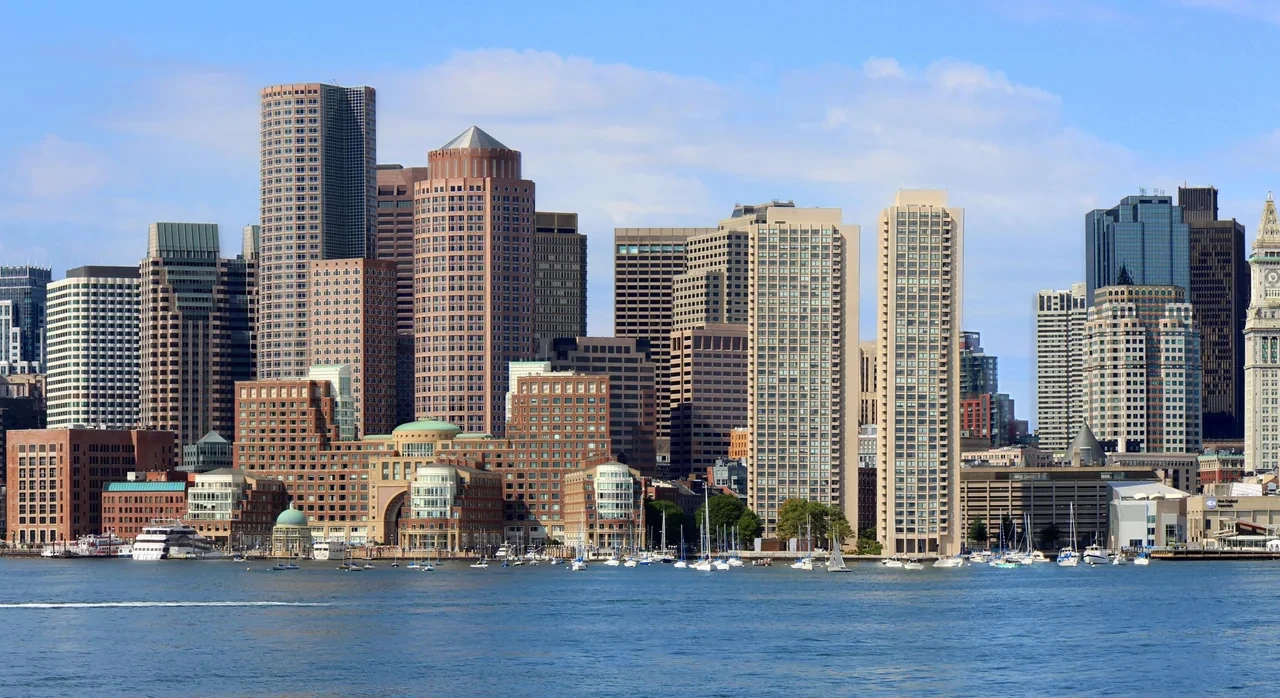
Boston today is the capital of Massachusetts and one of America's most compact major city breaks, with downtown history, Back Bay shopping, Cambridge universities, harbor views and sports culture all close enough to combine in a short trip.
Founded in 1630, Boston became one of the oldest major cities in the United States and a center of revolutionary politics, from the Boston Tea Party and Paul Revere's ride to the battles around Lexington, Concord and Bunker Hill.
Boston residents move through a city of students, researchers, hospital workers, finance professionals, sports fans and long-rooted neighborhood communities.

One of the world's oldest and best children's museums - climbing, water play, and role-play on Fort Point Channel.

Gorillas, giraffes, and a tropical forest pavilion in Olmsted's largest Boston park.

Indoor LEGO world at Assembly Row - rides, MINILAND Boston, and build zones for the brick-obsessed.

Winter skating rink, summer splash pool, and a carousel - the Common's year-round children's engine.

A carousel of New England creatures and an eruption fountain - the Waterfront's free-and-cheap toddler circuit.

A beautiful, fully inclusive playground by the Children's Museum, honoring Martin Richard - ships, slides, and harbor air.

The riverside playground circuit - climbing structures with Charles River sails behind, free all day.

Swedish 'questing' - teams solve physical and mental challenge rooms by trial and error; teens' favorite afternoon.

One of America's oldest puppet theaters - intimate weekend shows steps from Coolidge Corner.

A world-class free children's library inside the Copley palace - story times, play corners, and courtyard picnics.

Eight blocks of brownstone shopping from indie boutiques to luxury flagships - Boston's signature retail stroll.

Back Bay's indoor mall under the tower - department stores, mainstream brands, food hall, and View Boston above.

Open-air outlet village on the Orange Line - brand discounts, riverside lawns, and LEGO for the children.
The luxury floors - Neiman Marcus and international maisons under one skybridge-connected roof.

Pedestrianized value district - Macy's, Primark, and everyday brands two minutes from the Common.
Souvenirs, local makers' pushcarts, and New England gifts around Quincy Market's colonnade.
The Harvard Coop's crimson merchandise and the square's legendary bookshops - gifts with academic weight.

East Cambridge's three-level canal-side mall - practical brands beside the Science Museum and Kendall hotels.

New England's largest outlet center, an hour south - the serious discount expedition with 170 stores.

Beacon Hill's gas-lit lane of antique dealers and independents - browsing as time travel.

East Boston exists for most visitors as Logan International Airport, but the neighborhood around it earns a footnote of its own. Practically: the airport's terminals connect by free Massport shuttles to the Blue Line's Airport station (about ten minutes to downtown) and by the Silver Line SL1 to South Station, and an interfaith chapel serves travelers within the airport (location and hours - verify with Massport). Hotels at and around Logan, led by the walkway-connected Hilton, are the sensible answer to 1 am Gulf arrivals or early departures with children. Beyond logistics, Eastie is one of Boston's great immigrant neighborhoods - today strongly Latin American - and Piers Park delivers what may be the best free skyline view in the city, with an excellent playground, ideal for burning children's energy on departure day. Maverick Square's casual eateries include Latin grills where seafood and beef dominate; halal status individually verified where listed.

Charlestown, across the harbor's inner channel, closes the Freedom Trail with its two most physical experiences: boarding the USS Constitution - Old Ironsides, launched 1797 and still a commissioned US Navy vessel - in the historic Navy Yard, and climbing the 294 steps of the Bunker Hill Monument for a wraparound city view (free; stair access subject to conditions - verify). The adjacent USS Constitution Museum adds hands-on exhibits children genuinely enjoy. Around the sights, Charlestown itself is a quiet quarter of gas lamps and clapboard houses on Monument Square, pleasant for a wander but thin on dining, so time your visit between meals or picnic in the Navy Yard. The best arrival is by water: the MBTA ferry from Long Wharf to the Navy Yard takes about ten minutes and doubles as a budget harbor cruise. Allow three to four hours total.

Assembly Row is the rare American outlet destination that needs no car: its own Orange Line station (Assembly) puts the open-air village fifteen minutes from downtown Boston. Dozens of brand outlets - sportswear, mid-range fashion, home goods - line walkable blocks beside the Mystic River, with lawns, a summer splash area, and the LEGO Discovery Center giving children a genuine reason to come along rather than endure the trip. Hotels on site offer family rooms at rates well under central Boston, a workable base for value-focused stays if you accept commuting to the sights. Dining is chain-casual with alcohol common; halal choices on site are limited, so plan meals around Orange Line stops toward Boston or carry picnic supplies for the riverfront. Pair it in this guide's shopping itinerary with a Bunker Hill stop, one station away at Community College plus a walk.

Brookline - a separate town wrapped by Boston on three sides - is where visitors go to live like residents. Coolidge Corner, its heart, stacks an independent bookstore, a 1933 art-deco cinema, bakeries, and playgrounds along the Green Line C branch, fifteen to twenty minutes from Copley. The town's large observant Jewish community means kosher markets and an ingrained understanding of religious dietary rules; halal-observant families report this makes daily life easy, and several halal venues operate in and around the town (verified per entry). Proximity to the Longwood medical area makes Brookline the default base for Gulf medical travelers accompanying patients, with apartment-style hotels suited to long stays. Trade-offs are honest ones: fewer sights on the doorstep and slower rides downtown. For a week-plus family visit prioritizing calm, space, and routine, it is hard to beat.
Where the Financial District's towers meet the harbor, Boston is at its most family-efficient: the New England Aquarium sits on Central Wharf, whale watches and harbor cruises leave from Long Wharf next door, ferries depart for the Harbor Islands in summer, and the Rose Kennedy Greenway - the ribbon of parks built where an elevated highway once ran - supplies a carousel, splash fountains, and food trucks between sights. Faneuil Hall and Quincy Market are two minutes inland. Hotels range from the landmark Boston Harbor Hotel to business properties that drop prices sharply on weekends when the bankers leave - a genuine value pattern worth exploiting. Evenings are quiet rather than dull; the harborwalk at dusk, with planes descending into Logan across the water, is one of the city's free pleasures. This zone anchors the first-timer itinerary in this guide.

The South End holds the largest intact Victorian row-house district in the country, its long brick blocks punctuated by leafy park squares that feel closer to London than to most of America. It is Boston's creative-professional quarter: art studios cluster around SoWa, whose Sunday open market (seasonal) mixes crafts, vintage, and food trucks, and the restaurant scene is among the city's most acclaimed - though wine-centric, so Muslim diners should treat it as cafe, bakery, and brunch territory and verify individual menus. The neighborhood borders Roxbury, putting the ISBCC mosque within a short bus or taxi ride, and Back Bay's shopping is a fifteen-minute walk. Come on a weekend morning: browse SoWa, photograph Union Park's fountains, take a long cafe breakfast, and drift toward Copley. Evenings are sophisticated and safe along main corridors.

Fenway-Kenmore orbits two giants: Fenway Park, the oldest ballpark in Major League Baseball (opened 1912), and the Museum of Fine Arts on Huntington Avenue's museum corridor, with the jewel-box Isabella Stewart Gardner Museum beside it. Even non-fans should consider a Fenway tour - the Green Monster wall and century of stories transcend sport - while game nights transform the whole district into a street festival (and clog hotels; check the Red Sox schedule before booking). The Back Bay Fens parkland threads through, part of the Emerald Necklace, giving green walking routes between sights. Student life from Boston University and Northeastern keeps food casual and affordable, with several halal-friendly options among the shawarma and chicken spots - verified per entry. Base here for museum-heavy trips or baseball pilgrimages; otherwise visit on a focused day via the Green Line.
Kendall Square, wrapped around MIT on the Cambridge side of the Charles, calls itself the most innovative square mile on earth - biotech towers, startup lofts, and the rebuilt MIT Museum with its robotics and AI galleries. For Muslim travelers it is quietly the most practical base in Greater Boston: MIT maintains Muslim prayer spaces and an active MSA (access policies vary; confirm), the Central Square halal cluster and ISB Cambridge mosque are minutes away by Red Line or a flat walk, and the hotel stock is modern, well-priced against downtown, and calm at night. The riverfront path along Memorial Drive gives postcard skyline views back toward Boston - best at sunset. Downsides are mild: weekends can feel empty as tech workers vanish, and character comes from labs rather than history. One Red Line stop reaches Harvard Square; two cross into downtown Boston.

Harvard Square - in the separate city of Cambridge, one Red Line ride across the Charles - delivers the collegiate America of imagination: red-brick gates into Harvard Yard, the John Harvard statue with its polished shoe, chess players and buskers in the square, and some of the country's best bookstores. Free student-led campus tours run from the Smith Campus Center (schedules vary; confirm), and for Gulf families with university-bound teenagers this is often the emotional heart of a Boston trip. Food is casual, international, and student-priced; the serious halal cluster sits one stop away at Central Square near the ISB Cambridge mosque, making this the easiest area in Greater Boston to pair sightseeing with Jumu'ah. Evenings are lively but studious rather than rowdy. Allow a half day, more if the Harvard Art Museums or natural history museum tempt you.

Twenty years ago this was parking lots; today the Seaport is Boston's glass-and-harbor showcase, and its newest hotel district. Everything is wide, flat, and stroller-perfect: the Harborwalk runs along the water past the Institute of Contemporary Art, the Boston Children's Museum sits at Fort Point Channel with the Boston Tea Party Ships beside it, and lawns and plazas host seasonal markets and winter light installations. Hotels here are new-build with modern family rooms, often better value than equivalent Back Bay stock. Dining is contemporary seafood and steakhouse territory with alcohol standard, so plan halal meals via the Silver Line to South Station and onward, or a ten-minute taxi. The SL1/SL2 Silver Line makes Logan Airport unusually convenient from Seaport hotels - a real advantage for late Gulf arrivals with children and luggage.
Baseball's oldest cathedral (1912) - the Green Monster, hand-turned scoreboard, and a century of Red Sox devotion.
The 1636 heart of America's oldest university - free student-led tours, the 'statue of three lies,' and collegiate dreams.

Downtown Boston's oldest house (c. 1680) - the small timber home the midnight rider left on April 18, 1775.

Boston's oldest church (1723), where two lanterns in the steeple - 'one if by land, two if by sea' - signaled the Revolution.
A 221-foot granite obelisk over the Revolution's first great battle - climb 294 steps for wraparound city views.

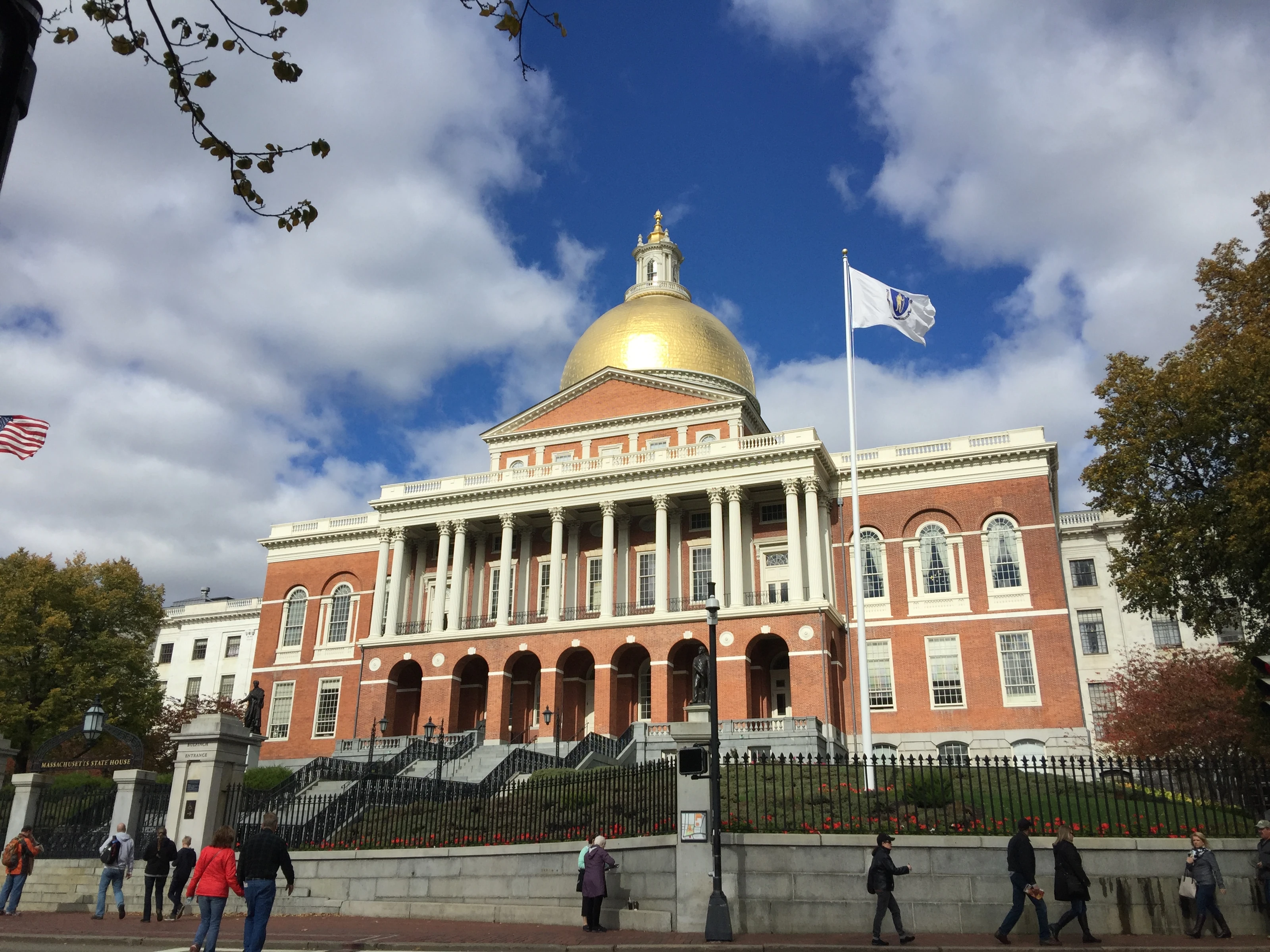
The gold-domed 1798 capitol crowning Beacon Hill - free weekday tours through working state government.

The world's oldest annual marathon, run on Patriots' Day - the city's defining event and its busiest week.
America's most famous Independence Day celebration - free orchestra and fireworks over the Charles.

Eid al-Fitr and Eid al-Adha congregations at ISBCC and area mosques - thousands gather, venues announced yearly.

Community iftars, nightly Tarawih at ISBCC and Cambridge, and student-association programs across the month.

The world's largest two-day rowing regatta, late October - riverside crowds at peak foliage.

Amphibious WWII-style vehicle through the landmarks, then splash into the Charles - children's favorite hour in Boston.
Costumed 18th-century guides bring the Revolution to life over 90 minutes of the trail's core sites.

High-speed catamaran to Stellwagen Bank's feeding grounds - humpbacks breaching with naturalists narrating.
Classic 90-minute harbor loop from Long Wharf - skyline, lighthouse, and the city from its best angle.

Narrated trolley loop with stops at the major sights - the pacing tool for prayer times, naps, and tired feet.
Behind the scenes at baseball's oldest park - atop the Green Monster, press box, and a century of stories.
Free student-led official tours or the theatrical paid 'Hahvahd Tour' - two ways into the Yard's stories.

Volunteer-scholar led walks - architecture, hidden alleys, Beacon Hill, and the beloved 'Boston By Little Feet' for children.

The 1692 witch trials town, 30-40 minutes by commuter rail - museums, memorials, and maritime streets.

Guided coach or trolley to the Revolution's first battlefields - the countryside chapter the city trail cannot tell.
New England's largest mosque - the landmark minaret of Roxbury and the heart of Muslim Boston.

The historic Cambridge mosque at 204 Prospect Street - anchor of the Harvard-MIT Muslim community.

Historic mosque completed in 1964 by Boston's earliest Arab Muslim families - one of America's pioneering purpose-built mosques.
Campus prayer space maintained by MIT's Muslim community - the practical daily-prayer answer for Kendall Square days.

Historic African-American congregation with roots to the 1930s - a living chapter of American Islamic history.

Neighborhood mosque at 186 Chestnut Hill Avenue serving Brighton, Allston, and Brookline-based visitors.
Logan International Airport is close to central Boston. The free Massport shuttle network links terminals with Airport station on the MBTA Blue Line, while the Silver Line SL1 bus connects the terminals with South Station and the downtown transit network. Taxis and app-based ride-hailing use designated airport pickup areas; follow terminal signs rather than accepting an unsolicited curbside offer.
The MBTA’s Red, Orange, Blue, and Green subway lines, local buses, and Silver Line provide the practical backbone for most Boston visits. Contactless bank cards, phones, and watches can be tapped at subway gates and on buses where supported; CharlieCards, CharlieTickets, and the mTicket app cover other fare situations. Commuter Rail trips use zones and are separate from the subway fare structure.
Licensed taxis and app-based services are useful when luggage, weather, late-night travel, or a suburban day trip makes the T less convenient. At Logan, follow the official pickup instructions; in the city, use a marked taxi stand or request the ride inside the app. Confirm the vehicle and driver details before entering and keep the destination address visible.
Boston is served by Logan International Airport, but admission to the United States is controlled by federal rules rather than by Massachusetts or the city. Check the US Department of State visitor-visa guidance and, where applicable, the Electronic System for Travel Authorization route before booking non-refundable travel. Passport validity, prior travel history, nationality, and purpose of visit can change the correct pathway; a travel article or hotel cannot substitute for the official decision.
Late April through June and September through late October are Boston's most comfortable general windows for walking, museums, harbor time, and family itineraries. October adds New England foliage, while July and August bring warmer weather, school-holiday demand, and higher visitor volumes. December through March can be cold and snowy; that season suits travelers who want winter atmosphere but requires insulated clothing and extra transfer time.
Boston has a four-season climate. Summer days can be warm and humid, with thunderstorms possible; spring and autumn vary quickly between mild afternoons and cool evenings. Winter brings freezing temperatures, wind, and occasional snow that can slow walking routes and airport transfers. Pack layers, waterproof footwear, and a compact rain shell rather than relying on one forecast for an entire week.
Boston uses the US dollar. Cards and contactless payment are widely accepted, including at most museums, shops, restaurants, and transit points, but keep a small amount of cash for tips, markets, and occasional independent vendors. US prices often exclude sales tax until checkout, and restaurant bills normally require a gratuity; check the receipt before paying so a service charge is not added twice.
Boston is the capital of Massachusetts and sits on the Atlantic coast of New England. Logan International Airport is the principal air gateway. The MBTA subway and bus network is known locally as the T, and central neighborhoods such as Downtown, Back Bay, Beacon Hill, the North End, and the Waterfront are close enough to combine on foot. The city uses Eastern Time and US customary measurements.
Federal holidays can alter government services, bank hours, school calendars, and some attraction schedules. Boston also has event-driven closures and crowd peaks around Patriots’ Day and the Boston Marathon, Independence Day, university graduations, and major sports or concert weekends. The federal holiday calendar is the right starting point, but check each attraction and hotel separately.
Boston is a practical city for visitors, but normal urban precautions still matter. Keep phones and passports secure in crowds, use well-lit routes at night, and be cautious with unsolicited ticket, taxi, or accommodation offers. Crowds around Fenway, the Marathon, concerts, and transit stations can be denser than the surrounding street suggests.
Boston’s public water system is regulated and publishes annual quality information, so visitors can normally drink tap water. Carry a refillable bottle, especially during warm walking days, and use sealed water if a hotel or attraction posts a local notice. Restaurants vary widely: Irhal’s halal listings record the available source evidence, but travelers with strict requirements should still ask about meat sourcing, shared fryers, sauces, gelatin, and alcohol-based flavorings.
For an immediate threat to life, fire, or serious crime in the United States, call 911. Give the operator the street address, building name, and a clear description of what is happening. For non-urgent city services, Boston’s 311 system can direct residents and visitors to the right department, while the hotel front desk can help with local medical or transport logistics.
The arrival of the FIFA World Cup 2026™ is a perfect opportunity for Boston's sports fans to show how their city revels in a championship contest.