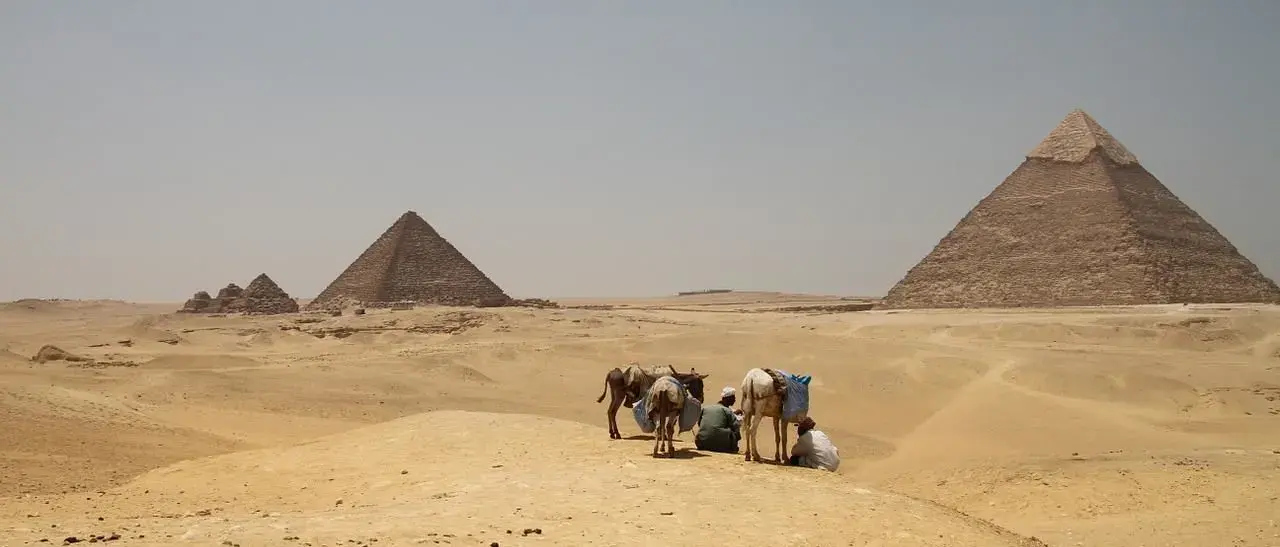
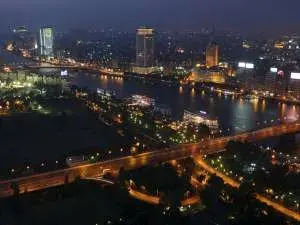
There is no doubt that Cairo will alarm your senses, and this can either be a good or bad thing. Cairo's allure stands tall with the Pyramids of Giza, which is the only surviving wonder of the Seven Wonders of the World. Additionally, its fascinating winding streets, oriental bazaars, and Islamic architecture can easily seduce any tourist. Yet, this seduction turns sour when experiencing Cairo's dirt, pollution, and crowd. Such contrasts may be too raw for the tourist that wants everything presented in a packaged platter. But for the intrepid soul, discovering Cairo can become a time-traveling experience that may lead to self-discovery and se
Some of the major tourist sites tend not to be child-friendly because of its large crowds. Yet, do not be turned off if the Pyramids of Giza is not the best place for a child, because with a little digging we have found some alternative options that include parks and playgrounds. Also, some hotels have begun catering to families by offering facilities specifically geared at children.
This hotel offers a petting zoo with a staff trained to make sure that the children have fun in a safe and friendly environment. Children can play with monkeys, a deer, a camel, a pony, flamingoes, and ducks. There is also a “Children's Garden" that has toys, swings, a trampoline, and a junior pool.
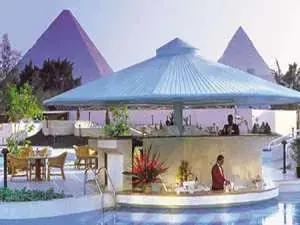
The Le Meridien Pyramids's children's area offers pint-sized chairs and tables along with a children's paddling pool, a special children's menu, and coloring books and crayons. These facilities are available for both hotel guests and non-guests.
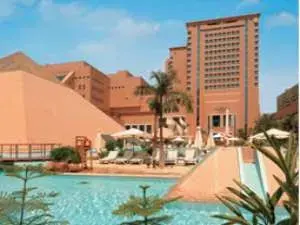
The Cataract Pyramids Resort's has both an indoor and outdoor children's area. The indoor children's area includes a children's club with rocking horses, toys, and paddling pool (good for children under four years of age). The outdoor children's area includes a playground with swings, slides, a trampoline, fiberglass funhouses, and a pool for children older than four-years-old.
Midan Tahrir is the center of modern Cairo. It's a place where several popular landmarks (the Egyptian Museum, the American University in Cairo, the Arab League and the Hilton and Intercontinental Hotels) are located and where congested traffic and un-pedestrian-friendly drivers may alarm the timid tourist. Yet, the hustle and bustle of the square is still interesting and soulful enough because of its authentic mix of ancient culture and local flavor. Hint: to avoid Midan Tahrir's traffic it is best to use the reliable and efficient Sadat Metro station.
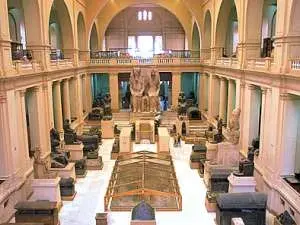
The Egyptian Museum holds one of the top attractions in Cairo, the Tutankhamun Galleries. The Tutankhamun Galleries is where the treasures of the boy-pharaoh Tutankhamun are held. King Tut (as he is referred to in popular culture) had no great historical significance prior to 1922, when the British Egyptologist Howard Carter found his tomb almost entirely intact in the Valley of the Kings (on the West Bank on Luxor in Egypt). In fact, even today, not much is known of this young pharaoh, who when in power at age nine was directed by others to rule the kingdom. Yet, his fame today outshines his little known past because of the mystery he provokes and because of what little damage Tut's tomb and his treasures have undergone (which has provided massive historical insight into Pharaonic burials).
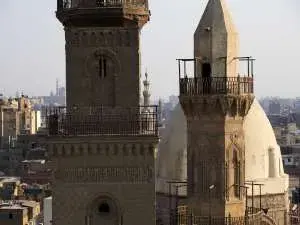
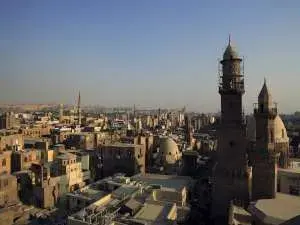
If you want to take a trip to the ancient past, then simply stroll down Islamic Cairo and you will soon find yourself surrounded by remnant buildings of medieval Cairo. Tourists are mainly attracted to this area because it is rich in historically Islamic monuments such as ancient mosques, 1,500-year-old markets, and medieval forts.
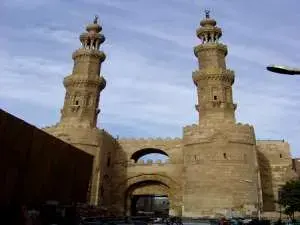
The Bab Zuwayla is a gate that was built in 1087 by three Armenian monks to protect the then Fatimid city from invasion. The name Fatimid is given to the ancient Shia Dynasty which ruled North Africa from about 900-1200.
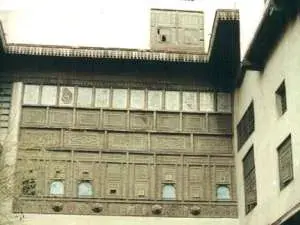
Though this site rarely makes it to the top places to visit list, it is well worth seeing this Ottoman-era house if you want to be taken off the beaten path. The Bayt el-Suhaymi enables visitors to glimpse into the lives of wealthy merchants from the 16th and 17th centuries.
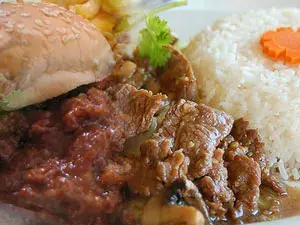
This upscale surf and turf restaurant offers a fusion cuisine that includes dishes ranging anywhere from pan-seared salmon pagoda to the traditional lobster thermidor to steak and to the finger-licking Buffalo wings. Vegetarian dishes are also served.
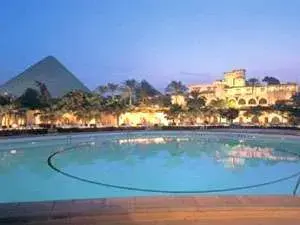
Famed as the best Indian restaurant in Cairo, the Moghul Room offers quality food with a serene dining atmosphere that is backed with soft, live Indian music. The food offered is North Indian cuisine that emphasizes tandoori and vegetarian dishes. The Moghul Room is located in the Mena House Oberoi Hotel located across from the pyramids.
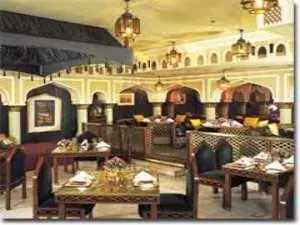
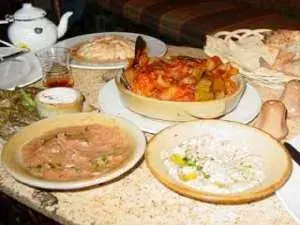
The Abu el-Sid is Cairo's best Egyptian restaurant and bar. The food is traditional and appetizing and brings in a mixed crowd of locals, tourists, and travelers on business. The decor is stylish mix of hanging lamps, large cushions, and brass tables. If you want to taste local food, this is the one place that will have you coming back for more.
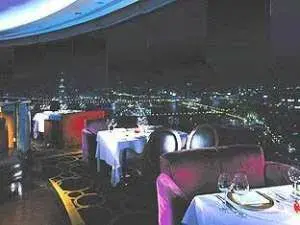
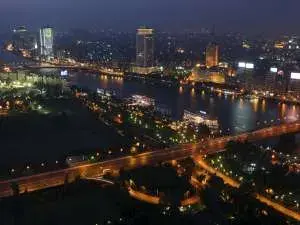
The Grand Hyatt hotel's Revolving Restaurant is the tallest restaurant in Cairo and the only dining venue which offers a rotating 360 degree of the city (it makes a full circle every 75 minutes) that includes catching sights of the pyramids and Nile River. Besides its superb decor, the restaurant also offers delicious French dishes.
If you want to escape Egyptian cuisine for a moment, then head over to Da Mario (located in the Hilton) and try its fabulously authentic Italian cuisine. Dishes are delicious and served in a generous quantity. The service is also very efficient. Located near the Egyptian,Museum, Da Mario is also a good choice you are feeling hungry after seeing some Islamic art.
The Khan El-Khali Restaurant & Naguib Mahfouz Coffee Shop offers its diners something most restaurants lack; personality. This restaurant has a distinct and charming local attitude that is matched with sumptuous Egyptian food. The coffee shop, which is named after Egypt's Nobel prize-winning novelist, is great for a quick snack if you want to take a mini-break from shopping at the bazaar. The clientele at this inexpensive hot spot includes local artists and intellectuals.
Andrea restaurant is a family-oriented restaurant that specializes in grilled Egyptian dishes. There is a lovely garden from where to dine and a bar that offers some local beer and wine. Though this restaurant is near the pyramids, be careful when driving to this restaurant as it is a bit secluded and some other restaurants carry its name. Reservations are a must.
The L' Aubergine restaurant is Cairo's self-proclaimed only vegetarian restaurant in the city (though it does offer some meat dishes). Its stylish decor and friendly staff make this restaurant a treat to visit. The subdued jazz-style bar is also very inviting.
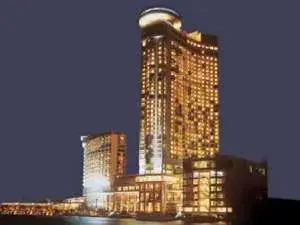
Located near the airport and business district, the Grand Hyatt is located on the banks of the Nile with views of the river and city. This hotel comes with 714 rooms and suites along with a spa, pool, gym, business center, shopping mall with a cinema, and 12 eateries.
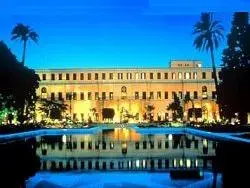
This traditionally elegant hotel was built in 1869 and offers classy comfort along with views of the Pyramids. The rooms are furnished in prints of old Egypt on the walls, have carved wooden screens, and glass-and-gilt-edged mirrors. There are also garden rooms and an 18-hole golf course.
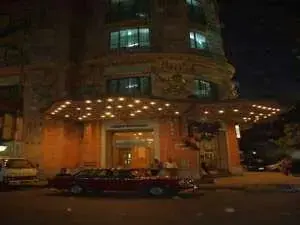
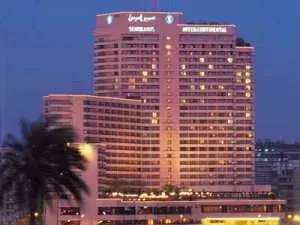
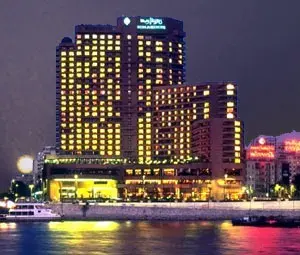
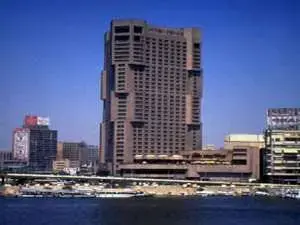
This luxury hotel is perfectly situated near all the main tourist attractions in Cairo. This is also the place in Cairo to hold weddings, anniversaries, and other special occasions. The Semiramis InterContinental also provides a buzzing atmosphere with people (other than guests) frequently going into the lobby cafe to chat or have a sit down dinner at its Lebanese restaurant. Moreover, the rooms are large and comfortable and many have great views of the Nile and feluccas (sail boats).
The Four Seasons on Corniche el Nil is the newer of the two Four Seasons hotels in Cairo. This luxury accommodation has 365 rooms, including 77 suites, and offers clear views of either the Nile or citadel.
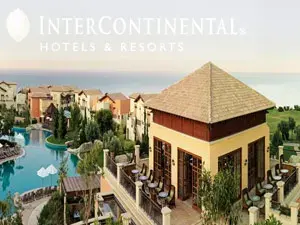
InterContinental Cairo Citystars is part of the Middle East’s largest retail and entertainment complex giving guests direct access to 550 stores and an indoor theme park. The hotel is ideally located seven minutes from Cairo International Airport, 10 minutes from Cairo International Conference Centre and 30 minutes from downtown Cairo.Named Cairo’s best business hotel by Business Traveller Magazine, it is also close to free time destinations such as the Egyptian Museum, Sakkara and the Giza Pyramids and Sphinx. Rooms are expensive but exemplar service and chic decor make it worth it.
Marriott Cairo Hotel & Omar Khayyam Casino, located in the city's Zamalek area, is the perfect place for weekend getaways, vacations and business travel. Located 45 minutes away from Cairo International Airport, this 20 storey building has spectacular views of the Nile and six acres of palace gardens. There are a total of 977 updated rooms, 111 elegant suites, 15 restaurants, a world-class casino and more than 35,500 square feet of meeting and banquet space.
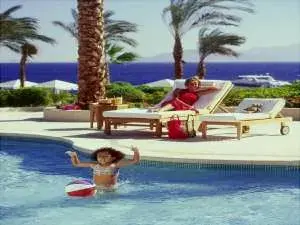
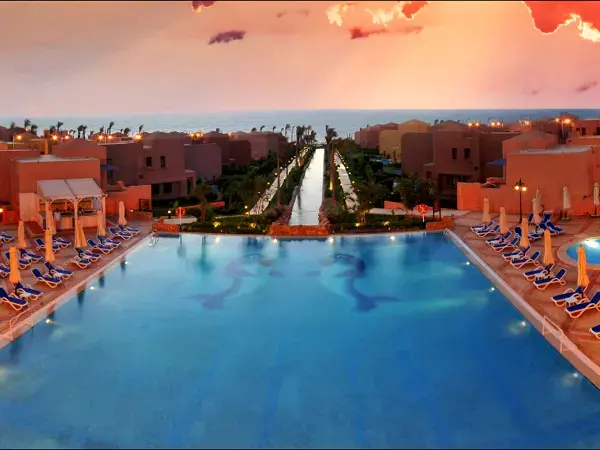
Centara Grand Beach Resort & Spa Sokhna is a new 5-star Centara resort in the land of ancient civilisations, Egypt. The historic land of Pyramids and Pharaohs is now home to the newest addition to the Centara family of hotels and resorts. The resort is located about 90 minutes drive from Cairo on the north coast of the Red Sea, where beautiful beaches meet the Red Sea. Travelers from all over the world can now enjoy the renowned Centara hospitality in one of the world's most fascinating and historic locations.
The Sheraton Cairo Hotel, Towers, and Casino complex works as two separate hotels, with the Towers being one and the less expensive Sheraton being the other. These two hotels hold 650 rooms with great views of either the Nile or the citadel. They are also just a short distance walk from the city center. The facilities include a pool and children's pool, health club and spa, shopping arcade, some restaurants, a bar, and casino.
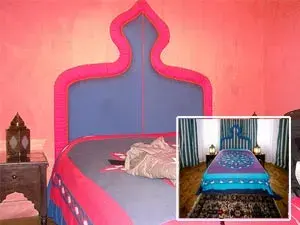
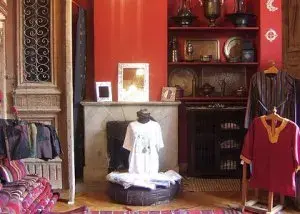
The Talisman is a charming boutique hotel that is boldly designed in an oriental style and located in the downtown area. There is no doubt that this hotel’s attractiveness is mainly derived from its unique furnishings. Yet, feel assured that the rooms not only offer style, but also comfort. In addition, the Talisman also holds a comfortable living room, dining room, kitchen, and a library with a collection of works by Khalil Gibran (the Lebanese poet and writer). Located just one kilometer from the Egyptian Museum and 15 kilometers from the breathtaking pyramids of Giza, it is a popular choice for tourists wishing to unwind in unique surroundings after a hectic day of sight seeing.
This charming hotel is run by its owner, Hebba Bakri, and offers spotless rooms along with two terraces. There is a small bar and restaurant that is attractively designed with red walls and wooden beams in the ceiling. There is also an antique telephone switchboard, books, and other interesting objects scattered around that make it easy to feel right at home. Price of rooms includes a rich breakfast buffet. Prices are based on US dollars.
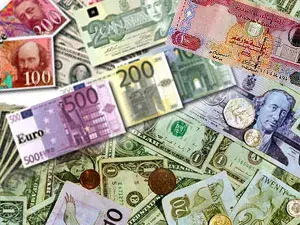
The currency in Cairo is the Egyptian pound ("gunaih" in Arabic). Egyptian notes are divided into piastres and pounds. Piastre notes come in 5, 10, 25, and 50; Piastre notes come in 1, 5, 10, 20, 50, and 100. Silver coins are hardly used (they come in 5, 10, 20, and 25), so don't expect to handle these much. If you are expecting change of a silver coin, you probably will receive gum or candy as compensation and not the coin.
There is no doubt that Cairo will alarm your senses, and this can either be a good or bad thing. Cairo's allure stands tall with the Pyramids of Giza, which is the only surviving wonder of the Seven Wonders of the World. Additionally, its fascinating winding streets, oriental bazaars, and Islamic architecture can easily seduce any tourist. Yet, this seduction turns sour when experiencing Cairo's dirt, pollution, and crowd. Such contrasts may be too raw for the tourist that wants everything presented in a packaged platter. But for the intrepid soul, discovering Cairo can become a time-traveling experience that may lead to self-discovery and self-assurance.
Though it was ‘only’ founded in 969 under the Fatimid Caliphate, Cairo and the surrounding region has been a focal point of Egypt for thousands of years due to its position at the apex of the Nile Delta. The city is located just a few kilometers from the ancient capital of Memphis and the first Islamic capital at Fustat.
Cairo's residents take great pride in their country's heritage. They are proud of their identity and wear it as a badge of honour. They belong to a country with one of the world's oldest and most distinguished civilisations. Approximately 90% of Egypt's population are Muslim, and the remaining 10% are Christian. Christianity in Egypt—as in Ethiopia—is called the Coptic Church.
Stars Center is a luxury mall located within CItyStars, an integrated urban development project that includes 3 international hotels (Intercontinental, Holiday Inn, and Crowne Plaza), a shopping and entertainment center, a medical center, and office and residential towers.
If you want to buy some general items, try the Ramses Hilton Mall. This mall sells casual clothes, shoes, home items, and jewelry. On the top floor you'll find a cinema and billiards.
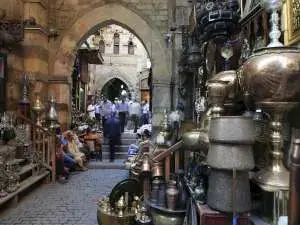
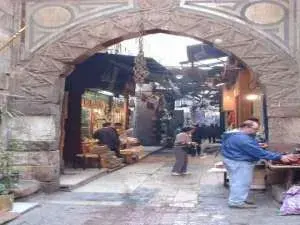
The Khan al-Kahlili market is a fun experience for both shopping and people gazing. The hustle of the vendors is unrelenting, and the awe of the foreigners and nonchalant attitude of the locals is so contrasting and real, that you'll want to spend more time here than allotted.
The Egypt Crafts Center is a great place to buy regional items. Some of these items include hand-made paper from Mugattam, Bedouin beadwork and rugs, embroidery from Sinai, and Egyptian shawls.
To buy jewelry and traditional Bedouin items, the hidden Nomad shop is the place to go to. Some items include Yemeni silver jewelry, Egyptian baskets, and elaborate tablecloths and cushion covers, and some dresses. This place is so undercover that you need to ring the doorbell to enter.
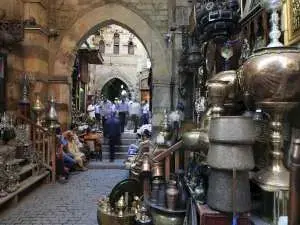
The best place to buy unique items and souvenirs is in Islamic Cairo at the market Khan al-Khalili. Some great finds in this market include jewelry, painted papyrus scrolls, gellibayas (long robes), silks, leather, brass and copper items, and herbs and spices. Perfume is also a good purchase, especially because many French perfumes get their supplies from Egypt. If you want to buy perfumes or pure essential oils, go to the Perfume Bazaar area.
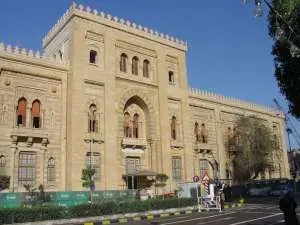
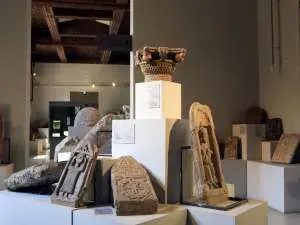
The Islamic Art museum is one of the best places in the world to see Islamic art. The collections featured range from the seventh to the 19th centuries. In addition, the design of the museum is sculpted using salvaged pieces from deteriorated mosques and mausoleums. The central hall holds the most impressive Islamic items.
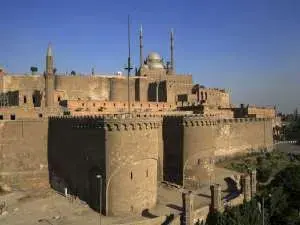
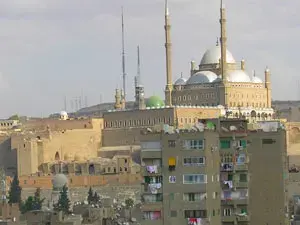
A staple of Cairo's skyline, the citadel was built in the 12th century to protect the region from the Crusaders and has since become one of the greatest monuments in the world in representing medieval warfare. Moreover, inside the citadel you will find small museums, the Mosque of al-Nasir, and Yusuf's Well.
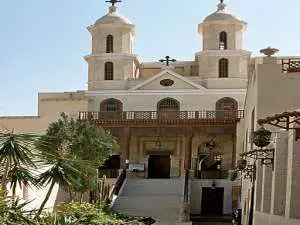
Formerly known as Babylon by the Romans, Old Cairo is located on the southern tip and is considered the oldest part of the city. Old Cairo is also often referred to as “Coptic Cairo because the area reflects Cairo's Christian past. Old Cairo is a must see on anyone's itinerary.
The Coptic Museum was built in 1910 to trace the history of Christianity in Egypt. Some of the highlights include Coptic textiles, ancient paper (known as papyri) with writings from the Gnostic gospels of Nag Hammadi, carved ivories, and Nubian paintings from the flooded villages of Lake Nassar. The setting of the museum is pleasing to the eye with florid designs and centered in a garden.
El Muallaqa is the oldest Christian church in Cairo and built anywhere between the fourth and seventh century. Its name is derived from its location atop a gate tower in Old Cairo.
Book lovers are in for a treat at the Cairo Book Fair. Considered the largest event of its kind in the Middle East, this fair is held at the Nasr City International Fair Grounds, usually in late January. Millions of books covering every conceivable topic are featured and many are sold at substantial discounts. Though most books are in Arabic, there are also pavilions featuring English, French and Italian titles, as well as computer software. The fair is also considered a platform for prominent Arab writers and thinkers who give lectures and hold discussions.
Taking place on the 10th day of Muharram in the Islamic calendar at El-Hussein Mosque, Ashura celebrates the martyrdom of Hussein, the grandson of Prophet Mohammed who was killed in 680AD during the battle of Karbala.
Flora Eypt Fair is an annual international exhibition of fresh cut flowers and ornamaental plants. The fair provides a meeting ground for those interested in all aspects of horticulture, from marketing to future trends. It is a gateway for exhibitors to introduce their products in the European and Middle East market. Some additional activities during the Fair include seminars, field visits to some model farms, 'Best booth presentation' competition, and flower arrangement courses by Dutch experts. This fair is organized by the Egyptian Flower Council under the patronage of various Ministries.
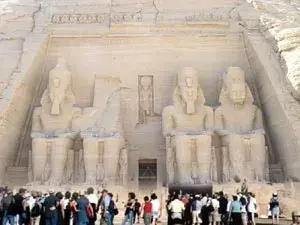
Twice a year, on February 22 and October 22, thousands gather to watch as the sun passes over the face of the Ramsis II statue at the Pharaonic temples of Abu Simbel.
Held every year at venues throughout Cairo, Al Nitaq is a popular cultural festival that celebrates a huge variety of artistic disciplines, from poetry to music and art.
Official walking tours can easily be arranged during all months except for the summer months. However, you may still be able to encounter some unsolicited tour offers by unofficial guides on the street. Although some tourists have stated that such unofficial guides were excellent, it is best to take this offer when traveling in a group and always keep your wits about you when making such decisions.
Bus tours offer a great way to see the city without feeling the pangs of Cairo's heat (especially during the summer months). Most hotels offer bus tour options, so make sure to check with the concierge about what is offered. Bus tours usually include visiting sites such as the Khan al-Khalili bazaar, the Pyramids and Sphinx.
A trip to Egypt is not complete unless you have sailed on the River Nile. The Nile is Egypt's iconic symbol and is the longest river in the world at 6690 km. Depending on how much time you have and where you want to sightsee there are several Nile cruises that cater to all budgets and constraints. Nile trips usually range from two hours (which is a simple boat cruise around Cairo that may or may not include dinner and entertainment) to two weeks (most of Egypt would be covered).
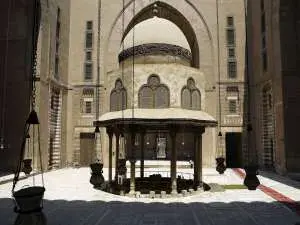
The Madrassa of Sultan Hassan Mosque is a masterpiece of Mamluk architecture and one of the largest in the world. It was commissioned in 1356AD by Sultan Hassan bin Mohammad bin Qalaoun for the purpose of establishing a school and mosque that would cater to the four branches of Sunni Islam: Shafi, maliki, Hanafi, and Hanbali.
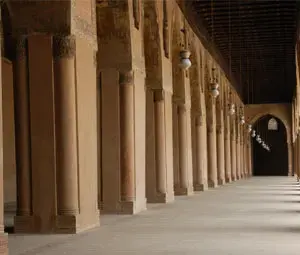
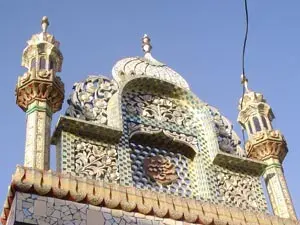
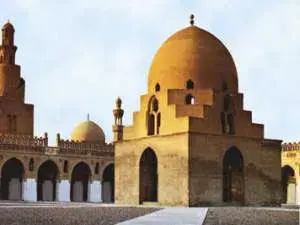
The Ibn Tulun Mosque is the top mosque to visit when in Cairo. This mosque, which is the largest and oldest in Cairo, was completed in 879 and still stands mostly intact. It was built using mud-brick and wood and covers 2.4 hectares (six acres). The mosque was built under the command of Ahmad ibn Tulun, who was the governor of Egypt from 868-884.
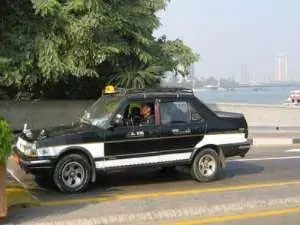
Taxis in Cairo are colored in black and white and are easy to find on the street. The only hassle is that there is no set price and Cairenes usually have a roundabout idea of how much their ride costs. As a result, Cairenes never set a price before entering a cab since they already know how much the fare will be.
Unless you want an anxiety attack, it is preferred you not drive in Cairo. The drivers are very careless and traffic signals are suggestions instead of actual rules. However, if you insist on taking on this experience, try observing the locals driving habits and then take the plunge if you dare.
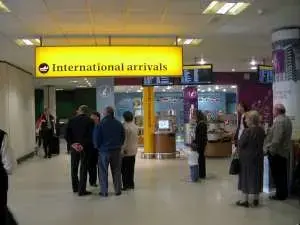
Taxi is the best way to get from the airport to your desired destination. Getting a taxi is easy, just exit the terminal and you will find rows of taxis. Do not be afraid to negotiate with the driver, you will be able to get a lower price with a little bit of bargaining. You can also hire a limousine (which costs around the same as a taxi), but to do so ask an airport employee where to grab a limo since they are not as scattered as the taxis.
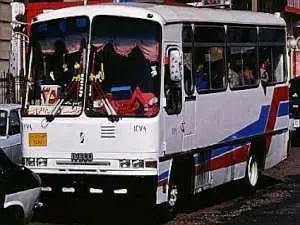
It is not recommended that you take public buses if you want comfortable navigation around Cairo. Public buses are always so crowded that you will likely not find a seat.
Getting around Cairo by public transportation is not the best way to travel. Thus, it is recommended you take taxis which, if the same driver is taken frequently, can become your private tour guide for a reasonable price. Something to definitely stay away from is the public buses, unless you are going for the experience of course. The metro is a good alternative, very comfortable.
The metro system is a good mobility option. As Africa's only metro system, be assured that the metro is comfortable, modern, clean, and safe. The major interchanges are Mubarak (at Midan Ramses) and Sadat (below Midan Tahrir).
Taking public transport to get around Cairo is not the best way to travel. It is therefore advisable to use a taxi, as the driver can often become your own tour guide for a reasonable price. It is preferable to avoid public buses unless you want to try the experience. The metro is the best transport alternative and is among the most comfortable means of travel.
It is highly advisable not to drink tap water or place ice cubes in your drink. It also may serve you well to bring iodine tablets to put in filtered water. Also, it may be safe to stay away from dairy products unless you know they have been pasteurized.
The Egyptian government has put a great deal of effort and money into safeguarding the city against terrorist plots. Such law enforcement has become especially rigorous after 1992, when terrorists ambushed a tourist bus and killed a British woman. Several terrorist attacks followed years later, with the last recorded terror fatality occurring in 1997 that left 60 tourists dead. Nowadays such incidents no longer occur. The government is very protective of its tourists, especially since tourism is
There are still some minefields left over from past wars in the Western Desert(numerously found near the North Coast) and near the off-roads of Sinai. Minefields are very dangerous and fatal, so be careful if you are planning on visiting either of these places. It is suggested that you speak to local authorities about mines before voyaging out. Also, be aware that minefields are usually marked with barbed wire, yet they do not have sign posts indicating mines are prevalent.
If by any chance you get your passport or wallet stolen, be sure to first contact the police and then the nearest embassy or consulate. The local police's role is only to curb violence and investigate the crime scene. On the other hand, your embassy or consulate can provide you with a more international and sophisticated level of assistance such as getting you a lawyer.
Though you will find a good amount of ATMs scattered around Cairo, take note that they are not as prevalent as in other major cities. Your access to an ATM will depend on your location and where you are staying (most hotels carry ATMs). Still, be aware that ATMs will not be seen as frequently as you may be accustomed to (but they are around).