Skip to content
Irhal · Your guide to the world
Irhal
العربية

Search for a city, hotel or experience

City guide article

Casablanca History

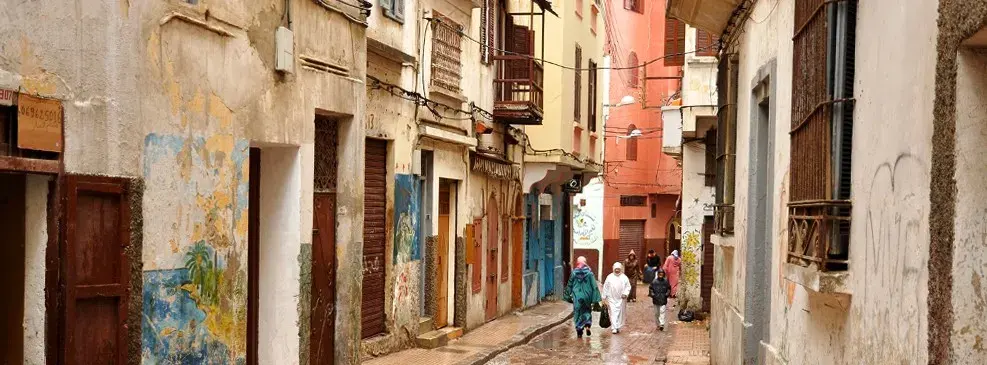
Casablanca (Dar el Beida) in Moroccan Arabic or ‘White House’ in English, was a tiny Berber settlement during the 7th century. Anfa, a minor independent country emerged within the area due to the Arab Muslim rule. By the 14th century, with the help of Merinids, Anfa became a major port. By the 15th century, the town became a self-governing state once again. The Portuguese, ruined this town in 1468, eventually attacking the local pirates of the region. The Portuguese constituted a military fortress in the year 1515 with the remnants of the city. The town that emerged here was named Casablanca, which meant White House in Portuguese language. But most of this town was later on destroyed during 1755 due to a severe earthquake, forcing the Portuguese to leave.

Overview

Casablanca History

Casablanca (Dar el Beida) in Moroccan Arabic or ‘White House’ in English, was a tiny Berber settlement during the 7th  century. Anfa, a minor independent country emerged within the area due to the Arab Muslim rule. By the 14th  century, with the help of Merinids, Anfa became a major port. By the 15th century, the town became a self-governing state once again. The Portuguese, ruined this town in 1468, eventually attacking the local pirates of the region. The Portuguese constituted a military fortress in the year 1515 with the remnants of the city. The town that emerged here was named Casablanca, which meant White House in Portuguese language. But most of this town was later on destroyed during 1755 due to a severe earthquake, forcing the Portuguese to leave.

The town was renovated and restructured by the grandson of Moulay Ismail and ally of George Washington named Sultan Sidi Mohammed III during the year 1756- 1790. The town was identified as Dar el Beida, the white house in the Arabic dialect and Casa Blanca in the Portuguese language.

Casablanca emerged as a port, after the French invasion and with the entrance of French colonists in the area, the local natives started a riot against them. With the French colonization there was sufficient amount of confusion and threat faced by the Moroccans. It was in 1943, that Churchill and Roosevelt discussed the advancement of the war at the Casablanca Conference. Later on, Morocco gained its freedom  on 2nd of March 1956 from the French dominion. Today, Casablanca is considered Morocco's economic and business capital while Rabat is its political capital.
Continue reading

More from City Information

Casablanca Today

City Information

Casablanca Today

City Information

When to go

Casablanca is located along the Atlantic Ocean but enjoys a Mediterranean climate with mild weather throughout the year. There is little seasonal temperature variation and a lack of extreme heat and extreme cold which makes it possible to enjoy a visit to the city round the year. However winter is the least popular time to visit due to the rains. Visiting in the spring, early summer and fall will offer pleasant weather and the fewest crowds. Most hotels, shops and attractions remain open throughout the year. However, some restaurants and coffee houses will close during the day in the month of Ramadan.
Read full article

City Information

Fast Facts

Location: Casablanca is located in the Chawiya plain on the Atlantic coast of Morocco. Dialing Code: Country -212 City - 022 Emergency Numbers: Ambulance: 150 or call Amal Assistance at 022-36-44-36 or 022-39- 20-03 or SOS Medecins Maroc at 022-25-25-25. Fire Department: 190 Police: 190 Road emergency: 177 Royal Gendarmerie: 177 Airport: +212 (022) 539040 Moroccan National Tourist Office: +212 37 67 39 18/ 67 40 13 International Calls Operator: Telephone Directory Services: 160 Population: City- 3,299,428 Languages: The official language is Arabic but French is widely spoken as well as English & Spanish Time Zone: UTC +0, Summer (DST) UTC +1 Average January Temperatures: 17.2○ C Average July Temperatures: 26.4 ○C Annual Rainfall: 6.9cm Electricity: 220 volts in new buildings, round two-pin plugs are standard. (110 volts in the old ones ) Enquire on the spot before using appliances.

Read full article

City Information

Currency and Exchange Rates

The national currency in Morocco is the dirham. It cannot be converted outside the Kingdom's borders, so don't forget to exchange money or bring other means of payment.

Read full article