Overview & visitor information
Fares Al Khouri St, Damascus, Syria

Search for a city, hotel or experience
Live suggestions could not load. Press Search to view results.
Fares Al Khouri St, Damascus, Syria
Fares Al Khouri St, Damascus, Syria
Keep exploring Damascus.
 damascus
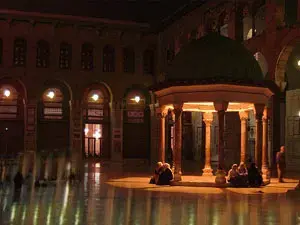
This is arguably Damascus’s most popular architectural attraction. It is a significant and sacred religious site for Muslims all over the globe. There are a number of stories and beliefs surrounding this architectural masterpiece. This mosque is magnificent from the limestone floors, to the gold mosaics depicting forests, domes and towers. Also located within it is a huge courtyard that houses the shrine of Hussein. Hussein is an important figure in Islamic history as he was the grandson of the Holy Prophet (P.B.U.H) and the son of the early Muslim convert, Ali, who later became a Caliph. He is especially important to the Shiite Muslims. He was killed by the Omayyads during the battle of Kerbala.
 damascus
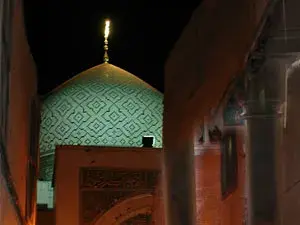
This mosque was built in memory of Ruqayya who is considered a saint by the Shiite Muslims. She was the daughter of Hussein, the grandson of Prophet Muhammad (P.B.U.H). The mosque was constructed recently in the 1980s around Ruqayya’s mausoleum. The interior comprises of numerous mirrors, the exterior is relatively simple and elegant. As with other mosques visitors must be dressed appropriately and take off their shoes before entering.
 damascus
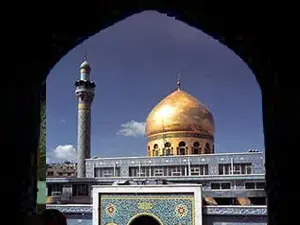
This beautiful mosque is built at the Prophet’s (P.B.U.H) grand-daughter’s burial site. Built like the Sayidda Ruqayya mosque, it is very popular amongst Iranian and other Muslim pilgrims from all over the globe. The mosque is beautiful with a shiny onion shaped golden dome, beautiful blue tile work and two minarets. Zainab’s mausoleum is located in the centre of the mosque. The interior of the mosque is as lavish as the exterior with numerous mirrors and chandeliers decking the walls and ceiling respectively. Visitors must be dressed appropriately and take off their shoes before entering the mosque.
Keep exploring Damascus.
 damascus
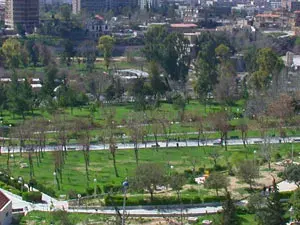
Tourists can take their children to swim in the Olympic Pool at this sports complex.
 damascus
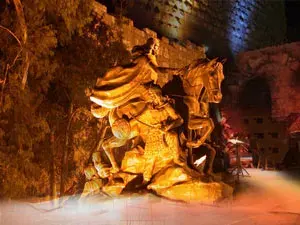
This historic site has witnessed much of the life of Damascus. Located in the Old City, it was built by the Selujiks at the end of the 11th and during the beginning of the 12th centuries. Subsequent invaders and rulers all made modifications leaving their mark on the Citadel. One of them, Saladin, who was the famous Ayubbid sultan, further strengthened the Citadel to resist attacks during the Crusades. The Mamluks, the Ottomans and the French all adapted it; the last turned it into a prison which it remained till the middle of the 1980s. This magnificent stone structure is integral to the city of Damascus; do not miss it as it also serves as a venue to various festivals, concerts and functions. The Citadel has certainly undergone a change in function from its past to its present.
 damascus
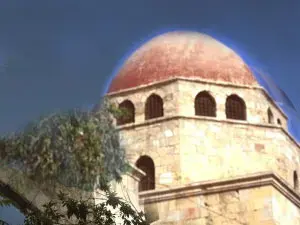
Saladin was a famous Sultan, most renowned for his role as leader of the Muslims during the bloody Crusades. He died in 1193 and his mausoleum is a low rise white building with a red dome. Contained within it is a walnut wood cenotaph containing Saladin’s body carved with intricate motifs representative of the Ayubbid Era. Also contained within, is a marble tomb gifted by Kaiser Wilhelm II of Germany who visited Damascus at the turn of the 20th century and financed the restoration of the Mausoleum.
 damascus
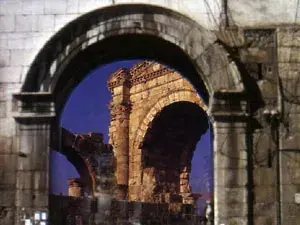
The Roman Arch is located amidst the Christian quarters. This originally consisted of three arches of which only one remains at the entrance of the Christian quarters. Numerous Christian sects now reside here.
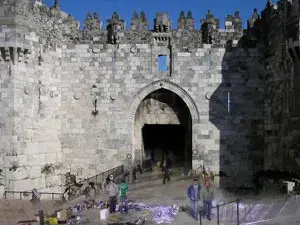 damascus
The Old City had thirteen entrances and, therefore, gates. These were built for the purpose of protection by the Romans and were often destroyed and later rebuilt. Only one of these gates dating back to the Roman era remains; it is known as the Bab-ash-Sharqi. Other gates built at later stages include Bab-al-Farag or the Gate of Joy, Bab-al-Faradis, Bab-as-Salaama or the Gate of Peace built by the Ayubbids, which incidentally is considered the most beautiful of them all, and Bab-as-Saghir or the Little Gate.
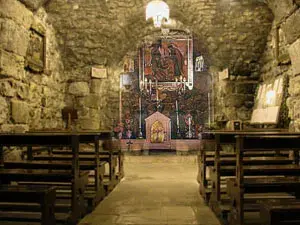 damascus
Within the Old City are the Muslim, Jewish and Christian quarters. Within the Christian quarter is this small chapel which is located inside a cellar of an old house that belonged to Ananias,
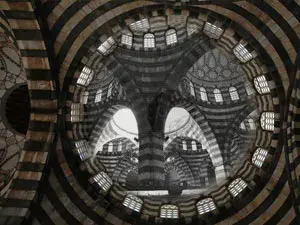 damascus
Commissioned by Asad Pasha in the 1750s, this cathedral is a truly magnificent piece of architecture. It comprises of eight domes and a round aperture with gigantic piers and arches. This spacious area is also well illuminated with natural light.
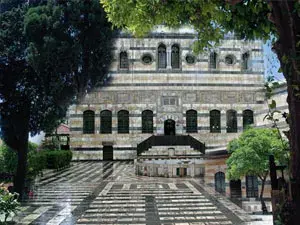 damascus
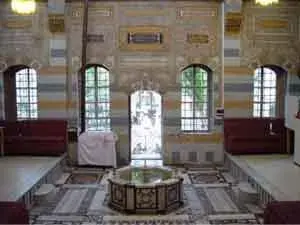
This Palace was built in the 1740s by the Governor of Syria, Asad Pasha Al Azem. It incorporates the traditional architectural styles visible around the city of Damascus- that of striped stonework- alternately layered limestone and black asphalt. The interior is much more extravagant. The ceilings of the rooms are painted beautifully with intricate tile work on the floors and wood paneling on the walls. The palace comprises of a number of structures, gardens and courtyards. It has served as the emperor’s residence and later passed into the hands of the French who used it as an institute of archaeology and Islamic Art. When the Syrian uprising against the French took place, the palace was damaged by the riots and fire, but was later restored to its former glory. It also showcases Syrian artefacts such as pottery, ceramic, textile, musical instrument and costumes.
 damascus
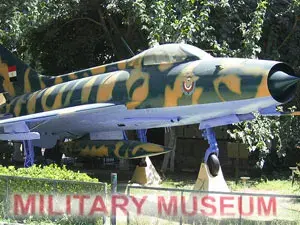
Exhibits at this museum date all the way back to the Bronze Age. The simplest to the most sophisticated weapons are on display, giving visitors an interesting insight into the evolution of armory from past to present, particularly in the context of Syria. Fascinating pieces include the remnants of a plane from the war with Israel in 1973.
 damascus
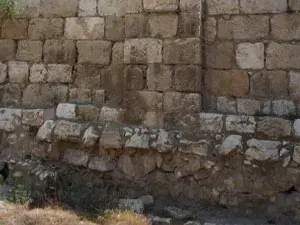
This is one of Damascus’s most interesting museums. It is worth a visit since it gives tourists an insight into the rich culture of Syria. This museum is basically a house, and within each room and courtyard of this house are knick knacks, photographs and diagrams related to the Old City. There is a wonderful model of the Old City too. Each room’s décor incorporates traditional Syrian style.
Keep exploring Damascus.
 damascus
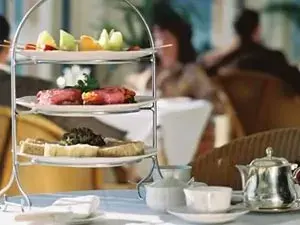
This is one of Damascus’s best known restaurants. Aleppan cuisine is at its finest here. The décor is extravagant and luxuriant. Specialties include hummus accompanied by a fabulous capsicum dip and kebabs with pomegranate sauce.
Mouth watering Syrian cuisine is served here. Fresh ingredients are used to churn out a wide range of authentic dishes. The restaurant is housed in a renovated old Damascene house. Specialties include the lamb with lemon sauce and chicken with thyme. The hummus is divine too.
 damascus
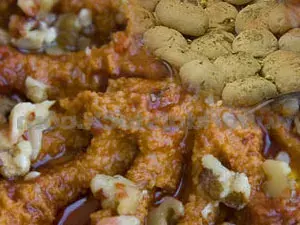
This lovely restaurant serves delicious Syrian and French cuisine. The food is pricey but worth it.
 damascus
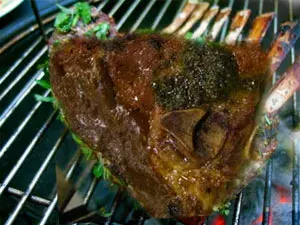
The menu here is dominated by French cuisine but guests can also opt for some of the traditional grilled lamb/ chicken dishes and spiced rice.
 damascus
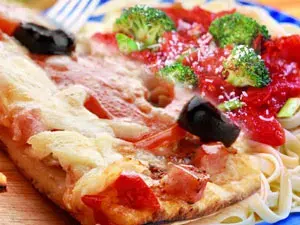
This is a popular food joint amongst the Damascene upper class. The ambience is relaxed and contemporary. The menu lists dishes from around the globe including pizza, pasta, fajitas, nachos and a range of grilled meats.
 damascus
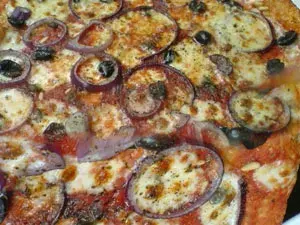
This is one of Damascus’s famous restaurants. The ambiance is very casual and the food too is unpretentious. Delicious pizzas and pasta are served here.
 damascus
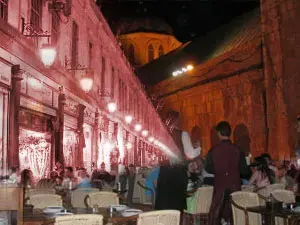
This is arguably Damascus’s most magical restaurant. The location is fantastic and the view breath-taking (it looks out over the magnificent Omayyad Mosque). The grilled lamb and chicken are divine, as are the eggplant croquettes.
 damascus
Housed in the courtyard of a beautiful old Damascene house dating back to the 1700s, the ambience in this restaurant is vivacious and down-to-earth with some of the diners engrossed in cards and backgammon. Come here for some delectable kebabs, thyme pizza, falafel, a diverse range of hummus, traditional Syrian bread and spiced rice.
 damascus
This is a great place to hang out and is extremely popular with the younger generation of Damascenes. The ambiance is unpretentious, relaxed and lively with some indulging in cards, backgammon and sheesha. Excellent sandwiches, salads, pastas and fresh drinks are available here. Cuisine: International Address: Abu Roumana, Sharia Abdul Malek, Northwest of Central Damascus Tel: +963-11-333-1288
 damascus
For those on a budget, this is a great place to eat out. The restaurant is small and intimate. What makes it so fascinating and the outing so enjoyable, is the fact that the restaurant exhibits the works of local artists and more often than not, guests will be able to see these local artists seated at nearby tables painting/ drawing away. Plus, the pizza is delectable.