City Information
Explore city history, fast facts, climate and practical visitor information for Bali.
City Information
Visa information
City Information
When to go
Best time to travel is from June through September when humidity is low and it is bright and sunny. You might want to avoid the tourist rush by going either a month earlier or later.
Read full articleCity Information
Annual Temperature
January: Min: 26 Max: 30; February: Min: 26 Max: 30; March: Min: 26 Max: 31
Read full articleCity Information
Fast Facts
Location: One of the 18,000 islands in Indonesia. Located between the Java and Nusa Tenggara islands Dialing code: 62 Emergency numbers General emergency number: 112 Police: 110 Fire Dept: 113 Ambulance: 118 Search and Rescue: 111, 115 and 151 Population: 3.2 million Languages: English, Indonesian and Balinese. Time zone: UTC/GMT +8 Average January temperatures: 30C and 26C Average July temperatures: 28C and 24C Annual rainfall: 100 inches
Read full articleCity Information
Exchange Rates
Rupiah (indicated as IDR)
Read full articleCity Information
Pubic Holidays
New Year's Day (Jan 1), Chinese New Year (dependent on the lunar calendar) Birthday of Prophet Mohammed (dependent on the lunar calendar) Nyepi (when everything, including the airports shut down, in late March) Good Friday (April 2) Easter Sunday (First Sunday in April) Ascension of Jesus Christ in Heaven (39 days after Easter Sunday) Muslim New Year (dependent on the lunar calendar), Ascension Day of Prophet Mohammed (dependent on the lunar calendar) Indonesia Independence Day (Aug 17) Shared Holiday by government decree (Sept 9) Idul Fitri (dependent on the lunar calendar) Shared Holiday by government decree (Sept 13) Id-ul-Adha (2 months and 9 days usually after Idul Fitri) Shared holiday by government decree (Dec 24) Christmas (Dec 25).
Read full articleCity Information
Bali residents
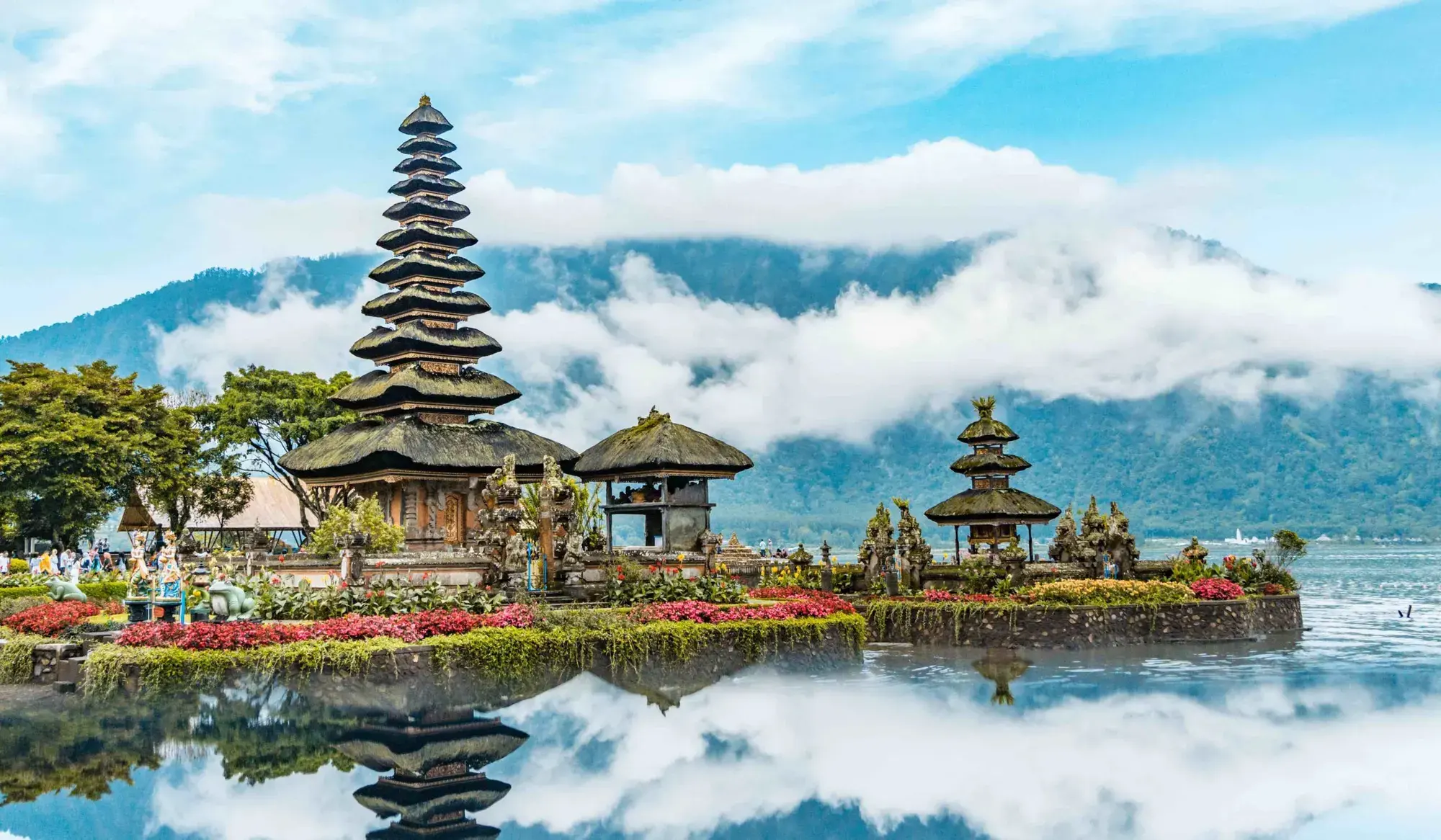
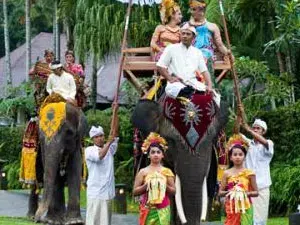
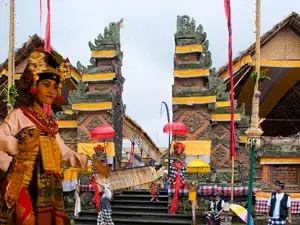
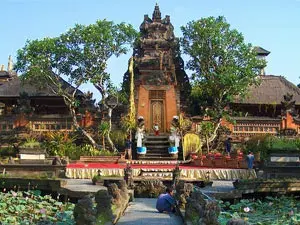
Over 90% of the Balinese are Hindu with a small minority being Muslims, Buddhists or Christians. Religion plays a huge role in the everyday lives of the locals; there are temples everywhere in Bali with strict adherence to temple guidelines (for instance, restaurants close to temples don’t serve beef). There are approximately 20,000 temples in Bali, which is why it is known as the ‘Island of the Gods.’ Arts, music and culture are intrinsic to Balinese culture and pervade almost every aspect of a Balinese. The Balinese are known to celebrate festivals with elaborate dances and rituals with loud music.
Read full articleCity Information
Bali today
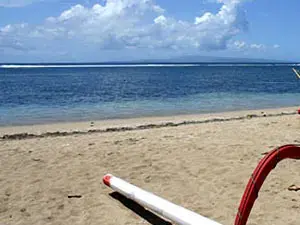
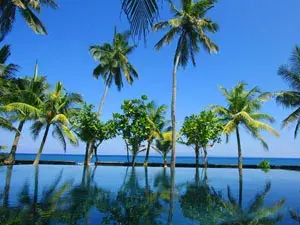
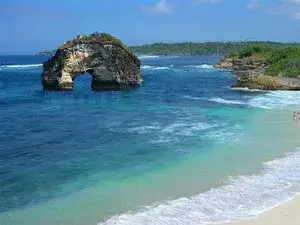
A few decades ago, the main forms of income for Bali were agricultural. Today, tourism is the single largest source of income for the Balinese. At least one member of every household is employed in the tourism industry. There was a sharp decline in the tourism industry after the 2002 and 2003 bombings in the busy shopping areas of Kuta and Jimbaran Bay. But things have picked up since then, especially after massive foreign investments (for instance, the Bulgari resort). Security measures such as bomb-sniffing dogs and security checks are now in place almost everywhere. The beaches in Bali are stunning and is hence one of the most photographed location in the world over. Many photoshoots for international magazines take place in Bali. The tourism industry has been developed in a way to cater to a tourists every need. Today, tourists can learn how to surf, snorkel and even go deep sea diving. The underwater world is absolutely breathtaking and for those looking to exchange vows under the sea, there are special tour operators who can arrange that for you. The culture and history is very rich and is evident from every festival, religious offering and art performances.
Read full articleCity Information
Bali History
Bali was ruled by the Javanese who laid the foundations of the Balinese culture today. Bali became the melting pot for everything related to religion and culture for Hinduism, Buddhism and Islam. However, Bali was conquered by the Dutch settlers in 1909 after much resistance. The Dutch had reached Bali in the early 17th century but were unable to secure complete control even with the expansion of the Dutch East India Company. The island was passed to the French, the British and then finally the Dutch who completely took over. This resulted in a steady stream of early tourism sparked by talks of the gorgeous, paradise-like island. After World War II, Bali witnessed a mass exodus after the Japanese troops were stationed at the island. Soon after the war ended, the nationalist party leader, Sukarno rasied his voice against the occupation of the island. He was finally successful in 1949 after gaining international recognistion and the Republic of Indonesia came into existence. However, this didn’t signify an end to violence in Bali; a communist coup was staged by Suharto in 1965 which resulted in the deaths of over a 100,000 Balinese who were suspected to be communists. The island witnessed prosperity under Suharto and rose to prominence as the leading tourist destination. Even after an economic collapse in 1997, Bali has recovered drastically and still continues to be the number one tourist destination.
Read full articleKeep exploring Bali
More places in Bali
Keep exploring Bali and add more stops to your plan.



More restaurants in Bali
Keep exploring Bali and add more stops to your plan.






More hotels in Bali
Keep exploring Bali and add more stops to your plan.