City Information
Explore city history, fast facts, climate and practical visitor information for Damascus.
City Information
Visa Information
City Information
When to go
The best time to visit Damascus is from March to May when the weather is cool and breezy, and during October and November. The summer months can get hot and dry and traveling to Damascus during such weather is not recommended.
Read full articleCity Information
Fast Facts
Location: Damascus is located 80 km from the Mediterranean Sea on a plateau 2200 feet above sea level. It is bordered by the Anti- Lebanon Mountains, with the Barada river flowing nearby Dialing code +963; Emergency numbers: Police – 112; Fire- 113: Ambulance- 110
Read full articleCity Information
Exchange Rates
The currency used in the Syrian Arab Republic is the Syrian Pound (SYP).
Read full articleCity Information
Public Holidays
1st January- New Year’s Day
Read full articleCity Information
Annual Temperature
January; High: 11 °C; Low: 0 °C February
Read full articleCity Information
Damascus Residents
Damascus has a population of 1.5 million people. The majority of the population are Muslims (predominantly Sunni, though Shiites also reside there). 15% are Christians, with a few Jews also claiming residency. Known as Damascenes, the residents of Damascus are friendly, hard-working and vivacious. There is definitely a culture of tolerance in this part of Syria.
Read full articleCity Information
Damascus Today
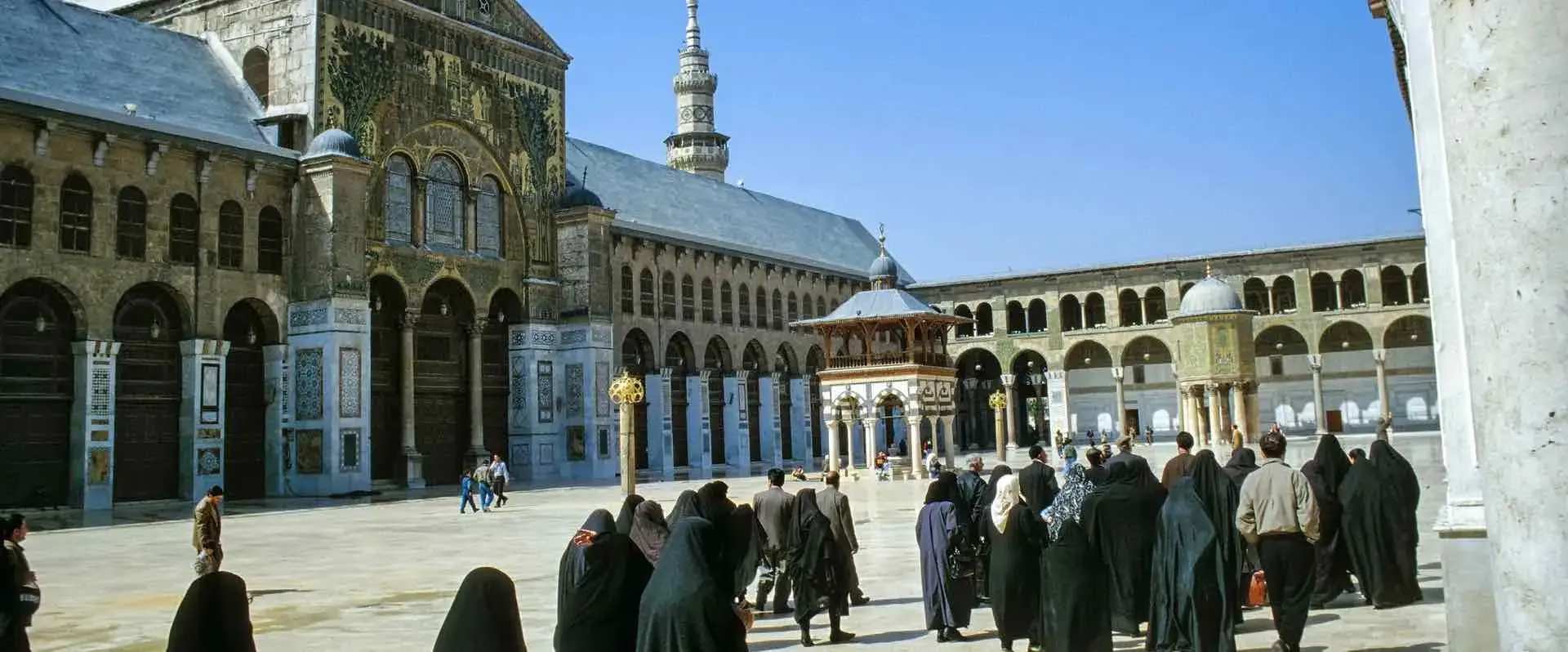
Damascus is the capital of Syria. Apart from being the political center of the country, it is also the cultural heart of the country. Damascus’s authorities have done a very good job in preserving the many historical and cultural attractions. Various architectural styles are visible throughout the city, dating back to different periods of its history- Roman, Islamic and French rule. An important sector of Damascus’s economy is the tourist industry. Other prominent sectors are the textiles, food processing and chemical industries. The military and secret service quarters are also located here. Politics undeniably is an important aspect of the city.
Read full articleCity Information
Damascus History
Inhabited since 10,000 B.C., Damascus is one of the world's most ancient cities, boasting a very colorful history. The city was conquered by Alexander the Great, and after his death it was annexed by the Roman general, Pompey. The Romans built a great deal of the infrastructure of the city. St. Paul and St. Thomas both lived in the quarters developed by the Romans in Damascus. Damascus was first conquered by the Muslims in 634 by the Rashidun Caliph. It soon became the capital of the Omayyad Empire and later was ruled from Baghdad during the Abbassid caliphate. It was also ruled by the Fatimid caliph. The Muslims left an indelible mark on the architecture of Damascus, which is clearly seen today. Damascus was also ruled by the Seljuks and then by the Turks. Ultimately it was inherited by Saladin of Egypt, famed for rebuilding the citadel and his role in leading the Muslims during the Crusades. Damascus then came under the Ayyubid and Mamluk rule. During the latter period, the plague claimed the lives of half of the city’s population. Damascus was also an important province of the Ottomon Empire for 400 years at least. In 1920 the French were given a mandate over Damascus and in 1925 they were able to suppress the Druze revolt, bombing and shelling the city during the process. In 1945 the French once again bombed Damascus which the Allies had wrested from them, but this time the British forces intervened and Syria gained independence in 1946.
Read full articleKeep exploring Damascus
More places in Damascus
Keep exploring Damascus and add more stops to your plan.


More restaurants in Damascus
Keep exploring Damascus and add more stops to your plan.







More hotels in Damascus
Keep exploring Damascus and add more stops to your plan.