Skip to content
Irhal · Your guide to the world
Irhal
العربية

Search for a city, hotel or experience

City guide article

Frankfurt History

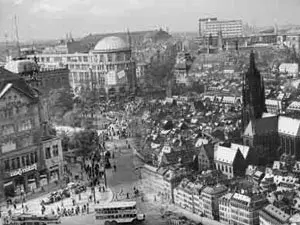
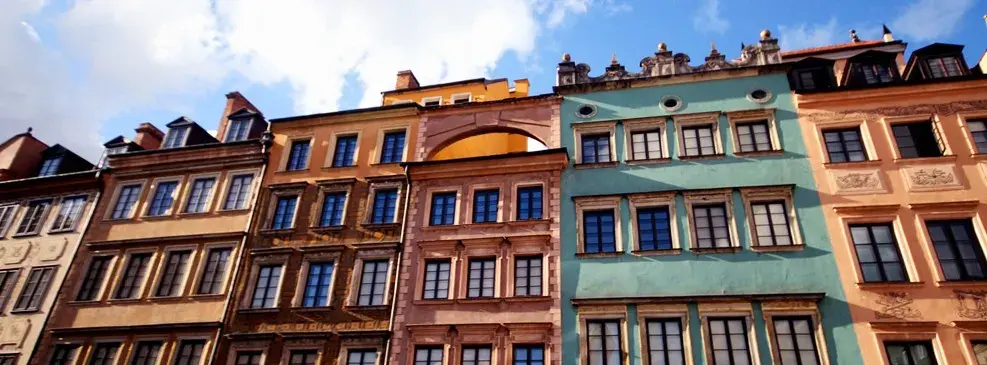
Most of Frankfurt’s history revolves around its location, a swampy valley at the intersection of two river channels. Though artifacts can be found dating back to the Paleolithic period, the first settlements were of the Romans during the first century CE. After Roman settlement, the first reference to the name Frankfurt in history appears as ‘Franconofurd’ the “ford of the Franks” where the river could be traversed by wading. Charlemagne had a royal court here and in 822, his son Emperor Ludwig the Pious, ordered the construction of the residential areas of the city. In the years following this, from 1074 to 1150, different tariffs, fairs and festival names were coined after Frankfurt and in 1152, Fredrick Barbarossa was named king of Germany. By 1240, Frankfurt was known as a ‘safe passage’ for tourists and its reputation as a fair trade city was built because it was the most profitable city of Germany. After being elected as a ‘free imperial city’ in 1372, the first Town Hall was built in Frankfurt in 1405. For about four centuries after this Frankfurt went through civil and political unrest with the Romans, Americans and the Jewish settlements. It was in 1800 that the fortification boundaries surrounding Frankfurt were demolished and the population numbers slowly rose from 35,000 to 100,000 to 400,000 in 1905. Within this period the major monuments of the city were, including the Alte opera. From 1948 onwards, Frankfurt witnessed an era of great development and progress with the opening of major banks, the establishment of an elaborate transportation system, and the growth of the city’s skyline with the addition of new skyscrapers. The Frankfurt we see today is one that carries a rich history of war and struggle. Every monument, park and alleyway has a story to tell.

Overview

Frankfurt History

Most of Frankfurt’s history revolves around its location, a swampy valley at the intersection of two river channels. Though artifacts can be found dating back to the Paleolithic period, the first settlements were of the Romans during the first century CE.  After Roman settlement, the first reference to the name Frankfurt in history appears as ‘Franconofurd’ the “ford of the Franks” where the river could be traversed by wading. Charlemagne had a royal court here and in 822, his son Emperor Ludwig the Pious, ordered the construction of the residential areas of the city. In the years following this, from 1074 to 1150, different tariffs, fairs and festival names were coined after Frankfurt and in 1152, Fredrick Barbarossa was named king of Germany. By 1240, Frankfurt was known as a ‘safe passage’ for tourists and its reputation as a fair trade city was built because it was the most profitable city of Germany. After being elected as a ‘free imperial city’ in 1372, the first Town Hall was built in Frankfurt in 1405. For about four centuries after this Frankfurt went through civil and political unrest with the Romans, Americans and the Jewish settlements. It was in 1800 that the fortification boundaries surrounding Frankfurt were demolished and the population numbers slowly rose from 35,000 to 100,000 to 400,000 in 1905. Within this period the major monuments of the city were, including the Alte opera. From 1948 onwards, Frankfurt witnessed an era of great development and progress with the opening of major banks, the establishment of an elaborate transportation system, and the growth of the city’s skyline with the addition of new skyscrapers. The Frankfurt we see today is one that carries a rich history of war and struggle. Every monument, park and alleyway has a story to tell.

Continue reading

More from City Information

When to go

City Information

When to go

City Information

Fast Facts

• Location: Frankfurt has a very attractive location. It is set beautifully on an ancient ‘ford’ (which is the place where a river may be crossed) on the River Main. 524km in length, this river crosses a lot of major German cities, including Bavaria. The city is in the heart of the ‘Rhine’ which is the largest metropolitan region in Germany. • Dialing codes: country code: +49, city code to Frankfurt: +69 • Emergency (police or ambulance): 112 • Airport enquiry: 1. Frankfurt Hahn (HHN): (06543) 509 200. 2.Flughafen Frankfurt/Main (FRA): (069) 6900

Read full article

City Information

Public Holidays

1st January- New Year’s Day. 6th January- Epiphany (a Christian fest to celebrate God’s revelation to mankind). During April: Good Friday. During April: Easter Monday. 1st May: Labor Day. During May: Ascension Day. During May/June: Whit Monday. During June: Corpus Christi (in honor of Holy Eucharist). 8th August: Holiday to celebrate Peace Festival. During August: Ascension of the Virgin (to celebrate the reuniting of Mary and her Child). 3rd October: Day of Unity. 31st October: Day of Reformation. 1st November: All Saints Day. 23rd November: Repentance Day. 25th December: Christmas. 26th December: Boxing Day/ St. Stephens Day.

Read full article

City Information

Currency and Exchange Rates

The currency in Frankfurt is the euro, which became Germany's official currency in 2002. It is divided into 100 cents. Euro come in denominations of five, ten, twenty, fifty, 100, 200 and 500 notes and one, two, five, ten, twenty and fifty cent coins.

Read full article