Skip to content
Irhal · Your guide to the world
Irhal
العربية

Search for a city, hotel or experience

City guide article

Sanaa History

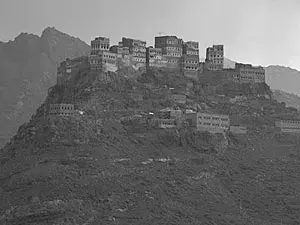
Sana'a is believed to be one of the oldest cities in the world, one that has continuously been inhabited over the centuries through times of drought, famine, war and major upheavals in social trends resulting from changes in its political and religious scenarios.

Overview

Sanaa History

Sana'a is believed to be one of the oldest cities in the world, one that has continuously been inhabited over the centuries through times of drought, famine, war and major upheavals in social trends resulting from changes in its political and religious scenarios.

Traditions narrate the story of Shem, the son of Noah, who decided to found a new city for his people, and was led to the site of the present Sana'a by a bird. Here he lay down the basis of a city that was to survive for centuries and to witness the ups and downs of a variety of cultures and peoples.

Sana'a was home to the Sabaean Empire during the 6th century BC. By the early 6th century AD, it had become the capital of the Himyarite dynasty. Written records as old as the 1st century AD provide an insight into the prevailing culture and social conditions during these periods of change. Sana'a also served as a strong military base for two mighty empires of the past – the Abyssinians and the Persians. With the advent of Christianity and the religious journeys of early missionaries, Sana'a began opening up to new waves of change, and churches became one of the more prominent public buildings.

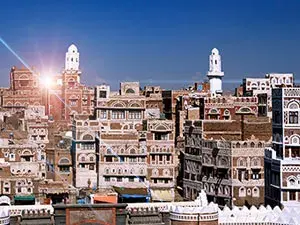
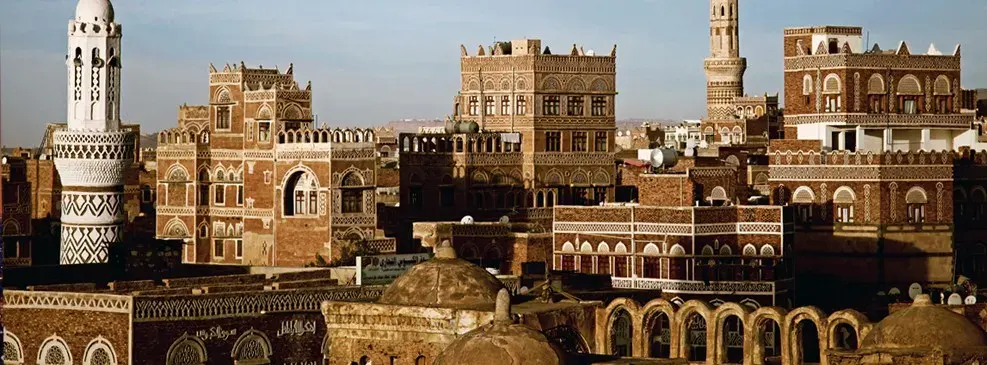
When Islam arrived in Yemen around the 7th century AD, it changed forever the look and feel of the ancient city. Towering minarets started to rise above the world’s first skyscrapers, and mosques taller and grander than the earliest churches sprang up, giving the city an interesting and unique skyline.

Sana'a developed rapidly under various phases of growth of the Islamic empire. It prospered under the Caliphate during the 8th century, then under the Mamelukes during the 16th century, and finally under the Ottoman Empire after the fall of the Mamelukes. Sana'a remained under Ottoman occupation for a few centuries, when in 1918 Imam Yahya began ruling North Yemen and declared Sana'a his capital city. When the imamate was abolished after the 1962 revolution, Sana'a became a capital of the new Yemen Republic. This led to a rapid growth in population and infrastructure. Population, due to a large influx of migrants, began to double every four years.

Sana'a remains today as the world’s fastest growing capital city.
Continue reading

More from City Information

Visa Information

City Information

Visa Information

City Information

When to go

Sana'a can be quite warm in the summer, and winters are generally cool and enjoyable. Summers are also quite dusty and dry, and your clothes can soon turn an annoying shade of beige as you traverse the city. Hot also means you will be more prone to exhaustion, and you might be tempted to try a locally prepared unhygienic drink just out of immense thirst, with grave consequences. In short - it is better to avoid Sana'a in the summer months. Unfortunately, it seems, the largest annual festival in Sana'a, one that is held especially to welcome tourists to the city, is held during the whole month of June. This offers perfect insight into the life and culture of the residents. If you love a city for its festivals, its people, and their sense of communal fun, then summer months would be the ideal choice for you to visit the city. Otherwise, it is better to visit the city any time during September-February. The hordes of tourists will be dying out, the city will be cleaner, cooler, and more accessible, and you can get to explore more of local life rather than bumping into a foreigner on every other corner.




Read full article

City Information

Fast Facts

Location: Sana’a, Yemen Dialing code: +967 01 X (where +967 is the international code for Yemen, 01 is the regional code for Sana’a, and X is the local number) Emergency numbers - Fire Brigade 191 - Water Problems 171 - Telephone enquires 118 - Accident (traffic) 194 - Foreign Affairs 202544/7 - Inter-City Bus Co. 262111 - Red Crescent 203131

Read full article

City Information

Exchange Rates

The currency used is the Yemeni Riyal (YER). Banknotes are present in denominations of 10, 20, 50,100, 500, 1000, and 5000 Rupees. Coins are also used for 1, 2, and 5 Rupees.

Read full article