Skip to content
Irhal · Your guide to the world
Irhal
العربية

Search for a city, hotel or experience

City guide article

Tunis History

Tunis has been home to world’s greatest civilizations, including the Arabs, Romans, Vandals, Byzantines, Turks, Spanish and French, all of whom have left their marks on Tunisia’s monuments, culture, language and way of life. Tunis achieved importance as the capital of Tunisia after the 7th century when the Arabs were dominant in the country and realized the importance of the strategic location of the city.

Overview

Tunis History

Tunis has been home to world’s greatest civilizations, including the Arabs, Romans, Vandals, Byzantines, Turks, Spanish and French, all of whom have left their marks on Tunisia’s monuments, culture, language and way of life. Tunis achieved importance as the capital of Tunisia after the 7th century when the Arabs were dominant in the country and realized the importance of the strategic location of the city.

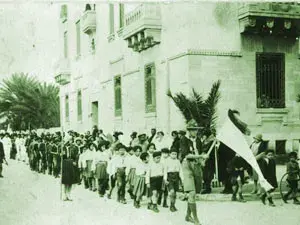
From 1159 to 1270, the city exchanged hands between the Arabs and French and remained turbulent during the 16th and 8th century after which the Ottoman Empire brought significant developments to its infrastructure, buildings and social networks. With these changes, Tunis witnessed a heavy inflow of European inhabitants during the 19th century who were the catalyst of positive changes in the way of life of the Tunisian society.

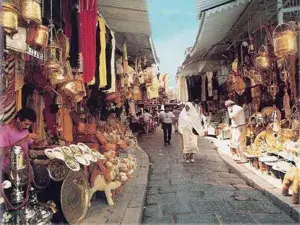
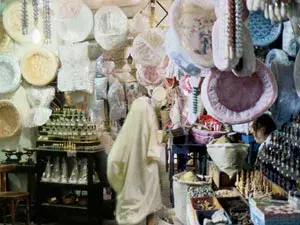
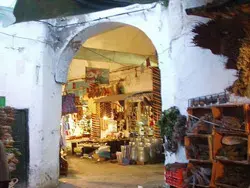
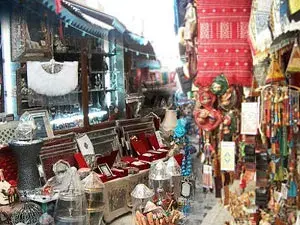
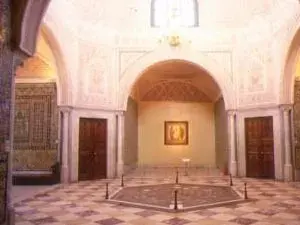
From being used as a military base to being developed as the hub of cultural, social and entertainment activities, Tunis has most of its history marked down in the battered and worn out streets of the medina where the old smell of fabric and spices is the same today as it was during the Arab and French conquests.
Continue reading

More from City Information

Tunis Today

City Information

Tunis Today

City Information

When to go

Being a Mediterranean city, Tunis has extreme temperatures. In the summers, as one approaches the Sahara in the south, one can experience extreme heat as well as very bitter winters in the north. Therefore, the ideal time to visit is in spring, from April to June when beautiful green fields blossom at very pleasant temperatures and again during autumn, from September to October when the cool breeze lowers the unbearably high temperatures! Locals and tourist can have fun on the beaches or explore the historic city and learn more about it during the various festivals that are held in these peak times.


Read full article

City Information

Fast Facts

• Location: Tunis lies on the Mediterranean coastline of the Gulf of Tunis with beautiful hills surrounding its perimeter and the Sahara surrounding the South of Tunisia. Being the smallest city in North Africa, Tunis is a bundle of surprises with the festive and historical sites in store for visitors. • Dialing Codes: country code: 216 ; city code: 71 • Emergency (police or ambulance): Police: 197 Ambulance: 190 Firefighters: 198 Free emergency call: 112 • Airport enquiry: Tunis-Carthage Airport : +216 (0)1 755 000 • Population: 728453 • Density: 3,425.9/km2 (8,873/sq mi) • Language: Tunisian Arabic, English and French are the most spoken languages with Tunisian Arabic being the official language of the country. Most people in holiday resorts speak English very fluently while French has most importance in academically. • Total Spread of city: Tunis covers a total area of 212.63 km2 • Time zone: CET (UTC+1) • Annual Rainfall: 1520mm • Highest Summer Temperature: 32 • Lowest Winter Temperatures: 7

Read full article

City Information

Annual Temperatures

Month Min. Temp °C Max. Temp °C January 7 15 February 8 16 March 9 18 April 11 20 May 14 24 June 18 29 July 20 32 August 21 32 September 20 29 October 16 25 November 12 20 December 9 16

Read full article