Skip to content
Irhal · Your guide to the world
Irhal
العربية

Search for a city, hotel or experience

Festival

Ascension Day of Festa della Sensa

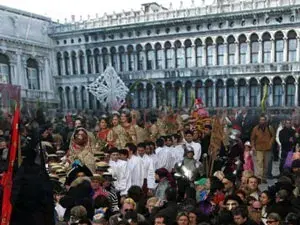
This is the day on which the marriage between Venice and the sea is celebrated. Back in history the Doge would sail out on his ship named "Bucintoro" and throw into the sea a ring of gold. These days the ceremony has taken a simpler form, as the Mayor of Venice, civic dignitaries and religious and military representatives sail to the Port of S. Nicolò and perform the ring throwing ritual.

City guide

Overview & visitor information

Ascension Day of Festa della Sensa

This is the day on which the marriage between Venice and the sea is celebrated. Back in history the Doge would sail out on his ship named "Bucintoro" and throw into the sea a ring of gold. These days the ceremony has taken a simpler form, as the Mayor of Venice, civic dignitaries and religious and military representatives sail to the Port of S. Nicolò and perform the ring throwing ritual.

More festivals in Venice

Keep exploring Venice.

Imagevenice

Palio of the Ancient Maritime Republics

Activity

The Palio is an annual boat race between the four Italian Maritime Republics or 'Republiche Marinare' (Amalfi, Genova, Pisa, Venezia), that sailed the seas in the middle ages. It takes place on the Mediterranean sea at Amalfi and Genoa, on the Arno in Pisa and on the lagoon in Venice, to celebrate the history and memories of many great sea struggles, particularly between Venice and Genoa. The idea for this race or regatta was conceived in 1955 and the first race was held in Genoa. At the opening ceremony of the regatta, a parade is held with people marching in historical costumes decorated with standards of the ancient republics. This is followed by a historical pageant comprising 400 boaters with participants attired in period costumes and carrying flags and festoons, trumpets and drums, riding on horses and sedan-chairs.

Imagevenice

The Carnival of Venice

Activity

On the Carnival of Venice (Carnevale di Venezia), held annually, Venetians put on elaborate masks and costumes and turn the streets into a huge party. The carnival starts around two weeks before Ash Wednesday and ends on Shrove Tuesday, the day before Ash Wednesday. According to historical records, the first carnival was held in 1097, and for centuries the people of the city have very enthusiastically celebrated the days prior to Quaresima or Lent, the period of abstinence leading up to Palm Sunday. The word carnivale when divided in two, carne literally means meat and levare means to remove. The event was named so because during Lent eating meat is prohibited.

Imagevenice

Saint Mark's day

Activity

On the 25th of April the feast of Saint Mark the Evangelist is celebrated by Venetian men by presenting a long stemmed red rose called the 'Bòcolo' to their beloved. The unique tradition is kept alive by the Venetians by celebrating this feast each year with a lot of verve.

Imagevenice

Vogalonga

Activity

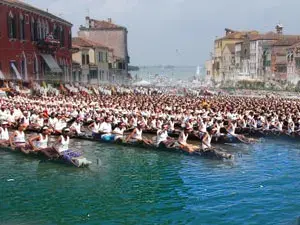
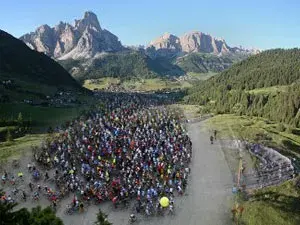
The Vogalonga is a rowing marathon all around Venice and the Lagoon. Each year the number of participants, especially from other countries increases. Sometimes the number of competing boats goes up to 1500. The race starts in the morning with a large number of boats of various sizes and shapes gathering in St. Mark's Basin opposite the Doge's Palace and then setting off on an approximately 30 kilometre long route, rowing between lagoon islands before heading back to Venice along the Rio di Cannaregio to end at the Punta della Dogana.

Imagevenice

Redentore

Activity

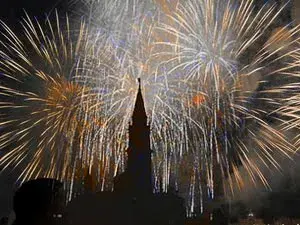
One of the most spectacular Venetian festivals is the Festa del Redentore because of the fireworks display and the hundreds of illuminated boats, decorated with boughs and coloured balloons, that congregate in Saint Mark's Basin. This festival is held on the third Saturday and Sunday in July and marks the July 1576 eradication of a plague that had gripped the city. It is organized at the Chiesa del Redentore (Church of the Redeemer) on the island of Giudecca. The church is linked with the banks of Le Zattere in Dorsoduro by a bridge of hundreds of boats afloat across the Giudecca Canal. As soon as night falls a magnificent half-hour spettacolo of fireworks light up the sky.

Imagevenice

The Venice International Film Festival

Activity

The oldest and one of the most respected film festivals in the world is the Venice International Film Festival. It was founded by Count Giuseppe Volpi di Misurata in 1932. Since its inception, the festival has been held each year in late August or early September on the island of the Lido in Venice. Films from the world over are shown here. Screenings are held at the historic Palazzo del Cinema situated on the Lungomare Marconi. This esteemed film festival is part of the Venice Biennale, an important two-yearly exhibition and fair for contemporary art. The major awards given at the festival are the Leone d'Oro (Golden Lion), for best film screened at the festival, and the Coppa Volpi (Volpi Cup), awarded to the best actor and actress. The San Marco Award initiated in 2002 is to honor the best film of the Controcorrente ("Against the stream") segment.

Imagevenice

Regata Storica

Activity

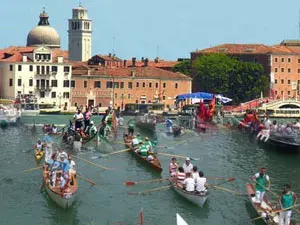
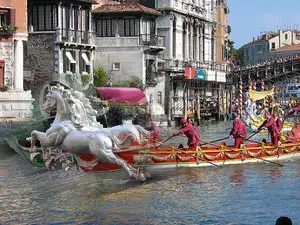
Yet another festival celebrated on water in this city of canals, is the Regata Storica. It takes place on the waters of the Grand Canal on the first Sunday in September. Venetians started holding this festival way back in 1315 with the Doge Giovanni Soranzo to celebrate the glory of the Serenissima. Through the festival, sometimes foreign dignitaries visiting the city were honoured and at other times a military victory was celebrated. The festivities are divided into two parts the Historical Procession and the 'Regatta' races. Hundreds of gondolas, opulently decorated for the occasion and piloted by gondolieri in colorful uniform, participate in the opening procession, which is followed by three regattas (races) along the Grand Canal. Grandstand tickets can be bought through the tourist office or one could arrive early to find a piece of embankment near the Rialto Bridge for the best seats.

Imagevenice

Maratona

Activity

Usually held on the last Sunday of October, the October Maratona (Marathon) is held annually. It starts at Villa Pisani on the mainland and ends along the Zattere for a finish at the Basilica di Santa Maria della Salute on the tip of Dorsoduro.

Imagevenice

Madonna della Salute

Activity

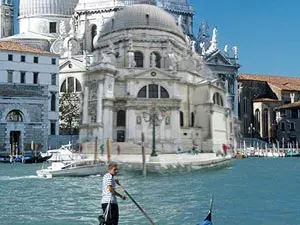
Venice had been shaken by a terrible plague for two years from 1630-31. To remember its removal the beautiful and grand domed church of Salute was constructed. Historians narrate that the city was saved because of the involvement of the Virgin Mary. Since then, every year in November the event is remembered by holding a special service and celebrations. A portable bridge is constructed, starting from San Marco and ending at Dorsoduro, where the Salute is situated. Through this temporary bridge, thousands of natives and visitors can cross the water to offer their gratitude at the church and to light a candle for good health. According to custom, on this occasion of the Madonna della Salute, Venetians prepare the ‘Castradina’ a traditional mutton-based dish.

More places in Venice

Keep exploring Venice.

Imagevenice

What to do with children in tow

Activity

A gondola ride would a very enjoyable experience for a child or adult. This might be a little expensive so one should consider the convenient and less expensive option which is a ride on the no. 1 vaporetto. Both rides offer entirely different experiences. The gondola takes you on a journey where one gets to see some unique buildings like view Marco Polo's house. On the other hand, the vaporetto provides a practical yet beautiful ride down the Grand Canal. One can find here boats of various kinds and services like the ambulance boat, the garbage boat, the firefighters' boat, the funeral boat, and even a delivery boat of Coca-Cola. Sometimes, also visible are special gondolas filled with flowers carrying a blissful bride and groom. Feeding the pigeons in Piazza San Marco could be the highlight of a child’s visit to Venice. Be sure to buy a bag of corn and you'll be draped surrounded by pigeons within seconds. This is also a great photo opportunity. Warn your child of the all the fluttering and flapping. An excursion to the Murano Island could provide a lot of recreation along with education. Ask around for a furnace, or the glass factory. Free entertainment would be provided to children in the form of a glass-blowing performance of the island's thousand-year-old art. Another breathtaking sight is that from top of the Campanile di San Marco (the highest structure in the city).One can take the elevator there for a pigeon's-eye view of Venice's rooftops and church cupolas, or view the four bronze horses on the portico of the Basilica San Marco. This view from its outdoor terrace will be retained in one memory for years to come. For older children, the Museo Navale & Arsenale, (Museum of Venetian Navy) has on display ship models and old vessels. The Museo Civico Correr (Correr Civic Museum), also displays many historic artifacts which are substantial remnants of Venice’s glorious times. Children can also be kept away from mischief by involving them in a competition to count how many times they can spot the winged lion, which is a kind of symbol of Italy. It is also known to have been a lucky mascot for St. Mark, the patron saint of Venice, thus its popularity. You will see it on numerous things from T-shirts to napkins on buildings facades, on columns, doorways, as pavement mosaics, on the local flag and government stamps.

Imagevenice

Arsenale

Building

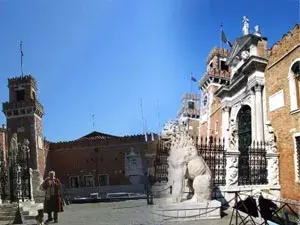
The Arsenale is a shipyard in Venice, which played a vital role in the development of the Venetian Republic. The Italian Navy is now running the yard and it occasionally opens to public like on the Biennale and for the festival of traditional Venetian boats, held in May each year. According to historical records the Arsenale started functioning in 1104. Sometimes up to 16,000 arsenalotti or workers used to be employed at the yard and they used to be among the best shipbuilders in the world. The ‘Inferno’ by Dante has truly captured these sweating men armed with pitch and boiling tar. The Arsenale has an extraordinary Renaissance gateway guarded by four lions which were taken from Francesco Morosini, who defeated Turkey in 1687 and won the Peloponnese. Address: Campo dell'Arsenale, Castello, Venice

Imagevenice

Basilica di San Marco (St. Mark's Basilica)

Churches

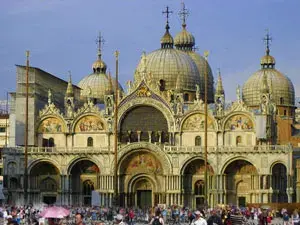
The design and the architectural style for Basilica di San Marco, complete with five mosque-like domes, was inspired from Constantinople. To honor the patron saint of Venice, from a small chapel, through the centuries, predominantly the 11th c., wealthy Venetian merchants and politicians have been donating gifts to expand and enhance the beauty of this church, the saint's final resting place and have also constructed the adjoining Palazzo Ducale. This church is more grand and unique than any other Roman Catholic Church. It is also known as Chiesa d'Oro or the Golden Church. It has a vast interior exquisitely gilded with Byzantine mosaics added over the period of 7 centuries. These mosaics cover every inch of both ceiling and pavement. One can go the Galleria upstairs for a better look at these amazing ceiling mosaics and the Oriental carpet like patterns of the pavement mosaics. The Galleria was originally the women's gallery or matroneum. It is also the only way to access the outside Loggia dei Cavalli. One can also view the renowned Triumphal Quadriga of four gilded bronze horses here. It was brought to Venice from Constantinople in 1204, together with the Lion of St. Mark (mascot of the patron saint and the former republic) and other valuables from the Crusades. The restored originals are on display inside to the small museum. The outdoor Loggia dei Cavalli provides a superb view of the piazza and the quadriga, which Napoleon said, upon his arrival in Venice in 1797, was the "the most beautiful salon in the world". The 500-year-old Torre dell'Orologio (Clock Tower) stands on the right and on the left is the Campanile (Bell Tower), and beyond, the glistening waters of the open lagoon and Palladio's Chiesa di San Giorgio on its own island. The marvelous altarpiece known as the Pala d'Oro or Golden Altarpiece is the church’s greatest wealth. It is a Gothic masterpiece encrusted with approximately 2,000 precious gems and 255 enameled panels. It was made in the 10th century and was decorated by Venetian and Byzantine artisans between the 12th and 14th centuries. It is placed behind the main altar, which covers the tomb of St. Mark. It is also very interesting to view the Tesoro (Treasury), which is a collection of the Crusaders' loot from Constantinople and various other icons and relics that have collected by the church over the years. Most of the booty from Venice has been used to decorate the interior and exterior of the basilica in the form of marble, columns, capitals, and statues. Madonna di Nicopeia, second in importance to the Pala d'Oro, is a 10th-century bejeweled icon taken from Constantinople and exhibited in its own chapel to the left of the main altar. She is regarded to be one of the protective patrons of present-day Venice. The guards at the cathedral's entrance will deny entry to those in inappropriate attire i.e. shorts, sleeveless shirts and shirts revealing the midriff and skirts above the knee. The Basilica is open Sunday morning for those who wish to attend Mass, but is not open for tourists until later. Hours: Basilica, Tesoro, and Pala d'Oro: summer Mon-Sat 9:45am-5pm; Sun 2-5pm (in winter usually closes an hour earlier). Museo Marciano: summer daily 9:45am-5pm (in winter usually closes an hour earlier Location: San Marco, Piazza San Marco Phone: 041-522-5697 Prices: Basilica, free admission; Museo Marciano (St. Mark's Museum, also called La Galleria, includes Loggia dei Cavalli), 1.50€ ($1.95); Tesoro (Treasury), 2€ ($2.60)

Imagevenice

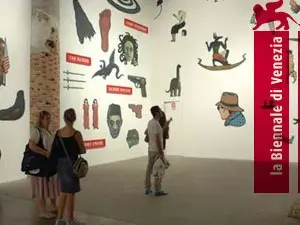
Biennale d'Arte

Building

Biennale d'Arte is a large exhibition held from late May to October very odd numbered year, which presents the latest in contemporary painting and sculpture from several countries. It is renowned as one of the world's best international modern-art shows. It is so popular that visiting crowds fill up the pavilions of the public gardens at the east end of Castello and in the Arsenale. The exhibition has bestowed awards, in the past to Jackson Pollock, Henri Matisse, Alexander Calder, and Federico Fellini, among others. Tel. 041-521-8846 or 041-271-9005 www.labiennale.org Tickets (17€/$22; 9.50/$12 students) can be reserved online or by calling tel. 199-199-100 in Italy.

Imagevenice

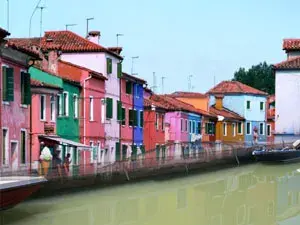
Burano

Village

A peaceful village which has brightly painted houses lining the canals. As this village’s fishing based economy dwindled, the residents took to lace making to earn a living. As soon as you enter the village, by the time you reach the Piazza Galuppi, the main square you would have passed dozens of stalls of lace vendors. These ladies are very proud of their unique product so they don’t offer great bargains. Authentic handmade Burano lace costs $1,000 to $2,000 for a 10-inch piece. The Museo del Merletto or the Lace Museum offers an awesome insight into the delicate intricacies of lace making. The museum also serves as a skills center as on weekdays one can see women practice lace making. Sometimes a few pieces are also put up for sale. Address: Piazza Galuppi 187. 041/730034 Musei Civici pass EUR 18. Apr.-Oct., daily 10-5pm; Nov.-Mar., daily 10-4 pm Location: Islands of the Lagoon

Imagevenice

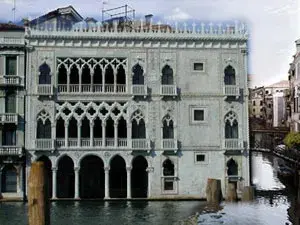
Ca' d'Oro

Palace

Located along the Grand Canal, this beautiful Gothic palace was constructed in 1434 by Marino Contarini for his wife. To express his love for his wife, he literally created a "Golden House" as the palaces marble traceries and ornaments were embellished with pure gold. Ca' d'Oro palace again became a gift of love when a 19th-century Russian prince presented it to Maria Taglioni, a famous classical dancer. The last owner left the palace to the city of Venice, after having had it restored and decorated with antiquities, sculptures, and paintings that presently form the Galleria Franchetti. Besides the famous work ‘St. Sebastian’ by Andrea Mantegna and other classic Venetian art, the Galleria Franchetti contains the type of fresco that long ago existed on the exteriors several Venice buildings.

Imagevenice

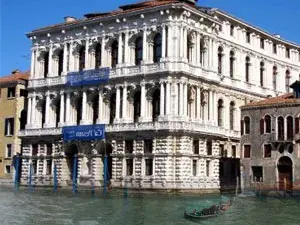
Ca' Pesaro

Gallery

Located on the Grand Canal and housed in a late Renaissance palace, these two museums have an impressive collection of art. The first collection is the Museo d'Arte Moderna or the Museum of Modern Art. Here numerous works of art are displayed, most of which have been bought during Venice's own Biennale over the years. The artists displayed include Chagall, Kandinsky, Klimt, Miró, Henry Moore, Umberto Boccioni, Morandi, and Filippo De Pisis. The top floor houses the Museo d'Arte Orentale collection, which mostly comprises Japanese artifacts, and Chinese, Javanese, Siamese (Thai), Cambodian, and Indonesian pieces. This oriental collection might be relocated to the Palazzo Marcello. Hours: Tues-Sun 10am-6pm Address: Santa Croce 2076 Phone 041-524-1173 Prices Admission 5.50€ ($7.15), free for children under 12

Imagevenice

Ca' Rezzonico (Museo del '700 Veneziano; Museum of 18th-Century Venice)

Museum

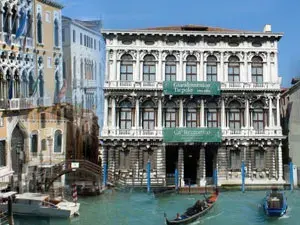
Ca' Rezzonico is a beautiful palace on the Grand Canal and is most famous for being the final home of English poet Robert Browning, after the death of his wife Elizabeth Barrett Browning. It was reopened in 2001 after a complete restoration. This museum shows the general public the lifestyle in a luxurious Venetian home in the concluding years of the Venetian Republic. Initiated by Baldassare Longhena, the 17th-century architect of La Salute Church, the Rezzonico palace is an extravagant setting for this collection of period paintings, notably works by Venetian artists Tiepolo and Guardi, and a special room dedicated to several works by Longhi, furniture, tapestries, and artifacts. This museum best depicts the occasionally flippant lifestyle of the Venetians. The likes and fashions preferred by the wealthy Rezzonico family of merchants, especially the generously frescoed ballroom stirs up images of the lifestyle of the idle Venetian rich 200 years ago. Hours: Wed-Mon 10am-6pm Location: Dorsoduro (on the Grand Canal on Fondamenta Rezzonico) Phone: 041-241-0100, 041-520-4036 Prices: Admission 6.50€ ($8.50) adults, 4.50€ ($5.85) students

Imagevenice

Campanile di San Marco (Bell Tower)

Tower

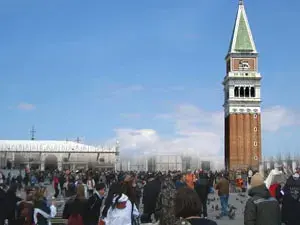
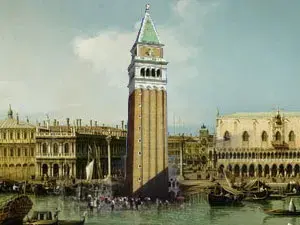
The 1000 years old brick bell tower is 325 feet tall, excluding the angel. It suddenly collapsed in 1902, crushing with it Jacopo Sansovino's 16th century marble loggia at the foundation. The loggia was immediately restored, and the tower was rebuilt according to the old plan and was opened for public in 1912. In the 15th century this tower was used to punish clerics found guilty of immoral behavior. They were suspended in wooden cages from the tower and were either left to starve or forced to survive on bread and water for as long as a year. On a clear day the view from the tower includes the Lido, the lagoon, and the mainland as far as the Alps. Strangely none of the innumerable canals of Venice are visible. Address: Piazza San Marco, Venice Phone: 041/5224064 Location: Piazza San Marco Cost: EUR 6 Open: Apr.-June, daily 9:30-5; July-Sept., daily 9:45-8; Oct.-Mar., daily 9:45-4. Last entry ½ hr before closing

Imagevenice

Campo San Polo

road

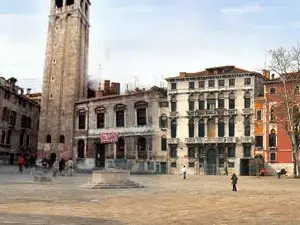
Many years ago, at the Campo San Polo bull races took place, fairs and military parades were held but now only the city’s outdoor cinema is set up here on summer nights. The church located here called the Chiesa di San Polo was restored several times but little remains of the original 9th-century building, and the 19th-century alterations were so expensive that the friars had to sell off many great paintings to pay bills. Though the work of Giambattista Tiepolo is displayed here, his work is outdone by 16 paintings by his son Giandomenico (1727-1804), including the Stations of the Cross in the oratory. San Polo's bell tower has not changed through the centuries. The highlight of the tower is the two lions guarding it, playing with a serpent and a Human head. Address: Campo San Polo, Venice Phone: 041/2750462 Chorus Cost: EUR 3, Chorus pass EUR 9 Open: Mon.-Sat. 10-5, Sun. 1-5

More restaurants in Venice

Keep exploring Venice.

Stella Sahaba Kebabvenice

Stella Sahaba Kebab

Address: Campo Sestiere Santa Croce, 182, Venice, Italy 30125 Cuisine: Middle Eastern A halal certificate is displayed in the restaurant as proof. Hours: from ten in the morning to eleven in the evening Telephone: 0418105730 Mobile: 00393294534726 Email: [email protected]

Imagevenice

Al Paradiso

The owner of this eatery, Giordano welcomes all diners personally and makes sure their needs are catered to. Operating in a small dining room with a cheerful and simple décor this place is always busy so a reservation is essential. The food here is exceptionally good and the chef is creative and gives dishes a unique twist. The Pappardelle "al Paradiso" is a pasta with seafood sauce and risotto with shrimp and grapefruit are the specialties. The entrées are also very tasty and well presented. The ‘panna cotta’ is the most celebrated dessert here.

Imagevenice

Antiche Carampane

This restaurant serves most of the classic fish dishes Venice is known for. These include mixed seafood antipasto to fish soups, pasta, and fish grilled to perfection. New additions like seafood and fruit salads for starters and entrées like turbot with citrus sauce are also very popular. Desserts are also magnificent here. The owners, Franco and Piera’s son Francesco has turned some family recipes into classics by adding and subtracting a few ingredients and greatly improved the presentation of this elegant restaurant.

Imagevenice

Antico Martini

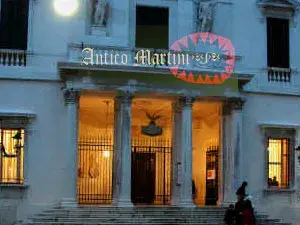
This restaurant was initially a café when it was initiated way back in 1720. Owned by the Baldi family, they have maintained the restaurant as a vivacious and cheerful eatery especially at the outdoor tables in summertime. Their most famous dishes include risotto di frutti di mare and fegato alla Veneziana which are prepared to perfection. It is very conveniently located right across the opera house. The prices here are a little steep.

Imagevenice

Avogaria

Avogaria is one of the most modern and fashionable restaurants of Venice. The food and the architecture and décor are very contemporary. The décor of the dining room and the garden is simple yet very elegant. The predominant cuisine here is Pugliese, a region in the south of Italy. Most in demand from among the primi include orecchiette (small, round pasta) with turnip tops, and zucchini involtini (roll-ups) made with fresh stracciatella cheese. Pugliese cuisine also lays great emphasis on fresh seafood.

Imagevenice

Do Forni

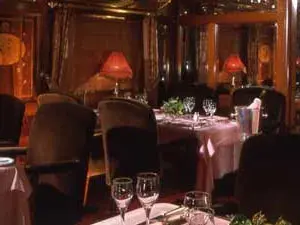
This is a very busy restaurant that serves superb Venetian cuisine. The large menu greatly emphasizes on sea food with some continental dishes. Do Forni is very well decorated and posh. The dining rooms have been divided into two design themes, the main room is decorated country-style and the front room décor emulates an Orient Express car, which makes the area very unique and charming. Cuisine Venetian, International Hours Daily noon-3pm and 7-11pm

Imagevenice

Ristorante Riva Rosa

A very elegantly decorated restaurant, Riva Rosa is located next to a canal in Burano and has beautiful views. The clientele is mostly tourists. The decor and menu are both contemporary and the quality of the food and service is superb. The staff are helpful and accommodating. The restaurant specializes in seafood and, if you ask, the chef is happy to create a vegetarian or low fat dish to suit your taste. Being served outside the restaurant veranda is excellent if you want to enjoy the view while you eat. Timings: Closed Wednesdays, and Monday and Tuesday evenings. Address: Via San Mauro 296, Burano. Telephone: 041 730850.

Imagevenice

Anice Stellato

A family run eatery located on a fondamente or a canal-side street of Cannaregio has a great romantic ambience and reasonably priced superb food. The place has an interesting architecture with narrow columns dividing the dining room into different sections. In addition to traditional Venetian cuisine, innovative dishes have also been introduced, such as carpacci di pesce which is thin slices of raw tuna, swordfish, or salmon dressed with olive oil and fragrant herbs, tagliatelle with king prawns and zucchini flowers, and many appetizing fish stews. Many meat dishes are also served here.

Imagevenice

La Bitta

Finally, a restaurant with a non fish menu! Nicely decorated, the restaurant has longer dining hours and the management is efficient and helpful. The restaurant is not open for lunch but serves continuously from 6.30 to 11 pm. Their popular dishes include the Treviso radicchio and crispy bacon salad, smoked-beef carpaccio or small marinated gnocchi with Montasio cheese, lamb chops with thyme, anatra in pevarada or duck in a pepper sauce and the Irish Angus fillet steak.

Imagevenice

La Zucca

This is an essentially vegetarian restaurant with a simple décor, lattice-wood walls and windows overlooking the canal. Meat dishes are also served here but are not their specialty. The expertise here is produce from the garden. A must eat is the radicchio di Treviso con funghi e scaglie di Montasio, a dish with mushrooms and shavings of Montasio cheese and the finocchi piccanti con olive or fennel in a spicy tomato-olive sauce. Reservations are required..