Skip to content
Venice
Venice

Festivals and Annual Events

On the Carnival of Venice (Carnevale di Venezia), held annually, Venetians put on elaborate masks and costumes and turn the streets into a huge party. The carnival starts around two weeks before Ash Wednesday and ends on Shrove Tuesday, the day before Ash Wednesday.  According to historical records, the first carnival was held in 1097, and for centuries the people of the city have very enthusiastically celebrated the days prior to Quaresima or Lent, the period of abstinence leading up to Palm Sunday. The word carnivale when divided in two, carne literally means meat and levare means to remove. The event was named so because during Lent eating meat is prohibited.
10 results

City overview
Image

On the Carnival of Venice (Carnevale di Venezia), held annually, Venetians put on elaborate masks and costumes and turn the streets into a huge party. The carnival starts around two weeks before Ash Wednesday and ends on Shrove Tuesday, the day before Ash Wednesday. According to historical records, the first carnival was held in 1097, and for centuries the people of the city have very enthusiastically celebrated the days prior to Quaresima or Lent, the period of abstinence leading up to Palm Sunday. The word carnivale when divided in two, carne literally means meat and levare means to remove. The event was named so because during Lent eating meat is prohibited.
Image

On the 25th of April the feast of Saint Mark the Evangelist is celebrated by Venetian men by presenting a long stemmed red rose called the 'Bòcolo' to their beloved. The unique tradition is kept alive by the Venetians by celebrating this feast each year with a lot of verve.

Image

This is the day on which the marriage between Venice and the sea is celebrated. Back in history the Doge would sail out on his ship named "Bucintoro" and throw into the sea a ring of gold. These days the ceremony has taken a simpler form, as the Mayor of Venice, civic dignitaries and religious and military representatives sail to the Port of S. Nicolò and perform the ring throwing ritual.

Image

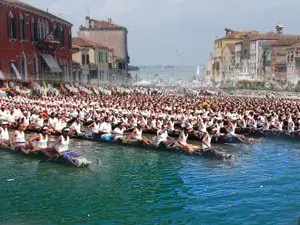
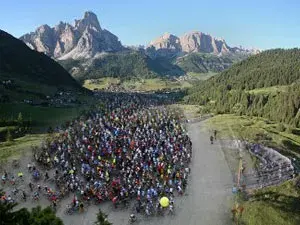
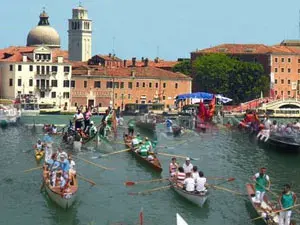
The Vogalonga is a rowing marathon all around Venice and the Lagoon. Each year the number of participants, especially from other countries increases. Sometimes the number of competing boats goes up to 1500. The race starts in the morning with a large number of boats of various sizes and shapes gathering in St. Mark's Basin opposite the Doge's Palace and then setting off on an approximately 30 kilometre long route, rowing between lagoon islands before heading back to Venice along the Rio di Cannaregio to end at the Punta della Dogana.

Image

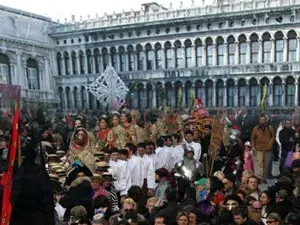
The Palio is an annual boat race between the four Italian Maritime Republics or 'Republiche Marinare' (Amalfi, Genova, Pisa, Venezia), that sailed the seas in the middle ages. It takes place on the Mediterranean sea at Amalfi and Genoa, on the Arno in Pisa and on the lagoon in Venice, to celebrate the history and memories of many great sea struggles, particularly between Venice and Genoa. The idea for this race or regatta was conceived in 1955 and the first race was held in Genoa. At the opening ceremony of the regatta, a parade is held with people marching in historical costumes decorated with standards of the ancient republics. This is followed by a historical pageant comprising 400 boaters with participants attired in period costumes and carrying flags and festoons, trumpets and drums, riding on horses and sedan-chairs.

Image

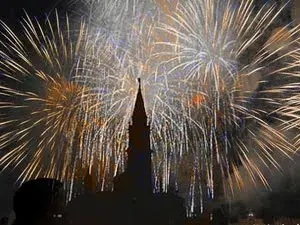
One of the most spectacular Venetian festivals is the Festa del Redentore because of the fireworks display and the hundreds of illuminated boats, decorated with boughs and coloured balloons, that congregate in Saint Mark's Basin. This festival is held on the third Saturday and Sunday in July and marks the July 1576 eradication of a plague that had gripped the city. It is organized at the Chiesa del Redentore (Church of the Redeemer) on the island of Giudecca. The church is linked with the banks of Le Zattere in Dorsoduro by a bridge of hundreds of boats afloat across the Giudecca Canal. As soon as night falls a magnificent half-hour spettacolo of fireworks light up the sky.

Image

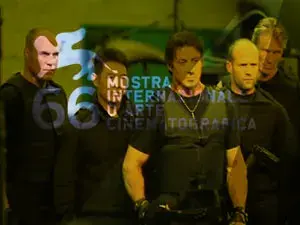
The oldest and one of the most respected film festivals in the world is the Venice International Film Festival. It was founded by Count Giuseppe Volpi di Misurata in 1932. Since its inception, the festival has been held each year in late August or early September on the island of the Lido in Venice. Films from the world over are shown here. Screenings are held at the historic Palazzo del Cinema situated on the Lungomare Marconi. This esteemed film festival is part of the Venice Biennale, an important two-yearly exhibition and fair for contemporary art. The major awards given at the festival are the Leone d'Oro (Golden Lion), for best film screened at the festival, and the Coppa Volpi (Volpi Cup), awarded to the best actor and actress. The San Marco Award initiated in 2002 is to honor the best film of the Controcorrente ("Against the stream") segment.

Image

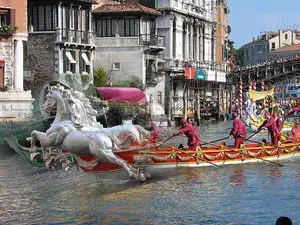
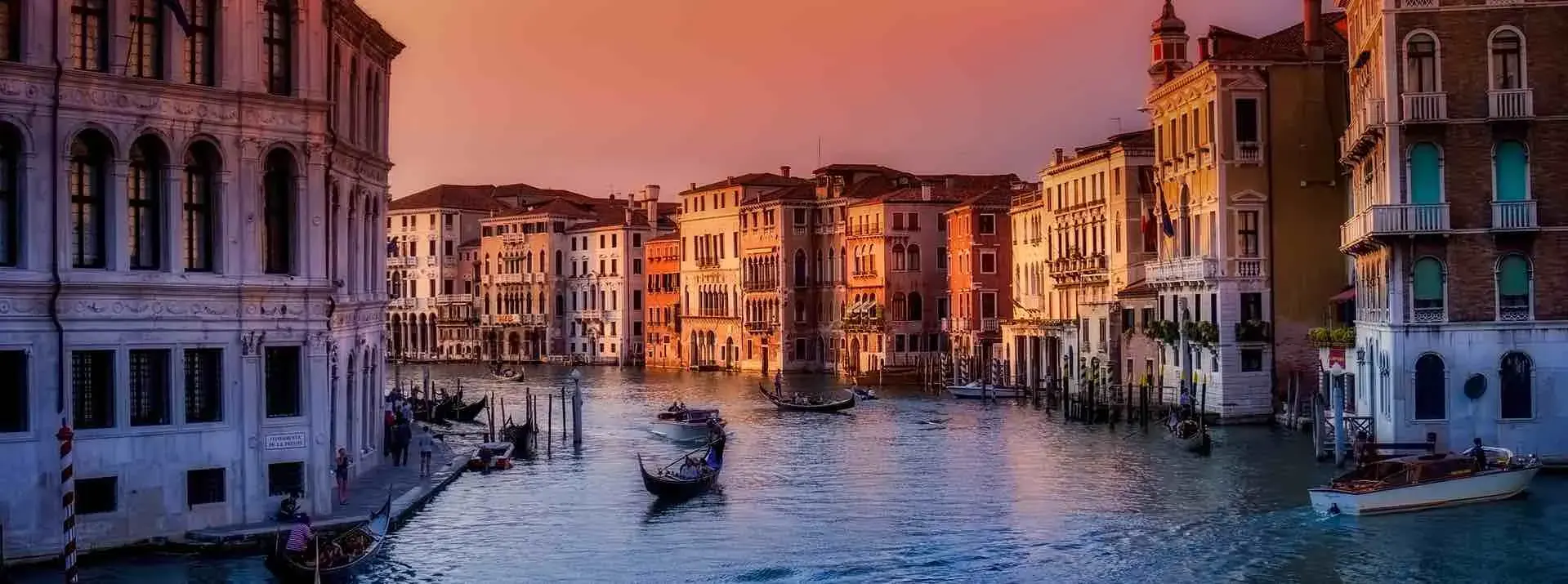
Yet another festival celebrated on water in this city of canals, is the Regata Storica. It takes place on the waters of the Grand Canal on the first Sunday in September. Venetians started holding this festival way back in 1315 with the Doge Giovanni Soranzo to celebrate the glory of the Serenissima. Through the festival, sometimes foreign dignitaries visiting the city were honoured and at other times a military victory was celebrated. The festivities are divided into two parts the Historical Procession and the 'Regatta' races. Hundreds of gondolas, opulently decorated for the occasion and piloted by gondolieri in colorful uniform, participate in the opening procession, which is followed by three regattas (races) along the Grand Canal. Grandstand tickets can be bought through the tourist office or one could arrive early to find a piece of embankment near the Rialto Bridge for the best seats.

Image

Usually held on the last Sunday of October, the October Maratona (Marathon) is held annually. It starts at Villa Pisani on the mainland and ends along the Zattere for a finish at the Basilica di Santa Maria della Salute on the tip of Dorsoduro.

Image

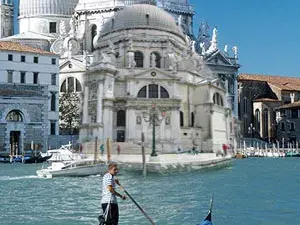
Venice had been shaken by a terrible plague for two years from 1630-31. To remember its removal the beautiful and grand domed church of Salute was constructed. Historians narrate that the city was saved because of the involvement of the Virgin Mary. Since then, every year in November the event is remembered by holding a special service and celebrations. A portable bridge is constructed, starting from San Marco and ending at Dorsoduro, where the Salute is situated. Through this temporary bridge, thousands of natives and visitors can cross the water to offer their gratitude at the church and to light a candle for good health. According to custom, on this occasion of the Madonna della Salute, Venetians prepare the ‘Castradina’ a traditional mutton-based dish.