
Whitechapel, Brick Lane and Bangla Town - evolving cultural smorgasbord
Published by Irhal
London is a melting pot of diverse ethnicities. Nowhere is this more visible than in Whitechapel Station where you see signs in both English and Bangla.
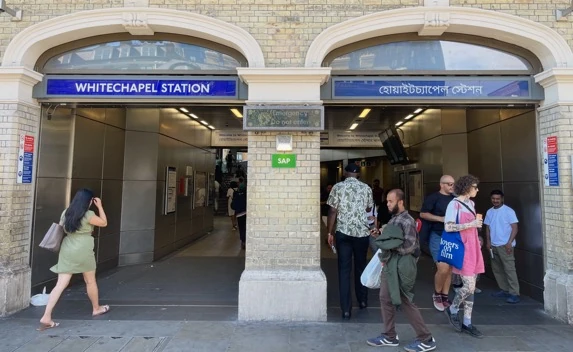
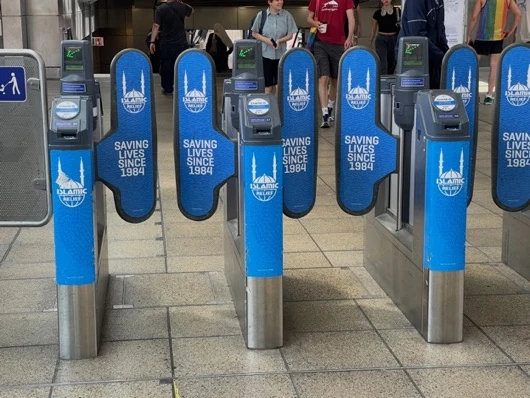
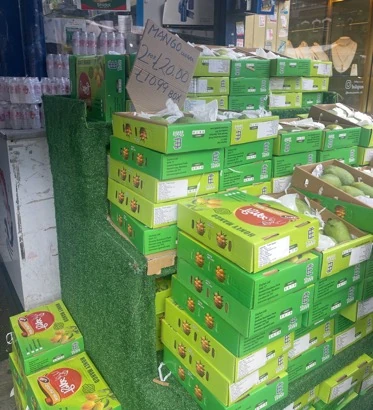
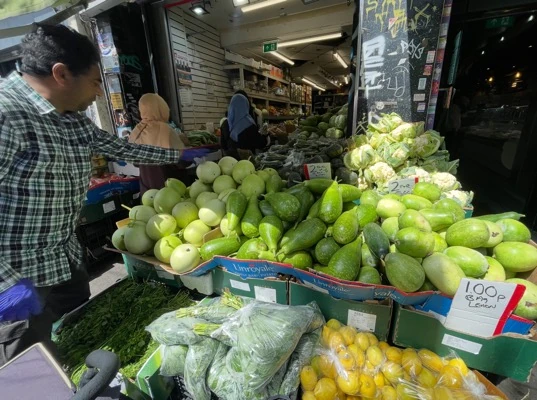
While exiting the station you cross turnstiles displaying signs of Islamic Relief. Step outside and you find yourself in Dhaka's bustling bazaar. You will see street vendors selling Langra mangoes freshly air shipped from Egypt! Kodu (green pumpkin) and Lal Sag (red amarnath) compete for attention with a variety of gourds that are common in Bengali culinary preparations.
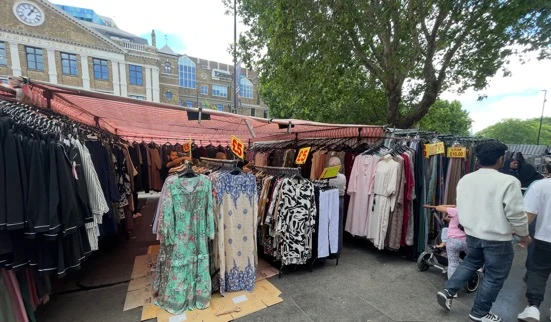
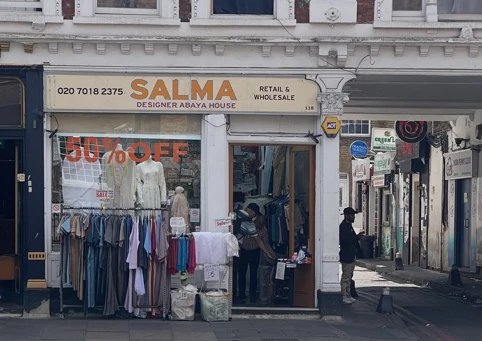
Acknowledging the modest fashion trends of Muslim women, you will see long skirts - jalabiyas - and abayas for sale alongside fabric stalls catering to the needs of women who still practice the art of stitching at home.
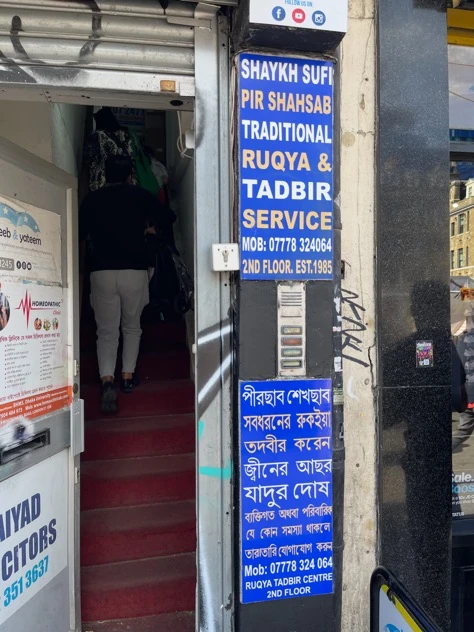
Almost hidden between the vegetable store and a grocery selling a variety of frozen fish is a small doorway that leads to the second floor of a building where a spiritual healer can ward off the evil eye and also give you guidance on your worldly affairs. Shaikh Sufi Pir Shah Sahab preys on human fears and makes money praying for your salvation! Buyers beware!
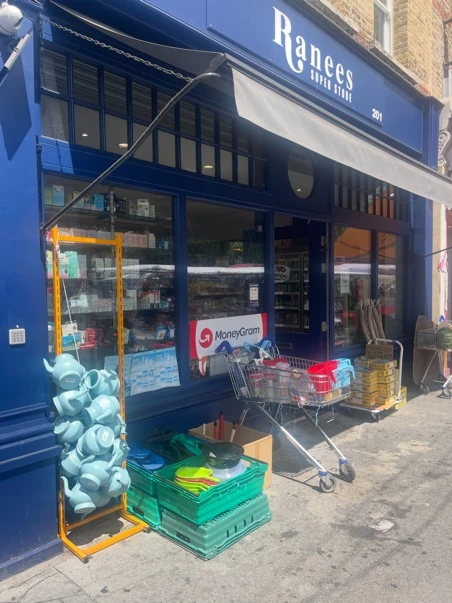
While one of the essential hygiene needs of Muslims is a shattaf or Muslim shower that is now commonplace in most Muslim countries, one wonders why Muslims who are permanently settled in the UK still rely on lotas - a spouted container that you fill with water to wash your privates after every liquid or solid deposit. Perhaps when they or their parents migrated to England the shattaf had not been introduced in their home country, so lotas became an inherited tradition. Something similar has happened with dialects. Immigrants usually retain the dialect they grew up with, even as the language in their home countries continues to evolve. The enduring use of the lota - that you can spot outside a grocery store in Whitechapel - and the preservation of ancestral dialects serve as cultural artifacts—frozen snapshots in time.
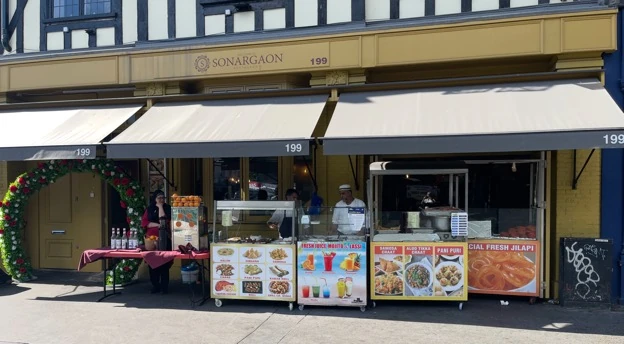
Restaurants and shops selling Bangladeshi snacks such as fuchka (otherwise known as pani puri), chaat, shingharas (a crispier form of samosas) and sweets line the Whitechapel Road all the way to the East London Mosque which is a 10 minutes' walk from the station. The closer you get to the masjid, you see abaya shops and Islamic bookstores, travel agencies promoting Hajj and Umrah trips and even a funeral home.
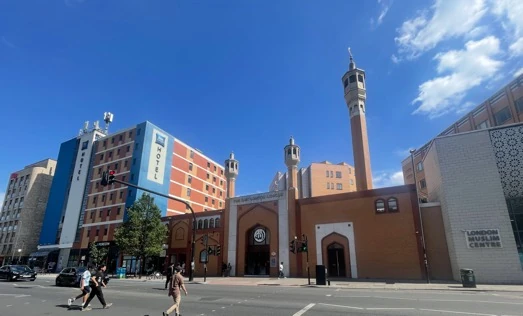
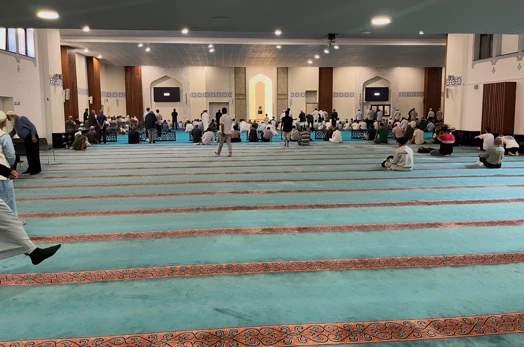
The East London Mosque has been the focal point of Whitechapel residents since its establishment in 1941. After expansion over the years, it now has a capacity of 7,000 worshipers and is the largest mosque in Western Europe. With prayer halls, function rooms for events and Islamic education facilities, the mosque and the community centre attached to it are active throughout the week. The ibis Hotel next door is a great place to stay if a clean bed is all that you crave.
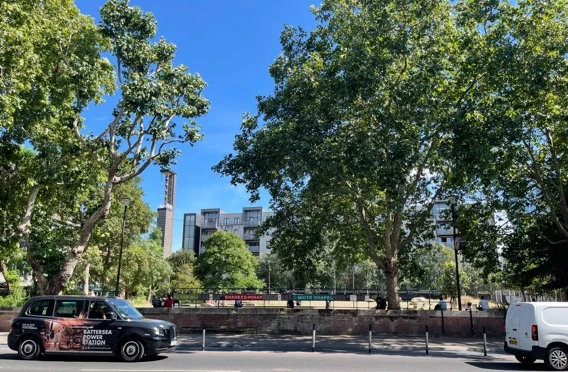
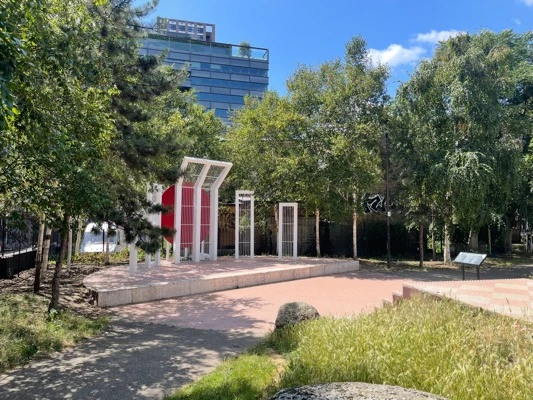
Continuing on Whitechapel Road from the mosque towards Brick Lane, there is a small park - Altab Ali Park - named after a 24-year-old British Bangladeshi who was the victim of a racist murder in the area in 1978. But what is inside the park is amazing: there is a replica of the Shaheed Minar there. The Shaheed Minar is a monument in memory of the martyrs of Ekushey February language movement that took place in Dhaka in 1952 against the imposition of Urdu as the national language of then East Pakistan. This rule was subsequently backtracked by the government in 1956 when Bengali was added as a national language but to this day Ekushey February (21 February) is commemorated throughout Bangladesh.
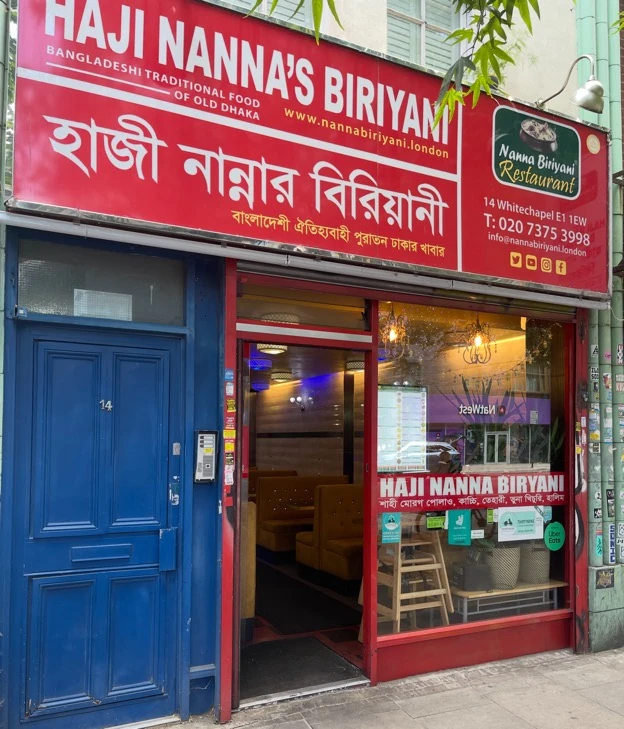
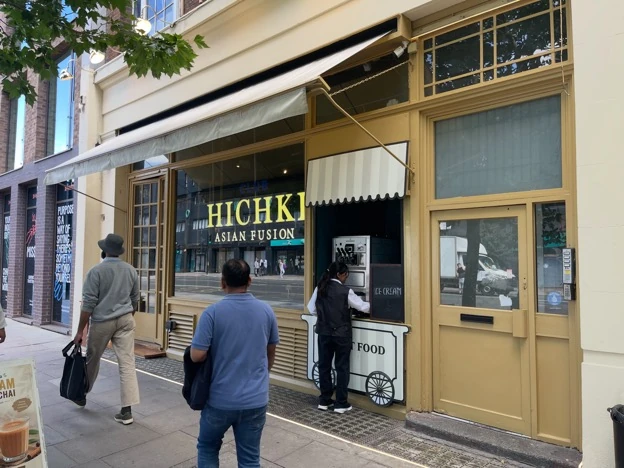
Near the park there are several Halal restaurants including Haji Nanna's Biryani that serves traditional food of old Dhaka and Hichki that claims to be the place for Asian Fusion food straight from Mumbai.
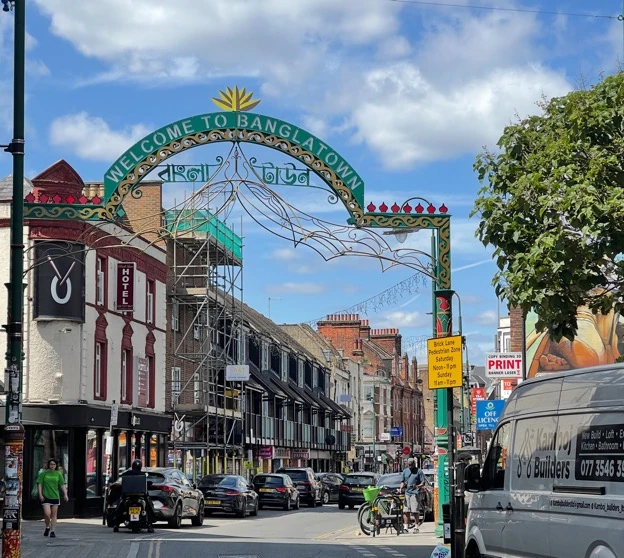
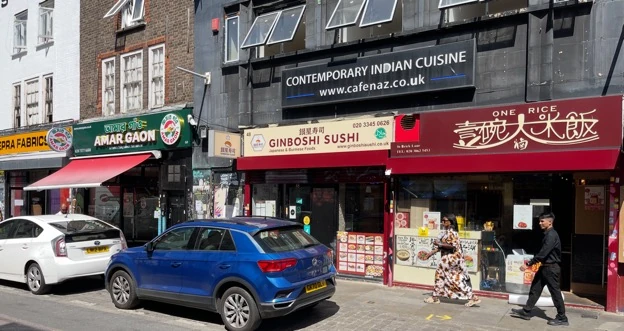
Walking up Brick Lane you see a sign welcoming you to Bangla Town. If you are expecting to see more vegetable markets and Ilish mach (traditional Bangladeshi fish) shops you will be disappointed. Next to Amar Gaon Bangladeshi restaurant is Ginboshi Sushi that serves Japanese and Burmese food while above this there is a name board of an Indian café that has permanently shut down. Permanently boarded shops are a common sight in Brick Lane - apparently after the Covid pandemic many shops closed down and the area has not fully recovered.
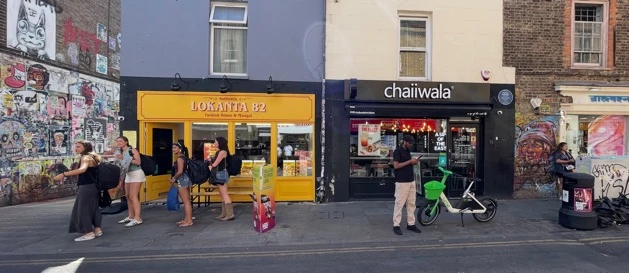
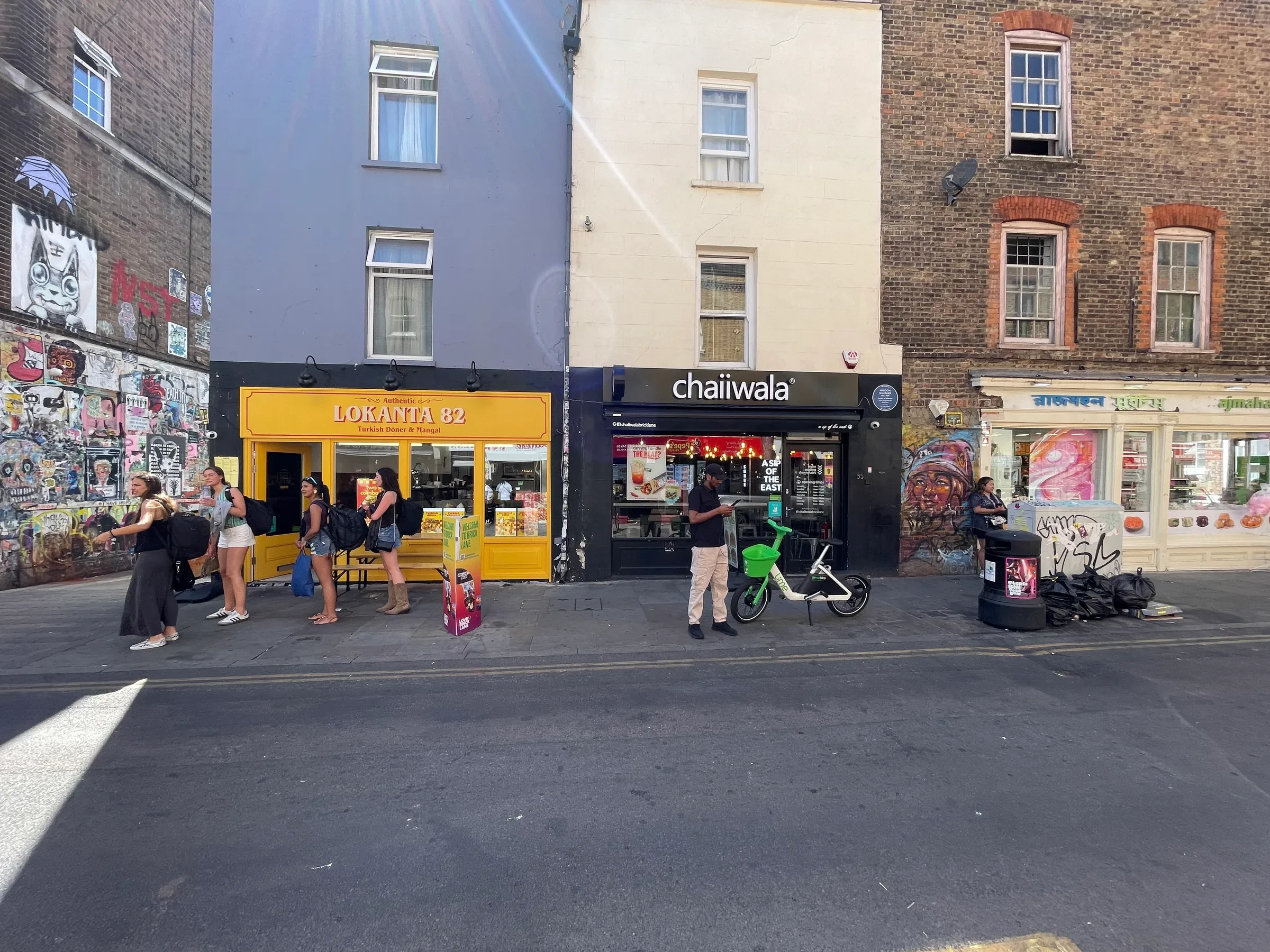
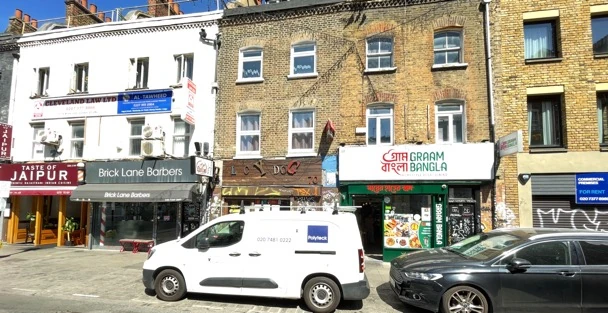
The UK's famous Chaiiwala tea shop chain that has expanded to Dubai and Canada is also present in Brick Lane next to a Turkish doner kebab place - Lokanta 82. Across the road there is Graam Bangla another authentic Bangladeshi restaurant next to Lucky Dog Chinese restaurant and Brick Lane Barbers.
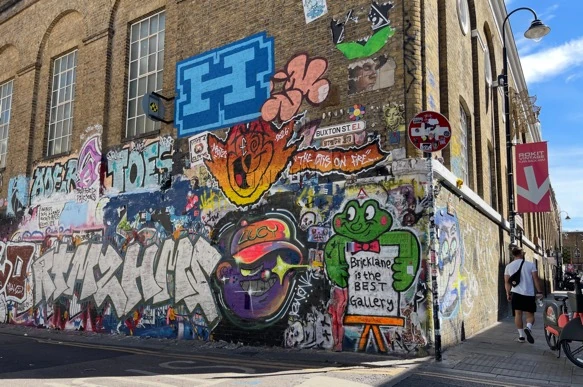
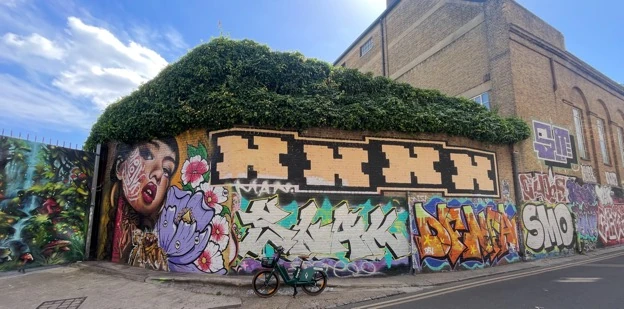
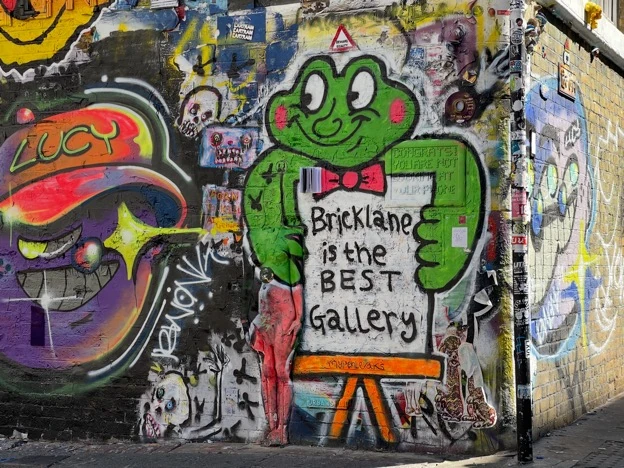
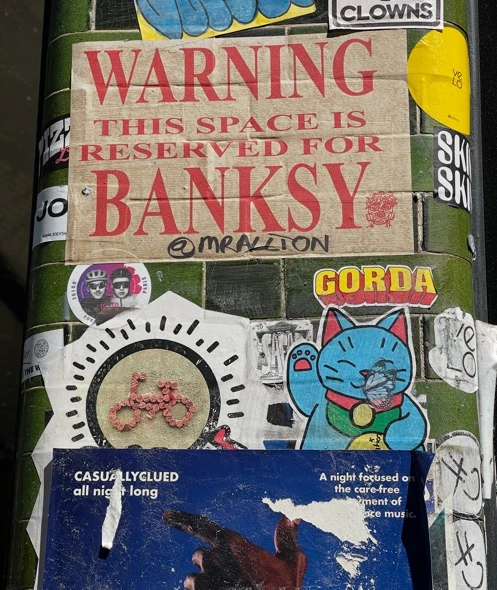
One thing you notice when you enter Brick Lane is an abundance of graffiti. You also notice that the graffiti is not in Bengali. That is your cue to expect global cuisines in this part of town. But coming back to graffiti - there is even a space marked for Banksy to come and create his work of art.
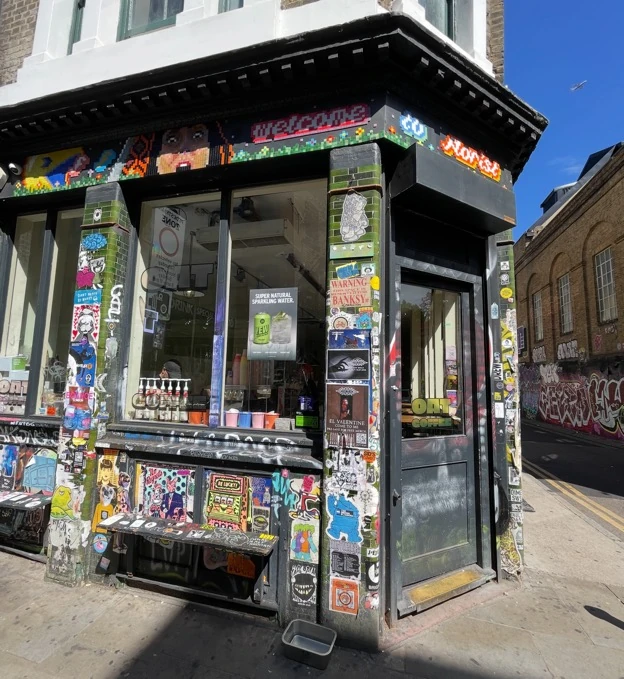
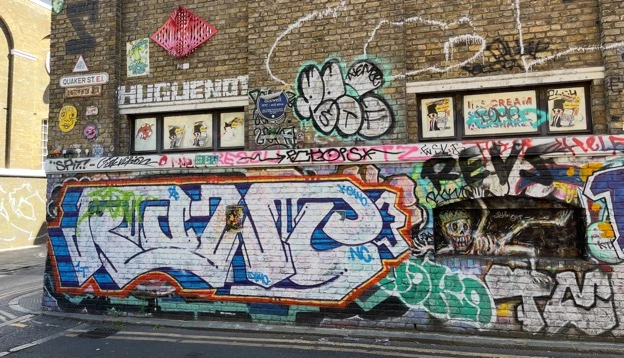
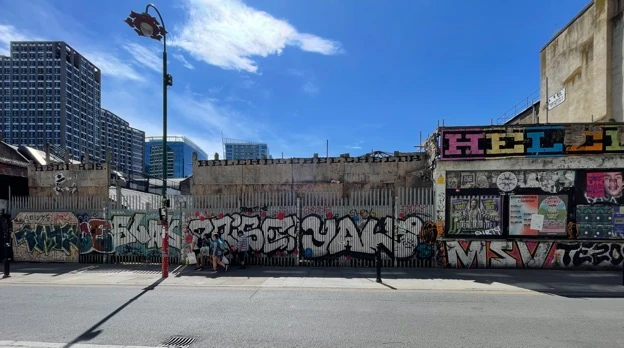
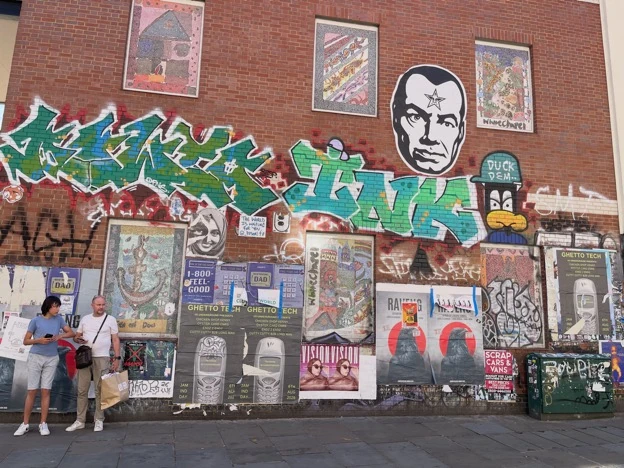
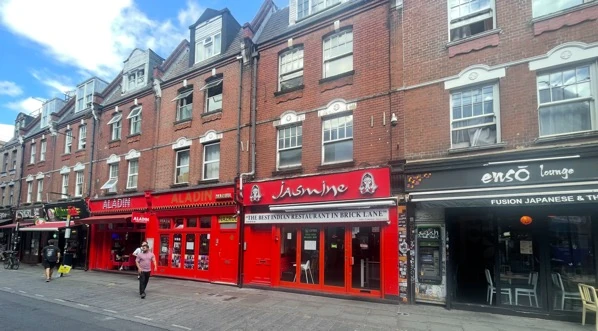
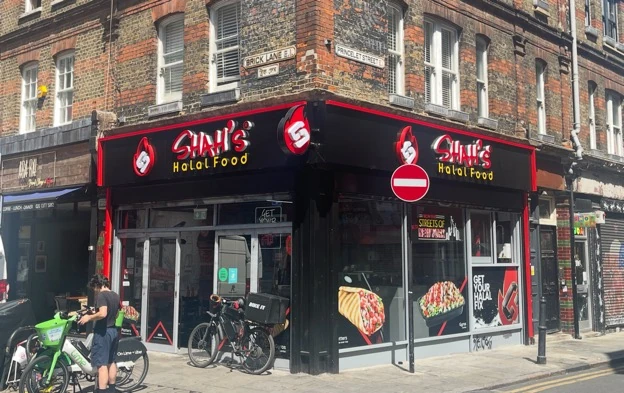
Just like the variety of graffiti you see on the walls, the culinary variety that is available in Brick Lane shows that the area is a haven for food lovers. Jasmine and Aladin Indian restaurants are close to Enso a fusion of Japanese and Thai cuisine. Nearby there is also a Vietnamese Pho place and Shah's Halal Food - a rapidly growing chain that has an outlet on Oxford Street near Selfridges.
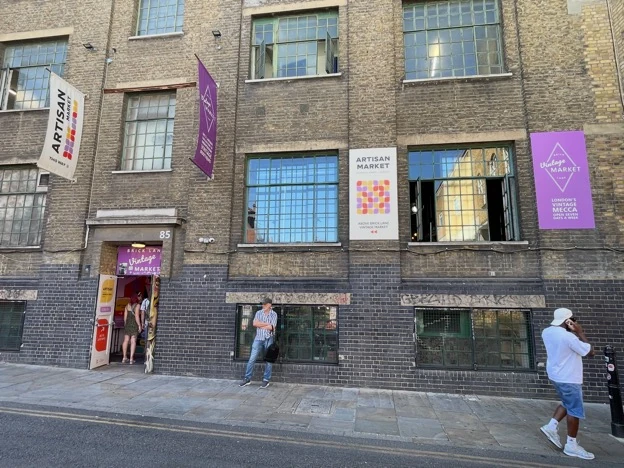
But eating isn't all that Brick Lane offers. There is a variety of arts and craft on display. Artisanal work as well as antiques are for sale at the Artisan and Vintage Market. While the artisan market has a limited number of shops, the antique market has a variety of preloved clothes and costumes - army jackets, rock star accouterments, and enough bling to fill your wardrobe.
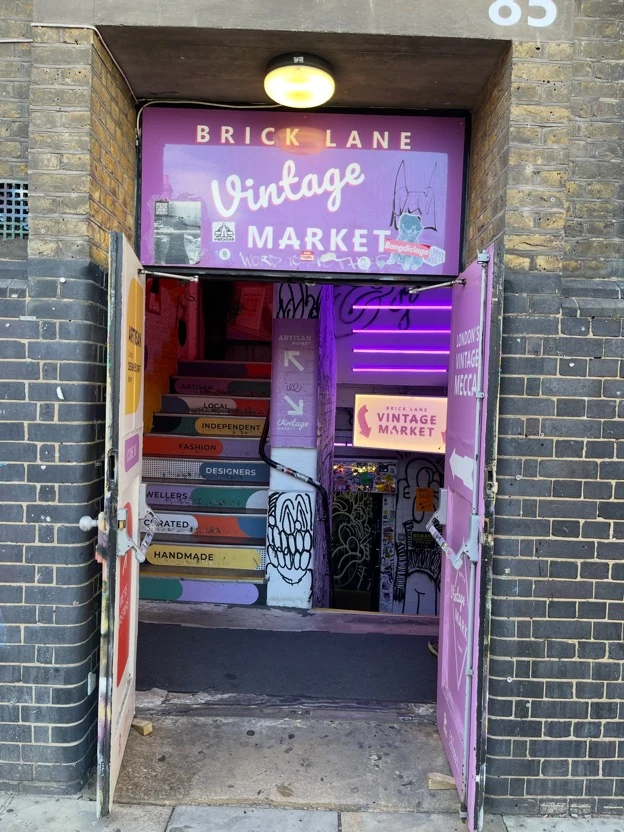
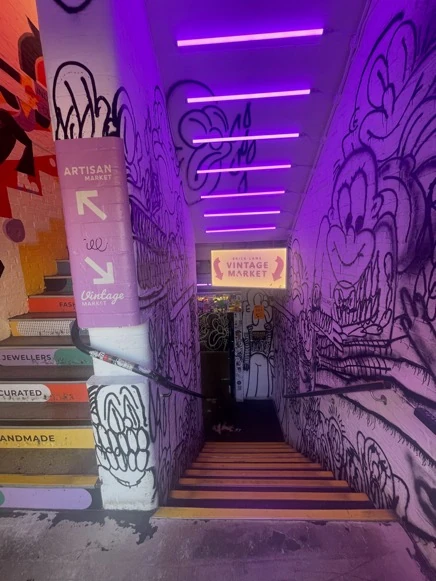
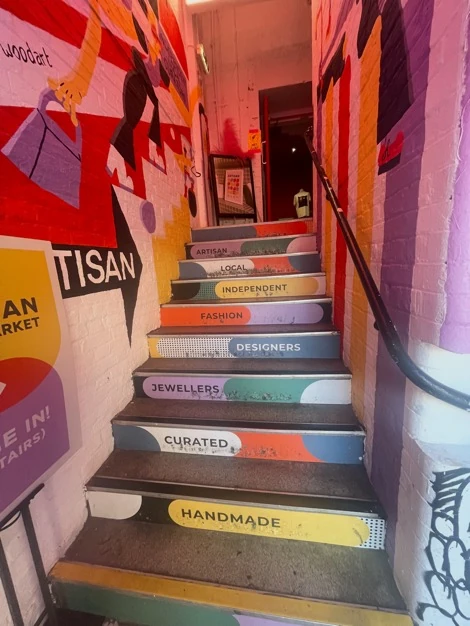
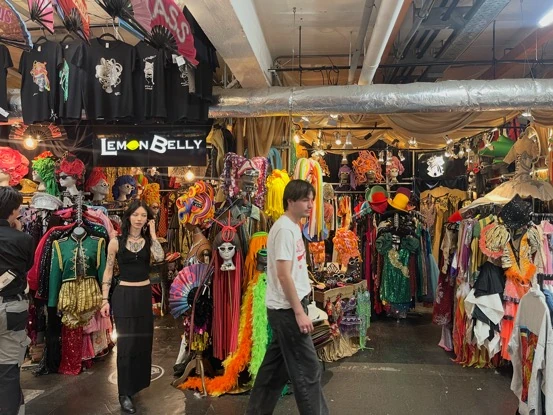
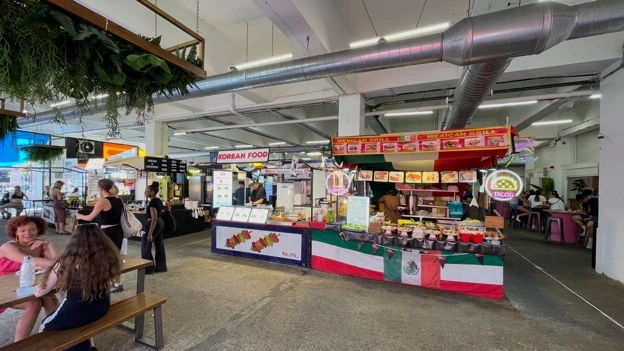
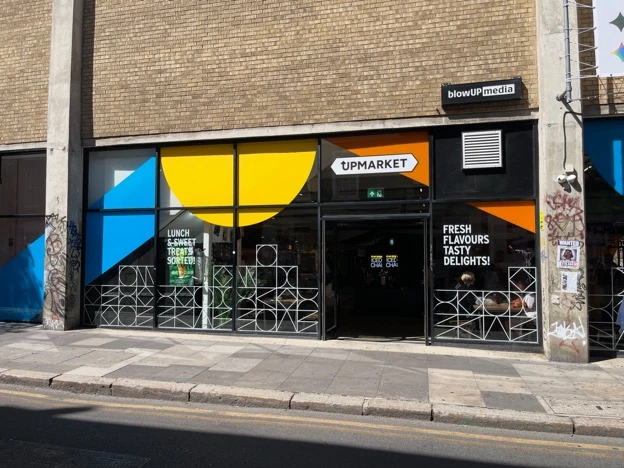
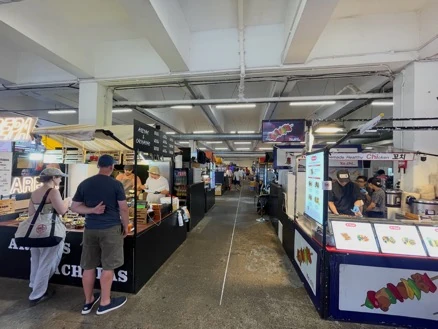
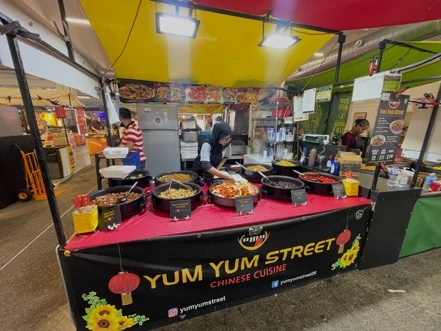
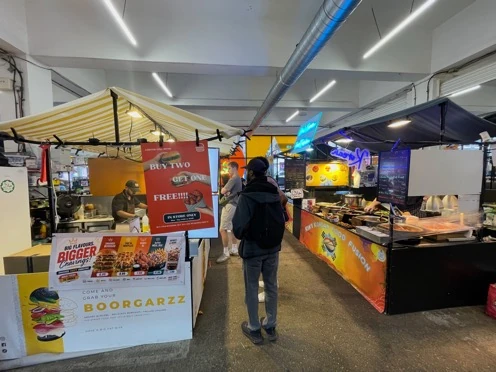
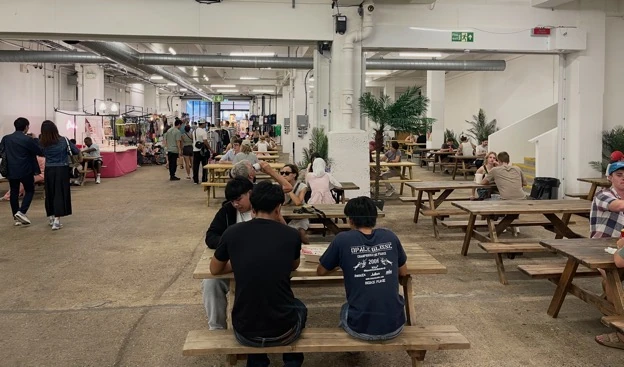
Connected to the Artisan and Vintage Market is Upmarket that is open seven days a week and offers a wide variety of international street food and a large indoor seating area - if it is too hot or cold outside.
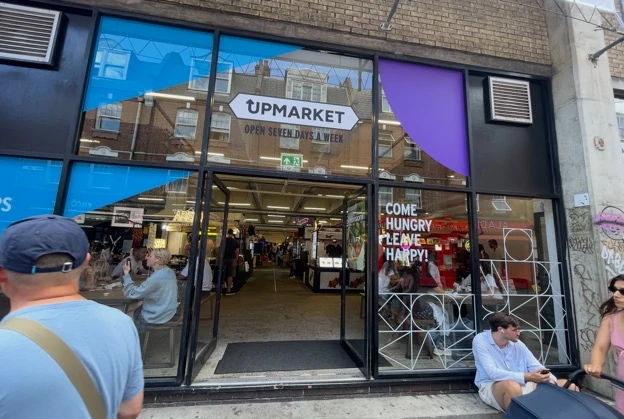
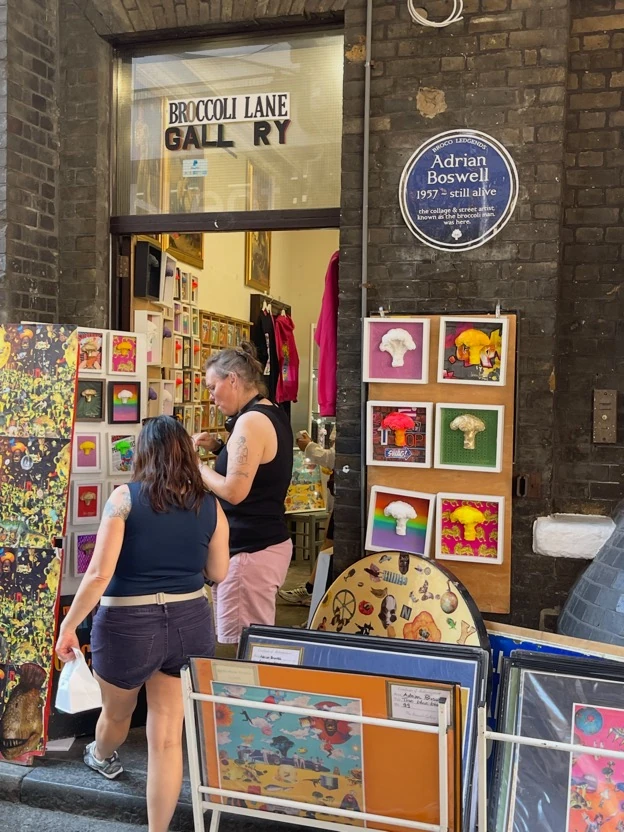
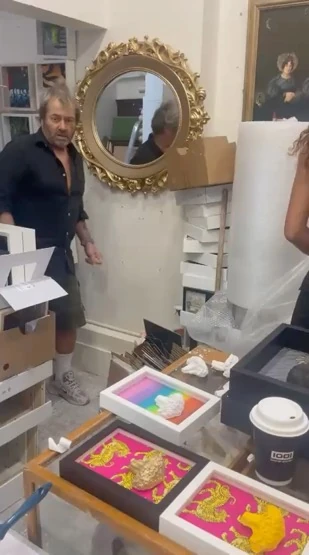
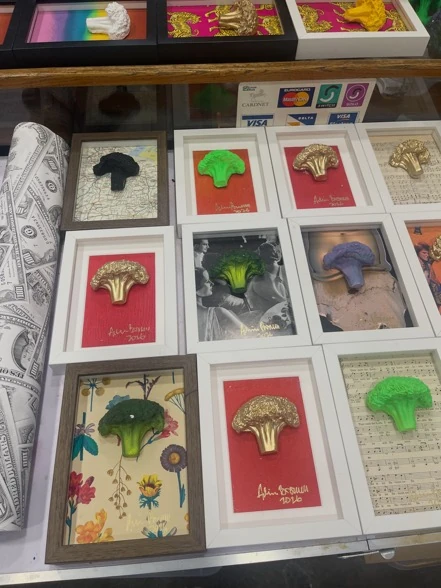
Come out of UpMarket and you see a corner shop and studio run by Adrian Boswell who was born in September 1957 and is still very much alive and making his trademark broccoli mixed media artwork. The smaller signed artwork is priced at GBP 25 while the larger ones sell for GBP 45. He can be seen making his creations in the shop.
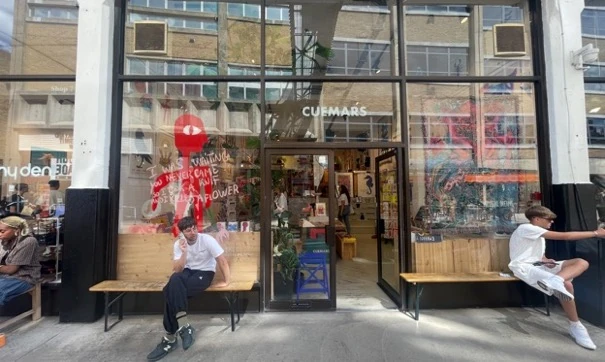
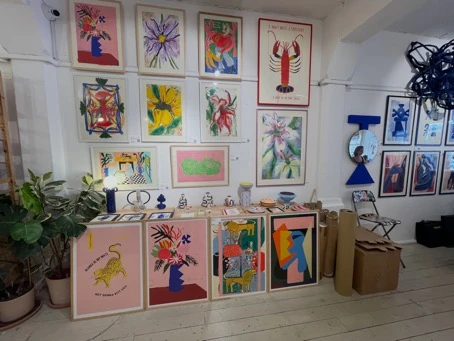
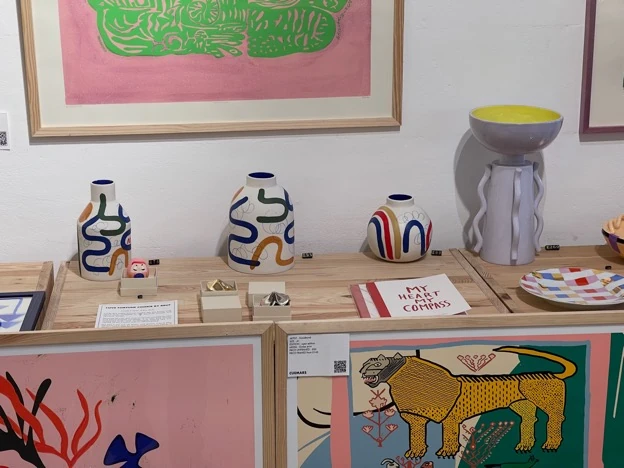
Across the road from Adrian Boswell's art studio are several poster shops including Cuemars that has a number of posters and ceramics for sale. Modern art is on display at the store - some with funny comments such as the text on the shop window: "I was waiting, you never came, so I took a knife and I killed a flower."
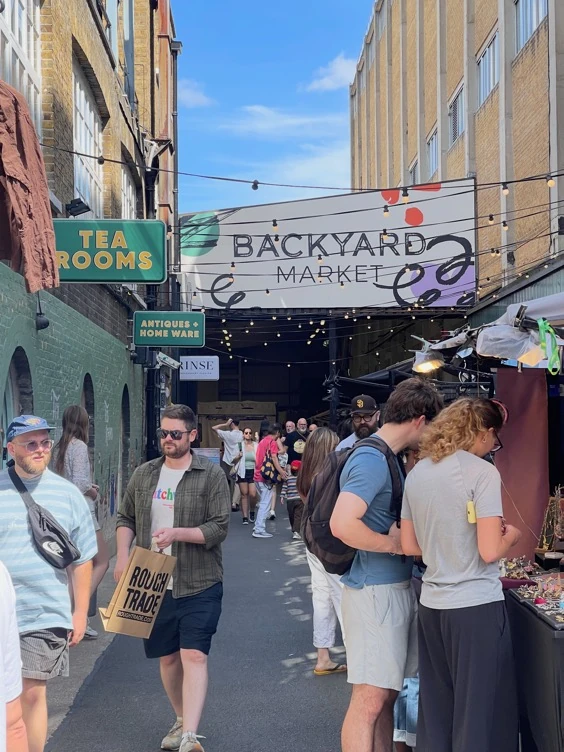
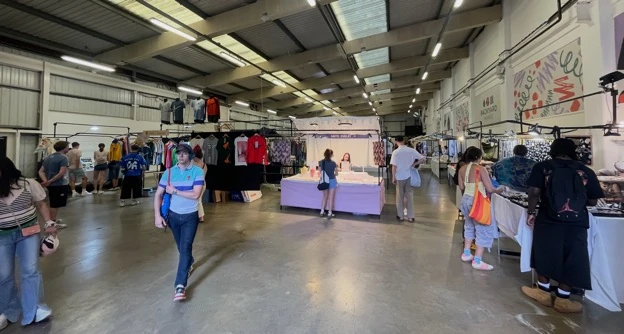
And you thought that was all of Brick Lane's art scene ... move a few steps away from UpMarket and you see a sign beckoning you to the Backyard Market. Open only during the weekends, this is a place where you can find costume jewelry, funky t-shirts, bags, specialty teas and artwork.
And if you are wondering how you will wear that non clip-on fancy earring, worry no more, there is an ear piercing place just outside the Backyard Market.
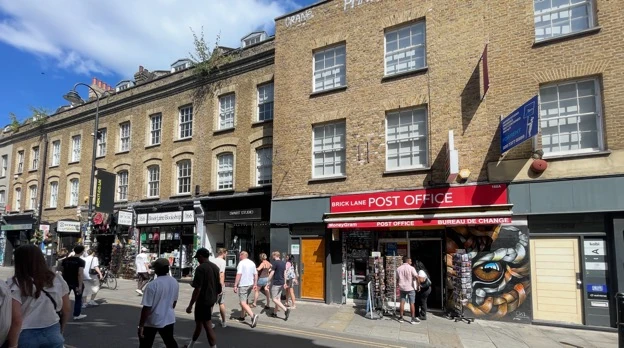
If you want to send a physical postcard during your travels, the Brick Lane Post Office is perhaps your only chance to send one to remind folks back home of the good old days of snail mail and messages that take a week to reach. Pop into the Brick Lane Book Shop and you can see a curated collection of books that remind you that you are near the area where Jack the Ripper used to prowl for unsuspecting victims. Staring in your face as soon as you enter the shop is The Five: The Untold Lives of the Women Killed by Jack the Ripper - a Sunday Times true crime bestseller. This is better than any Crime Junkie podcast. Feel the thrill and excitement of being in a place where murders actually took place - you can even take a walking tour of the sites.
London's ethnic demographics is rapidly changing. In 1961 it was 97.7% white British. Within sixty years, although white British are still the largest ethnic group, they account for only 36.8% of the city's 9 million population. Brick Lane's predominantly Bangladeshi dominance is also evolving. Visitors from all over the world come here to take in the art scene as well as the ubiquitous variety of global Halal cuisine.
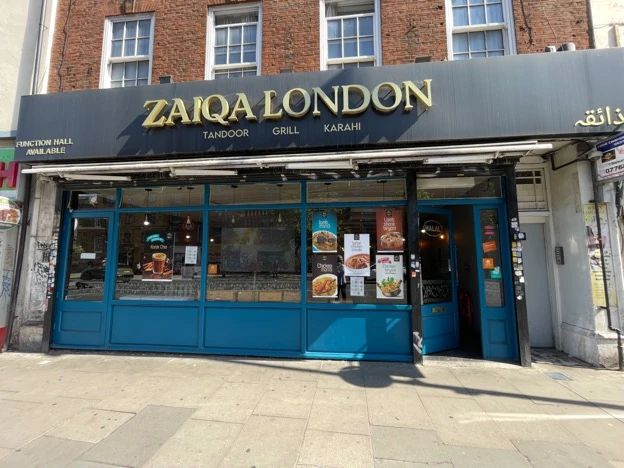
After a tour of the place if you feel like having a good biryani, head back to near the East London Mosque and pop into Zaiqa London - a wholesome eating place with biryani, mandi, paneer tikka, onion bhaji and Peshawari lamb karahi. Shows what you can pass off as "Halal Punjabi Cuisine" to unsuspecting tourists!
Coming out from Whitechapel station you feel like you are entering Bangladesh but the reality is different. There is plenty of global art and culture to imbibe and the cuisine you find in this part of town is truly all embracing ... and most restaurants have the familiar Arabic sign proudly claiming that they serve Halal food.
More Travel Stories
All travel stories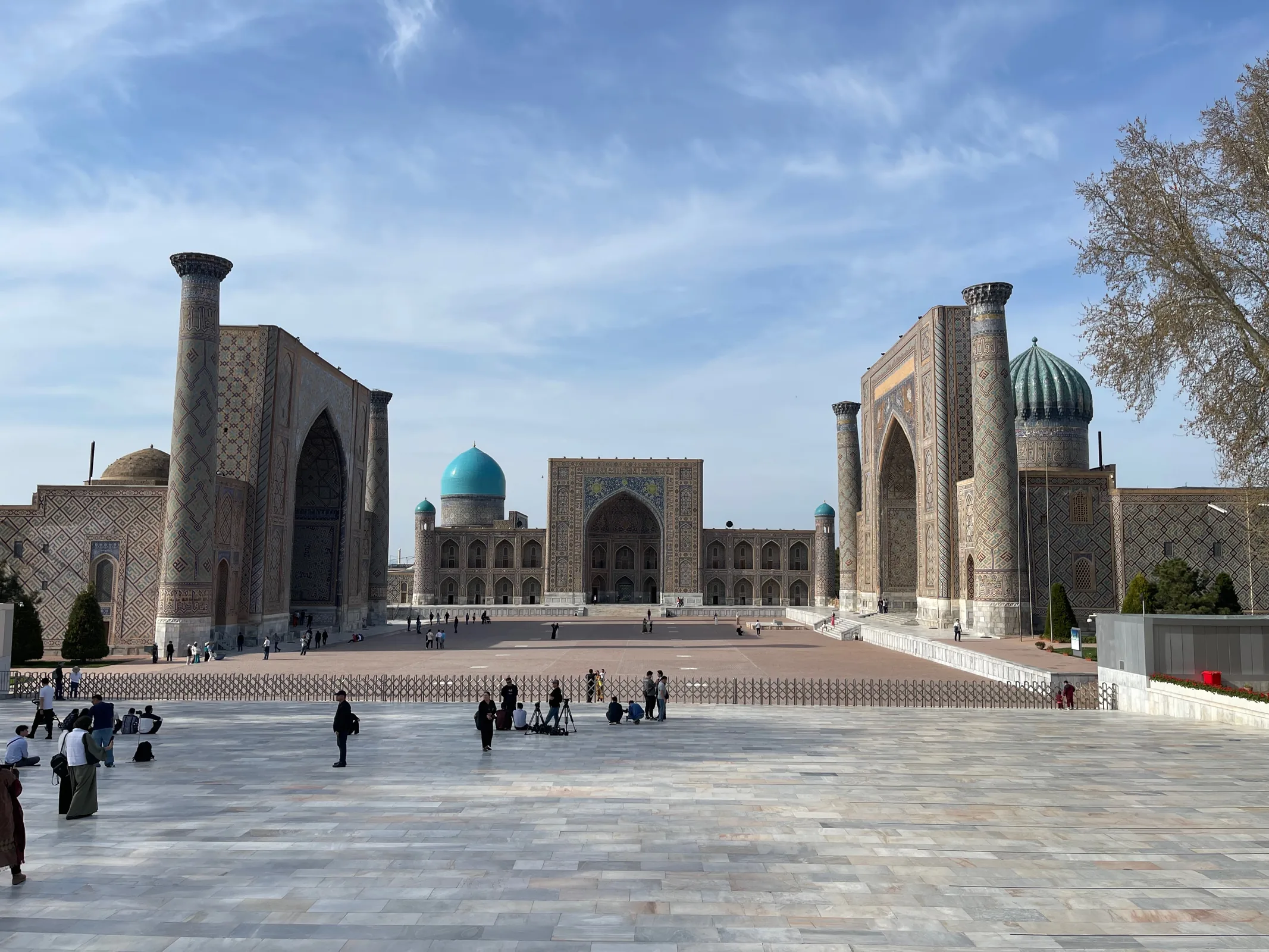
Travel Stories
Madrasahs of Registan Square, Samarkand, Uzbekistan
Samarkand, a city that lies at the heart of the ancient Silk Route is steeped in Islamic architecture. The three turquoise domed monuments to a gloried past in Registan Square are fascinating examples of a history that is being carefully restored to captivate the awe and admiration of tourists from around the world who are now discovering this ancient city of Uzbekistan.
Read story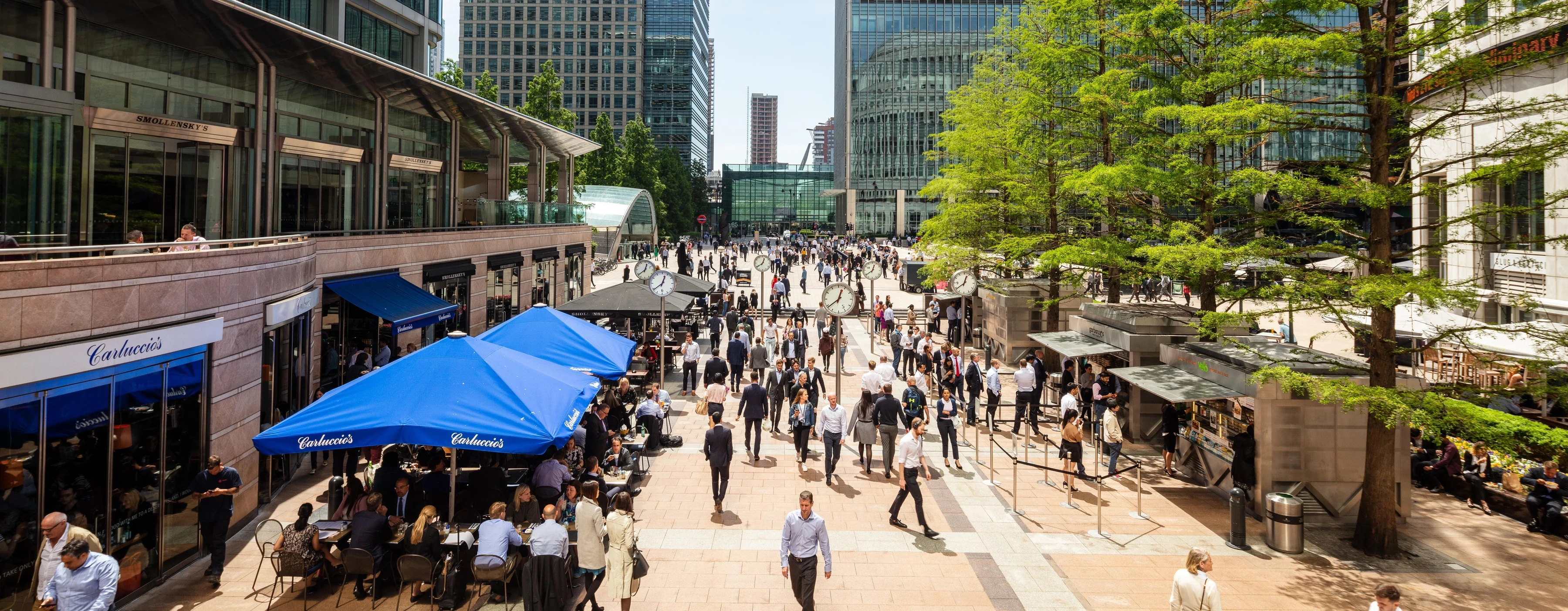
Travel Stories
Halal Restaurants near The House of Gods in London
A Muslim travel route through Canary Wharf, from halal food trucks and polished dine-in restaurants to Docklands Community Centre Masjid.
Read story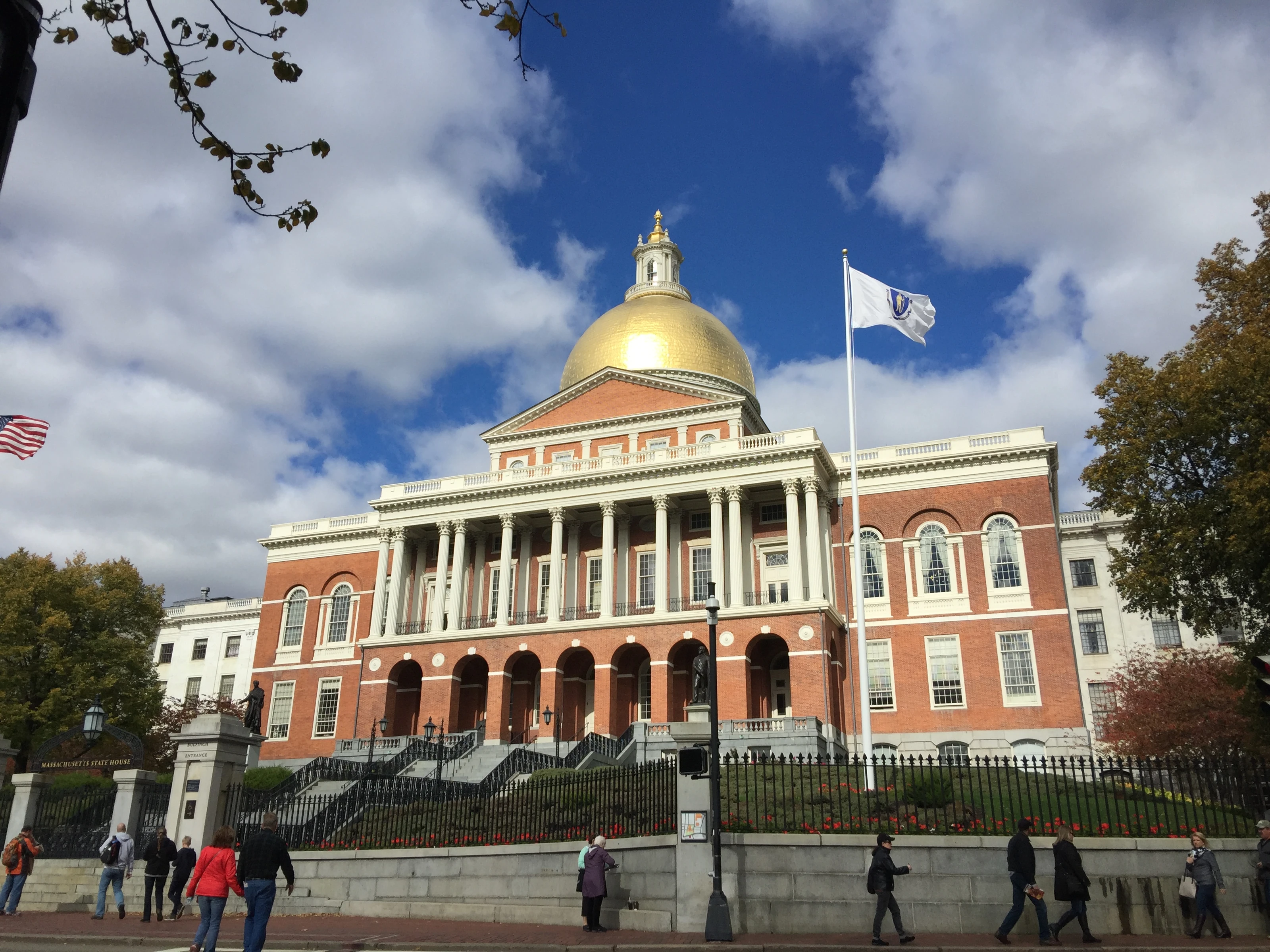
Travel Stories
FIFA World Cup Cities: Boston
The arrival of the FIFA World Cup 2026™ is a perfect opportunity for Boston's sports fans to show how their city revels in a championship contest.
Read story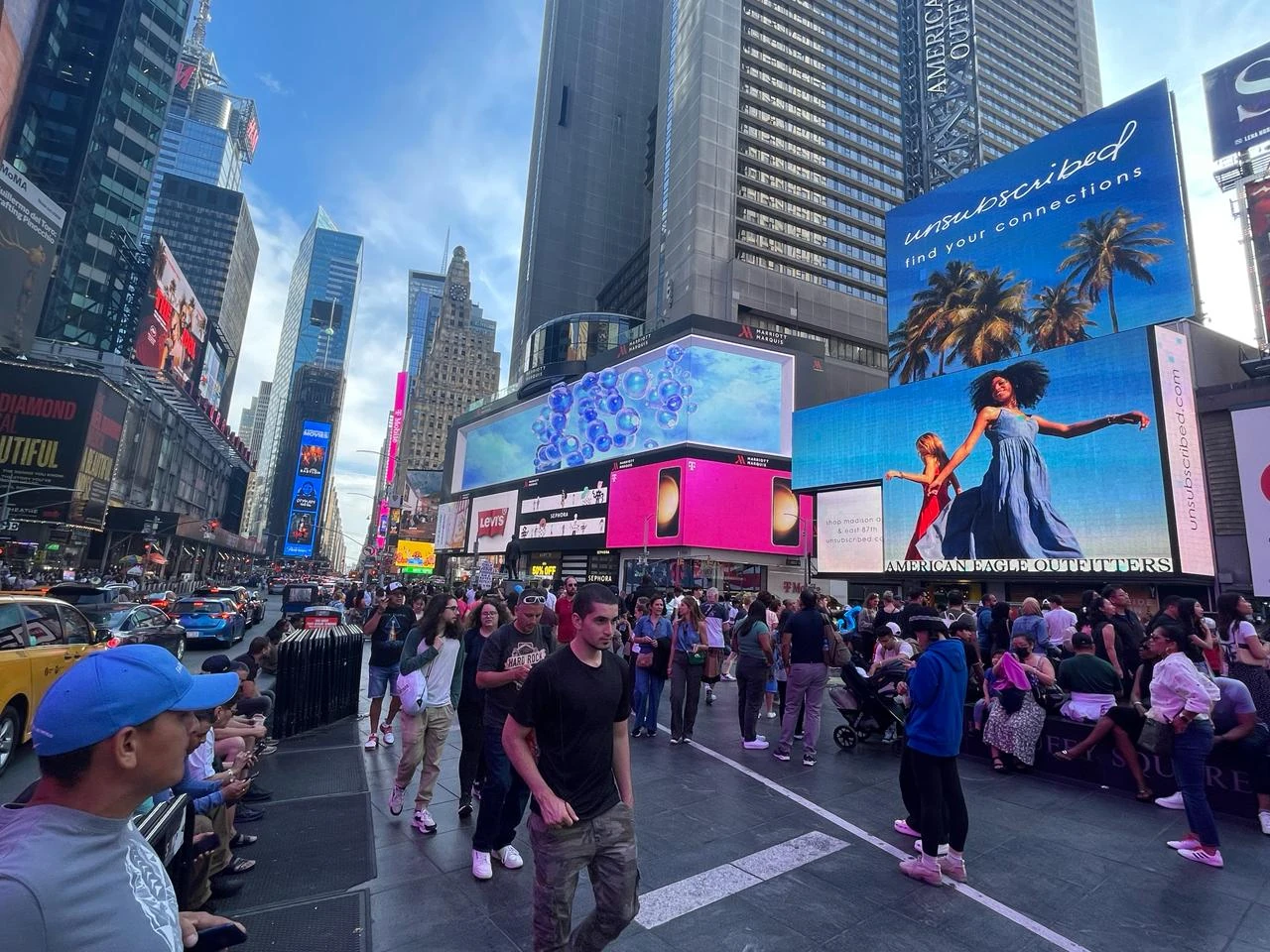
Travel Stories
FIFA World Cup 2026 Cities: New York
International fans visiting New York and New Jersey for the FIFA World Cup 2026™ are bound to find lots to do in addition to attending soccer games.
Read story