City Information
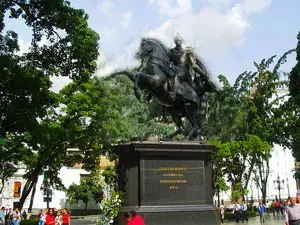
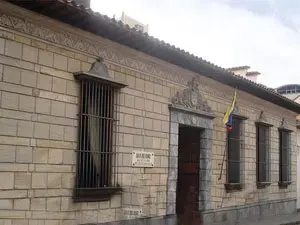
Caracas History Caracas during the Middle Ages was little more than a small village in a beautiful valley occupied by indigenous tribes. The towering Mount Avila to the north of the settlement created a natural barrier that protected the city from the Caribbean Sea. Hence it remained out of sight from the prying eyes of the European navies that sailed along the coasts of the region on the lookout for local towns to plunder and add as colonies to their respective crowns. However, this did not hinder interaction between merchant navies and the locals. Traders often frequented the village for its rich cocoa, medicinal herbs, and other local products. In 1562, Francisco Fajardo, a sailor of Spanish-Guaiqueri origin who had established several small settlements along the South American coast, tried to set up agricultural plantations for the crown in the region. This was instantly seen as a possible means of invading local traditions of farming, and the estate was soon destroyed by the locals. Some little skirmishes followed afterwards, but on 25th July 1967, the Spanish Captain Diego de Losada established the city as a territory under the Spanish crown. It was named as Santiago de León de Caracas. Formal city planning rapidly came into play as the Spanish moved in. By 1578, the city was centered on a public piazza, surrounded by 24 equal quadrilaterals. Linear streets were developed, covered by a layer of rounded cobblestones, and the first blends of Medieval European architecture with traditional construction materials of wood and adobe became evident. Private housing for the elite, complete with patios, arcades, and quarters for servants and horses, began springing up. Development then proceeded along the main east-west axis, which still forms the spine of the city’s networks today. In the 16th and 17th centuries, during the Golden Age of piracy, the city remained comparatively out of sight of marauding pirates and opportunist bounty hunters. Apart from an attack by English buccaneers in 1595, Caracas remained a fairly safe haven for traders and new settlers. For these reasons, and a steadily increasing cultivation of cocoa, Caracas soon emerged as the capital city of the region in 1777. A major outbreak of smallpox quickly wiped out the native Indian population, decreasing the chances of a rebellion. However, there were still attempts to gain independence from the Spaniards. Manuel Gual and José María España assembled an organized army that was defeated on 13th July 1797. On 5th July 1811, following the ideals of the Wars of Independence in North America and the French Revolution, officials signed the Declaration of Independence that was to shape the future of Caracas. Caracas also gave birth to Simón Bolívar, who is regarded as a pioneer in the rebellions against the Spanish crown. He led the local population to a crucial victory against the aristocracy at the Battle of Carabobo, on 24th June 1821. Today, monuments, streets, and even the currency in Venezuela are named in his honor.
Read full article City Information
Exchange Rates The currency used is the Venezuela bolívar fuerte (VEF). This replaced the Venezuela Bolivar (VEB) with effect from 1st January 2008. This was due to unprecedented rises in inflation over the years. 1 VEF = 1000 VEB. The VEB, however, is obsolete currency. The banknotes used are in denominations of 2, 5, 10, 20, 50 and 100 bolívares. Coins are available in of 1, 5, 10, 12½, 25, 50 céntimos, and 1 bolívar denominations. The 1 céntimo coin is rarely used, as prices are usually calculated in 5 céntimos progressions. 1 VEF = 0.232558 U.S. dollars 1 U.S. dollar = 4.30000 VEF
Read full article City Information
Visa Information A passport that is valid for at least six months is needed when visiting Venezuela, even as a tourist. The visa process is generally hassle free, and takes around 2-3 weeks during the off-tourist season, that is the winter months. The embassy would provide the required forms and the guidelines to filling out these forms. There are several kinds of visas that can be issued. The most common one is a visit/tourist visa, valid for up to 90 days of stay, and for a single entry and exit only. The business visa however can be used for multiple exits and entries, and is also valid for 90 days. Student visas are dealt with on a case to case basis, depending on the kind of program and the institution. For acquiring a student visa, please consult the embassy in person. It is recommended that you have at least 2 unused pages of your passport remaining when you apply for a visa to Venezuela. Once in Venezuela, always be sure to carry your passport along with some other form of ID around, as you may be asked to produce these by officers of the law. There is no need to worry though, as this is normal procedure.
Read full article