City Information
Explore city history, fast facts, climate and practical visitor information for Maldives.
City Information
When to go
City Information
Public Holidays
Religious holidays vary annually in accordance to the lunar calendar.; 1 Jan New Year's Day.: 26 Feb National Day. -Mawlid al-Nabi (Birth of the Prophet). in Malé. 29 Mar The Day Maldives Embraced Islam. 26-27 Jul Independence Day. -Ramadan begins. Eid al-Fitr (Ramadan ends). 3 Nov Victory Day. -Hajj. 11 Nov Republic Day. -Eid al-Adha (Feast of the Sacrifice). -Islamic New Year.
Read full articleCity Information
Visa Information
No pre-arrival visa is required to enter Maldives. A 30 day free visa is issued on arrival for all nationalities, provided the following conditions are met (a) they possess a valid passport (with 6 months minimum validity) and (b) they have a valid ticket to continue the journey out of Maldives. Citizens of India, Pakistan, Bangladesh and Nepal are given a 90-day free visa. To stay longer visitors need to apply for a visa or leave the country when the 90 days are up, then return. Visitors are officially supposed to show US$30 for every day’s stay though this is not usually enforced, and showing a credit card will usually placate concerns. However, if asked by immigration officials, one should know the name of the hotel where ones residing and be able to show a return air ticket out of the country. For further information, please contact Honorary Consulate of Maldives in UAE Office No. 13, Medina Road PO Box 5995 Zip code 21432 Jeddah Saudi Arabia (+966-2) 6608411, 6612151) (+966-2) 6611755) [email protected]
Read full articleCity Information
Fast Facts
Location: The Republic of Maldives, is an island country consisting of 26 atolls (or islands of coral and within these atolls are 1,192 islets, out of which only 200 are inhabited. It is geographically located at the south-west of Sri Lanka and it stretches out from India's Lakshadweep islands to Minicoy Island and the Chagos Archipelago. The Maldives is surrounded by the Indian Ocean. Capital: Male
Read full articleCity Information
Exchange Rates
Currency Maldivian Rufiya (MVR; symbol MRf) = 100 laari. Notes are in denominations of MRf500, 100, 50, 20, 10 and 5. Coins are in denominations of MRf2 and 1, and 50, 25, 10, 5, 2 and 1 laari. Currency Exchange Major currencies can be exchanged at banks, tourist resort islands, hotels and leading shops. Payments in hotels can be made in most hard currencies (particularly US Dollars) in cash, traveller's cheques or credit cards. Credit/Debit Cards and ATMs Most major island resorts, local and souvenir shops will accept American Express, Diners Club, MasterCard and Visa. Arrangements vary from each island. There are ATMs widely available Exchange Rate Indicators
Read full articleCity Information
Maldives Residents
Maldivians are friendly and extremely down to earth. Ethnically they are a mix of different descendants, and most trace their roots to the Sinhalese people who arrived first from Sri Lanka. Others are descendants of South Indian and Arab traders and sailors. Traits and customs prevalent also prove the fact that the Gujratis sailed from India during the Indus Valley period and settled in Maldives. Because of the country' s location on the main sea route on the Indian Ocean, it has been the meeting place for African, Arab, Malay and Indonesian mariners for a long period of time. In Male, most residents are the Giraavarus, who are considered to be descendents of the Tamils of South India and follow a unique set of customs and traditions, different from the rest of the Maldivian race. For instance, the women tie their hair into a neat bun on the right side unlike the rest of the country, who tie it on the left side.
Read full articleCity Information
Maldives today
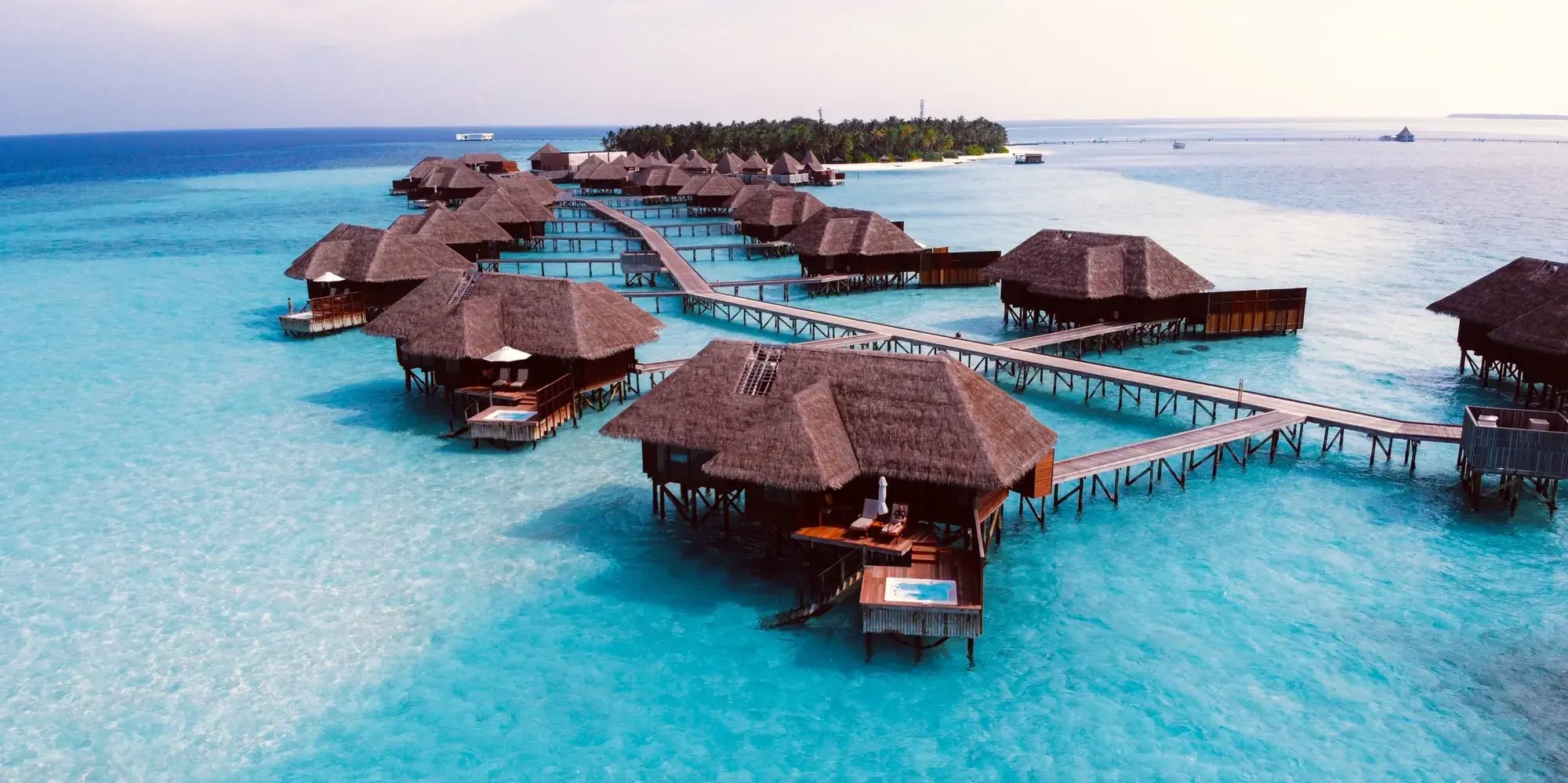
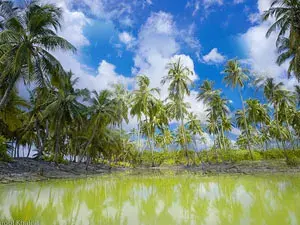
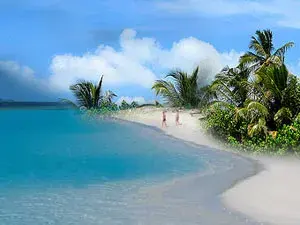
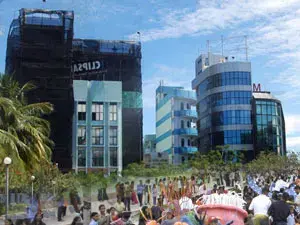
Maldives has been the most sought after beach holiday destination since it started concentrating on developing its resorts to boost tourism. Having suffered a series of natural disasters in the past few years, Maldives is currently enjoying incredible growth again. It has bounced back from major setbacks like the coral bleaching wrought by el Niño and the horror of the 2004 tsunami. With its beautiful white beaches, sapphire blue waters and friendly atmosphere, the country has become the epitome of paradise for honeymooners, sightseers and diving/surfing enthusiasts. Formed of 26 atolls, Maldives is a geological peculiarity nestled in the middle of the Indian Ocean. These atolls are a series of ancient coral reefs that grew up around the sides of towering prehistoric volcanoes. These immense structures have long since sunk into the ocean, leaving behind coral islands of incredible natural beauty. These islands are now being occupied by travelers seeking unmatched pampering and romance, from the modernity and hustle and bustle of Male’ to the tranquil ambience of the Southern Atolls.
Read full articleCity Information
Maldives History
The earliest settlers in The Republic of Maldives probably hailed from southern India and they were later followed by Indo-European speakers from Sri Lanka between the fourth and fifth centuries BC. In the 12th century AD, sailors from East Africa and other Arab countries discovered the islands and began settling there. As a result, Maldivian ethnic identity today is a mixture of these cultures, and this is reinforced by religion and language. The early history of the Maldives is unclear but a popular legend is that a Sinhalese prince named KoiMale was stranded with his bride, a Sri Lankan princess, in a Maldivian lagoon. He then decided to stay on to rule as the first sultan. The islands, over the centuries, have been occupied by sailors from countries on the Arabian Sea and the Indian Ocean littorals and the Islands development has been influenced by these cultures. The Portuguese arrived in the 16th century and subjugated and ruled the islands for 15 years (1558-73). They were driven away by the warrior-patriot Muhammad Thakurufar Al-Azam. The British ruled Maldives from 1887 to 1965 but essentially the country has been governed as an independent Islamic sultanate for most of its history from 1153 to 1968. In 1953, there was a brief, unsuccessful attempt at a republican form of government, after which the sultanate was re-imposed. After gaining independence from Britain in 1965, the sultanate continued to rule for another 3 years. On November 11, 1968, it was abolished and replaced by a republic, and the country adopted its present name.
Read full articleKeep exploring Maldives
More places in Maldives
Keep exploring Maldives and add more stops to your plan.
More restaurants in Maldives
Keep exploring Maldives and add more stops to your plan.


More hotels in Maldives
Keep exploring Maldives and add more stops to your plan.