Official currency: the Jordanian dinar. Subunit: the fils; one Jordanian dinar = 1.000 fils. Date introduced into circulation: 1 July 1950. Value when introduced into circulation: one Jordanian dinar = 2.80 US dollars (that is, one US dollar = 0.357 Jordanian dinar).
2009: 1 Jan New Year's Day. 9 Mar Mawlid al-Nabi (Birth of the Prophet). 10 Apr Good Friday. 13 Apr Easter Monday. 1 May Labour Day. 25 May Independence Day. 10 Jun Army Day. 20 Jul Prophet's Ascension. 22 Aug Ramadan begins. 20 Sep Eid al-Fitr (End of Ramadan). 27 Nov Eid al-Adha (Feast of the Sacrifice). 18 Dec Islamic New Year. 25 Dec Christmas.; 2010: 1 Jan New Year's Day. 26 Feb Mawlid al-Nabi (Birth of the Prophet). 2 Apr Good Friday. 5 Apr Easter Monday. 1 May Labour Day. 25 May Independence Day. 10 Jun Army Day. 9 Jul Prophet's Ascension. 11 Aug Ramadan begins. 10 Sep Eid al-Fitr (End of Ramadan). 16 Nov Eid al-Adha (Feast of the Sacrifice). 7 Dec Islamic New Year. 25 Dec Christmas. Note: Christmas and Easter holidays are only observed by Christian business establishments
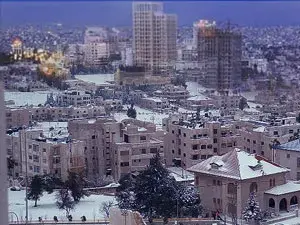
Winters in Amman can be quite unpleasant, with chilly temperatures and frequent rain (and even snow). When it rains, the roads are hazardous. Poor drainage turns sidewalks and roads into rivers. High temperatures generally range from 15C to 20C, but it feels colder.
Amman is very diverse as it is home to many Palestinian, Iraqi, Circassian, Armenian and many other ethnic groups. In less than a century, the population increased from 20,000 to more than 2 million people. Part of this increase is due to the massive amount of Palestinian and Iraqi refugees.
Amman has been settled for millenia. From the Chalcolithic Period (c. 4000 – 3000 BCE), Amman became the capital of the Ammonites as Rabbath-Ammon, which later fell to the Assyrians. During the Greek and Roman period, the city was renamed Philadelphia (the City of Brotherly Love) and became an important trading center.
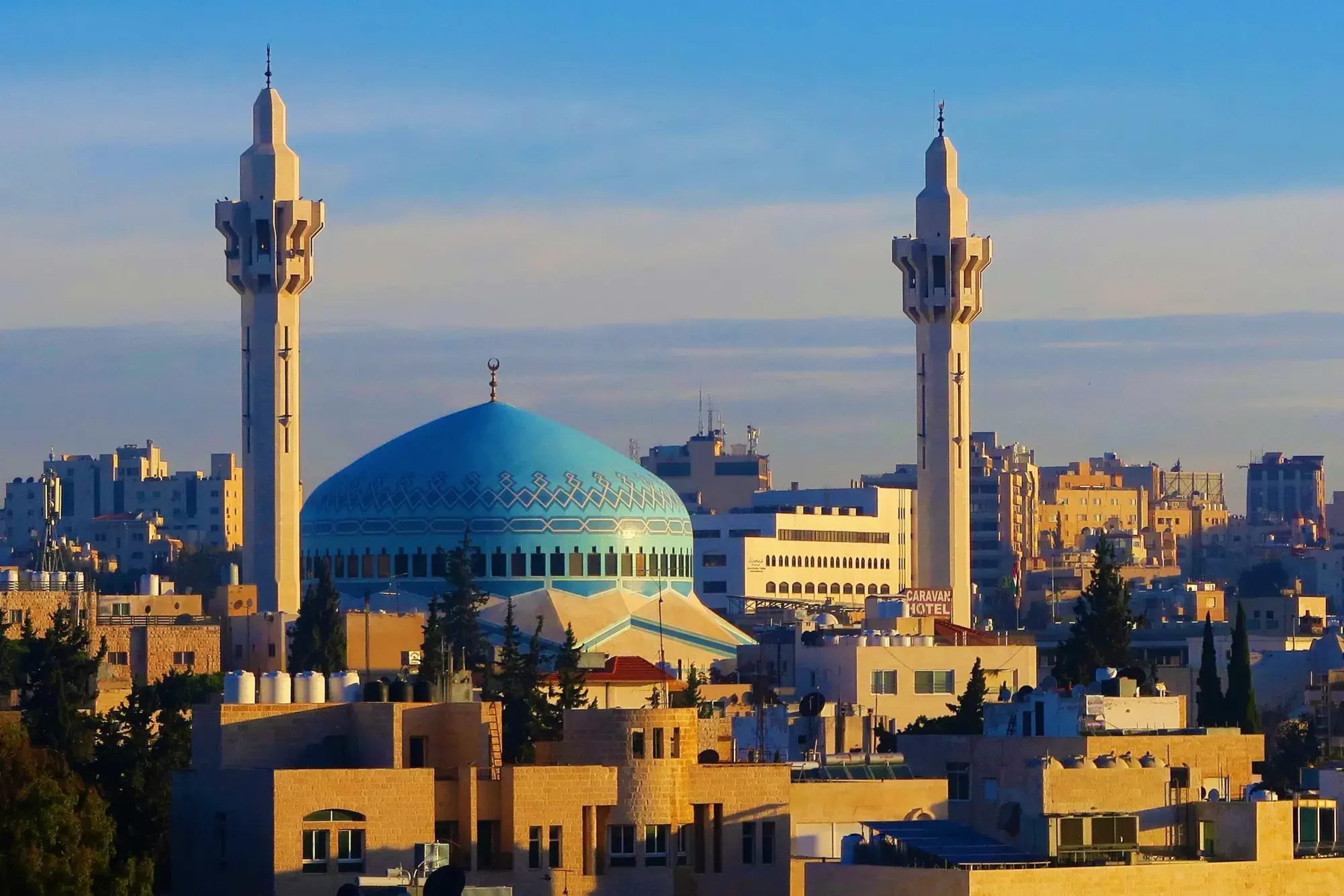
Modern Amman is an eclectic mix of the present and the past. It is one of the most modern and liberal cities in the Middle East, but you wouldn't know looking at the historic architecture. New skyscrapers are being built in Abdali in stark contrast to the low-rise sandstone apartment buildings that sprout from the hills.
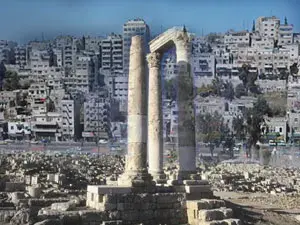
Start your day downtown at the Citadel. Walk amongst the ruins, specifically the Temple of Heracles and the Umayyad Palace. Check out the small but informative National Archaeology Museum to get some context. The views from the Citadel are spectacular. On a clear day, you can see the surrounding hills for miles, each covered in Amman's signature white-cube apartment blocks.
-Location:: Middle East Borders Syria, Saudi Arabia, the Red Sea, Palestine, Israel, and Iraq. Geographic co-ordinates: 29 - 34 00 N, 35 - 39 E; -Area:: total: 89,213 sq. km (34, 445 sq. miles) land: 88,884 sq. km (34, 318 sq. miles) water: 329 sq. km (127 sq. miles); -Dialing code:: +962 City/area codes are in use, e.g. (0)6 for Amman.
Jordan’s Ministry of Interior publishes nationality classifications and provides an electronic visa service. Check any prior-approval requirement before booking. If your residence permit may affect eligibility, verify the applicable route directly with the ministry.
Frequently asked questions
What are the top city information in Amman?
Featured highlights in Irhal’s Amman guide include Exchange Rates, Public Holidays, When to go, Amman Residents, Amman History.