Skip to content
Bahrain
Bahrain

City Information

Explore city history, fast facts, climate and practical visitor information for Bahrain.

9 results

City overview
Visa Information

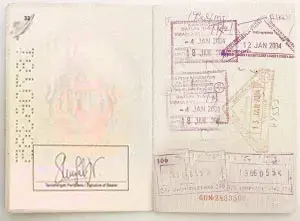
Applicants must have valid, up-to-date passports and a return or onward ticket. A visa fee of BD5 ($12) is charged and can be taken upon entry at the Bahrain International Airport. The visa may be a tourist visa,72-hour visa, 7-day visa, visit visa, business visa, family visa, dependent visa or an employment visa. The period of validity is stamped on the passport.
When to go

The best time to visit Bahrain is between November and March; when it’s not too hot. The summer months are not a good time to go to Bahrain as May-September is very hot and humid with the dry summer winds bringing sandstorms. Similarly, October-April is only just bearable.

Public Holidays

1 January- New Year’s Day; 1 May-Labour Day: 16 December- National Day 17 December- Accession Day 1 Moharram- Islamic New Year – December * 10 Moharram- Day of Ashura - December * 12 Rabi-ul-Awwal- Prophet Muhammad’s Birthday – March * 27 Rajab- Isra and Miraj – July * 1 Shawwal- Eid-ul-Fitr – September * 10 Zulhijjah- Eid-ul-Adha – November * * - Dates for these festivals are moveable as they are in accordance with the lunar calendar.

Bahrain Residents

Though the majority of the population is Muslim, other religions include Hinduism, Christianity and even Judaism because of a large incoming of immigrants and workers from non-Islamic countries; India, Philippines and Sri Lanka. Bahrainis are known for their tolerance and the country has transitioned into a cosmopolitan society with mixed communities. Two thirds of the population is made up of Arabs while the rest of the people are of Iranian descent as well as from South Asia and Southeast Asia. Expatriates make up 30% of the population.

Bahrain today

Bahrain has progressed into a cosmopolitan society of religions and communities. With the discovery of oil in 1932 rapid modernization occurred in Bahrain. Bahrain has the fastest growing and also the freest economy in all of the Middle East because of its oil and tourism. In March 1999, King Hamad ibn Isa Al Khalifah became head of state and introduced parliamentary elections, granted women the right to vote, and released all political prisoners. This was seen as a "historic period of human rights".The country officially became a kingdom in 2002.

Bahrain History

Bahrain’s rich history dates back from the early Dilmun period through the Islamic era. Archaeological evidence dating to 3000 B.C. shows that the Sumerians settled in the main island. In about 2000 B.C. it was known as Dilmun and served as a trading post on the course between the Indus valley and Mesopotamia (now Iraq). In 400 C.E. Bahrain was annexed by the Sassanian Empire. Bahrain was called by different names such as Awal, before Islam. In 629 C.E, Muslims conquered the region and ruled until the sixteenth century. In 1521, the Portuguese took control, using Bahrain as a military garrison until 1602, when the Persians took over. The ruler Ahmed Bin Khalifa took control from the Persians in 1783 and his descendants rule this country to date.