Why it is worth attending
Formal public Basant varies by permissions and safety rules, but schools, clubs and private venues often host spring gatherings.
Verified places close enough to combine into the same route.
You might also like
Keep exploring Karachi.
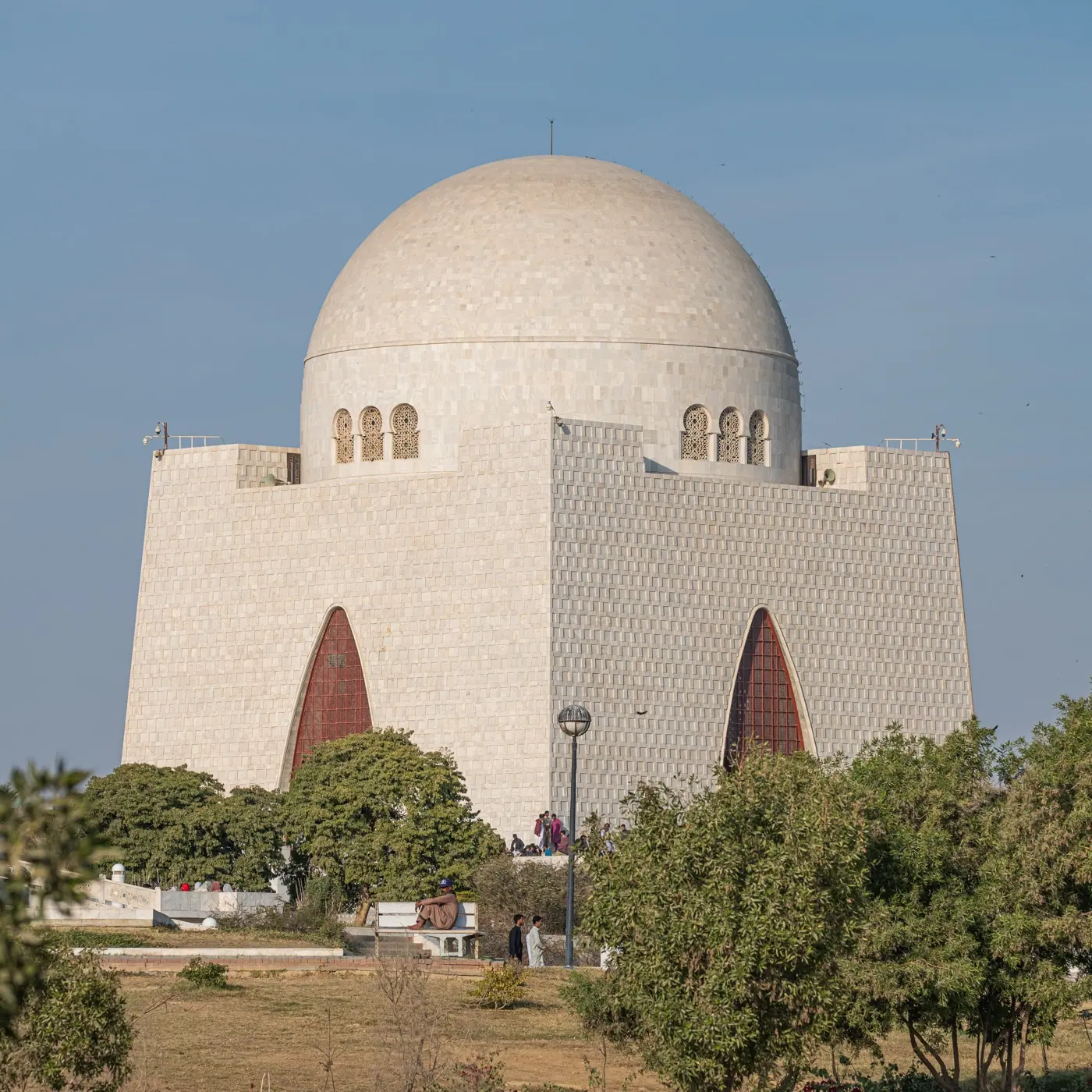
The most important festival of Pakistan, the National Day, stirs in every citizen’s heart a feeling of fierce patriotism and passion. It is marked with celebrations throughout the city. Typical sights include ornamentations on government buildings, functions in schools, patriotic concerts at popular youth hangouts, and silencer-less bikes speeding past you every five minutes, driven by some guy with a funky shirt, sunglasses, and a bandana made from the flag. The day begins with the national anthem being broadcast at 8:00 am live from the capital city of Islamabad. After the initial celebrations in the capital city, there is a special ceremony held at the Mazar-e-Quaid, usually presided over by the president of the country. Also present are prominent officials like the Prime Minister, provincial governor, and city mayor. There are unofficial food festivals held at the food streets in Karachi, and many popular food outlets usually come up with some ‘Azadi’ package, which offers discounts or new deals to customers. The city is decorated with buntings and flags, and once again the lights on the various government buildings throughout the city are a sight to cherish at night. A night-time visit to the KMC Building (M.A.Jinnah Road) and the Sindh Secratariat Buildings (Secratariat Road, off Frere Road) is recommended.
This is the most important religious festival in Karachi, and all throughout the Muslim world. After a month of fasting Muslims all around the world celebrate Eid. In Karachi Eid is marked with the special Eid prayers being offered in large open grounds throughout the city at times that are convenient to almost everyone, starting from 7:15 in the morning to around 10:30 am. This means that if you miss the Eid prayer at one location you are almost certain to find another one being offered a little later somewhere close by. The prayer grounds are filled with vendors selling balloons, toys, confectionaries, and other such stuff, to attract the small children who tag along with their fathers to attend the mass congregation. Also to be found are seemingly never-ending queues of beggars of every kind. Eid is usually a very family-oriented occasion. There are visits to relatives, neighbors, and friends, and this day is one of those few moments that you get to spend some quality time with people who deserve your love and attention. All major shopping centers and markets usually remain closed on the first day of Eid, and business activities resume after the 3rd day.
This event corresponds to the great sacrifice made by the Prophet Abraham to God. This is the most happening event of the Muslim year. It is marked with the sacrifice of livestock such as goats, cows, and camels. The meat obtained from the animal is divided into 3 parts: one is for personal consumption, one part is distributed amongst relatives and friends and the third is distributed among the poor. The events leading up to the big day are no less than a series of festivals. From the small grass and feed shops at every street corner to the large, sprawling cattle markets being set up on the outskirts of the city, the event is all about buying, feeding, and walking the animals that are to be slaughtered on the big day. As the day approaches, the amount of animals on the streets increases dramatically, and almost every street in the city can be seen teaming with cattle as though they were being bred in the very homes. The real fun is the night-time guarding of the animals. This has become an increasing concern after several events of cattle being stolen from the baraas they were kept in. Groups of young men set up small tents near large cattle baraas, with supplies for the night, including cups of tea, cigarettes, decks of cards, and of course motorbikes, to roam the city and keep watch. The activities on the actual day of Eid (10th Zil-Hajj) are limited to running after butchers to help get the animal slaughtered and dividing the meat according to the above-mentioned purposes. This continues for another two days, as the number of butchers in the city is too few to cope with the demand of the festival, and also because some people, according to various religious beliefs, prefer slaughtering their animals on the 2nd or 3rd day of Eid (11th or 12th Zil-Hajj). All camels are usually slaughtered on the third day and the whole neighborhood as well as people from nearby areas gather around to see the camel being sacrificed, as this is a sight they do not get to see very often.
This day is celebrated to mark the birth date of the Holy Prophet of Islam. It has become very popular in Karachi in recent years, and the preparations for the events themselves are a sight to behold. The major roads of the city are lit up with green lights right from the very beginning of the month. The most ornamentation is at the Numaish Roundabout, where large tents with heart-throbbing sound systems are set up on both sides of the wide road, playing Na’ats (songs in praise of the Prophet) all day long. On the 12th of Rabi-ul-Awwal there are processions along the M.A.Jinnah Road, the Golimaar-Lasbela-Gurumandar Road, and other prominent thoroughfares of the city. Thousands of people attend these processions, chanting religious anthems and slogans, and carrying large flags on high poles balanced by ropes held taut by energetic young men from all sides. There are large religious gatherings arranged at public parks throughout Karachi, but they are always a risky business. After the bomb blast at such a gathering at Nishtar Park, Saddar, just a few years back, these gatherings have raised questions about the security measures undertaken by the city government. It is therefore not advisable to attend such gatherings but to enjoy watching the sights from the safety of your balcony, or the television.
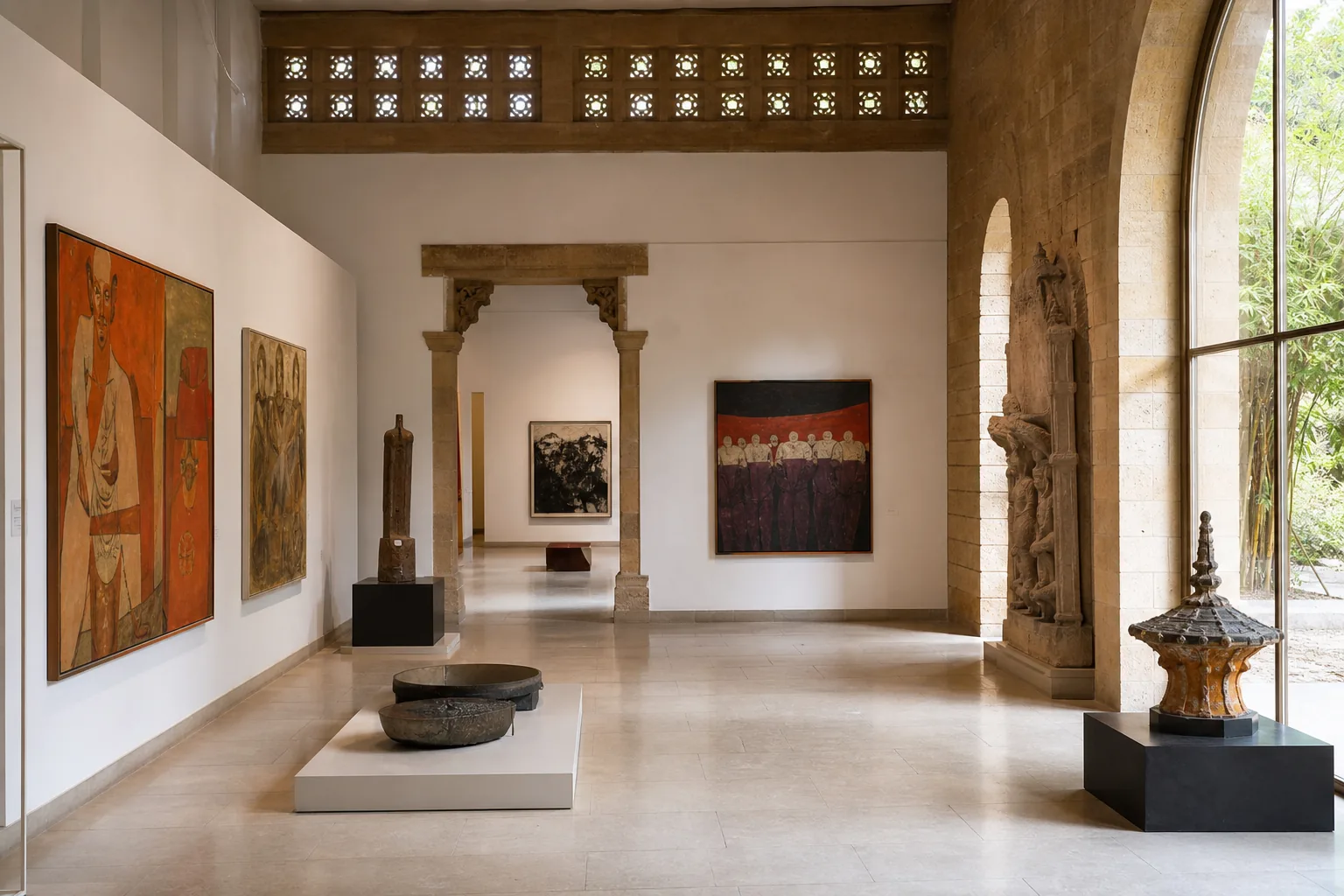
This is one place that holds regular artistic and linguistic performances, exhibitions, and gatherings. There are sure to be a few art exhibitions, Mushaairaas, or other linguistic activities going on at any time of the year. Entrance into the Arts Council is generally free, although some events may require an entrance fee or a special invite.
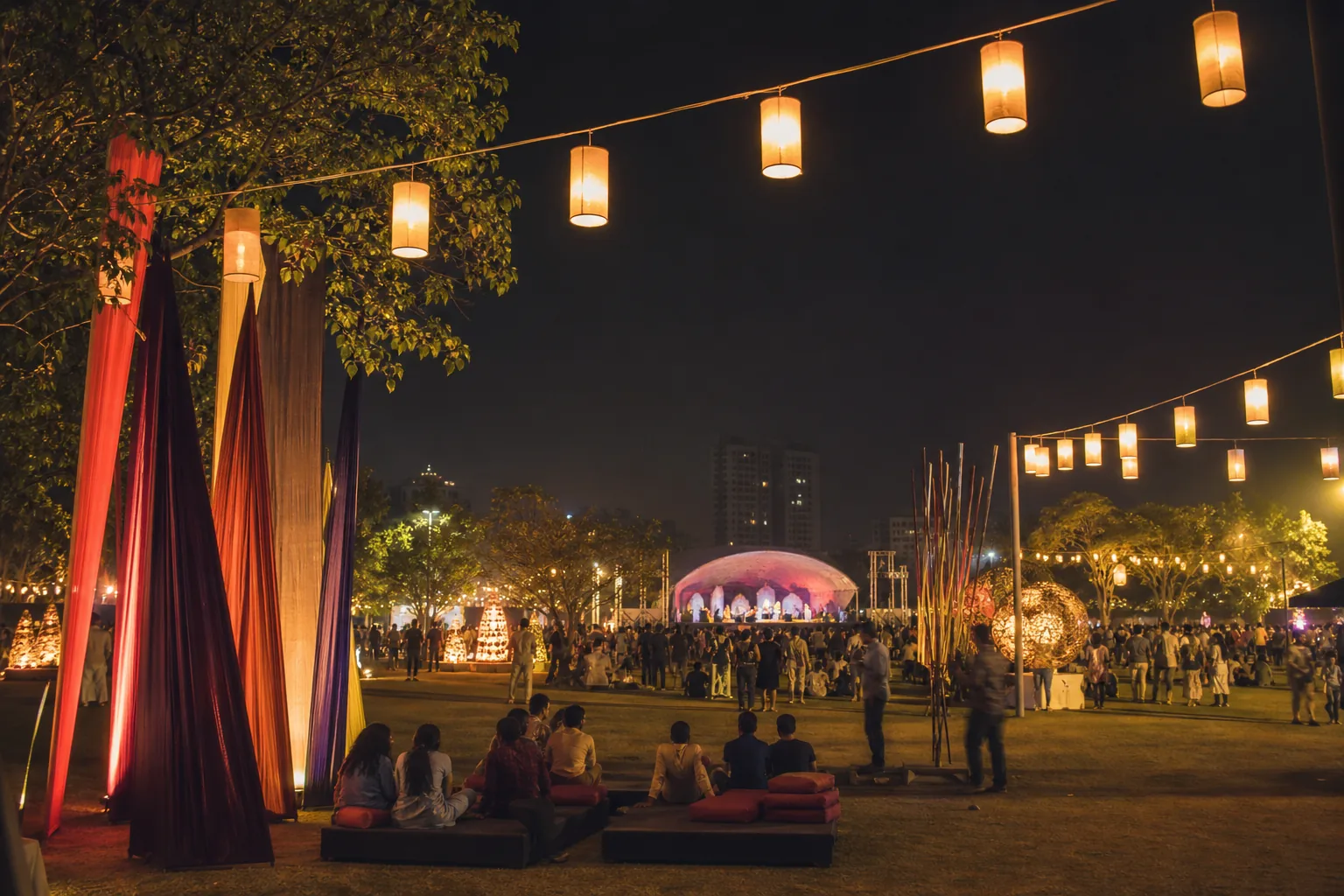
Karachi Biennale is periodic rather than annual; its 2024 edition ran in late October-November and the next announced cycle is for 2027. Use this month for art-season monitoring, not a fixed yearly listing.
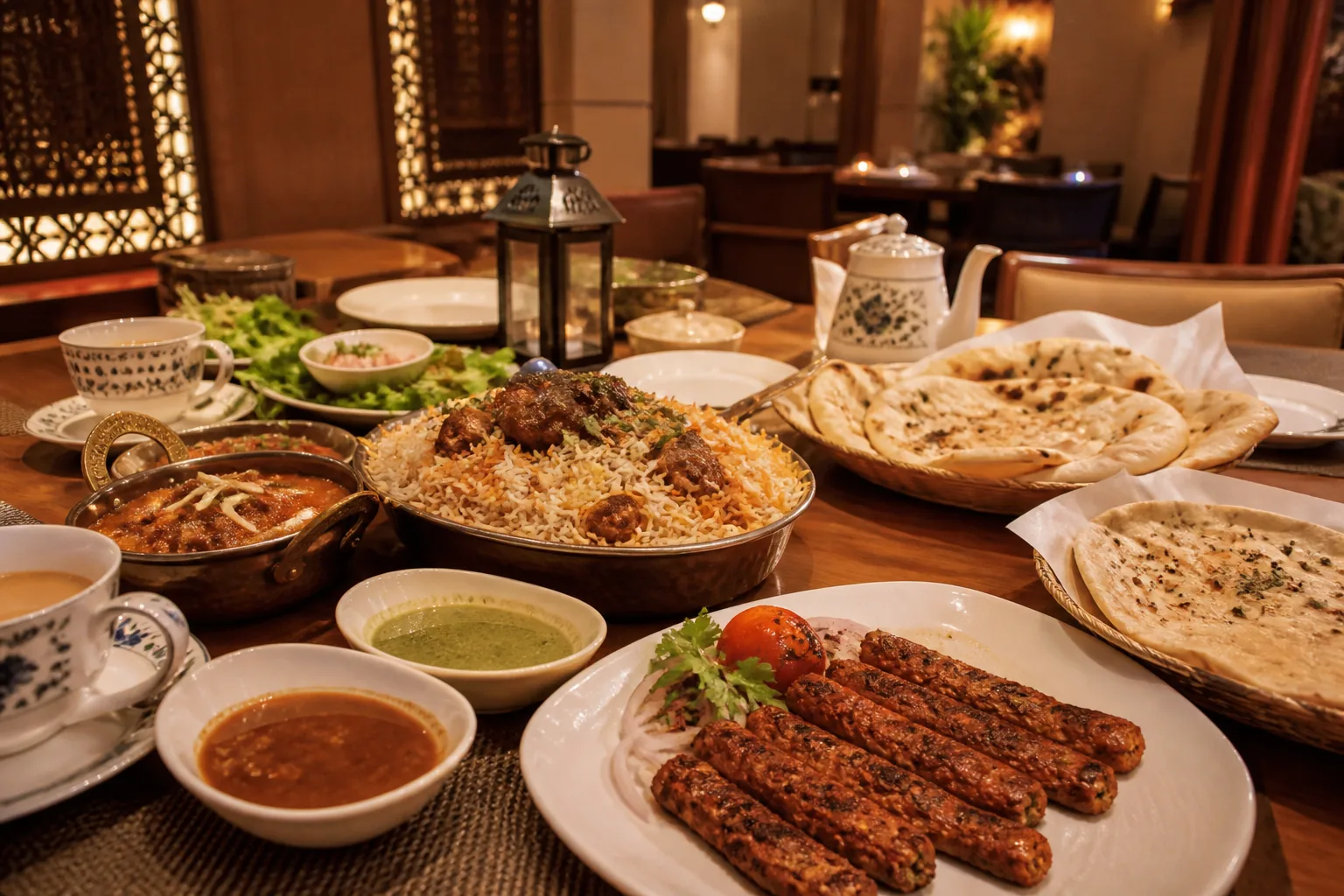
A major food festival usually staged in winter with restaurant stalls, pop-ups, music and large youth/family crowds. For 2026 it was promoted for 9-11 January at Bagh Ibn-e-Qasim; future dates must be checked before publishing.
Book, trade and lifestyle fairs commonly use Expo Centre Karachi in the cooler months. Confirm the year event calendar.
One of Pakistan most prominent literary gatherings, usually bringing writers, artists, publishers and readers to a central hotel venue. The 17th KLF ran 6-8 February 2026.
Not a festival month, but rain transforms travel planning. Street flooding can affect airport runs, old-city lanes and beach trips.
Keep exploring Karachi.
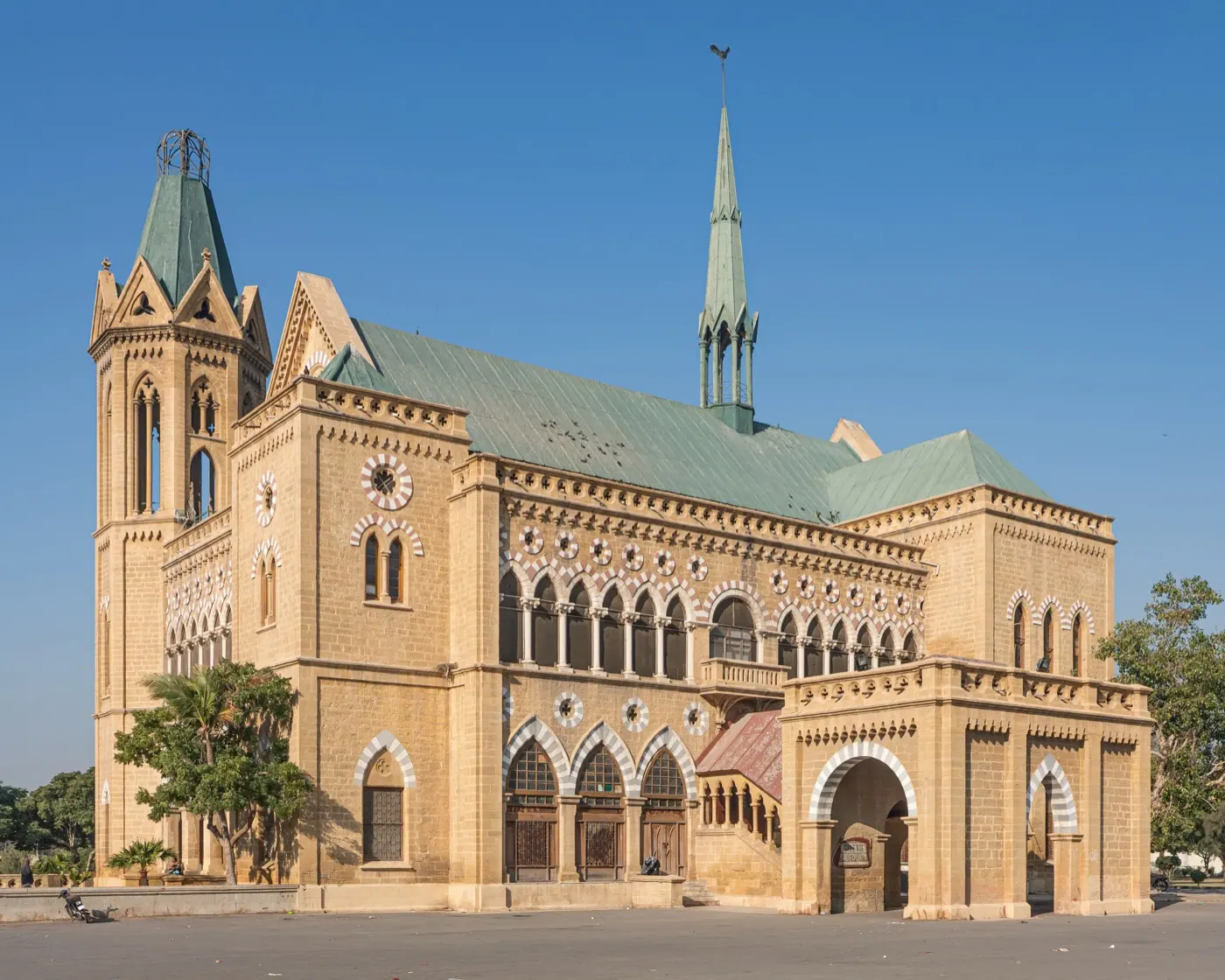
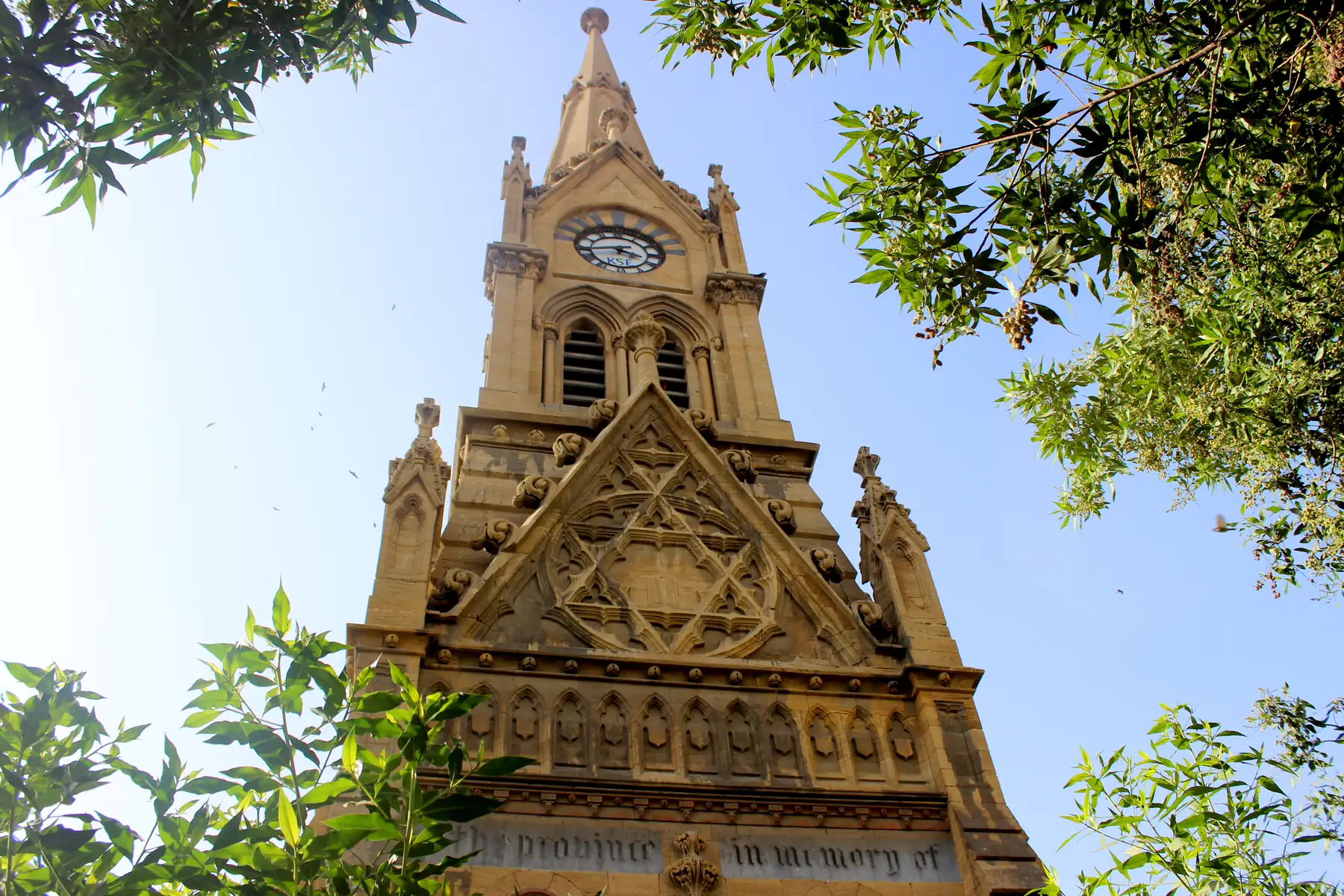
Historic Gothic Revival clock tower marking Karachi's old port-city gateway.
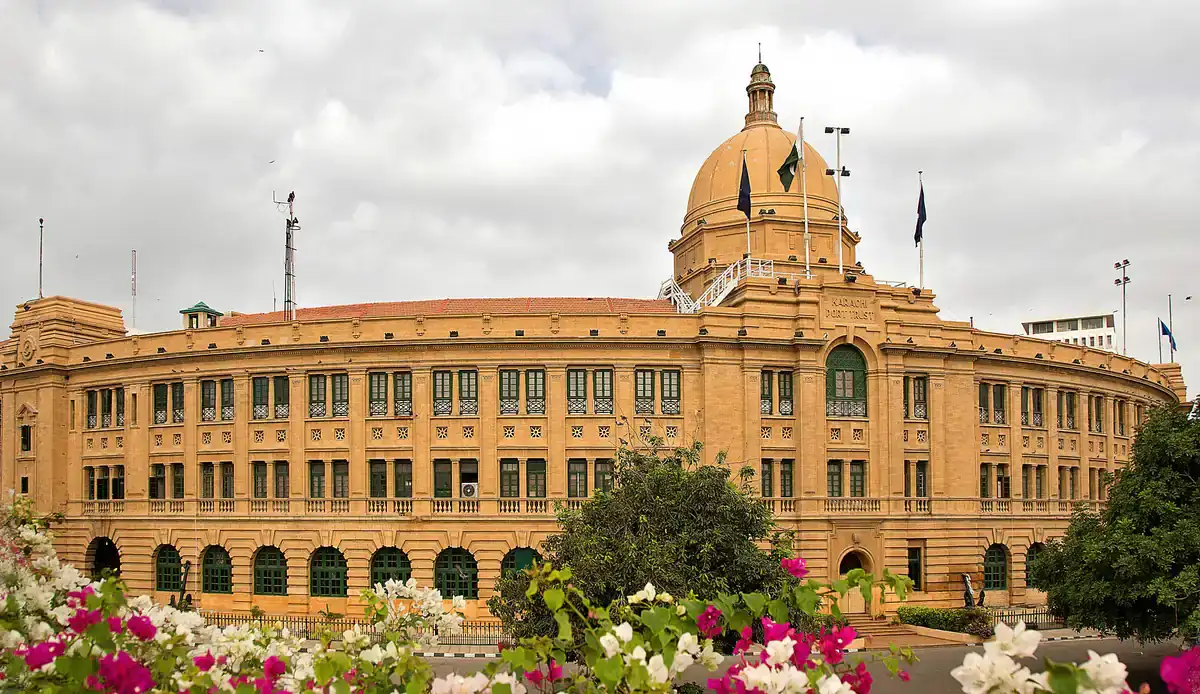
Historic port authority headquarters and colonial-era landmark near Karachi's harbor.
Keep exploring Karachi.