

Munich
Top places to visit
Discover places to visit in Munich. Open each guide entry to read more and plan your visit.
27 results
City overview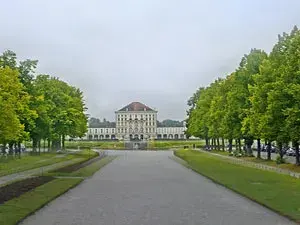
This was the Wittlesbachs summer residence. Elector Ferdinand Maria commissioned the building of the Palace in 1664. Its center is a small Italianate palace which the Electress Adelaide dedicated to the goddess Flora and her nymphs – which is where the palace’s name comes from.
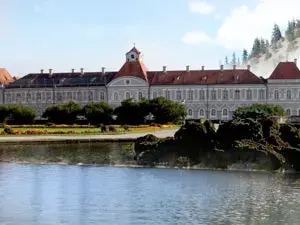
This museum is loacted to the south of the palace buildings and has state coaches, sleighs and riding equipment used by the Bavarian rulers on display. The coaches with their fine upholestry, sculpture, gilt ornamentation and paintings are real works of art. Among the main highlights are the magnificent vehicles that belonged to King Ludwig II.
The Palace Park covers an area of about 180 hectares. It was originally a Baroque garden which was transformed in the early 1800’s into a landscape garden. There are extensive grounds with lakes, streams and the famous pavillions, Amalienburg (a roccoco hunting lodge), Pagodenburg (which was used for the most exclusive parties thrown by the court), Badenburg (a small bathing palace) and Magdalenenklause (a place for religious retreat).
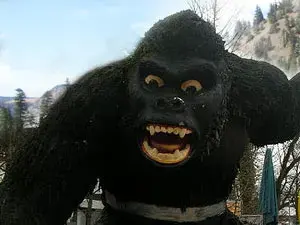
This film studio is Europe's largest film making center. Production began here in 1920. Directors such as Fassbinder, Wim Wenders, Herzog and Stanley Kubrickhave worked here. Tours take you through the sets of famous films such as Das Boot and The Neverending Story. There is also a live stunt show, as well as a 4-D film viewing that can be taken in during the visit.
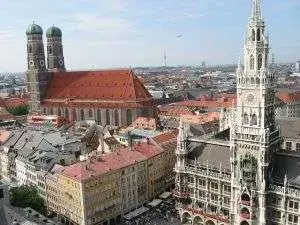
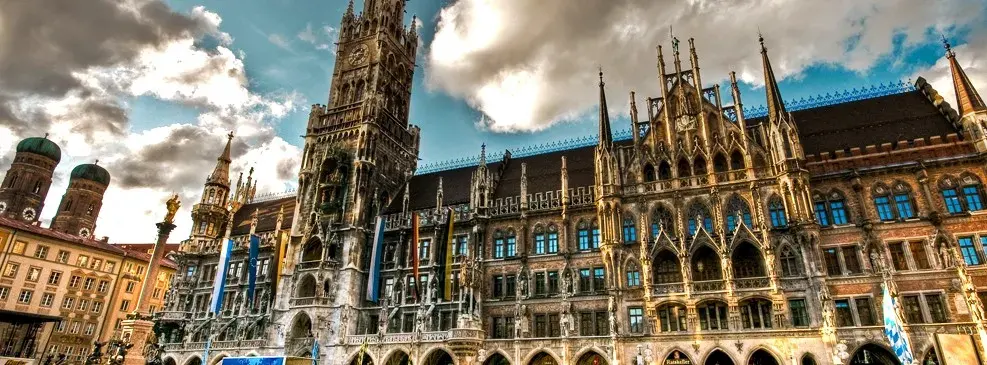
Marienplatz is the very heart of Munich and is always full of crowds who are being entertained by street performers and musicians. This square is dedicated to the patron of the city, whose golden statue stands on top of a huge column (the Mariensaule) in the center of the square. The city's most beautiful square, Odeonsplatz is located to the north. Travelling west from Odeonsplatz you will come to the wide shopping avenue, Briennerstrasse. This avenue will lead you to Konigsplatz, which is a large Grecian square. Located around this square are three classical buildings constructed by Ludwig I, namely, the Propylaen, the Glyptothek, and the Antikensammlungen.
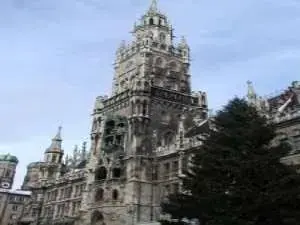
The New City Hall is a huge 19th century neo-Gothic building where every day at 1100 and 1200 hours, the glockenspiel on the frontage plays out a complex presentation which includes a miniature tournament, with copper figures moving in and out of the archways.
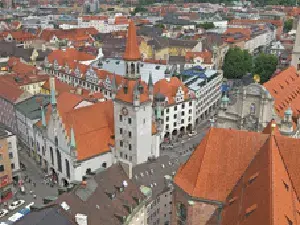
To the right of the New City Hall is the Old City Hall, which has been rebuilt after being destroyed in the war. It is built in the 15 th century style and now houses a vast toy collection in the Toy Museum.
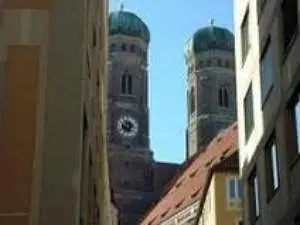
This church is one of the landmarks of Munich. It has a late Gothic nave from the 15th century and its interior is decorated with works of art spanning over five centuries.
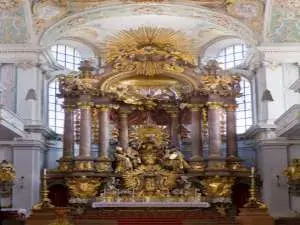
This is Munich's oldest church, built in 1180. The church also has a tall steeple that you can climb.
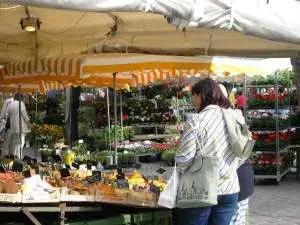
This is a huge open-air food market selling everything from wiesswurst and beer to fruit and vegetables.
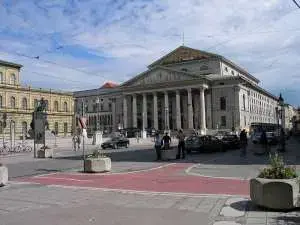
Munich's opera history began in 1651 and since then has seen performances, including thoseof Verdi, Cavalli, Mozart, Beethoven, Wagner and Strauss. These composers make up a great share of today's programs. The Bavarian State Opera presents over 350 performances a year.
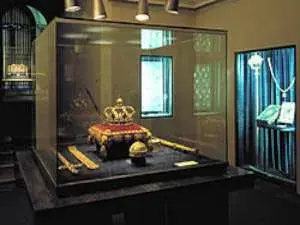
A separate ticket is needed to see the amazing treasures of the Schatzkammer. Founded in 1565, the Wittlesbach's treasury is on display in ten halls in the Konigsbau. The collected works are one of the most important of their kind with invaluable enamel, rock crystal and ivory work, crowns and royal insignia, religious art and unique goldsmith work from nine centuries.
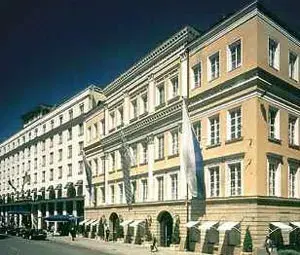
This is Munich’s biggest museum, located on an island in the River Isar. It covers every conceivable aspect of technical endeavour, from the first flint tools used to the research labs of modern industries.
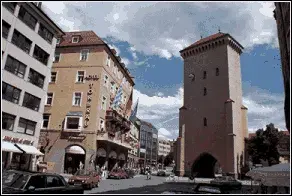
This gate located at Isartorplatz is one of the most well known landmarks of Munich. This tower was part of a wall that surrounded Munich and protected it from invaders.
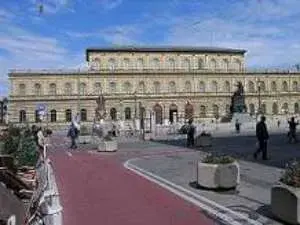
The Residenz was the palace of the Wittlebachs. It was first the political and cultural center of the first Dukes, then the Electors (from 1623) and finally the Kings of Bavaria (1806 – 1918). The various rulers furnished and extended the palace’s rooms to suit their personal tastes.
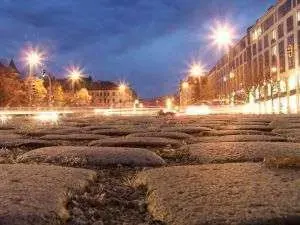
This is one of the largest galleries in Europe, housing the finest art. It contains more than 700 paintings from the golden ages of German, Flemish, Dutch, French, Italian and Spanish painting.
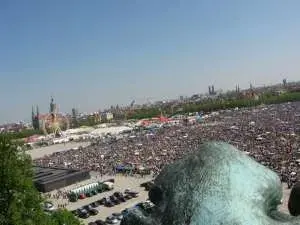
This gallery holds a collection of 19th century art. Here you can find paintings and sculptures from the Neoclassical and Romantic periods, as well as from the Impressionist movements. The museum was commissioned by King Ludwig I in 1853 as the first museum for contemporary art.
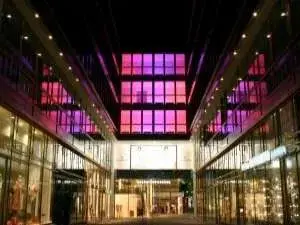
This gallery is a glass and concrete structure which is home to an impressive collection of 20th and 21st century art, ranging from Dali and Picasso to great German artists such as Beckman and Polke. There are also regular exhibitions on design, architecture and graphics, as well as temporary exhibits and events from various cultural areas.
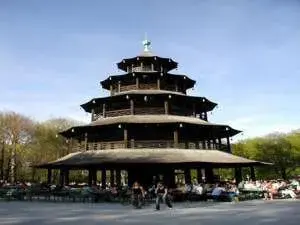
Schwabing is the upscale artistic and entertainment district of Munich. It was once home to communities of artists and bohemians. The area is now packed with well off young professionals. This is a trendy and yet charming neighborhood filled with small open-air cafes. It has all kinds of expensive stores ranging from shoe stores to bookstores. There are many superb restaurants, bars and exclusive clubs in the area as well.
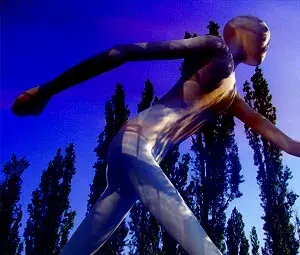
The Walking Man is a 17 metre high sculpture by the American artist Jonathan Borofsky, which stands on the street called Leopoldstrasse, in front of the Munich Re Group Building. The figure is seen taking an energetic step forward. Since its establishment in 1995, the Walking Man, a steel structure with fiber glass mats, has become an outstanding landmark of the city.
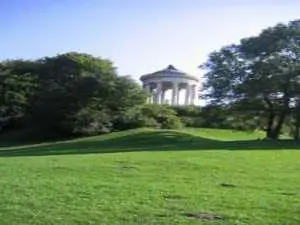
These gardens date back to 1789. Englischer Garten or the English Garden begins at the very center of Munich and continues north for 5 kilometers. The park is divided into two distinct sections and has the river Isar running through it. Here you can see all kinds of activities taking place, including joggers, cyclists, strollers, skateboard and roller blades, horse riders and even surfboarders taking advantage of the river currents under a bridge. In fact this bridge is always full of spectators watching the surfing below. Also scattered throughout the park are various beer halls
Olympia Park was built for the 1972 Olympic Games. It is crowned by the magnificent Olympic Stadium – once home of the German Sports Club, FC Bayern Munich, who have now moved to the Allianz Arena. Olympia Park is southern Germany's centre of sports and entertainment. As well as a variety of sports stadiums and swimming pools, the complex also includes a huge entertainment centre, the Olympiahalle which is the venue for concerts by artists such as U2. There are also tennis courts, a mini-putt course, and an ice sport center at the Olympic Park.
The Sea Life Aquarium covers an area of more than 2000 square meters and contains thirty aquariums. You can view this giant aquarium at two heights. Firstly it can be seen from underneath as you walk through a tunnel, with the aquarium above you, and then from the top level, where you can get eye to eye with all kinds of sea life including sharks.