Skip to content
Prague
Prague

Top places to visit

With its fascinating architecture, Prague can be thought of as an ancient place for children to be enthralled by and enjoy. Along with Prague Castle, there is its fascinating Toy Museum and Miniatures Museum (they are not allowed to touch the displays though). There are numerous toy shops dotted around the city which, when travelling by tram can be entertaining for children, along with the puppet theatres.
21 results

City overview
alt

With its fascinating architecture, Prague can be thought of as an ancient place for children to be enthralled by and enjoy. Along with Prague Castle, there is its fascinating Toy Museum and Miniatures Museum (they are not allowed to touch the displays though). There are numerous toy shops dotted around the city which, when travelling by tram can be entertaining for children, along with the puppet theatres.
alt

Pay homage to Prague’s most famous resident in this weird museum. Original documents and photos are exhibited in claustrophobic, strobe-lit sections and marvel at the writer’s complex relationship with Prague which is broached within a trippy short movie.

alt

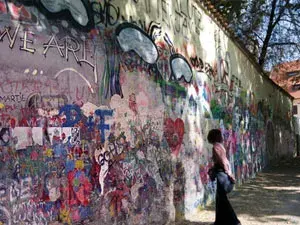
Rebels against communist Czechoslovakia praised Western rock musicians such as John Lennon and when he died in 1980 this wall was painted in his honor; repainted again and again every time the secret police white-washed it. Today it stands proudly though a bit graffiti splattered.

alt

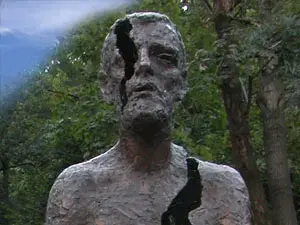
A prominent sculpture that has male figures at various stages of aridness descending a staircase; a line runs down the centre counts the victims of torture, exile and death which is quite sobering.

alt

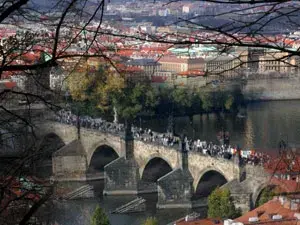
The most popular walkway across the Vltava River that connects Mala Strana and Stare Mesto, the Charles Bridge is over 650 years old. However, a 100 million Kč renovation that began in 2007 and was due to end by 2008 stretched into 2009 so it may still be a bit crowded with sections being roped off to the public. If you rub the bronze plaque beneath the statue of St John, you will return to Prague.

alt

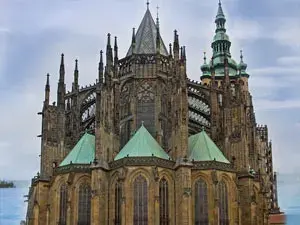
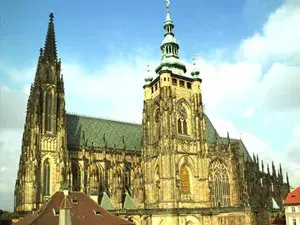
If you must see one part of Prague Castle then make it St Vitus Cathedral. Its construction began in 1344 and despite it is very Gothic in appearance it was only completed in 1929. Passing through the Golden Gate doorway adorned with its 14th century Mosaic of the Last Judgement, you’ll be given a brochure of highlights to visit. One of these is the view of Prague from the 96m tall Great Tower and the silver tomb of St John of Nepomuk. The ornate Chapel of St Wenceslas however has a special significance. On the southern side of the chapel there is a little door with seven locks, each key needed to unlock this door is in the safekeeping of a separate official. What lies behind the door? The Czech crown jewels which are rarely shown to the public; the oldest of which is a 22-carat gold St Wenceslas Crown made for Charles IV in 1347. The crown does come with a curse however: any usurper who wears it is doomed to die within the year. Admission prices: the nave and chapels are free but a ticket is required for the rest.

alt

You cannot visit Prague without visiting its most famous landmark. Founded in the 9th century by Prince Bořivoj of the Premysl dynasty, the castle grew arbitrarily as subsequent rulers made new additions. All Czech rulers have had their residences at the castle except for the country’s first post-communist president who preferred the comforts of his own home. The castle now stands at almost seven football fields long, proceeding east to west through three courtyards. The information, while detailed, gives a basic overview of the opening hours and admission prices; see the castle website for a more information.

alt

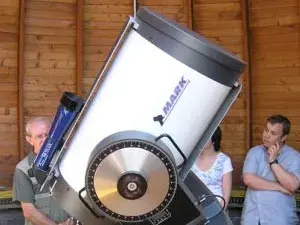
While you can walk up this lookout from different routes the best way is to take the funicular railway from Ujezd. Services leave every 15 to 20 minutes and ordinary public transport tickets are valid. Some of the best views of Prague are from this lookout, which has 299 steps and was built in 1891 for the Prague Exposition. Here you’ll find a nearby mirror maze and other attractions from the late 19th to early 20th century. There is also an Observatory but opening times vary according to the season; check the website www.observatory.cz for details.

alt

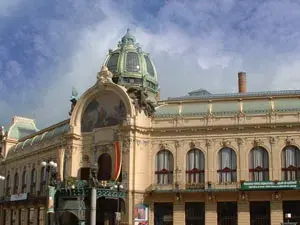
Full of Czech symbolism, this building is Art Nouveau homage to nationalism. There is a mosaic called Homage to Prague above the entrance which represents the oppression and resurrection of the Czech people. There is a cafe; concerts are held in Smetana Hall and tours.

alt

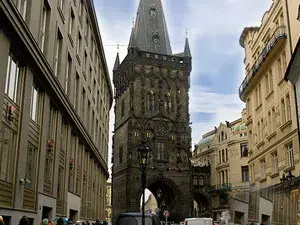
Standing at 65m over one of the Old Town’s original gates, this used to be an 18th century gun powder store.

alt

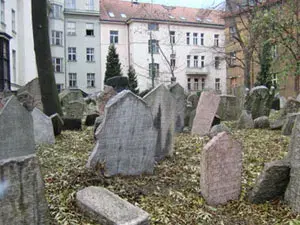
The cemetery is like no other on earth: over 100,000 bodies are packed into this space the size of five suburban gardens with 12,000 gravestones crookedly lining the narrow paths. To enter you must buy a ticket to the museum which comprises of six establishments: the Pinkas, Maisel and Spanish Synagogues, the Klaus Synagogue and Ceremonial Hall and of course the cemetery.

alt

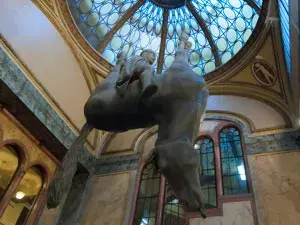
A 1920s Art Nouveau shopping arcade that runs below the Lucerna Palace this place has a cafe and club but the biggest sight here is a quirky sculpture by renowned artist David Cerny. If you want to see his sculpture, just look up: it is hanging from the atrium, depicting King Wenceslas astride the belly of a dead, upside down horse.

alt

See how Prague looked before the walls were pulled down and St Vitus Cathedral was completed take a look at this museum. The biggest attraction is a model of the city circa the 19th century city but there are other displays that show how Prague looked from prehistoric times to the 20th century.

alt

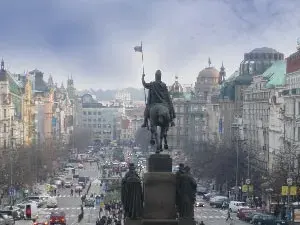
It’s easy to be put off by this square with its drunken stag parties, drug dealers, pickpockets and brash advertising on old buildings. However still take a look as this place is the central area of Czech history, a gathering place for demonstrators and proud Czechs; also check out Wenceslas Statue at the southern end and the Memorial to the Victims of Communism is nearby.

alt

The grave of Franz Kafka is the most visited site here; turn right a row 21 then left at the wall until you come to the end of the section. Worshippers commemorate Kafka’s death on June 3rd.

alt

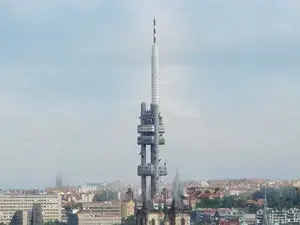
Opinions are divided over whether this tower is hideous or futuristic, especially with the babies crawling up the city’s tallest landmark. The lifts go up to a 93m observation deck and there is a restaurant on the 66 floor but it is overpriced. About the babies, originally designed by Prague’s artist of choice David Cerny during Prague’s reign the European City of Culture, the babies served as an art installation on the tower but when they came down at the end the resulting outcry resulted in them being re-installed – they should remain there until the end of 2010 at least.

alt

This park boasts some great views but there are also some interesting historical overtones to its huge concrete terrace. This terrace used to be home to the world’s largest statue of Stalin in the 1950s; it was blown up in 1962. Today skateboarders, a beer garden and a metronome symbolizing the passage of time are the highlights here.

alt

This building houses the National Gallery’s impressive collection of 19th, 20th, and 21st century Czech and European art. If you take the glass elevator to the 5th floor you can see the atrium displays. The 3rd floor is the most stunning however, displaying Czech cubist masterpieces and French impressionist works.

alt

Erected for the 1891 Jubilee Exhibition this wrought iron building which has a kitsch musical dancing fountain, the Krizikova Fountain (price is 200 Kč performances are hourly from 8-11pm in March through to October). The nearby Lapidarium stands 10 of the Charles Bridges original statues (adult/child 20/10 Kč noon – 6pm Tue to Fri, 10am to 6pm Sat & Sun). In February through to Easter the park becomes a fun fair.