Skip to content
Riyadh
Riyadh

Top places to visit

The National Museum and Riyadh Zoo are safe bets for enjoyable places to take children and the Desert Diamond hunt is family friendly, even if it does take an entire day. The Ice Skating center is also a great distraction for the children, especially since the center also contains tennis courts, a bowling alley, and a restaurant.

19 results

City overview
alt

The National Museum and Riyadh Zoo are safe bets for enjoyable places to take children and the Desert Diamond hunt is family friendly, even if it does take an entire day. The Ice Skating center is also a great distraction for the children, especially since the center also contains tennis courts, a bowling alley, and a restaurant.

alt

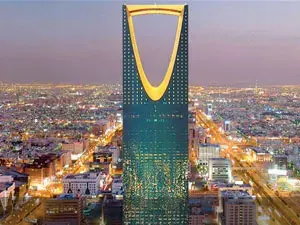
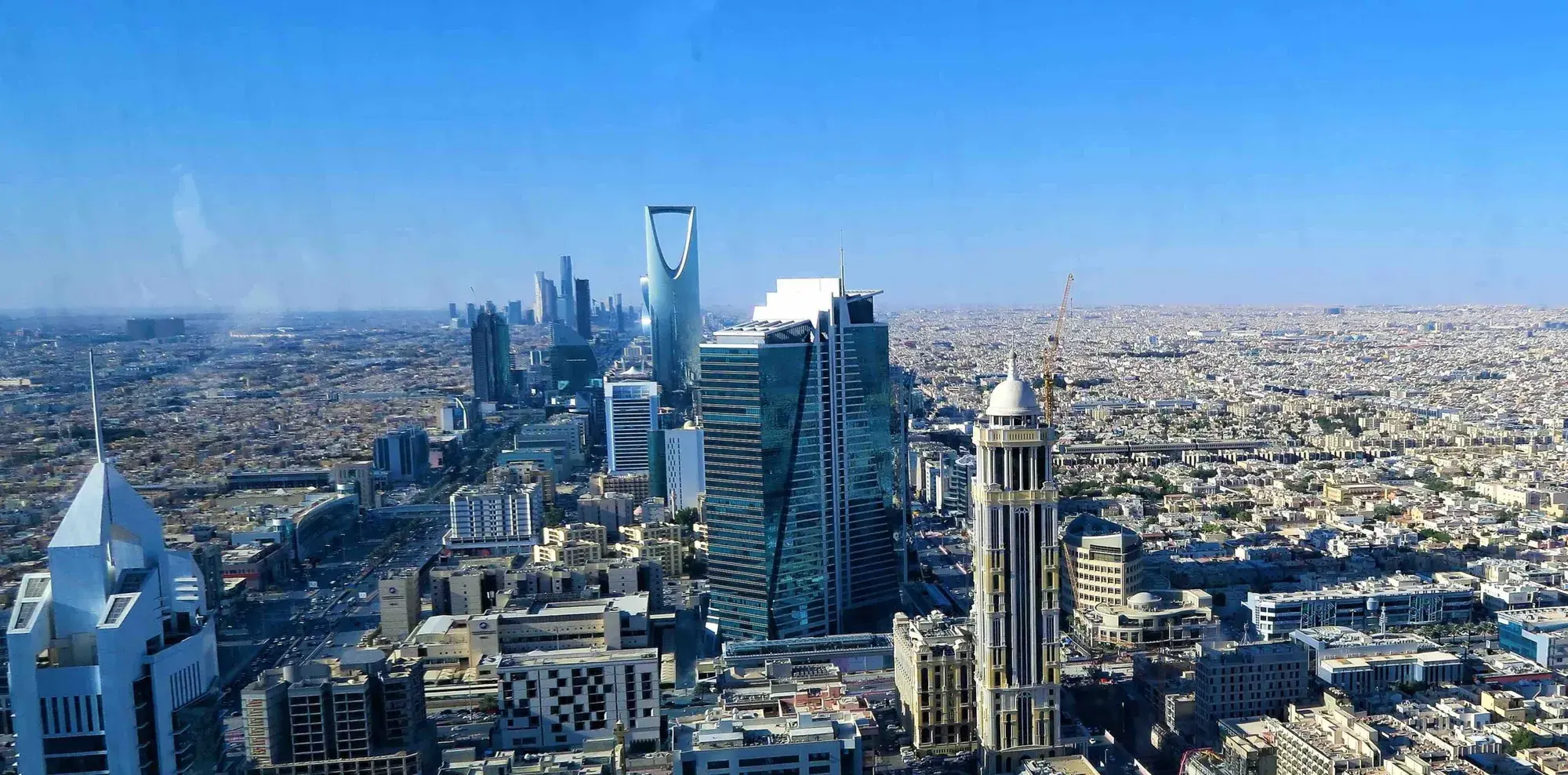
Kingdom Centre Daily 4-9 PM. Kingdom Center is situated in Al-Urubah Road between King Fahd Road and Olaya Road in the growing business district of Olaya. The Kingdom Center, opened in 2001, is currently the tallest building in Saudi Arabia with a height of 302 meters. It is Riyadh's most celebrated piece of modern architecture, and is quite a sight, especially when lit at night. The center is home to a pricey three-story shopping mall, with one floor reserved for women only, but its main highlight is the 99th-floor Sky bridge that connects the two top floors at a height of three hundred meters and gives a sublime view of the city. SR25 (Skybridge) The Kingdom Center was the winner of the 2002 Emporis Skyscraper Award selected as the "Best Skyscraper of the World for Design". A five-level shopping center, which also won a major design award, fills the east wing. The large opening is illuminated at night in continuously changing colors. Other neighborhood notables include Al Faisaliyah Center, the first skyscraper in Saudi Arabia, the King Faisal Foundation, an esteemed charity foundation, and Najd National Schools, one of the best and most prestigious schools in the country.

alt

The Diplomatic Quarter, or DQ as it is popularly known, is home to foreign embassies and international organizations, as well as residential structures and malls. With lush gardens and numerous sports facilities, it is also one of the city's greenest areas. It is especially known for its fine architecture, and is considered a model for other Islamic cities around the world. Despite its name, the special privileges offered in the Diplomatic Quarter constitute a controversial issue. All Saudi laws must be obeyed and there are occasional patrols by the Mutaween, or Saudi religious police. However, foreign diplomats and their families are allowed certain privileges and it is not uncommon to see foreign diplomats and their wives strolling on the streets of the DQ in shorts and short-sleeve shirts. The district is also generally more walking friendly.

alt

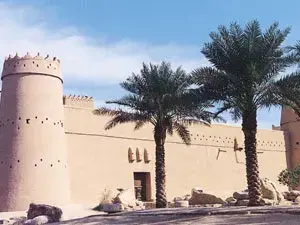
The heart of old Riyadh, this was the fortress stormed by King Abdul Aziz and his men in their daring conquest of Riyadh in 1902. It was completely renovated in 2008 and the historic mud brick structure now appears brand new, but the museum inside recreates the story of the raid and has some excellent photos of old Riyadh. It was originally built in the late 19th century and, as the Al-Musmak Fortress, was the main prize captured by King Abdul Aziz in 1902. It thus represents the birthplace of the modern day Kingdom of Saudi Arabia.

alt

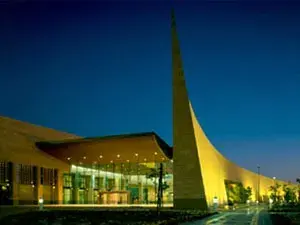
Opened in 1999, this museum is undoubtedly one of the top sites in Riyadh. The museum is infused with the latest technology and is very accessible to visitors, with almost everything available in English. There are a vast number of video presentations and mini-theatres for the dedicated museum enthusiast to spend an entire day doing virtual tours of Madain Salih or watching re-enactments of the Prophet Mohammed's battle of Medina. The Kiswah cloth that once covered the Ka’aba in Makkah is a main attraction. Note: Many cabbies will not recognize the English name, ask for the neighboring Murabba Palace (Qasr al-Murabba) instead. Ticket price: SR15. Open Su-Mo,We-Th 9-noon for men, 4:30-9 PM families; Tu 9-noon women only, 4:30-9 PM men; Fr 4:30-9 PM families; Saturday closed.

alt

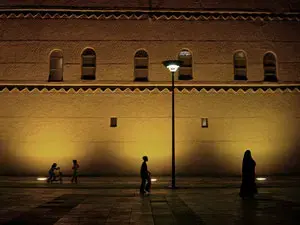
Murabba Palace (Qasr al-Murabba), (next to National Museum). (6-9 PM Sun-Fri). This is Riyadh's second old mud-brick palace, built by King Abdul Aziz after he conquered Masmak Fortress because he wanted a more strategically powerful fort. This two-story structure does have an intimidating look and feel to it, but permits are no longer needed to venture inside, where you can find interesting items including the first royal Rolls-Royce. Free.

alt

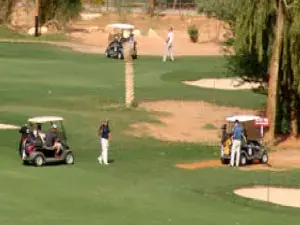
This attraction is a thirty minute drive west of Riyadh. It features a traditional country club layout with superb grassy greens; the last nine holes are even floodlit for night golf. The club also offers tennis, swimming, and horse-back riding activities as well.

alt

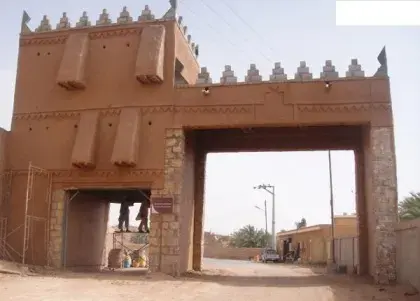
This is an impressive restoration of one of the nine city gates that led into the city until its walls were torn down in 1950. It is a quaint reminder of the city’s past.

alt

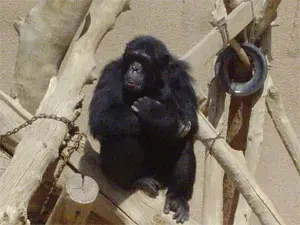
The park is located in the Malaz area, east of Al-Ahsa Street and North Street Musab bin Amir. The zoo is home to over 1,400 animals of 40 different species of animals and birds including reptiles, crocodiles, rhinoceros, snakes, gazelle, leopards, monkeys, lions, hyenas, vultures, kangaroos, seals and camels. Timings are 8:30 am – 12:00 PM and then 1:00 PM to Magrib Prayer (Sunset) Men are allowed on Monday, Wednesday and Friday and Women are allowed on Sunday, Tuesday and Thursday. Tickets are priced at SR 10.00 for adults, SR 5.00 for children and SR 2.00 for school trips.

alt

This commercial skyscraper is the second tallest building in Saudi Arabia (after the Kingdom Center) and is located in the business district of Riyadh. It contains a shopping center with international brands at its base and a viewing deck on higher floors, as well as a luxury hotel and numerous restaurants. The tower is most famous for the glass globe near its summit.

الافلاج

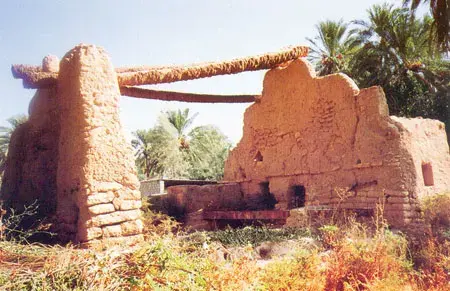
Al Aflaj lies southwest of the main Najd plateau, between the Tuwaiq mountain range to the west and the low outer escarpment of an extensive plain, about 312 km from Riyadh. One of its most important archaeological sites is Al Uyun, about 18 km from Layla. It contains a settlement covered with numerous pottery remains, a burial area and irrigation networks dating to the early Hellenistic period.

الدرعية

Located northwest of Riyadh on the western bank of Wadi Hanifah, Diriyah is an ancient historic town dating to the middle of the ninth Hijri century. Mani’ bin Rabi’ah Al Muraydi, a relative of Ibn Dir’, the ruler of Hajr Al Yamamah, founded Ghusaybah, Diriyah’s oldest neighbourhood. The town continued to grow and expand because of its important geographical position in the centre of the Arabian Peninsula. In the middle of the twelfth Hijri century, Imam Muhammad bin Abd Al Wahhab arrived in Diriyah and found in the Al Saud family, especially Imam Muhammad bin Saud, a strong supporter and ally for the call to reform and revival of the Prophetic Sunnah. Thus God willed Diriyah to become a centre of guidance and the starting point of a firmly established state.

قرية سدوس

Sadus, northwest of Riyadh, is one of the oldest human settlements in the central Arabian Peninsula. It was known as Al Qaryah and contained archaeological landmarks of great importance, perhaps foremost a striking obelisk with ancient inscriptions and writings confirming the town’s importance as an Arabian urban centre.

مسجد الإمام تركي

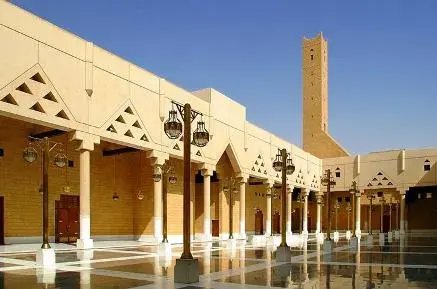
It was built on land called Al Naq’ah in central Riyadh, where Imam Turki bin Abdullah, may God have mercy on him, ordered a congregational mosque later named after him and appointed Sheikh Abd Al Rahman bin Hassan Al Al Sheikh to it. Its proximity to several neighbourhoods and Qasr Al Hukm was considered, and it was made an institution of learning in the manner of the First Saudi State. When Imam Turki prayed Friday prayers in the Grand Mosque, he customarily left through the door south of the mihrab. This door on the mosque’s qibla side was prepared for his entry and exit, avoiding the need for the imam to step over people in the many rows. These additions took place during his rule, before and through 1241 to 1249 AH (1826–1834). His son Imam Faisal bin Turki followed in 1259 AH, rebuilding the mosque and expanding it to the east and west. He introduced Islamic ornamentation into its courtyards that was then unknown in Najd, and installed an elevated passage between the mosque and Qasr Al Hukm. New water facilities were also added, and a long covered passage supported on columns connected the mosque to the palace. The traveller Palgrave described it as a large, flat-roofed parallelogram on square wooden pillars, accommodating more than two thousand worshippers at once, largely comprising an external courtyard with room for more than two thousand as well. It had no ornamentation or other aesthetic features, and had a short minaret on the roof directly above the mihrab. King Abdulaziz took an interest in the mosque, expanded it and linked it to Qasr Al Hukm by a bridge facilitating access at prayer times, especially Friday prayers, for the king, his entourage and his servants. He also installed lighting. King Saud continued to care for the mosque, enlarging its structure, ordering new carpets and lighting and greatly increasing its area by incorporating adjoining land. During those earlier royal periods, it was built with traditional materials of mud and dried mud bricks, with roofs of palm trunks and stone slabs. Care for the mosque continued under Kings Faisal and Khalid through modern construction.

www.wordpressmu-1028950-3627295.cloudwaysapps.com

Ushaiger lies in the Al Washm region, 210 km north of Riyadh. Administratively it belongs to Shaqra Governorate; Shaqra is its nearest city, about 15 km to its south. Ushaiger is an ancient historic town, home to the Banu Tamim tribe in the pre-Islamic era and inhabited in early Islam. It was mentioned by the poet Al Hutay’ah, who died in 45 AH. It is among the most famous towns of Najd in the medieval Islamic period, known for its many scholars and judges. The family of the reforming scholar Muhammad ibn Abd Al Wahhab, may God have mercy on him, came from it. In his book Scholars of Najd over Six Centuries, Sheikh Ibn Bassam considered it Najd’s foremost source of scholarship. Many families that spread throughout Najd and beyond trace their origins to it.

مرقب جبل منيخ

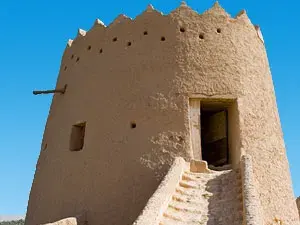
Munikh Fort is a castle built on a hill, Jabal Munikh, in the Sudair region, overlooking Al Majmaah from the west. On this hill stands Munikh Castle—pronounced with a damma on the m and a kasra on the n—west of the city. Its tower, the watchtower, is about eleven metres high, circular and conical, narrowing towards the top. It consists of two towers, one inside the other, with a spiral staircase between them. Its base is built of stone to a height of about two metres, above which the structure is made of mud bricks shaped in special moulds. South of this tower is another, smaller square tower, and a still smaller tower stands to the west. A wall of mud and stone surrounds the castle on the hill and connects to the wall that once enclosed the town. It was used for observation and defence and is now used to watch for floods and livestock. The tower and surrounding area have been comprehensively restored and provided with lighting, becoming a cultural and tourist landmark.

قرية الفاو

"Qaryah", as it was known in the past, or Al Faw in its local name, lies about 700 km southwest of Riyadh and about 150 km southeast of Al Khamasin in Wadi Al Dawasir. It overlooks the northwestern edge of the Empty Quarter, where Wadi Al Dawasir intersects the Tuwaiq mountain range at a gap in the mountain called Al Faw. It is on the ancient trade route known as the Najran–Gerrha road. The site of "Qaryah" is one of the most important archaeological sites in the Arabian Peninsula, if not the world, as a living example of a pre-Islamic Arabian city with all its elements: homes, roads, markets, temples, tombs, wells and agricultural channels.

طريق القوافل ( ابا القد )

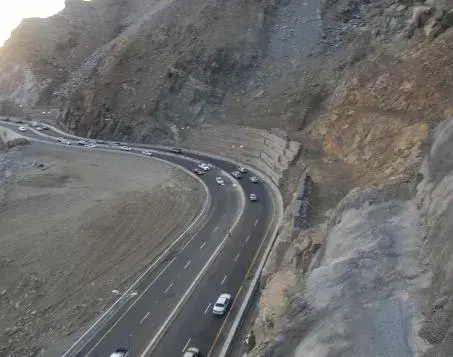
It lies among the folds of the Tuwaiq mountain range, specifically 4 km south of Qusur Al Muqbil. It is a long caravan road cutting through the Tuwaiq mountains from bottom to top over a distance of 969 metres.

alt

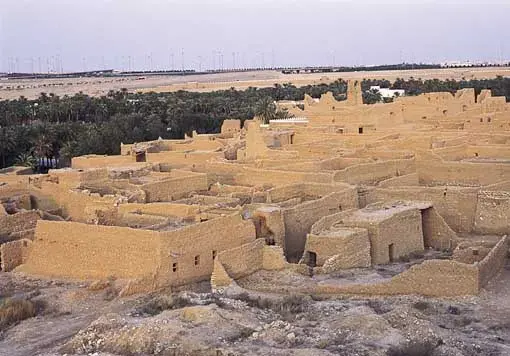
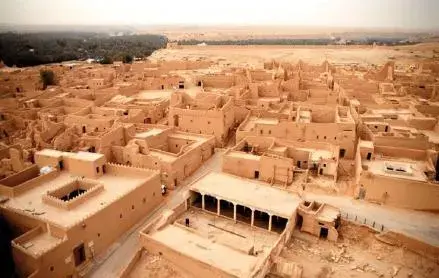
The Saudi dynasty’s first capital is an oasis city that was founded in 1446 and razed in 1818. Reconstructed palaces, mosques, and the old city wall, made from the traditional mud brick, form what is now the country’s most popular archaeological site. Address: Dir’aiyah