
Women-Friendly Travel in Riyadh
The Riyadh women-friendly travel guide places explicit women-friendly and family confidence signals first, while keeping uncertain details visible for review.
Riyadh
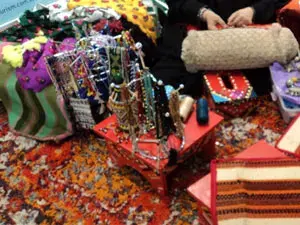
Al Thumairi and Al Deira Souq
Al Thumairi and Al Deira Souq, near Masmak Fort and also known as the Antiques Souq, is one of the most popular tourist markets. It specializes in Arabian goods ranging from inexpensive products to authentic pieces. Goods sold here include carpets, coffee pots, daggers, jewellery and more. English is spoken, and you should bargain over prices.
Riyadh
*Riyadh Marriott Hotel
Exceptional service awaits you at our five-star Riyadh Marriott Hotel. The luxury of Riyadh Marriott Hotel seamlessly combines style and substance with a high standard of service. The hotel is near the thriving business district and many of the city’s best-known attractions, including museums, cultural landmarks, shopping centres and 5-star entertainment. Dining choices include a seafood kitchen and a café. Its location provides easy access to downtown and popular shopping centres. All rooms are spacious and suit tourists and business travellers, with high-speed Wi-Fi, luxurious bedding and available amenities. Whether joining us for work or pleasure, you will be happy with Riyadh Marriott.
Riyadh
Souq al-Thumairi
Souq al-Thumairi, Deira (next to Masmak Fortress). Also known as Antique Souq, this is Riyadh's most tourist-friendly souq. It specializes in Arabic goods ranging from cheap to expensive and authentic to fake. Goods offered include carpets, coffee pots, daggers, jewelry, and more. English is generally spoken, and haggling is obligatory.
Riyadh
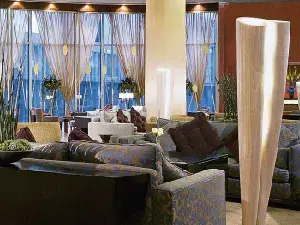
Al Faisaliah
Located in the same complex as the Faisaliah Tower (but not in the tower itself), is probably Riyadh's top hotel. Impeccably stylish, excellent service and priced to match — a coffee in the lobby will set you back SR60! Rooms are around SR1400 a night. Address: King Fahd Rd, Phone: +966-1-2732000.
Riyadh
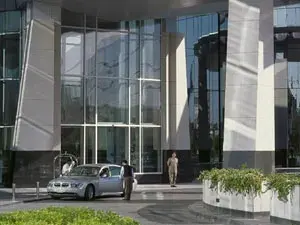
Four Seasons
It doesn't get any fancier than staying in the 302-meter Al-Faisaliah Tower, and the Four Seasons provides all the standard features what you expect from the luxury hotel chain. Singles from SR1200, doubles from SR1400 per night.
Riyadh
Holiday Inn Al-Qasr
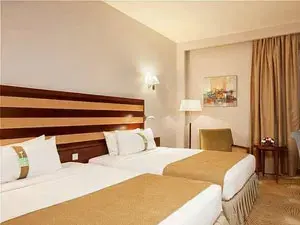
Holiday Inn Al-Qasr, Olaya Main Rd, +966-1-4625000. Formerly the Howard Johnson Olaya Palace, this hotel was completely renovated and reopened in 2007. The hotel exudes a modern design, decent rooms, central location, and basic gym. Internet costs SR100/day while the breakfast buffet runs at SR105. Rooms are priced at SR550 per night.
Riyadh
Intercontinental Hotel
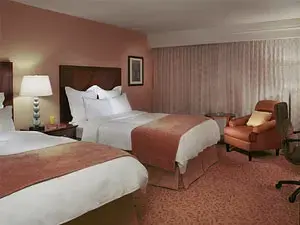
This is a popular hotel for visiting businessmen. It contains large meeting facilities and good restaurants; it is also close to Olaya Road business district.
Riyadh
Luthan Spa and Hotel
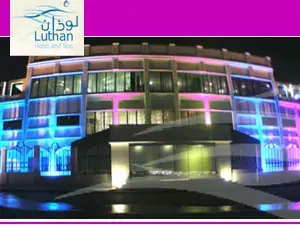
This is the first and only women-only hotel in Saudi Arabia. Most visitors are locals coming here for the spa, but there are also twenty-five rooms for overnight visitors. It is highly recommended for women traveling alone into Saudi Arabia. SR350-979 per night.
Riyadh
Marriott Riyadh
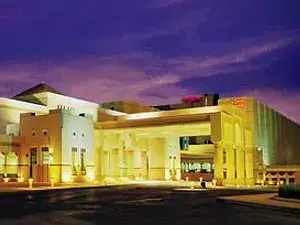
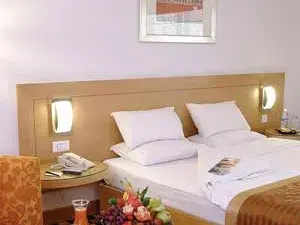
This hotel is in desperate need of a facelift and is awkwardly located east of the city core. About the best that can be said about its location is that it is clean and quiet ( though this can be said for most of the city. Nevertheless, the rooms meet the high standards set by any Marriott. It does offer an excellent large-size indoor swimming pool and excellent fitness room (included in the room charge). SR1000 per night,
Riyadh
Radisson SAS Riyadh
This is a very comfortable modern hotel with a European touch. It contains a nice gym with two saunas and pools, free Internet, and good breakfast. It also has four in-house restaurants including both Japanese and Italian. SR800 per night.
Riyadh
Sheraton Hotel
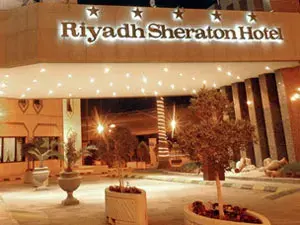
This is an older structure, but it has been well-maintained and is located three kilometers north of the city center.It’s proximity to both the airport and the business district makes it an attractive option for business travelers. The hotel also has a solid array of tasty in-house restaurants, but there are virtually zero other restaurants within walking distance. SR900 per night.
Riyadh
Al Khozama
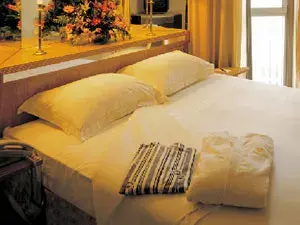
Once among Riyadh's top hotels, it is now getting a more rustic feel. Its rooms are small, but well kept and sanitary. The pool right by the hotel is outdoor only (making it somewhat dirty), but hotel guests have access to the fitness center in the next building (Khozama Center, 1st floor) which offers a superb gym, a large indoor pool, tennis, and bowling. Free internet in the business rooms (located on the 5th floor). SR800 per night. Address: Olaya Rd, Phone: +966-1-4654650.
Riyadh
Almuthana
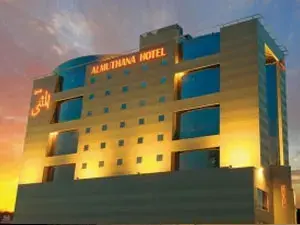
Almuthana is a modern, four-star hotel priced reasonably compared to its better known peers, though service has a reputation for being sub-standard. Free, but notoriously inefficient wireless internet, a small indoor pool, and a limited gym (open only in the evening) are available to customers. The cafe on the mezzanine provides a relaxed breakfast buffet and the 8th floor restaurant dinner buffet, while tasty, is expensive at SR120 per night.
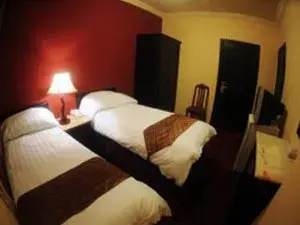
Riyadh
White Palace 'Al-Qasr Al-Abiyad'
This is a thoroughly decent hotel in the Al-Dubat district with a sense of history and a total of 135 rooms, all furnished with a TV and ensuite bathrooms. Singles/doubles SR160/200 per night.
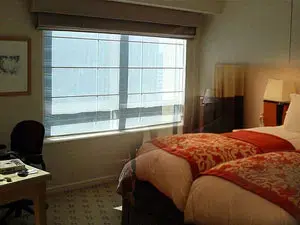
Riyadh
Al Jazeera Hotel
A value for money hotel on Main Street, this hotel offers singles and doubles from SR60/120 per night. Behind this hotel is a multistory building (Nostro Hypermarket) for shopping and car parking for SR5 per 24Hrs.
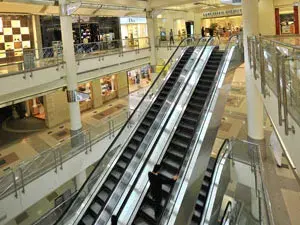
Riyadh
Al Mamlaka (Kingdom Centre) Shopping Mall
This upscale three-level shopping center includes the women-only Ladies Kingdom, an entire level where women can shop in comfort and privacy. The shopping center is connected to the Hotel lobby.
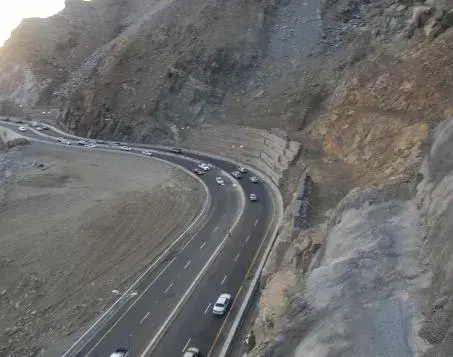
Riyadh
Caravan Road (Aba Al Qid)
It lies among the folds of the Tuwaiq mountain range, specifically 4 km south of Qusur Al Muqbil. It is a long caravan road cutting through the Tuwaiq mountains from bottom to top over a distance of 969 metres.
Riyadh
Qaryat Al Faw
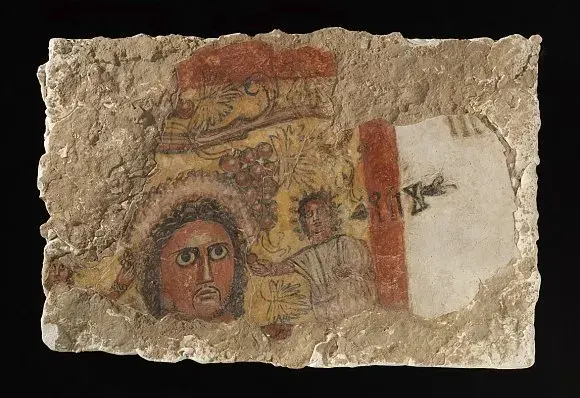
"Qaryah", as it was known in the past, or Al Faw in its local name, lies about 700 km southwest of Riyadh and about 150 km southeast of Al Khamasin in Wadi Al Dawasir. It overlooks the northwestern edge of the Empty Quarter, where Wadi Al Dawasir intersects the Tuwaiq mountain range at a gap in the mountain called Al Faw. It is on the ancient trade route known as the Najran–Gerrha road. The site of "Qaryah" is one of the most important archaeological sites in the Arabian Peninsula, if not the world, as a living example of a pre-Islamic Arabian city with all its elements: homes, roads, markets, temples, tombs, wells and agricultural channels.
Riyadh
Jabal Munikh Watchtower
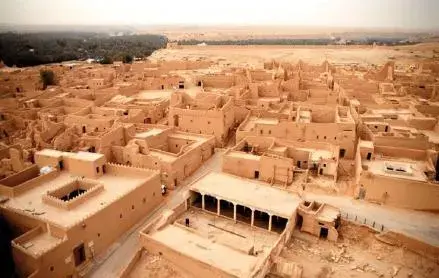
Munikh Fort is a castle built on a hill, Jabal Munikh, in the Sudair region, overlooking Al Majmaah from the west. On this hill stands Munikh Castle—pronounced with a damma on the m and a kasra on the n—west of the city. Its tower, the watchtower, is about eleven metres high, circular and conical, narrowing towards the top. It consists of two towers, one inside the other, with a spiral staircase between them. Its base is built of stone to a height of about two metres, above which the structure is made of mud bricks shaped in special moulds. South of this tower is another, smaller square tower, and a still smaller tower stands to the west. A wall of mud and stone surrounds the castle on the hill and connects to the wall that once enclosed the town. It was used for observation and defence and is now used to watch for floods and livestock. The tower and surrounding area have been comprehensively restored and provided with lighting, becoming a cultural and tourist landmark.
Riyadh
Ushaiger Old Town
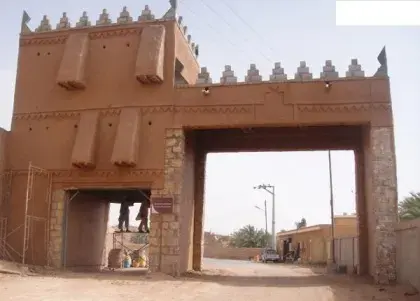
Ushaiger lies in the Al Washm region, 210 km north of Riyadh. Administratively it belongs to Shaqra Governorate; Shaqra is its nearest city, about 15 km to its south. Ushaiger is an ancient historic town, home to the Banu Tamim tribe in the pre-Islamic era and inhabited in early Islam. It was mentioned by the poet Al Hutay’ah, who died in 45 AH. It is among the most famous towns of Najd in the medieval Islamic period, known for its many scholars and judges. The family of the reforming scholar Muhammad ibn Abd Al Wahhab, may God have mercy on him, came from it. In his book Scholars of Najd over Six Centuries, Sheikh Ibn Bassam considered it Najd’s foremost source of scholarship. Many families that spread throughout Najd and beyond trace their origins to it.
Riyadh
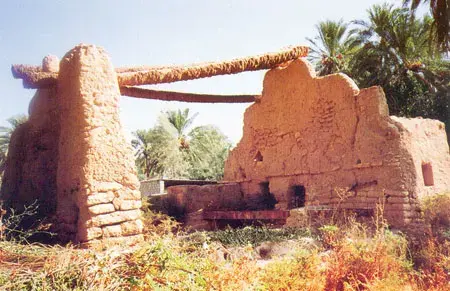
Imam Turki Mosque
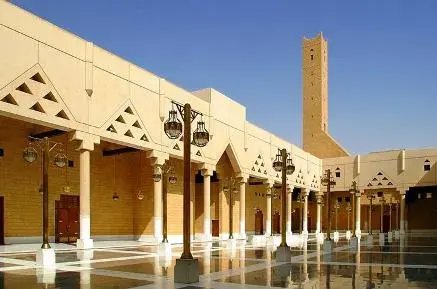
It was built on land called Al Naq’ah in central Riyadh, where Imam Turki bin Abdullah, may God have mercy on him, ordered a congregational mosque later named after him and appointed Sheikh Abd Al Rahman bin Hassan Al Al Sheikh to it. Its proximity to several neighbourhoods and Qasr Al Hukm was considered, and it was made an institution of learning in the manner of the First Saudi State. When Imam Turki prayed Friday prayers in the Grand Mosque, he customarily left through the door south of the mihrab. This door on the mosque’s qibla side was prepared for his entry and exit, avoiding the need for the imam to step over people in the many rows. These additions took place during his rule, before and through 1241 to 1249 AH (1826–1834). His son Imam Faisal bin Turki followed in 1259 AH, rebuilding the mosque and expanding it to the east and west. He introduced Islamic ornamentation into its courtyards that was then unknown in Najd, and installed an elevated passage between the mosque and Qasr Al Hukm. New water facilities were also added, and a long covered passage supported on columns connected the mosque to the palace. The traveller Palgrave described it as a large, flat-roofed parallelogram on square wooden pillars, accommodating more than two thousand worshippers at once, largely comprising an external courtyard with room for more than two thousand as well. It had no ornamentation or other aesthetic features, and had a short minaret on the roof directly above the mihrab. King Abdulaziz took an interest in the mosque, expanded it and linked it to Qasr Al Hukm by a bridge facilitating access at prayer times, especially Friday prayers, for the king, his entourage and his servants. He also installed lighting. King Saud continued to care for the mosque, enlarging its structure, ordering new carpets and lighting and greatly increasing its area by incorporating adjoining land. During those earlier royal periods, it was built with traditional materials of mud and dried mud bricks, with roofs of palm trunks and stone slabs. Care for the mosque continued under Kings Faisal and Khalid through modern construction.
Riyadh
Sadus Village
Sadus, northwest of Riyadh, is one of the oldest human settlements in the central Arabian Peninsula. It was known as Al Qaryah and contained archaeological landmarks of great importance, perhaps foremost a striking obelisk with ancient inscriptions and writings confirming the town’s importance as an Arabian urban centre.
Riyadh
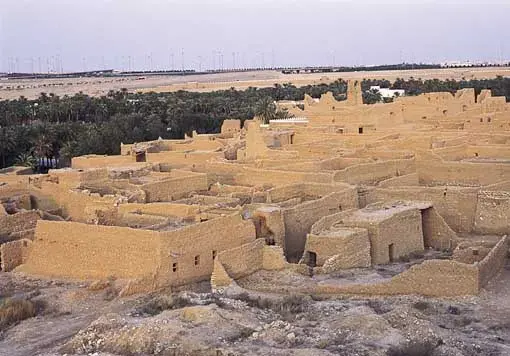
Diriyah
Located northwest of Riyadh on the western bank of Wadi Hanifah, Diriyah is an ancient historic town dating to the middle of the ninth Hijri century. Mani’ bin Rabi’ah Al Muraydi, a relative of Ibn Dir’, the ruler of Hajr Al Yamamah, founded Ghusaybah, Diriyah’s oldest neighbourhood. The town continued to grow and expand because of its important geographical position in the centre of the Arabian Peninsula. In the middle of the twelfth Hijri century, Imam Muhammad bin Abd Al Wahhab arrived in Diriyah and found in the Al Saud family, especially Imam Muhammad bin Saud, a strong supporter and ally for the call to reform and revival of the Prophetic Sunnah. Thus God willed Diriyah to become a centre of guidance and the starting point of a firmly established state.
Riyadh
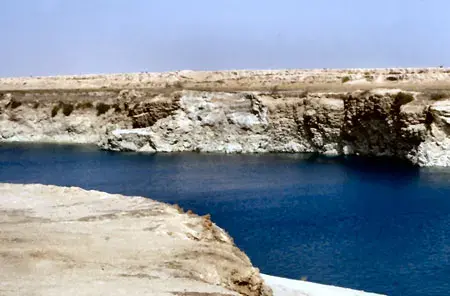
Al Aflaj
Al Aflaj lies southwest of the main Najd plateau, between the Tuwaiq mountain range to the west and the low outer escarpment of an extensive plain, about 312 km from Riyadh. One of its most important archaeological sites is Al Uyun, about 18 km from Layla. It contains a settlement covered with numerous pottery remains, a burial area and irrigation networks dating to the early Hellenistic period.