Overview & visitor information
Sun Yat-sen, the doctor and revolutionary who led the movement that ended imperial rule in 1911, is Guangzhou’s most celebrated son of the modern era, and this hall is the city’s grandest tribute to him. It was funded largely by overseas Chinese and completed in 1931 on the site of his former presidential office. The architect, Lu Yanzhi, wrapped a modern, column-free auditorium in a traditional palace form: a sweeping octagonal roof of sapphire-blue glazed tiles, red columns and painted eaves.
The auditorium seats more than 3,000 people and still hosts concerts and ceremonies, which is why the hall sometimes closes to visitors at short notice. When it is open you can walk into the vast space and appreciate how the roof spans it without a single interior pillar. A small exhibition explains Sun Yat-sen’s life and the building’s history, with English captions.
The gardens in front are free, open from early morning and are an attraction in their own right. A bronze statue of Sun Yat-sen stands on the main axis, and old kapok trees, Guangzhou’s city flower, turn the lawn red with blossoms in February and March. Morning visitors find locals doing tai chi and fan dances on the paths.
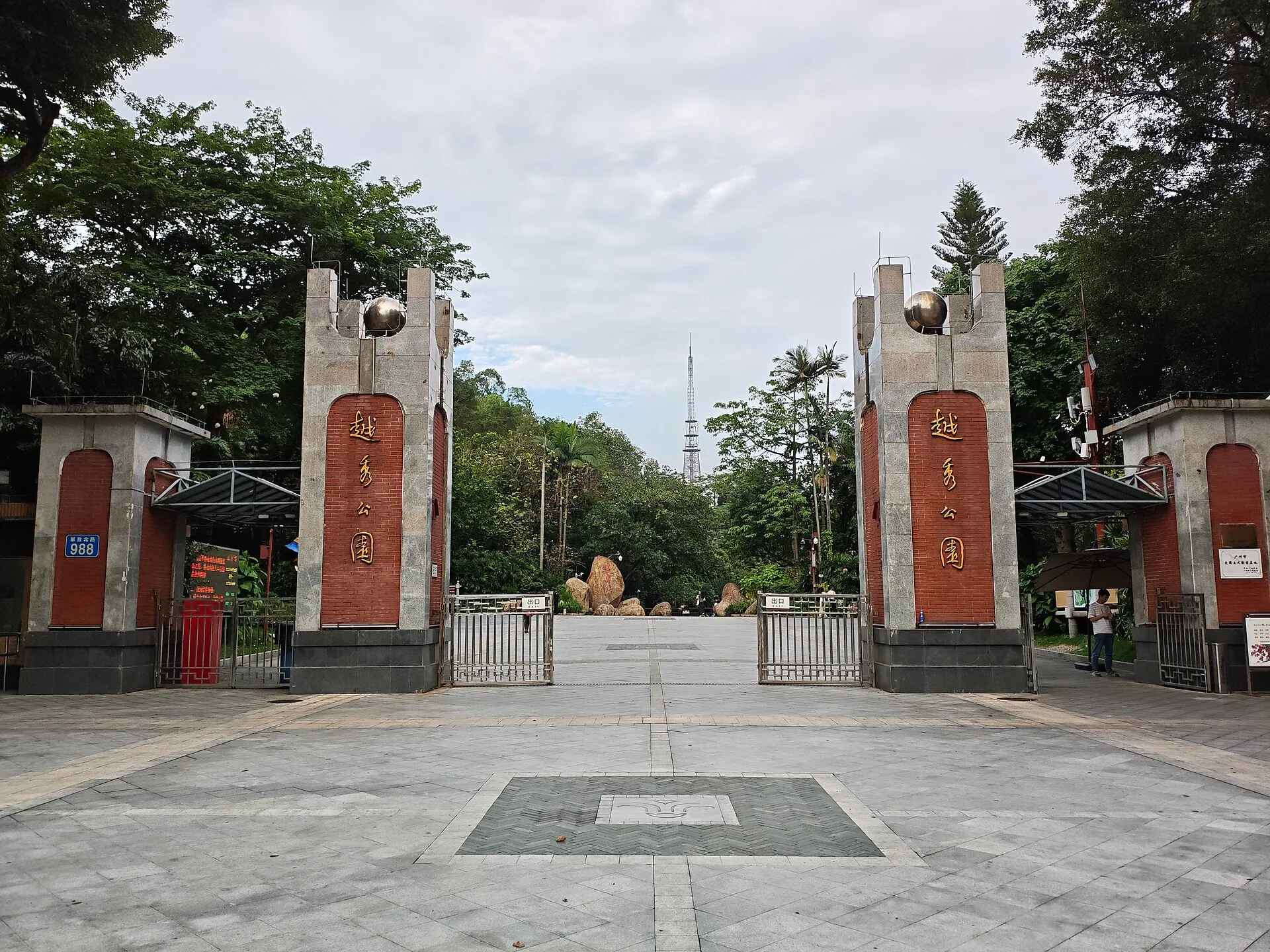
Allow about an hour. The hall is a short walk from Yuexiu Park’s south gate and from Memorial Hall station on Line 2, which makes it easy to combine with Yuexiu Park, the Nanyue King Mausoleum and Xianxian Mosque in a single day. The grounds are flat and step-free; the auditorium has a few steps at the entrance. Photography is allowed in the grounds.