Skip to content
Hanoi
Hanoi

Festivals and Annual Events

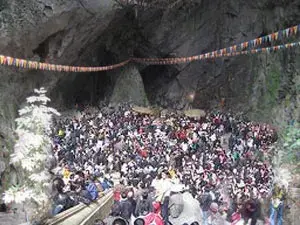
Date: January - March Celebrated from the 6th day of the first month to the end of the third month according to the lunar calendar, the Perfume Pagoda is the most prominent of pilgrimage for the Buddhists in the northern parts of Vietnam. Thousands of pilgrims endure hardships to reach these sacred caves where they go to pray for well-being, happiness and prosperity in the future. Surrounded by an epic landscape and lush greenery the festival is observed in three places- Huong Tich, Tuyet Son and Long Van. These areas can be reached either by riverboat and a short hike along the riverbank or by taking the Hanoi - Ha Dong - Van Dinh - Huong Son route by road. Most of the crowds visit between the 15th and 20th day of the second month of the lunar calendar.
16 results

City overview
alt

Date: January - March Celebrated from the 6th day of the first month to the end of the third month according to the lunar calendar, the Perfume Pagoda is the most prominent of pilgrimage for the Buddhists in the northern parts of Vietnam. Thousands of pilgrims endure hardships to reach these sacred caves where they go to pray for well-being, happiness and prosperity in the future. Surrounded by an epic landscape and lush greenery the festival is observed in three places- Huong Tich, Tuyet Son and Long Van. These areas can be reached either by riverboat and a short hike along the riverbank or by taking the Hanoi - Ha Dong - Van Dinh - Huong Son route by road. Most of the crowds visit between the 15th and 20th day of the second month of the lunar calendar.
alt

During the Nui Ba annual celebration, thousands of Buddhists and tourists flock to the Ba Mountain to worship and sightsee. The festival is celebrated during spring till the 30th day of the 1st lunar month and reaches its peak on the day of the full moon of the first month. People from the Ho Chi Minh City and the provinces of the south gather in crowds at the mountain to celebrate on the day of the peak. Pilgrims start at the bottom of the mountain and climb one half of the mountain to Saint Linh Son's communal house, then; they follow a path that leads to a pagoda where they feast on the vegetarian meals offered at the pagoda. Tourists can enjoy the meal for free and donations to the pagoda can be made depending on budget and ability.

alt

Lim Festival in Hanoi celebrates northern Vietnam's beloved quan ho folk songs and the founder of these songs, Hieu Trung Hau. Practicing a traditional dramatic art form that dates back several centuries, performers at this annual festival in the Bac Ninh Province, converse in a specific style of quan ho folk singing. It takes place every year on 13th day of the 1st lunar month. The participants make for a spectacular sight adorned in traditional quan ho attire and millions of visitors come to enjoy the dialogue performances between 'lien anh' or male singers and 'lien chi' or female singers. They are the country's most skilled quan ho singers. Besides this, visitors are treated to traditional temple games and competitions in addition to all the religious observances that take place.

alt

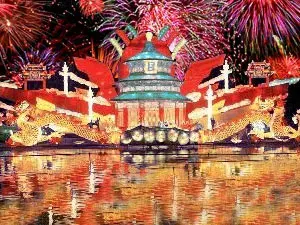
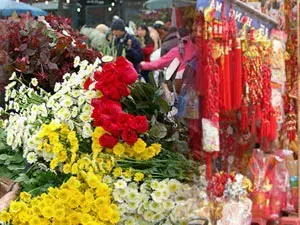
Date: January-February Tet is a major event in Hanoi which is enjoyed by both locals and tourists every year. This festival is celebrated at the beginning of January or at the end of February, and marks the beginning of the New Year by the lunar calendar. It is one of the most sacred and important festivals to locals, and while it is officially a three-day affair, festivities may continue for a week or more with locals and tourists alike indulging in eating, drinking, merry making and other enjoyable social activities. People are seen in their best attires, decorating their homes and stocking up on traditional Tet delicacies. Festoons adorn the city streets and shops and stalls are decorated with colored lights, selling traditional candied fruits and jams, traditional cakes, and fresh fruit and flowers.

alt

The Whale Festival in Hanoi lasts for only two days and is commemorated in the middle of the 3rd lunar month. It is considered to be the biggest water festival among the fisherman of the Danang province where the Whale God is worshipped in the hope that it will ensure safety and prosperity for the entire village for the coming year. Irrespective of wherever they might have been all fishermen and boats return to the village for this celebration and it is accompanied by chanting and prayers, as well as a feast that entirely excludes any seafood. It is an elaborate ceremony, rich in color, and a large part of the ceremony is the decoration of the temple, the houses and all fishing boats in the village.

alt

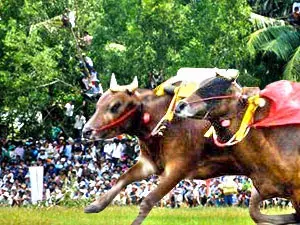
Date: March/April The Khmer celebrate this festival as a part of the Don Ta Ceremony in which tributes are paid to the fore-fathers. The festival is witnessed in the Tinh Bien and Tri Ton districts, and allows visitors to explore the ethnic culture of Vietnam. Guests are warmly and grandly greeted by the members of the Khmer tribe because the guests are believed to have been sent by the ancestors and after an elaborate meal and prayers at the pagoda a meticulously planned cow race is held. The event is extremely entertaining, full of color and revelry and is a day long affair.

alt

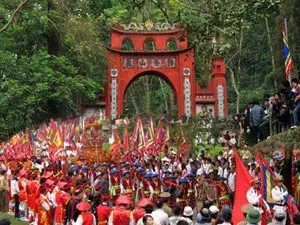
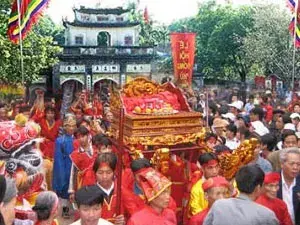
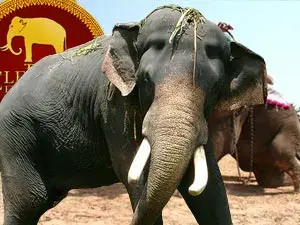
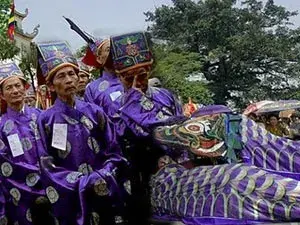
Held for 3 days from the 9th to the 11th day of the third month as per the lunar calendar, the festival celebrates the Hung Kings, whose contribution to the foundation of the nation is highly revered. A flower ceremony is held where all the representatives of the state participate and the offspring of the Hung kings from across the country come to the temple to offer incense. Massive processions are a mark of this festival, with state officials and their children even taking part. The processions also consist of other marches like the Elephant march after which, the Xoan song, a classical song is performed in the Thuong Temple and Ca Tru, a classical opera is held in Ha temple. Even other traditional activities like bamboo swings, nem con or the custom of throwing a sacred ball through the ring, cham thau or beating bronze are carried out.

alt

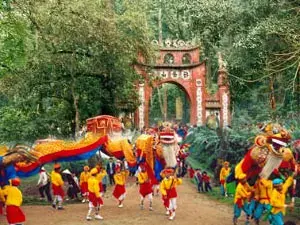
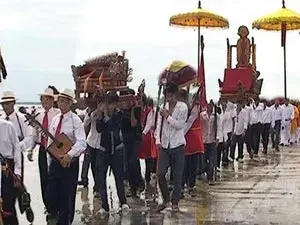
This festival captures the patriotic ardor of the Vietnamese people and their love for freedom, and is a celebration of their national heroes. Celebrated annually in the Phu Dong Village, Gia Lam District in Hanoi, the widely popular festival is held on the ninth day of the fourth month of the lunar calendar and commemorates the hero of the village, saint Giong who saved the village by defeating the An invaders. One of the predominant attractions of the Giong Festival is the elaborate procession that starts from the Mother Temple and heads towards Thuong Temple and ends with a religious service. Combining the Vietnamese affection for their national heroes with an earnest desire to preserve their cultural heritage, the festival is a unique experience for visitors and provides a true insight into the nationalistic nature of the Vietnamese people.

alt

Acknowledged as the biggest festival in the middle highland of Vietnam, this festival is significant for epitomizing the martial spirit of the M'nong ethnic group, noted throughout the country for their valor and gallant skill in hunting dangerous wild elephants. Generally commemorated in the Don village or in forests in the vicinity of Sevepoi River (Dac Lak) a distinct elephant race is the primary attraction of this festival. The race is held to the beat of drums and the roars of an excited crowd, as twelve elephants race side by side on a track in the middle of the forest. After the race the audience can interact with the majestic creatures as it is customary to feed them sugar cane after the race.

alt

Date: April/May Mat is an ancient village in Hanoi and is a purely agricultural one, but it's a long-standing trade has been snake catching and breeding, being practiced here for almost 900 years. Snake wine and tonics and snake dishes are some of the specialties of the Mat village. After the morning ceremonial prayers are over, the villagers gather at the temple yard to see the performance of the young man killing the snake and saving the princess as the popular legend is played out accompanied by drums and traditional music. While attending the Le Mat Snake Festival in Hanoi, guests can be offered a cup of snake wine with 3 or 5 snakes inside.

alt

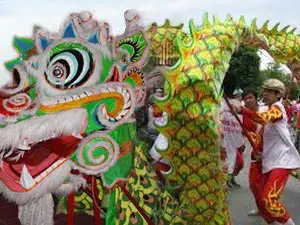
Chu Dong Tu Festival in Hanoi is celebrated over three days from the 10th to 12th day of the third month in the lunar calendar. It is celebrated in Chu Dong Tu Temple in Da Hoa and Da Trach villages, which are approximately 25 kilometers out of Hanoi. The package of dragon procession, martial arts competitions, lion dance, and cheo performances make this festival grand, colorful and popular among the tourists. There is much to enjoy with the host of processions, dance, music, food and entertainment on offer; including wrestling, fighting with sticks, Chinese chess and lion dances. To reach the festival tourists can ride downstream on the Red River on a boat or a canoe to reach the temple or hire a motorbike and travel along the dyke of Red River for 20 km from Hanoi.

alt

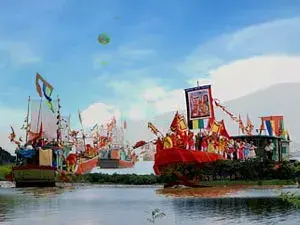
Date: May 14-16 Every year the Chem Temple festival is held to honor the legendary hero Ly Than who was a defender of these territories during the Hung King dynasty. The temple is located in Thuy Phuong village in Hanoi's suburban district of Tu Liem and was built in admiration for Ly Than, by the local villagers. The temple is an old piece of architecture, with many sculpted figures and a wonderful example of Hanoi’s preserved historical past. Every year an elaborate ceremony involving a procession of boats to obtain water to wash the statues of Ly Than and his wife is held accompanied by drums and a procession of elephants, horses and chariots culminating in a grand ceremony at the communal house. It is a colorful festival, full of life and wonder and a must visit if in Hanoi.

alt

Date: May 30 – June 7 Tra Co village which is 8 kilometres from Mong Cai town, is part of Hai Ninh district, Quang Ninh province and is dotted with many scenic spots and historical and cultural vestiges such as the Mang dunes, the Tra Co communal house, the Linh Khanh pagoda and the Xuan Lan pagoda. It plays host to this annual festival which includes a procession, ceremonies, games and lots of feasting and generally runs from the end of May till the 10th of June. Aside from the actual festival which involves gala celebrations, feasting and processions, tourists can take in the historical landmarks and the lush scenery that makes up the area.

alt

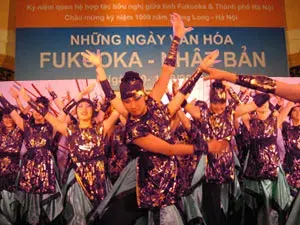
Meant to introduce the people of Hanoi to Japanese culture, the Fukoka cultural days is an annual event held over four days at different venues in Hanoi. Cultural activities include origami folding and traditional Japanese tea ceremonies. These activities often provide a unique and culturally exotic experience for both the citizens of Hanoi and visitors alike.

alt

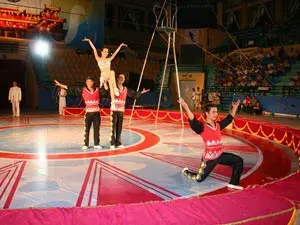
Date: August 6-11 Jugglers, trapeze acts, clowns and trained animals entertain audiences at the annual International Circus Festival held at the Nation Circus Theatre. Participants of the six day event include troupes from Hanoi, Vung Tau, Quang Tri and the Vietnam Secondary School of Circus Arts.

alt

Kiep Bac Festival in Hanoi is celebrated with millions of people thronging the Kiep Bac temple to participate in the festivities. The festival takes place from the 15th to 20th days of the eighth lunar month, when autumn is in its full bloom. Colorful processions start on the morning of the 20th day from Van Yen, Duoc Son and Con Son for the temple. After all the members of the processions gather at the gateway to the temple at a definite time, the ritual of incense offering takes place. It is followed by a vibrant ceremony characterized by a palanquin procession taking place after its completion. A major attraction of the festival is the race of dozens of boats on the Luc Dau River. The festival draws visitors from all over Hanoi.