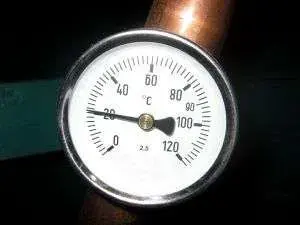
With the highest temperature ever recorded being 36.1 °C and the lowest 0 °C, Hong Kong is a destination one can visit almost all year round. While spring is pleasant ie around March, April, autumn months of October, November and even December are considered the best time to visit as Hong Kong has sunny and clear days in this period. Summer season is humid and warm with lots of rain, thunderstorms and occasional tropical cyclones, though the city has a good warning system in place. Winter is again not extremely severe, except for the wind chill factor, but towards February it starts getting cloudy. All hotels offer discounts during the off season.
In Hong Kong, UAE nationals have visa free access for 30 days. However they must have proof of funds for comfortable stay during this period and have onward or return tickets.
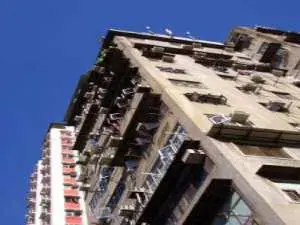
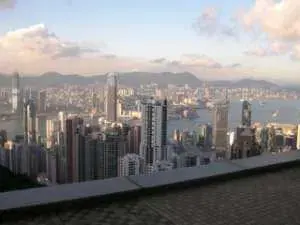
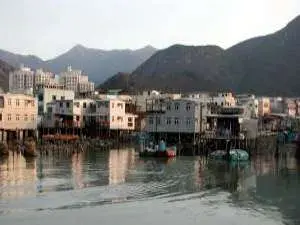
Location:: Between 22 15 N and 114 10 E, Hong Kong is in Southeast Asia. China mainland is to its North and South China Sea to its South, West and East. Hong Kong is divided as per location into four main districts. In the Hong Kong Island's northern area the world famous skyline consisting of its skyscrapers can be seen. Here lies all the government offices, corporate offices, shopping districts and social and nightlife areas. The southern part has the more upmarket residential area, the parks, leisure activities and beaches. Kowloon is another part of Hong Kong and refers to the peninsula which is North of Hong Kong Island and is highly populated. Its name signifies nine dragons referring to hills of the region. The third region is the New Territories. This has newer towns, industries, farms, small villages and parks and has a hilly terrain. Lastly are the Outlying Islands. These are some 234 islands of various sizes, some much bigger than the Hong Kong Island and others just a speck.; Dialling code:: +852. There is no zip code; Emergency numbers:: Emergency Service (Police, Fire, Ambulance): 999 General Police Enquiries: 2527 7177 Directory Enquiries: 1081 Weather: 187 8066 Overseas IDD and card phone enquiries: 10013 Collect calls: 10010 Hong Kong Tourism Board Visitor Hotline: 2508 1234 Hong Kong International Airport (24 hrs): 2181 0000 Hong Kong Immigration Department (24 hrs): 2824 6111 Tourist Information Hotline: 28076177 Hong Kong Post office Hotline: 29212222 Time: 18501
Over 90% of the people of Hong Kong are Chinese with Cantonese background; others are the Hakka Chinese who are mainly the landowners, while Hoklo and Tankla are the fishermen and 'boat people'. There is huge diversity amongst the Chinese themselves in Hong Kong, besides Hong Kong is a confluence of many Asian and western cultures and the younger generation prefers to be associated as Hong Kong residents rather than call themselves Chinese or otherwise. Amongst other Asians, the Indians, Pakistanis and Nepalese are the largest resident population. The large numbers of Philipinos and Indonesians are mainly temporary workers. The great business opportunities attract a huge force from the west and parts of Asia. These people may stay for long periods and hence there is a perpetual inflow of fresh ideas, cultures and vitality giving Hong Kong its ever moving yet very special feel.
Today Hong Kong is internationally known as a strong financial and corporate center. It has the world's 7th highest GDP per capita. Foreign investment has a huge role to play here still. There are over 4,000 foreign companies which have their base here. Hong Kong practices free trade, has easy regulations, and taxes are low. The economy is mainly service based, with banking (15th largest), finance (world's 6th largest foreign exchange centre) and corporate as the major emphasis. The property market, tourism and trade (11th largest trading economy) are other key drivers economically. Very little has changed after the China takeover of 1997. Hong Kong is run with the principle of 'one country, two systems'. It has a huge degree of autonomy except for foreign affairs and defense, where the Chinese government exercises full control. Hong Kong operates with its own dialing code, currency, police, controls etc. The Government of Hong Kong as the Special Administrative region of the People's Republic of China is small yet very efficient. There is a Chief Executive elected by an 800 member selection committee comprising of professionals and businessmen. He is answerable to the State Council of the People's Republic of China. There is a 15 member Executive Council to assist the Chief Executive. There is a 60 member Legislative Council.
Humans have lived in Hong Kong for 30,000 years, but did not enter the history books until the third century BC. In the year 221BC, Hong Kong was incorporated into the Qin Dynasty. For many centuries, it was just a small town, supported by the fishing and pearl industries. Starting in the tenth century, the area became an important economic center due to its location on the Pearl River Delta. In 1276 AD, Hong Kong, specifically Kowloon, briefly became the seat of the Song Dynasty as Mongls invaded the rest of China. Hong Kong's importance increased and its population grew as Chinese refugees streamed in.