Why visit
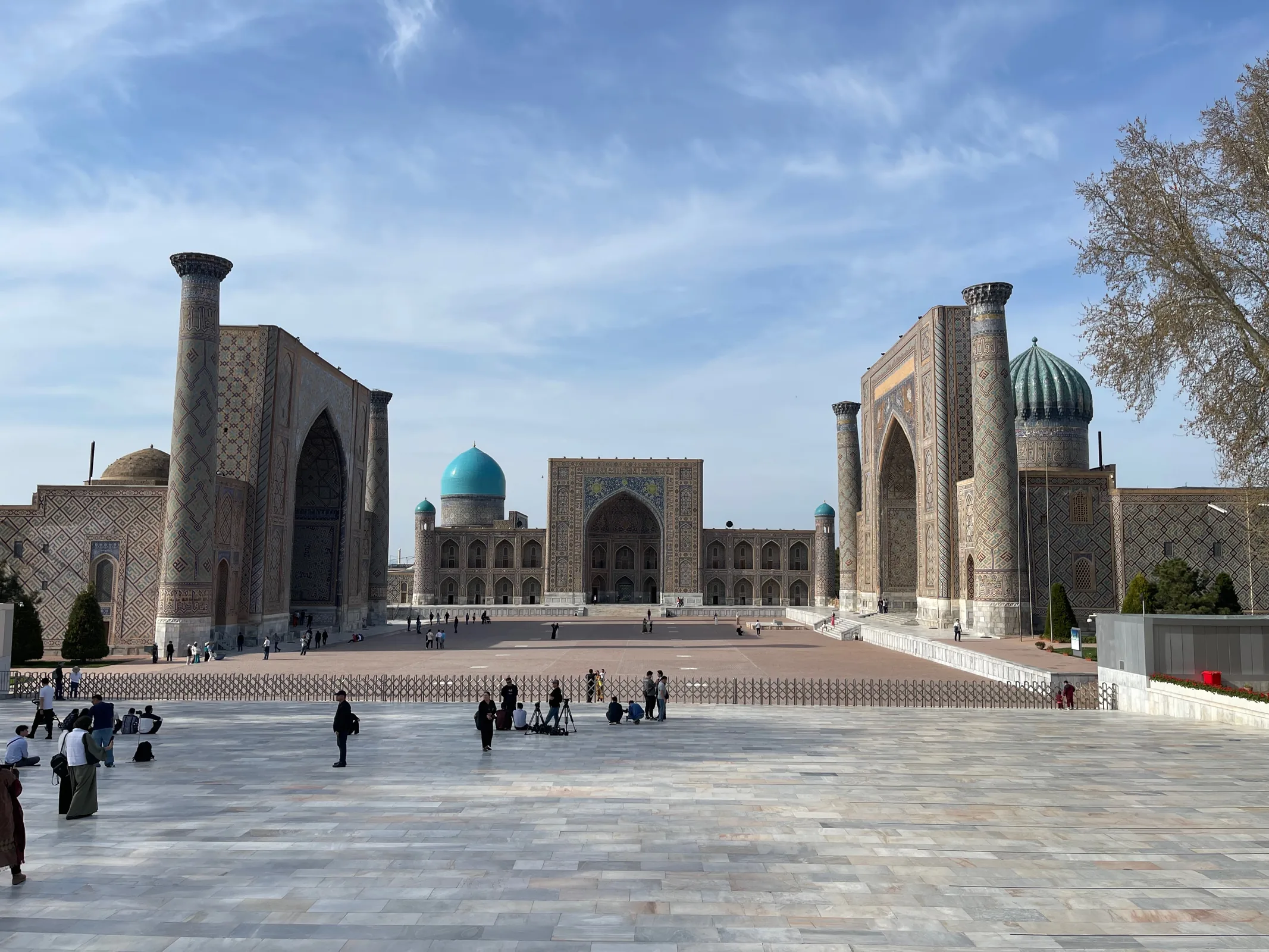
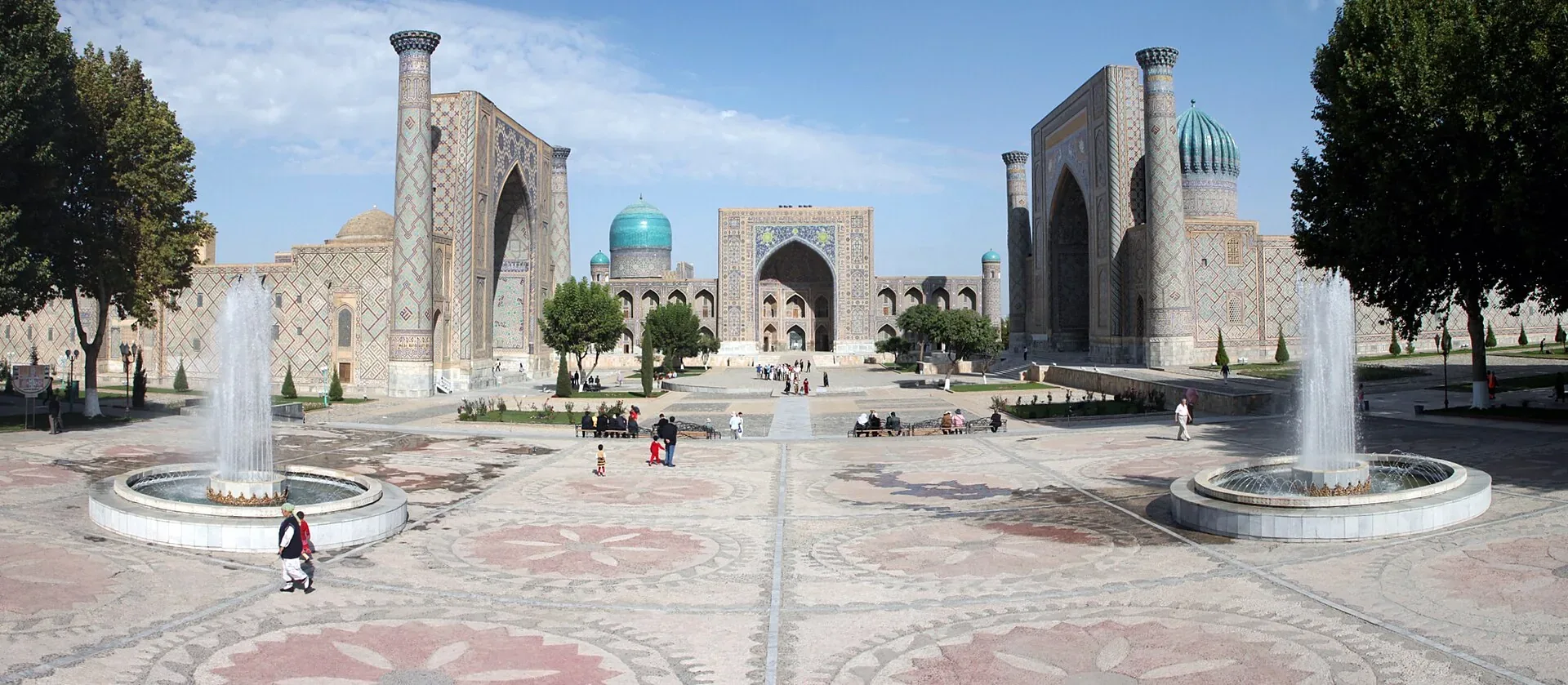
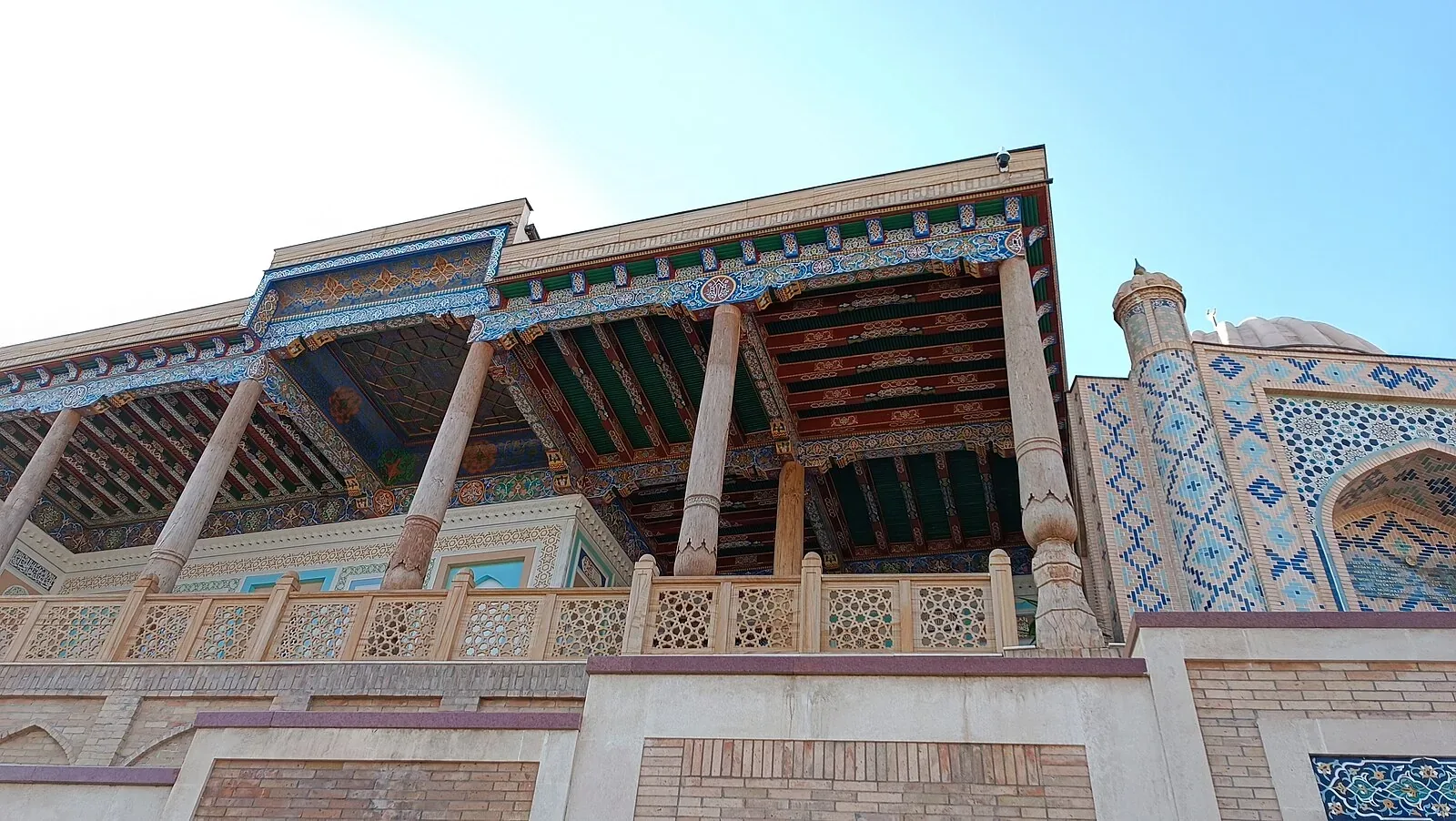
Sher-Dor Madrasah occupies the eastern side of Registan and gives the square one of its most memorable faces. Built in the early seventeenth century, it was designed to answer the older Ulugh Beg Madrasah across the square while establishing its own visual identity. Its great portal is immediately recognisable for the paired felines chasing deer beneath stylised sun faces, an unusual decorative programme in Central Asian Islamic architecture. Stand back first to read the full façade, then move closer to see how the animal forms, mosaic fragments and calligraphic panels work together across the vast entrance.
What to see
Inside, the courtyard changes the mood from the dramatic public square to a contained rhythm of arches, cells and tiled surfaces. The contrast helps explain why Sher-Dor should not be seen only as a façade. Walk the perimeter slowly and look toward the portal from within the courtyard; the building’s scale becomes more legible when framed by the inner space. Children often enjoy finding the feline motifs outside, while adults can compare the colour, pattern and proportion with the other two Registan madrasahs. The interior rewards attention even when the exterior is the feature most people remember.
Plan your visit
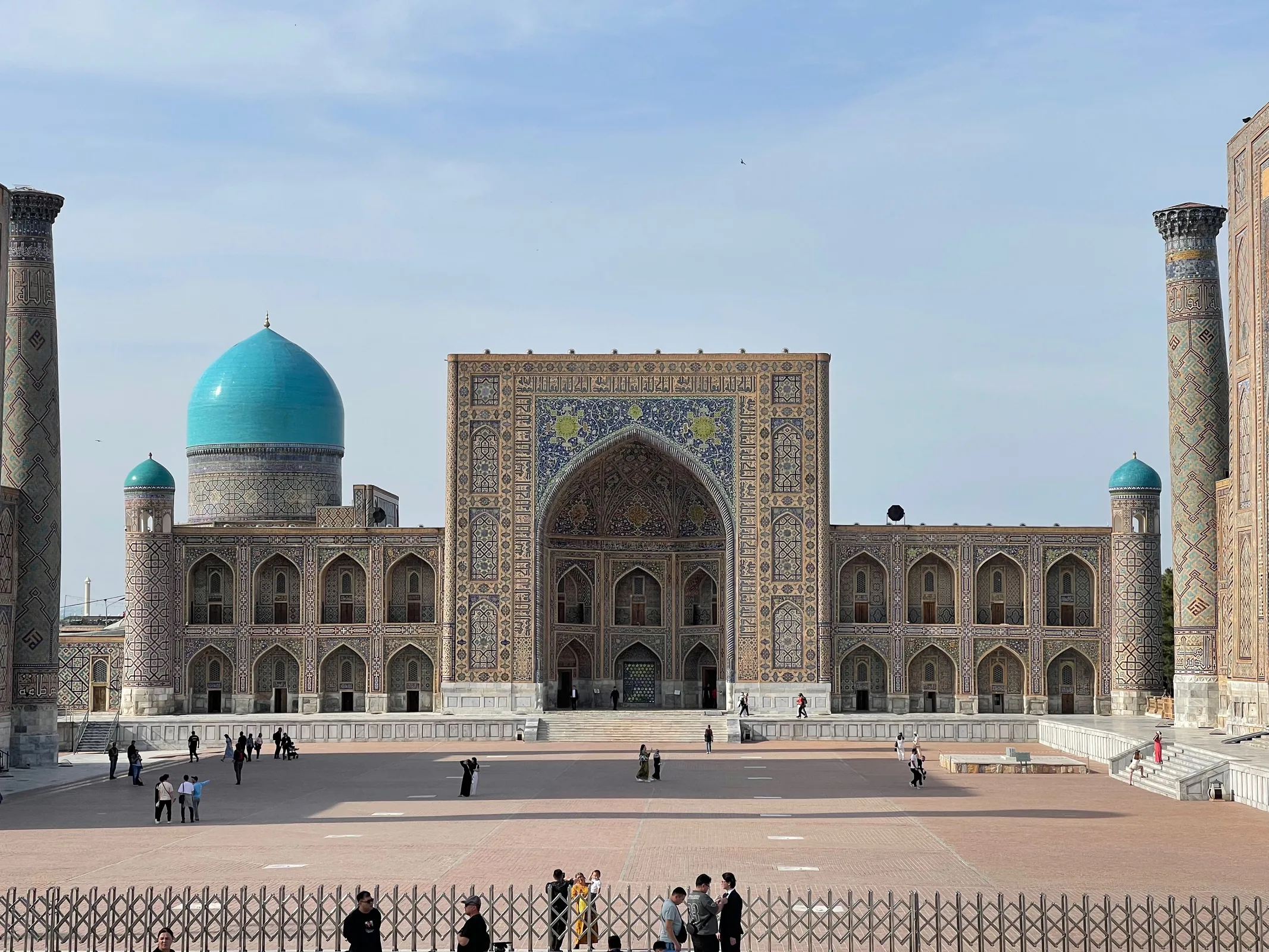
See Sher-Dor as part of a three-building conversation. Begin with Ulugh Beg Madrasah to understand the fifteenth-century foundation of Registan, cross to Sher-Dor for its seventeenth-century response, then complete the sequence at Tilya-Kori. This order makes changes in architectural taste easier to notice without leaving the square. A second look from the centre of Registan is worthwhile after visiting the courtyard, because the portal’s animal and sun imagery becomes clearer once you have seen its scale up close. Pair the square with Gur-e Amir or the central streets for the rest of the day.