Why visit
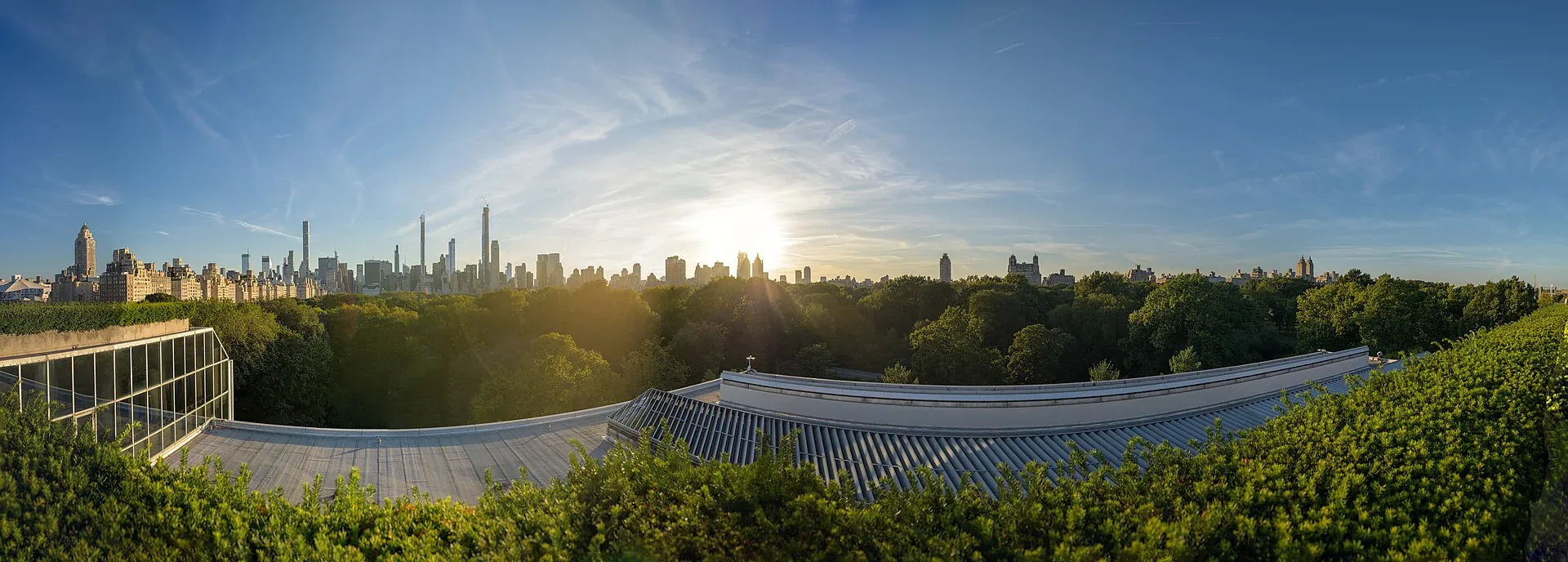
Central Park extends from 59th to 110th Street across 843 acres in the center of Manhattan. Frederick Law Olmsted and Calvert Vaux won the 1858 design competition with their Greensward Plan, reshaping difficult terrain into an engineered pastoral landscape rather than preserving an untouched piece of nature.
What to see
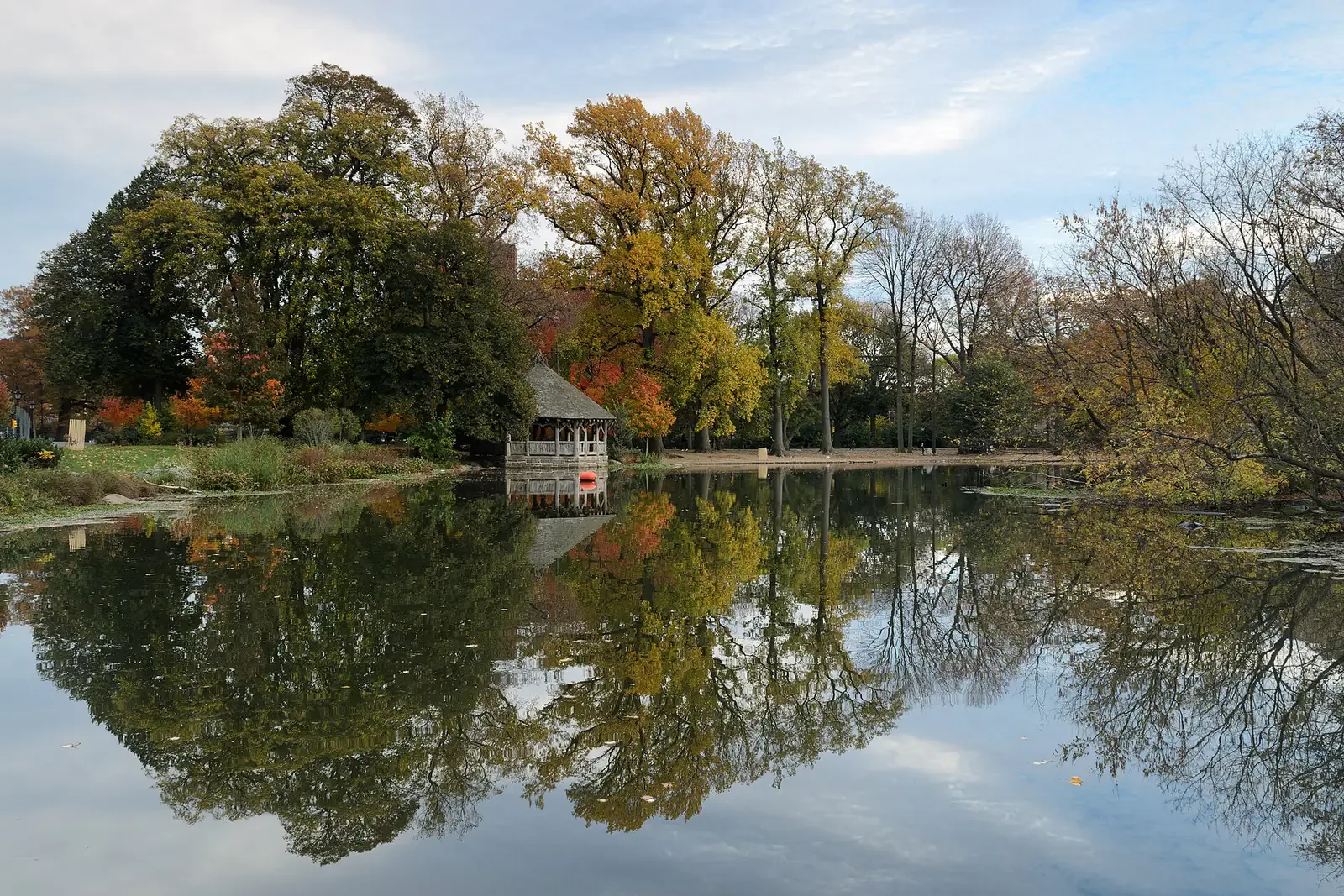
The design moves between broad spaces such as Sheep Meadow and the Great Lawn, wooded routes through the Ramble and North Woods, and water bodies including the Lake, Reservoir and Harlem Meer. Bridges separate walkers, riders and transverse traffic, while Bethesda Terrace, the Mall and Conservatory Garden introduce formal architectural sequences.
Plan your visit
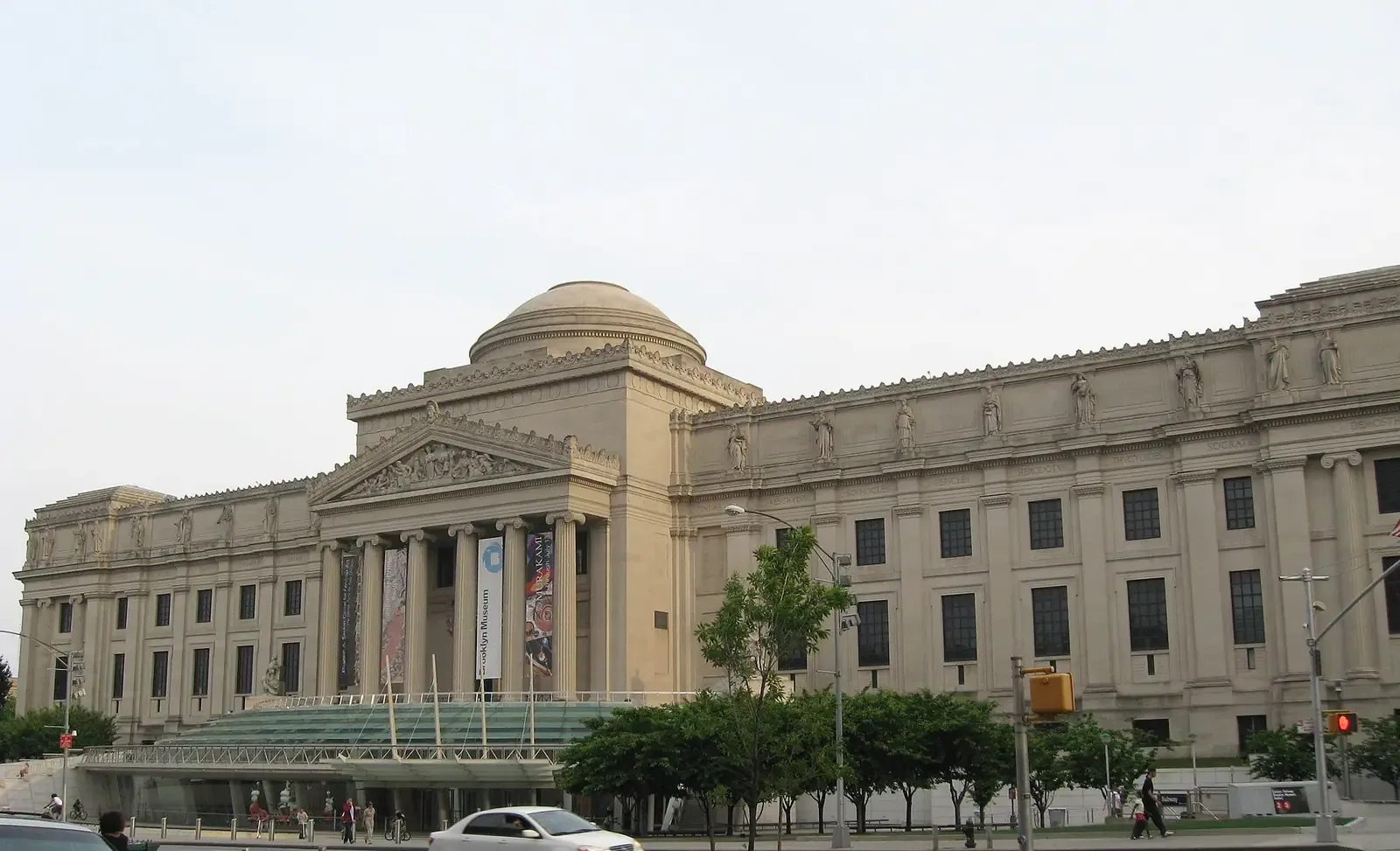
Museums and dense residential avenues define the park's outer edges, but rock outcrops, curving paths and layered planting repeatedly interrupt the surrounding street grid. That contrast explains the park's power: it is a constructed public work whose topography, infrastructure and changing seasonal canopy make an enormous shared interior within the city.